

All things Indian are showcased at the week-long Encounters India festival

The week-long Encounters India festival was presented Queensland’s Conservatorium Griffith University from May 13-19. The festival is held every two or three years, to celebrate cross cultural music and arts in Australia, and this was Brisbane’s fourth Encounters India event.
Bhajan fusion
Darkness descends, there is a chill in the air, expectations run high on the evening of Friday, May 17 at the bustling Queen Street Mall in Brisbane. Spectators huddle around a stage waiting in anticipation to witness ‘India in the City,’ a cultural event that is part of the Encounters India festival. The event kickstarts with devotional music by the Sahaja Sangeet group, the chanting of Om resonates through the Mall. A spectator Jasleen whispers, “Close your eyes, feel this music vibrating throughout your body!” I do and the music not only exuded warmth on this cold evening, but also positive vibrations.
Sahaja Sangeet is a devotional music group of Australians and Indians who came together through the Sahaja Yoga organisation in Brisbane. “We are self-taught, and can sing in Sanskrit, Hindi and Marathi,” says Peter Hewittson, of the group.
As the evening progresses, the audience is involved and enthralled with their foot-tapping bhajan Udhe ho, even down to the hand gestures required for the chorus. “This band is great, their song changed the vibe of this vibrant business-like mall. Especially as Friday is a holy day for Hindus, it is good to hear sounds of holy chanting echoing through the mall,” says Sharminee, a spectator.
The second performance of the evening was from Brisbane Bliss, a youth group with Australians, Nepalese, Indian and even a Mauritian, who came together during Satsangs at the Art of Living Foundation. With the use of modern instruments like the guitar, bjembe (African drum) and a tambourine, traditional Sanskrit bhajans become peppy and energetic and are enthusiastically applauded. Says Brett Kneebone of Brisbane Bliss, “As a band we try to connect to the youth and the young at heart, combining elements of popular rock music”. The band has been performing for over two years at various festivals and community events.
Although the event lasted for only an hour, it has pumped up the crowd. “This has been a wonderful event, very heart-warming and I can feel the joy in the air,” says Pam, a spectator.
Authentic Indian bazaar
Aunties dressed in saris and salwar kameez were seen all around South Bank, an uncommon sight in Brisbane. Long queues at enticing food stalls, curious crowds trying to understand the right concepts of meditation and yoga, while at the other end of the bazaar, onlookers watched Indian cultural performances. The fragrance of butter chicken, scrumptious dosas and spiced tea wafted in the air at the Indian bazaar, held at the cultural forecourt South Bank, Brisbane on May 18-19. As part of Encounters India festivities, this bazaar was expected to offer a feel of authentic Indian street life featuring food, crafts and clothes, yoga and mehendi.
“I wish I was in India right now. The music and dance have created new impressions,” says Synne, visiting Brisbane from Norway. Ekta Shah reminisced on her days in Delhi saying, “I was expecting chaat and more rangeele (colourful) moments inherent to India here, but nevertheless it’s good to see different cultures embracing our Indian heritage through this bazaar”.
Strolling along, my eye catches an extremely colourful stall titled Earthlink which strongly believes in the philosophy of ‘Sharing Cultures, Educating Children’. The stall had colourful craft and toys ranging from hand and finger puppets, educational games and story telling kits to name a few. Proprietor Sally Eberhard says that the business was set up in 2003, and the toys are educational to assist early learning. Sally has a long term interest in supporting fair trade, sponsorship and fundraising to help people in developing countries. “Our crafts are sourced primarily from India and Bangladesh, few of the items are from countries like Peru, Cambodia and Thailand,” says Sally.
She further explains that India and Bangladesh produce beautiful and colourful varieties of toys and most importantly, quality which appeals to her niche market for early childhood. Sally sources her products from a fair trade co-operative based in Kolkata, which has items from different states like Gujarat, Rajasthan and Orissa.
Bollywood flash mob
At the bazaar on May 18, suddenly the popular track Chance pe Dance begins booming on the speakers. Racheal Leigh, a choreographer and a dance instructor takes the lead and starts dancing solo, with over 35 onlookers and people sitting in the crowd gradually joining in, grooving to the music. This is probably the first Bollywood flash mob witnessed by Brisbane.
Racheal runs Bollycise, a dance fitness program and also Bollywood dance classes. “I learnt Bollywood dance steps through songs, and it is easy choreography,” she says explaining that her love for Bollywood began when she was part of a play that travelled around the world. One of the scenes was of Bollywood, and that triggered a passion for not just Bollywood dancing, but other classical dance forms. “I have never visited India, but I have been trained in Bharatnatyam and Odissi by my teachers in Brisbane,” says Racheal.
When asked if she has been planning the flash mob for a while, Racheal quips, “I have always wanted to do a Bollywood flash mob, and Encounters India was a good platform to perform”. Racheal had posted details of the flash mob on various social networking sites, and the response was overwhelming. “There were people from different cultures who wanted to be part of this mob, and we rehearsed for only an hour in the morning of the event. A few more joined in later, quickly learning the steps a few minutes before the flash mob,” she explains.
Beyond Bollywood
Another cultural extravaganza held on the evening of May 18 at South Bank was ‘Beyond Bollywood,’ at the Courier Mail Piazza. The initial delay didn’t seem to faze the crowd, they were soon enjoying the show, humming the tunes of the 90s classic hit Papa kehte hain from the film Qayamat se Qayamat tak. Sung by Yusuf Ali Khan, with a background score by an Australian orchestra band, it was a hit. Next is the Brisbane Babas Band, with the crowd dancing to their fast paced Punjabi song Munda hogaya crazy. The bhangra does not stop here as black and white taxicabs make a grand entrance at the Piazza where the Sher-E-Punjab bhangra dance group jumps out and runs onto the stage. Dressed in colourful bright outfits, the group pumps more energy into the crowd with their dancing.
As the evening progresses and the night air gets chillier, more Indian dance forms like the Bharatnatyam, Mohiniyattam, Kathak and Garba are performed by all age groups.
“We have so many Indian functions in Brisbane, but most Australians are still unaware about our culture,” states spectator Shobha Nettur, making a valid point. “We need to get more Australians involved and spread the word of future events through mainstream media and radio stations”.
India comes alive in Brizzie!
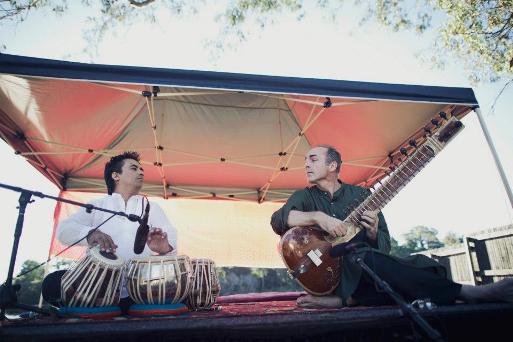
Mozart magic in Vienna
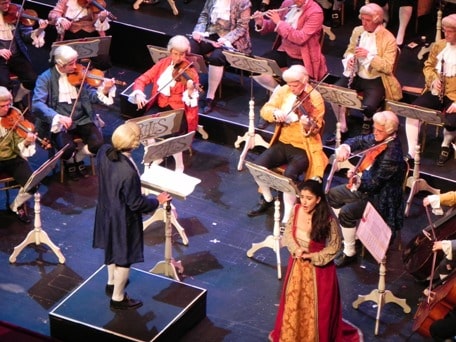
A historic city that abounds with memories of the legendary maestro

A musical note welcomes us from the moment we enter the Hall of Mirrors inside Schoenbrunn Palace in Vienna. It is from Mozart’s unforgettable creation Symphony no 40, played because it was in this particular room in 1762, that the six-year-old prodigy presented his first concert for Hapsburg Empress Maria Theresa. His legendary performance soon became the talk of the town and laid the foundations of his comet-like rise to fame.
This is one of many legendary tales that visitors encounter when visiting Vienna, the capital city of Austria, also touted as the ‘City of Music’. There is literary music in its very air, gifted by geniuses such as Hayden, Beethoven, Schubert and Strauss, all of whom at some point in their life lived, composed and played in this imperial city.
However, Wolfgang Amadeus Mozart appears to dominate the scene. There are several sites in the city which are deeply associated with the maestro, and by visiting them you not only come closer to Mozart, but also capture most Viennese attractions.
The Schoenbrunn Palace was a very special place for the whiz kid, because it was from this location that the Salzburg-born composer not only began his rapport with the royals, but also commenced a life-long empathy with Vienna. This baroque palace, now a UNESCO cultural heritage site, was built in 1642 as the former summer residence of the powerful Habsburg dynasty. The rooms shown to the public are mostly decorated in Rococo style, with its walls and ceilings covered with white-lacquered surfaces ornamented with gold leaves. The Bohemian crystal chandeliers, white porcelain tile stoves, Indian and Persian miniatures and other eye-catching fittings and furnishings garnishing each of the 1400-odd chambers, simply proclaim the opulence of the rulers and their taste for art and culture.
Mozart, at the age of twelve, again performed for Empress Maria who is regarded in Austria as the ‘mother of the nation,’ at the opulent Hofburg Palace, the Hapsburg’s winter residence in the heart of city. The vastness of this royal complex comprising of imperial apartments, museums, libraries, riding schools and churches, exhibits architectural development from Gothic to late 19th century styles, and is captivating. It is said that during the later reign of Emperor Joseph II when Mozart was living permanently in Vienna, he was a regular guest at this quarter. In commemoration of his long association with the royals, a statue of Mozart was erected in 1896, in the adjacent royal garden.
Mozart was born in 1756 in nearby Salzburg where he lived till 1781, before permanently moving to Vienna to pursue his career as a freelance musician and composer. One iconic site that intimately shares his life is the Stephansdom, the majestic cathedral revered as Vienna’s soul. It is here that Mozart married in 1782, his children were baptised, and after his untimely death in 1791, his body was blessed in the chapel within.
Mozart resided at various addresses in Vienna, but none of the buildings exist except the one at Domgasses 5, where he occupied the first floor apartment between 1784-and 1787. While living there he composed one of his most memorable operas, ‘The Marriage of Figaro’. Today, all floors of the building have been converted to a museum called the Mozarthaus Vienna. A shrine for his fans, the exhibits comprising of documents, pictures and memorabilia, provide comprehensive information not only about the composer Mozart, but also around him as a family man. While sensing the aura that surrounded this famous man, visitors also gather a good understanding about the cityscape and the lifestyle during his time.
It is interesting to note that while living in Vienna, Mozart began to organise his own concerts at various venues, inviting subscriptions from Viennese nobles of the time. It started very well; in 1784 his concert was sold out, but three years later seats were empty. He started performing at local cafes and one from the time, Cafe Frauenhuber, still exists. It is close to the site at Rauhensteingasse 8, where he lived his last years until passing away in 1791. The original house in which Mozart began framing his unfinished piece Requiem, has made way for a modern department store, Kaufhaus, but the site hasn’t lost its moving significance. Large crowds still gather at the site and while waiting in silence, one can surely visualise the maestro playing his violin or piano inside an imaginary building. Mournfully they walk along the street along which the maestro’s funeral procession headed towards St Marx Cemetery, Mozart’s final resting place. Some extend their journey to St Michael Church where his resurrection service was held, and the story goes that Requiem was first heard during that function.
Unfortunately Mozart didn’t have the opportunity to play at the State Opera House, one of the world’s most esteemed venues for musical soirees, as it was completed in 1869. However, no regrets for Mozart, as this grand auditorium opened with the performance of his famous Don Giovanni and recitals of several of his immortal compositions are regularly played there to mesmerise visitors. It is one of the best ways in which to end your odyssey to this music-loving city.
Tickets for these concerts are touted throughout the city by people dressed in period costumes. It doesn’t matter if you are not a connoisseur of classical music; an entry inside the large concert hall of the Opera House is a lifetime experience. Like me, you will be stunned by its lavish interior decorations that speak only of unmatched opulence. Patrons dressed in their best evening wear, performers on stage in historical costumes and traditional wigs, and the sound of music from their ensemble of violins, pianos and cellos, enshrines the entire audience in a magical atmosphere.
Something interesting happens to me when Symphony no 40 is played. It reminds me of a popular Hindi film song, Itna na mujhse tu pyar karo by Talat Mahmmod and Lata Mangeshkar from 1961, from the Bollwood blockbuster Chayya. The tunes appear to be almost the same. Through later research, I find that music director Salil Chowdhury was so inspired by Symphony no 40 that he skilfully introduced the melody in his song for the film, thus making both Mozart and the song memorable forever among lovers of music.
Travel Notebook
Getting there: Fly Singapore Airlines (www.singaporeair.com) via Singapore direct to Frankfurt or Munich, from where Vienna is well connected by train (www.raileurope.co.in). The trains in Europe are very comfortable and the journey provides a spectacular acquaintance with European countryside.
Accommodation: Ring Hotel (www.theringhotel.com) at Ringstrasse is located close to the city’s iconic sites
Best time to visit: July to October
More information: www.vienna.info
[geo_mashup_map]
Gen Y and mashed potatoes – a mad mix!


Gen Y… should I listen to you?
Dear Auntyji
I am an ambitious and driven 40-year-old female and I would appreciate your insight. I have a 17-year-old niece, who I love very much. She is very bright and creative, but she continually frustrates me with not having any idea about what she wants to do with her life after high school. She wants to go to university, but she is unsure of what she wants to study. I find myself getting continually frustrated after each conversation with Cheyenne, because each time I offer her some ideas, she shoots them all down. It would appear that not only does she not know what she wants, she has no idea about what she does not want to do. Talking to her about her future goals is like an exercise in trying to decipher the conversation of two demented people on heroin. I don’t know how she can’t know what she likes or dislikes. If I say study medicine, she crinkles her nose. If I say study business, she grimaces. I suggest teaching, and she shrugs. So I find myself feeling frustrated, but fortunately, because I only see her every few weeks, I don’t express my irritation at her. I think that being so bright, she should live to her potential and achieve something useful – instead of being like her mum and staying at home. What are your thoughts Auntyji? What is your proposed solution for me? Obviously, I love my niece very much and want her to be happy. Can you please give me some ideas on the best options here?
Auntyji says
Hmm. I can completely see your dilemma here. Say nothing and have Cheyenne meander through life, not knowing what direction to take, or say something and have Cheyenne think you’re an interfering aunt. First things first. As much as you are driven and ambitious and you only want a happy, fulfilling future for your niece, this is her life. You are living your life exactly how you want to, and you can provide guidance to Cheyenne, but you must not impose your expectations on her. If she wants to go to university and have a high-powered job, that’s a decision she needs to make. If she wants to stay at home and have babies and raise them without putting them in daycare, then that is her option as well. I suggest you start by changing your thinking. You are there to provide guidance to Cheyenne, if she asks for it. If she doesn’t, then leave it at that. Cheyenne’s crinkling of her nose and shrugging of her shoulders are signs that she is probably being polite and not wanting to say to you that really, she does not want to talk about her future career, she is currently stressed out about her HSC. So your job is to support her by saying that whether she wants to be a doctor, lawyer, engineer or housewife, you will be there to help her if she needs you. Then leave it at that. And please, don’t make sarcastic comments to her about how she will end up as a mere housewife, because that is doubly insulting. So, I suggest you re-orient your thinking, and leave Cheyenne alone. Talk to her about things that will decrease her anxiety, not increase it. So talk about fashion or TV shows. Leave it at that. If you want to be a hip aunt, you will need to step up your game, girly, and learn that your drive and ambitions are yours alone. There is no rule that says that this needs to be passed to the next generation.
*
One potato, two potato…
Dear Auntyji
My sister-in-law makes the best mashed potatoes ever, and no matter how much I try to recreate it, I can’t seem to perfect the recipe. I have asked her for her recipe, but she makes excuses and does not give it to me. Do you have a good recipe that you would like to share with me please, Auntyji? I love mashed potatoes and mostly have it for special occasions only (because I am mindful of getting fat). So can you help?
Auntyji says
Of course I can help you my little laccha paratha. I have a particularly good recipe that I am happy to share with you. But be mindful, this recipe is for those people who don’t eat mashed potatoes every day. If you eat this dish every day, very soon you too will become a golu matolu aloo yourself – all shapeless and jiggly with each step. To, pehle, take 4 medium unbrushed aloo. Now I am not fussed, but you will need to cook them till they are soft. You can cut them into chunks and boil them gently, or you can boil them whole, or steam them. Either way, the aloo must be cooked completely and drained well. Now, once cooked and while still hot, leave them in the pan, and add ½ cup of cream (the proper kind, not thickened) and about 75 grams of real butter (no margarine or any of that rubbish – get the best quality butter you can find). Then, mash it all up while on low heat. Turn off the heat and continue mashing until there are no lumps left. You can add a little more cream if the mixture appears a bit dry. The potatoes should be very fluffy and light. Once done, add a dollop of butter to the middle, and let it melt. Then serve. You will find this mashed potato so rich and tasty that you will want to eat it by itself. Which you should, but of course, with accompaniments, it is quite superb. Now remember, don’t do it that often, otherwise you will become a petu. Good luck with this recipe, I am sure you will love it very much. Write to me and tell me how it turned out for you.
Moving beyond cricket

The Indian community is moving away from the stereotypes in the sporting world to become involved in footy across various levels, writes RAJNI ANAND LUTHRA












When Trevor Banerjee arrived in Australia ten years ago as an international student, he found himself drawn to Aussie Rules Football. He thought at first it was because his extensive basketball and soccer experiences were giving him an advantage on the field. While that may have been true, he soon realised that what the sport was offering him, was a platform to connect with the mainstream community.
“There is an essential yaarana about AFL that I simply love,” he says. “It’s called ‘shepherding’: I have the ball, and if someone tackles me, my guys will protect me. On the field, your differences dissolve; you look after others like your own brothers”.
He got so involved with the game that he played in the 2011 AFL International Cup, pitching in as a local for a team from India, the Indian Tigers, that did not have enough numbers.
That experience urged him to want to launch a community team, to initiate Indian-Australians into the game.
Indians for AFL? You must be joking!
He got no support from the Indian community. No one will be interested, he was told; there will be no players, and no sponsors.
Today, his Masala FC is not only up and running, but has been winning games, attracting sponsorships and drawing players. Its players come not only from the subcontinent but also from Zimbabwe, Afghanistan and Russia. A junior team is on the cards, and Banerjee’s dream is that one day there will be a women’s team in the club.
“When I tell an Australian that I’m a part of an AFL team, there’s a sparkle in their eye which is priceless,” Trevor says.
Sport can indeed be an effective tool to help migrants integrate into society.
Contact sports have never had a large following among Indians – unless the traditional kabaddi can be considered one! But times are changing, with the mass appeal of these rubbing off on migrant Indian communities in Australia and New Zealand. South Asian-origin players are taking to AFL, Rugby Union and Rugby League at the lower levels like never before, and while we still wait for one of us to make a mark with the Baggy Green, who’s to say a footy or rugby player doesn’t get there first? Hey, if Chinese-American Jeremy Lin could excel at the National Basketball League…
It might be a thing of the past to say that Indians lack the physique for these sports.
Sport administrators have themselves begun reaching out to multicultural communities like never before.
A number of clubs are approaching the Indian community with opportunities to engage with their particular leagues.
AFL’s Essendon Football Club for instance is focussing on the north-west of Melbourne which has a sizable Indian population, with Dyson Heppell as its Indian Ambassador. It entered an Indian team in this year’s Unity Cup, which focuses on strengthening ties with Police, Muslim and other CALD communities through a mutual appreciation of Australian Rules football. The ‘Bharat Bombers’ won two out of their four games.
Richmond has defender Bachar Houli, a practising Lebanese Muslim, as its Multicultural Ambassador.
Other clubs have specially appointed multicultural development officers or community engagement officials to design programs to deliver specific outcomes to targeted communities.
Even smaller scale token efforts are making a mark, such as AFL’s invite to Bollywood actor Vidya Balan when she was in Melbourne earlier this year, to present the match ball to the referees before the start of a game. (She did so in a bright red sari with a backless blouse, the chill in the air notwithstanding. She admitted she was not familiar with the game at all, but that she was looking forward to the “eye candy”).
And in the midst of all these efforts, we have individual members of the community shining forth with flashes of brilliance, at various levels of the game. While some are starting to push through and make a mark, others are impressing simply with their passion and commitment to a game they did not know growing up, but have since embraced.
And in all of them, the lifting of the gaze away from the all-pervading cricket ball, to try a differently shaped one, is truly commendable.
Representing Australia in the Universities World Cup
Jason Ram is about to reach a milestone in his Rugby League career. Next year, he will have played for 25 straight years. And he is only 29 years old.
“If my body is still holding, I will definitely consider going further”.
Jason’s family moved to Sydney from his native Fiji when he was five years old. He had already been introduced to the game by an uncle who represented Fiji in Rugby Union. But when he saw his first game here in Australia – the Cronulla Sharks were playing – he was hooked.
Andrew Ettinghausen has been a lifelong hero.
“His speed and ability, those length-of-the-field tries, were something I wanted to replicate”.
In 2008, Jason represented Australia in the Universities’ World Cup as a Sydney Uni student, and this urged him to try out for Fiji’s national team. He didn’t make it ultimately, but won a chance to play in the American National Rugby League, for the Philadelphia team Glen Mills Bulls.
“A fantastic opportunity, it was a development thing for their players. I absolutely loved that experience”.
Has he ever felt disadvantaged due to his racial background?
“No, not really, but it can be good to know a few people here and there! Develop your talents and you will be noticed… they’ll be willing to take you on!”
Today Jason plays half-back with the Bass Hill Broncos. But currently, he’s nursing an injury.
“Last weekend I got poked in the eye, and two days on I’m just getting my vision back!”
His injuries list is rather long, Jason reveals.
“I’ve dislocated my right shoulder five times and my left shoulder six times. But you know, injuries are part and parcel of sport, any sport really. You’d think golf is not strenuous, but Tiger Woods has had double knee trouble, shoulders… The fitter you are, the less likely you are to get hurt, so look after yourself”.
Jason’s message to the Indian community is to get out there and get involved in the game, even as spectators.
“It’s a great game to watch, a wonderful spectacle, and can be a great day out. Support a local team, or an NRL team, and come join the fun!”
Making the first fifteen at Trinity Grammar
Manish Poologasundram, school captain at Sydney’s Trinity Grammar School has been a Rugby Union player since he was eight years old. Today he is in the school’s first fifteen.
“I started in the C team,” Manish reveals. “But there was great desire and much commitment, and the coaches saw my eagerness”.
In fact, the 17-year-old claims his rugby career so far has taught him that if he puts his mind to anything, he can attain it.
“That’s why I am school captain”.
What brought him to rugby?
“Rugby involves teamwork more than any other sport. Cricket is a team game but it is still played by eleven individuals”.
He adds that he has benefitted academically thanks to rugby.
“As a Year 12 student, I’m currently preparing not only for the HSC but also the IB, and am about to sit the UMAT. I’m ready for it all. Training 5 days of the week and playing on the 6th, I have a very tight schedule, and that forces me to have a very structured study routine. In fact rugby is a great break from studies”.
He counts rugby greats such as David Pocock, Nathan Sharpe, Martin Johnson and Chris Jack as his inspirations.
“Even if you have a little desire, I’d say, go for it, give it a try,” he urges. “My brother only tried the sport in his last year of school. He says it is his biggest regret that he did not play before!”
His mum Anjali is his biggest fan. “I did not follow the game till Manish played. Initially I was concerned about injuries etc, but he was always so keen, and my husband Hari was so supportive, I didn’t want to stop them”.
Manish dreams of playing with West Harbour one day.
Captain of the Under 16s
Damendeep Singh Aujla of Lalor, Melbourne, has just returned from a successful tour in Sydney at the NAB AFL Under-16 Championships. As captain, he took his team to a first-ever Division 3 victory, after being undefeated in all three games. Coach Anthony Koutoufides, former Carlton captain, described Damen as “one of the most talented boys in the team and certainly one of the better players in Sydney”.
Damen was discovered by AFL during a weekend camp in which 40 boys participated. He was among the 15 picked finally to make up the team for the Sydney event.
Damen comes from a family of sportsmen, traditional wrestlers who go back centuries. But this 16-year-old found himself loving footy at eight years of age.
“My friends got me into footy, and when I got a chance to play in the TAC Cup, I realised I was good at it and decided to put everything into it”.
With support from his family (who took time out to watch him play at Sydney), Damen dreams of future prospects in the game.
Currently, he trains 6 days of the week, and competes on Sundays, fitting his Year 12 studies around his sporting schedule
“He’ll definitely go far,” Coach Koutoufides says of him.
A NSW-ACT Ram
At the same event last year, Angad Roy of Sydney became the first-ever player of Indian origin to represent NSW-ACT, playing for the Under-16 Rams side. Angad is currently taking time off from the sport for school reasons, and is already feeling antsy at not having played in recent months. He trained with the Slater & Gordon Giants Academy for three years where he had Ryan Hulihan, who played 200+ games for Carlton, as coach and mentor.
“I am drawn to AFL (more than other sports) because of the fact that you have to be good at so many different things, such as kicking, handballing, fitness and pace,” observes Angad. “You need to have this to be successful and none of it comes without practice. This challenge has provided me with a work ethic not only in AFL, but in most parts of my life”.
He adds, “I have found I have improved a lot not only in terms of my AFL skills, but things like discipline, diet and the way I conduct myself overall”.
Life skills from rugby
49-year-old investment advisor Manjit Singh of Sydney was first exposed to Rugby Union as a young kid in Mumbai’s exclusive Cathedral and John Connon School, and continues to play to this day.
“At school I just wanted to be different because everyone else played cricket or hockey,” he laughs. “But I fell in love with the game. At that time India only had 10 teams that played, so as school kids if we wanted to play, we had to play against the men. I Didn’t realise at that time how important rugby was going to be in my life. In 1980, my family moved to Australia and I can confidently say that playing the game helped me make friends and to assimilate”.
Manjit played at school and with the Wahroonga Tigers, and later began to coach with the club.
Why rugby?
“Rugby is a very inclusive game with a great sporting spirit, one of the very few games in the world that brings players together rather than dividing them. Like most team sports it provides great life learning skills – working under pressure, working for the team, working with the team, understanding your role in the overall effort, and relating to people from all walks of life”.
Today he plays with the community-based Killara West Pymble Rugby club, and continues to coach.
“Coaching and Killara West Pymble is all about giving back to a sport that has given me so much,” he reveals.
Community efforts with Collingwood
As Collingwood Football Club’s Community Engagament Officer, Harmit Singh likes to tell people his job is all about educating new Australians about football.
“In my six years with the club, I have seen some 2,500 school kids in Victoria go through our programs,” he tells Indian Link. “We run clinics to teach the sport, bring the kids to the club for a look around, we give them tickets to games. We get the message across that football is a major part of Aussie life”.
AFL has been a major part of Harmit’s own life. He plays today for Morwell, and coached the Indian Tigers team for the 2011 AFL International Cup.
Something different from cricket
A practicing Muslim, 23-year-old Yasser Hussain is not playing footy in the ongoing Ramadan period. But he continues to be involved with Masala FC, and promoting the game in the Indian community.
Arriving from India as a 5-year-old, he had an early introduction to the game with Auskick, moving on to the Juniors up to the Under-15 level with the Glen Waverley Rovers and Under-17s with Northvale.
“My parents must really be credited with that initial push,” he reveals. “They wanted me to try something other than cricket! And luckily I found that my cricket skills transferred well to footy”.
Moving to Abu Dhabi for two years, Yasser played there when the Mid-Eastern League started off.
“That’s where I bumped into Ash Nugent and we talked about promoting the game in India”.
Yasser’s mum Aain is a regular at all his matches, and has won the admiration of his teammates.
“She wears her scarf to the field, bringing not only an Indian, but also an Islamic aspect to the game!”
Aain herself says, “Yes I am very involved and enjoy supporting my son. In fact, sometimes I cheer so hard that my husband begins to avoid me! Yasser is a die-hard fan of the game and has taken me to see the big games at the MCG”.
Dad’s approval
Ten-year-old Prithish Pancholi of Melbourne is very proud to declare that his team, Glen Waverley Rovers Junior Football Club, is currently “first on the ladder”.
His interest in the game comes through loud and clear as he rattles off his training schedule. He’ll tell you he likes the game because it’s lots of fun and a lot of his mates are on his team.
“I play in the back line,” he reveals. “I like it because the coach put me there, and also because the ball comes quite often”.
Do mum and dad come to watch him play?
“Dad does, and he shouts ‘Good job!’ from the sidelines”.
With reports by Ritam Mitra and Sujith Krishnan
Many cultures, one game
In a bid to recognise, embrace and encourage greater involvement of multicultural communities, the Australian Football League launched the 2013 Multicultural Round in Melbourne recently. Under the logo ‘Many Cultures. One Game,’ the AFL has implemented several initiatives to engage multicultural communities and promote social harmony.
“It is important the AFL reflects cultural diversity, providing an environment which welcomes people from all backgrounds to enjoy our game as supporters, players or administrators in the future,” said AFL Head of Diversity, Jason Mifsud, on the occasion.
According to Misfud, AFL remains committed to strengthening the landscape of opportunities available for their multicultural community group. “We are also proud to see AFL players from non-multicultural backgrounds supporting multiculturalism, as the entire AFL community, irrespective of background, strives to strengthen diversity, inclusion and cultural understanding in our game,” he said.
Over the year, several multicultural talent academies were held in each Australian state and an Under-16 world team was selected to participate in the NAB AFL championships held in Sydney to coincide with the multicultural round. Under the Australia Post AFL Multicultural School programs, the AFL Multicultural ambassadors have visited 300 schools and brought thousands of culturally diverse people to the game by teaching football skills and reinforcing key themes of leadership, harmony and respect.
The AFL Multicultural round 2013 initiatives include the use of orange flags by umpires to represent social harmony, half time games between junior multicultural teams, and cultural diversity forums being organised in various states. They also include sporting events and programs to introduce the game to international students and consular staff from various countries, and inclusion of performances from multicultural artists.
Preeti Jabbal
Rocking for the Sevens
Young Rocky Khan is being lauded as a player of repute in the Sevens, by MALLIKA GOEL
Twenty-three year old Auckland-resident Rocky Khan isn’t just any ordinary rugby player. He is the first Fijian of Indian ancestry and also the first Rotuman (an island of Fijian dependency) to represent New Zealand in the Wellington Sevens. It’s a big deal! Players of Asian background or descent in any form, are a rarity in top rugby ranks. And the Sevens, with its spot firmly entrenched in New Zealand’s sporting calendar, not to mention cultural scene, may not be the All Blacks proper, but it’s pretty damn close. The event attracts over 30,000 spectators annually. A fast and furious version of rugby, Sevens matches are shorter than their rugby union counterparts, with each game running for two seven-minute halves (the final is played over two 10-minute halves), instead of the usual 40. There are also seven players instead of 15. 16 international teams compete for points that go towards the world series.
The event has become known as much for the sport, as for the creativity and celebration that surrounds it. Today the Sevens is about celebrating the diversity of New Zealanders, in all their shapes, sizes, costumes and backgrounds. And with New Zealand’s massive ethnically diverse population – the fastest growing of which is Asian – it is appropriate (if not long overdue) for some of this cultural diversity to come through on the field.
When questioned about his unique position and all the historic ‘firsts’ he is making, the young player comes across as pretty modest.
“I am young and have a long way to go in the game,” Rocky says. “Obviously, I would love to play for New Zealand as I grew up an All Blacks fan but yeah, I’d still consider the offer to represent Fiji if it came my way”.
Rocky might downplay the significance of his role in having made the big leagues – but the rest of his homeland certainly isn’t. With headlines like ‘Let us rock you’ and ‘Living the Dream’, it is evident that he’s making waves across the board. Rocky’s success could help other kids realise their dreams too. To say New Zealanders are fanatical about their rugby would be an understatement; kids grow up living and breathing it, and dreaming of being an All Black. Rocky Khan has just shown New Zealand’s migrant population that anything’s possible: “Just keep working hard, and doing something everyday that will help you achieve your goals and don’t stop doing it until you’ve reached that goal,” is his advice.
A koan for a happy life
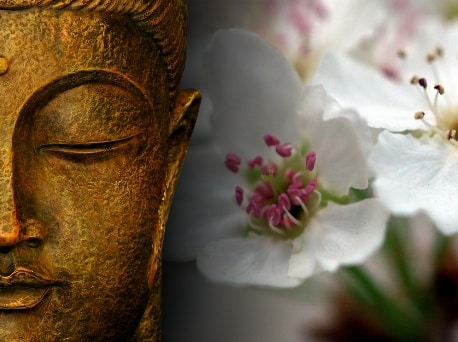
A simple strategy to cope with those times in life when we are stuck in a seemingly hopeless situation, writes SAROJA SRINIVASAN

A ‘koan’ is defined as a paradox to be meditated upon that is used to train Zen Buddhist monks to abandon ultimate dependence on reason, and to force them into gaining sudden intuitive enlightenment.
In everyday life we may not actively seek spiritual enlightenment, but we certainly need ideas and strategies to get through an impasse, when we feel ‘stuck’. Every situation that produces uneasiness and conflict within our minds needs attention within a framework that will help reduce this uneasiness. At such times we need to ask ourselves, “What is my expectation of this situation?”; “What limitations do myself and others involved have?”; “I need to accept limitations however unacceptable they are, by limiting my expectations”.
To maintain peace within oneself, regardless of whatever the situation may be, applying a simple koan of three inter-related words summarises the direction we may need to take. At a point when things are at a standstill, our thinking has to change if we have to progress.
These three words are: Expectations, Limitations and Acceptance – accept limitations; limit expectations; expect the unacceptable.
Acceptance
This word seems to appear in our thoughts in a negative way – passive, giving in, inaction, failure, dejection, long suffering, uncomplaining, compromise and a sense of hopelessness. Yet, whatever situation we find ourselves in, the undeniable fact is that we are already there. Often we are unable to retract immediately, or may not be able to even in the future. We act within the ‘given’ of that moment, maybe through outward actions like impulsively saying something rude, acting in a hostile manner, or privately thinking of someone’s action in a negative way and later finding it to be wrong.
At such times, the only avenue to move forward is to start at that point. This requires taking stock of everything instantaneously, and accepting the given of that moment. For example, being in a situation that has become difficult many years after a decision was made and finding it intolerable at present, one may not be accepting of it and go back to delving into the past, often ruminating ‘if only…’, ‘maybe…’ which is totally fruitless, and in fact only increases present frustration.
In relationship conflicts, many find that even after repeated requests for others to change, or even after being verbally harsh, they do not even make an effort. The only solution would be to accept the person as they are, and not how you would like them to be. Accept, keep cool and move on.
Limitations
In an ideal world we do not have any limitations – mentally the capacity of our brain and mind is so vast and untapped that anything is possible within the confines of one’s mind. The common saying, ‘the sky is the limit’ cannot always be applied to everything. On a practical level, limitations abound. From the trivial to the most profound, life constantly throws at us circumstances that are totally beyond one’s choice or volition.
The limitations that confront us may be financial, physical or geographical. We may lose our capacity to earn an income or as we age, we cannot do many things as well or as fast as we did earlier. These are limitations; we can win over some, but not others. Such limitations may be present for others with whom we live or work.
Repeatedly we try to overcome limitations that are beyond changing, and feel frustrated. We may be aware of alternatives for some of these issues, but we are unwilling to accept them. We constantly keep moving the goalpost, wanting better things or have a fanciful hope that somehow things will change despite the odds against us.
We have limitations and so do others, and we need to accept them.
Expectations
We all have expectations, some appropriate and some not; some realistic, others fanciful. People will often say they do not have any expectations – it’s not true. We do have expectations, either of ourselves or others. More often than not it is in our expectations of others that our disappointments arise. For perfectionists, it is their expectation of themselves that creates problems.
We expect most people to behave responsibly, respectfully or with understanding. Others expect the same of us. Sometimes these expectations come from social conditioning within our own subcultures that have become ingrained, a right to be demanded. This is where problems arise. Many expectations that were appropriate earlier in different circumstances, may not be appropriate now. For example, the roles within the family in a changing world may be completely different to what they were when one was growing up.
Even if some of these expectations seem unreasonable, we continue to hold onto them. Perfectionists expect themselves and others around them to be perfect in everything all the time. Surely this is almost impossible, for many things have several unknown limitations of which we may not even be aware. The sense of disappointment and frustration when unreasonable expectations are not met, is indeed profound.
In a positive sense, high personal expectations can motivate people to make concerted efforts and persevere to achieve great heights, but when they are unreasonable they completely backfire and can be distressing.
We need to limit expectations of ourselves and others; accept limitations and sometimes, expect that unacceptable things will happen.
Somehow applying this koan to any situation, however trivial, allows one to navigate through the journey of life, enjoying calm seas and riding through everyday storms.
Yapping saves lives
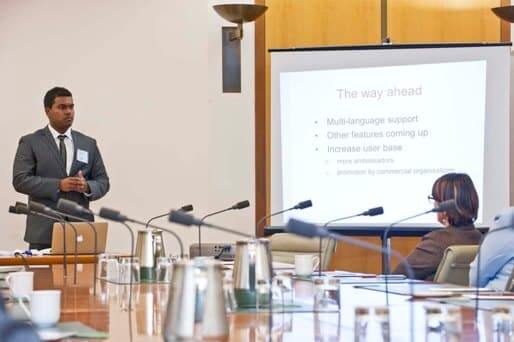
Parliament House applauds a special app by a young developer that assists in self-detecting the early stages of breast cancer

Sanjay Sreekumar is not your average software engineering student. Just nineteen years old, Sanjay has recently developed a smartphone app that assists its users in self-detecting the early stages of breast cancer. On June 25, the app was inaugurated at Parliament House in front of not only Federal MPs, but also ambassadors of several countries as part of the Australian Parliamentary group, Federal Parliamentary Friends of Breast Cancer Awareness among Young Adults. Sanjay, who presented the app at its inauguration, developed it with the assistance of a team in order to promote the YAP (Young Adults Program), a charitable organisation that encourages healthy behaviour in young adults.
Breast cancer is one of the most common types of cancer, with Australian women exposed to a 1 in 8 lifetime risk of contracting the disease. It is estimated that 14,940 Australian women and more than 100 men will be diagnosed with breastcancer this year. Most women survive breast cancer, with the five year survival rate for women diagnosed with breast cancer being 89%. However, early detection remains crucial, and that is what Sanjay’s app named ‘Yap App,’ is aimed towards.
Yap App features a number of slideshow screens that guide users through breast self-examination. At the end of the self-examination process, users are prompted to record any abnormalities they came across, allowing them to save the information for future reference, which could be particularly useful for doctors. Yap App, which is targeted at young adults who lead busy lifestyles as a result of studies or other extra-curricular activities, also reminds users to conduct the self-examination every month.
Sanjay started building the app a couple of months ago after a conversation with his father, who was heavily involved in promoting the YAP program. It seemed natural to Sanjay that in order to promote YAP, it should be “accessed by tools that youngsters use” – such as a smartphone app. After his father brought the app idea to YAP directors Roz and Peter, Sanjay was given the green light to go ahead and design the app, an opportunity for which he is extremely thankful. He has already designed a number of apps and websites with the assistance of his own local development team, but the thought of making a difference is very important to Sanjay.
“This started as a passion, and now it seems it is growing into a business,” Sanjay says. “These days I get lots of requests for apps through my website SanjaySreekumar.com. Currently I am making two game apps, which are fascinating me to the core, but nothing fascinates me more than the app that I built for YAP. I feel I am saving hundreds of human lives just through that app. I would like to thank the YAP team for accepting my offer to build the app for them”.
Although studying software engineering has helped Sanjay to a certain extent, he has had to rely on his own devices for much of the journey. “I had to read and understand everything myself. However, it was not that difficult. I had the drive to learn, since the idea of saving lives really drove me. The Yap App is free, and I would like it to be free so that the app is available to everyone in any country, thus serving its purpose well,” he added.
One of the most exciting events for Sanjay in the development of the app was its inauguration in Parliament House. “I was thrilled and over the roof when I heard that my app was to be inaugurated in the Parliament House. Even more exciting was when I was asked to present the app before MPs and Ambassadors from many countries. Everyone present offered their support and promised to promote and support the app, and also the YAP initiative. Ken Wyatt MP, mentioned that he would promote this with his full heart,” said Sanjay.
Sanjay has several plans in mind to improve the app – and he’s getting help from one of the best in the business.
“Google has come forward to provide their assistance in making the app even better by providing me with valuable suggestions,” he revealed. “I had discussions with their experts and many advanced features are being incorporated now”. Some of these features include adding a ‘panic’ button to allow users to locate their nearest medical facility, and multiple language support.
Leticia Lentini, Google’s Australia/New Zealand Events and Brand Marketing Manager, was particularly impressed by the app, mentioning that it was a “good example of ‘how do you use technology for good and how do you use technology to spread the word’”. www.yapstuff.org, the home of the YAP initiative, has been supported by Google grants since 2005.
In the meantime, Sanjay wants to mass promote and market the app in order to reach a wider range of people. “Many businesses, shops and other organisations would be interested in supporting and promoting this app,” he says. “But many of them would be quite interested in promoting this if they get some business advantage too. Our app provides such organisations a tool called ‘App Badging’. Organisations that promote the app get exposure by having their business image displayed in the app”.
As for his personal plans for the future, Sanjay is noncommittal. “My parents always gave me freedom to pursue the career of my choice, and I wanted to be a computer assembler. Later, my interest changed to software, and my parents were always with me. My interests might still change. Currently I am really looking at a career in software development,” he says.
To anyone out there who is interested in creating apps, or exploring other interests that they’re at all unsure about, Sanjay has words of advice, “I would like to suggest this to my young friends: One, do only what you like to do. Two, find a good mentor and three, stick to their advice no matter how hard it might seem initially,” he stated.
This could be your story!

Originality of presentation, subtle humour and realistic characterisation makes this play a winner

The youth group MAYA Youth in Performing Arts staged their play About A Brown at NIDA’s Parade Theatre on July 12-13. The evening show on July 13 was packed to capacity with the foyer in the theatre bustling with all kinds of drama/art enthusiasts and in all colours – not just brown, but black and white too! After a very informal introduction by director Lakshman Nirthanakumaran and producer Maathumai Nirmalendran, the play began with the narrator introducing the main protagonist, Abhinav and the typical morning in a ‘subcontinent’ family. From the get go, the characters built a rapport and a connection with the audience, as they drew them into their fold, discussing their problems, seeking for solutions and at times even making the audience their confidants. The omnipresent narrator injected humour into every conceivable situation.
About A Brown is the story of Abhinav and the different people in his lives. Not all of them are important to him, but each one of them comes with a message. While Abhinav is the typical run-of-the-mill character who is mollycoddled by his mum every morning and is in a constant fear of disappointing his parents, his brother Varun flatters himself into thinking he is ‘the guy’ that girls would be interested in. Unfortunately for him, reality is a far cry from his fantasy. In fact, his parents decide to find him a bride who he fears would soon turn into a ‘curry mummy’ and haunt him forever. Then there is Ariya, who falls for the wrong guys all the time and stresses over it. Poor Ariya! She just can’t help herself. Her friend Ash is so consumed in self-pity that she is even unable to enjoy the party she hosts for her own benefit. Then there is Pradeep, a self-proclaimed poet and the focus of Ash’s affection. And of course Nikhil and Boots – Nikhil who can’t stop talking about becoming a doctor and rattling out his family lineage crowded with doctors at the drop of a hat, and Boots who is always looking for her runaway cat (she decides to buy a pup by the end of the play). At one point, the writer even manages to introduce a typical love triangle of sorts where Pradeep is in love with Ariya and Ash is in love with Pradeep. As is customary, the play ends with all knots untied and all messes untangled.
About A Brown is more than just a play, in fact it is a juxtaposition of a play within a play, and a playwright in search of a credible story. Most of the ideas/concepts presented are mundane, but the originality of presentation laced with subtle humour lifts it to a different level, making it an unforgettable experience. The characters of the play relate so closely to real life personalities that the audience may have been laughing at themselves or the situations in which they may have often found themselves!
The live band, singers, dancers, the deft and quick change of scenes and stage management all gelled well and appeared synchronised.
About A Brown came with the message of multicultural synergy and crossing all boundaries to serve the greater good. The choices one makes defines one’s personality, reflects one’s culture and conveys how ‘Brown’ one’s life may be.
MAYA, Youth in Performing Arts supports the International Medical Health Organisation, and through the staging of the play, raised nearly $15,000. To make this possible, the organisation was supported at every step by the local community and some very philanthropic organisations and individuals. The caste and the crew minimised all sorts of overheads by using community venues for rehearsals and pooling in resources for props, etc. The project not only showcased the talent of over 80 young people whose contributions at different stages and in different roles made the play a reality, but brought to the forefront the power of youth and what can be made possible when actions are driven by determination, and the desire to make a difference in the lives of those in need. Every member in the audience walked out of the hall with a smile on their faces and a grin of satisfaction. That is a mighty achievement.
Photos: BAVE; Cowlickflicks
Crediting the editor

Young Amardeep takes on the challenge as guest editor at Time Out and delivers an impressive issue

At just 9, Amardeep Gill has achieved a feat many can only dream of. He has become Australia’s youngest editor by bagging the spot of guest editor for Time Out Sydney magazine. To coincide with the July school holidays, Time Out was looking to create a kids’ edition, and ran a competition for a child guest editor.
Year 4 student Amardeep found out about the competition through his mum who heard about it on ABC radio.
He told Indian Link how he went about entering the contest.
“I completed an application form on the Time Out website. I had to tell them about myself, my favourite foods, what I liked doing in my spare time, about my local area, and who I would like to interview most – I wrote down Anh Do. Unfortunately he is out of the country and I was unable to interview him. Once shortlisted, I had to attend an interview with Time Out editor Joel Meares and kids’ editor Emma Joyce at their office in Glebe”.
Amardeep competed against dozens of aspirants for the coveted position. Finally, out of the seven shortlisted candidates he was declared the winner, claiming the prize of a Merlin Family Annual Pass: 12 months unlimited entry to 11 top Australian and New Zealand attractions including Sea Life, Sydney Aquarium, Wild Life, Sydney Zoo, Madame Tussaud’s and Sydney Tower Eye. He also won a family pass to see the musical The Addams Family with a backstage tour and an opportunity to meet the cast. And this was in addition to the privilege of editing Time Out Sydney.
So what impressed the judges most about him?
“I think my idea of kids’ food in restaurants was original as they (the judges) hadn’t thought of that before. I had a very strong view on the kids menu, and eating out, which they liked. They were also impressed with what I was wearing (mustard slacks and checked button down shirt). They thought that Anh Do was an interesting choice for an interview. They also liked the idea that I enjoyed doing quite a few things around my local area and the city, for example, bush walking, nature trails, and visiting the Maritime Museum and Art Gallery of New South Wales. I also enjoy going to the theatre and watching live sports like soccer and cricket,” Amardeep answered articulately.
When he received the phone call informing him of his success, Amardeep could not believe his ears. “I was jumping up and down in joy. I couldn’t believe that I had been chosen for this fantastic opportunity. I had to phone dad and my grandparents immediately,” he recalled.
A couple of weeks after winning the guest editor’s position, Amardeep was invited to the Time Out office to look at the magazine, meet the staff and chair a meeting to discuss the front cover of the magazine.
“Over the next couple of weeks, Joel asked me to write my own article titled ‘Amardeep’s Top Picks’- about kids menus in a selection of different restaurants, an Editor’s letter introducing myself to go in the first page of the magazine, rank the ‘Top 13 things to do before you are 13’ list, add my own ideas and check the whole magazine before it went to print,” explained Amardeep, outlining his role as the guest editor.
His stint at Time Out Sydney started on June 4 and by June 8 he was editing emails, continuing to work tirelessly until the magazine was published. Amardeep’s time on the editing team ended on a high note with an interview on Channel 7’s morning show on June 26, to announce the publication of the special children’s issue.
Asked to sum up his experience as a guest editor of Time Out Sydney, Amardeep reflected, “I found the job to be a lot of fun, even though I had to do quite a bit of work. It was an interesting and exciting experience. The team was very welcoming, organised and friendly. They were also quite funny and when it ended I was really, really sorry to go because working with them was just so great!”
Now that the children’s issue is out, Amardeep feels it has been “a huge success”.
“Everyone wants to know what a kid has to say about Sydney; the restaurant article especially attracting a lot of interest. Everybody who has seen it is very proud. Lots of my friends and teachers have bought copies, and found it good to use during the school holidays”.
Speaking of the reaction of family and friends on his success, Amardeep said, “they were as happy as me, and were very proud of me. My teacher announced it in the school newsletter, and showed my class. My classmates watched me on TV and gave me a standing ovation when I got back”.
He enjoyed the experience so much that Amardeep wishes for a similar opportunity again. His passion for writing makes Amardeep want to consider becoming an author or a journalist when he grows up, or maybe even an editor!
Visa deportation scam


Migrants and visa holders have been warned by the Australian Competition and Consumer Commission (ACCC) about a recent scam, whereby victims are threatened with deportation if they do not pay $900 to the scammers.
The scammers claim that the person they are calling does not have a “citizenship and immigration services alien” (CISA) number, which is fictitious.
Delia Rickard, ACCC deputy chair, says there has been 60 reports of the scam so far this year.
A Department of Immigration and Citizenship spokesman said “The Australian Government will never call you to demand a payment in relation to your visa so if you receive this call, hang up”.
Call the Immigration Dob-In Line on 1800 009 623 if you receive a similar phone call.
From Coogee to Tilak Nagar
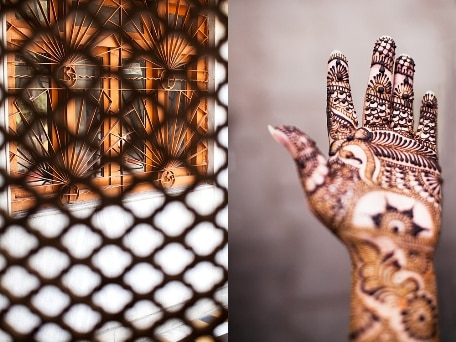
Louise Hawson’s vivid photographic exhibition 52 Suburbs Around the World goes beyond cultural clichés to explore the “real” side of suburbs including India and Australia








Photographs copyright of Louise Hawson
In a quest to explore the uncelebrated neighbourhoods of the world, Sydney-based photographer Louise Hawson explored 10 countries, 14 cities and 52 suburbs with her daughter Coco, all in just one year. Her photographs, almost entirely diptychs, are currently being displayed as the exhibition 52 Suburbs Around the World at the Museum of Sydney, and present images of the ordinary suburbs of Australia up against those of India.
“I’m motivated to explore the ‘unfamous’ side of a city by a child-like desire to be surprised and to make discoveries, rather than follow a well-worn trail where things have already been discovered a zillion times,” says Hawson. “I want to observe real life, so venturing into neighbourhoods where there’s normal life going on is much more satisfying to me”.
Hawson’s quest to “capture the beauty that exists in an apparently ordinary world” was ignited after her project 52 Suburbs of Sydney, where she explored the lesser known suburbs of her home town. This trip in turn was propelled by a bite from a white-tailed spider, which lead Hawson to change her career path to photojournalist.
Her trip around the world in 2012 included Hong Kong, New Dehli, Istanbul, Paris, Rome, Berlin, New York, Los Angeles, Tokyo, Kyoto, Auckland, Wellington, Melbourne and finished up Sydney.
“Yes, they’re all famous ‘over-photographed’ cities; [but] my mission is to paint a more imaginative, intimate picture of them than you normally see,” she said at the start of her trip on her blog www.52suburbs.com. Hawson’s aim was to “ignore the postcard clichés and focus instead on finding ‘ordinary’ beauty in the places where ‘ordinary’ people live”. This can be seen in the exhibition, which presents 100 (of the 30,000 photographs taken on her trip), simply displayed photographs on fine art raag paper. Eight vibrant photographic prints of New Dehli, and seven of Melbourne and Sydney are included as part of the exhibition, which explore the differences between countries and cultures, as well as the remarkable similarities.
This effective presentation of 52 Suburbs Around the World, presented by Sydney Living Museums, allows the photographs to speak for themselves and are split up into cities. More images can be seen in the slide show that is part of the exhibition, as well as on her blog.
Hawson enjoys using diptychs, which are two images presented side by side (presented with a caption) because they are “a playful way of presenting images that allows me to make connections between seemingly unrelated things and to tell ‘mini stories,’” she says. “I often juxtapose people with the built environment, making a connection through a shared texture, colour or shape – anything that unites the images and creates a new meaning”.
Interesting points can be made from the photographs of Indian Australians living in Melbourne and those in the New Dehli images. “What I also keep being surprised by is that as abysmal as the built and natural environments can be, there is so much beauty in the people, the saris, the temples and the street food,” says Hawson. “And in the case of Lajpat Nagar, the art that may fade quickly but will leave an indelible mark on me forevermore”.
As director of Syney Living Museums, Kate Clark said in her exhibition opening speech, the exhibition displays an “extraordinary mixture of cultures”. It also shows Hawson’s interest in the cultures found in Australia compared to the original cultures that they derive from overseas. Her celebration of the beauty of the ordinary suburbs goes beyond the usual cultural clichés found on postcards and forces the viewer to suspend any preconceived notions.
Although the “world is an imperfect place, when you spend a year walking the streets… you find beauty in unexpected places… find hope, and joy that exists, despite the many problems” Hawson says. 52 Suburbs Around the World allows the viewer to explore these lesser known neighbourhoods of the world’s famous cities, and join in with their inhabitant’s daily rituals. “Explore + photograph + share = my idea of a good time,” says Hawson, which sums up her exhibition.
20 July – 24 November
Museum of Sydney is open daily 10am – 5pm
52suburbs.com