


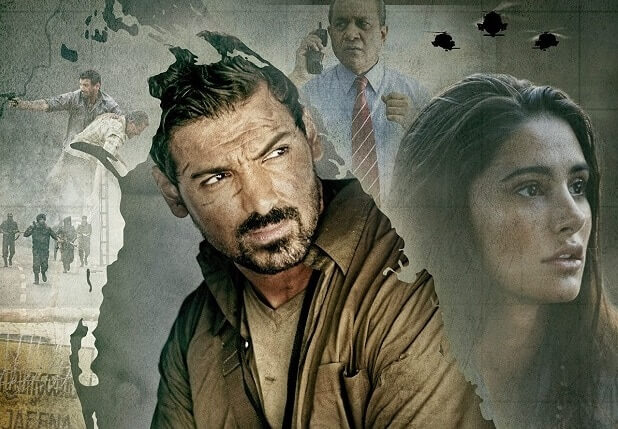
Film: Madras Café
Cast: John Abraham, Nargis Fakhri and Raashi Khanna; Director: Shoojit Sircar
Rating: ****
If only history could be changed by art. Cinema is a powerful medium for socio-political expression and revolution. Alas, in India, entertainment engages all other aspects of life on celluloid.
But seriously, it’s time now to get off the Chennai Express and get into Madras Cafe for a cup of the compelling. We need a reality check. And we need to regain a sense of history in Bollywood cinema which seems lost in the hoary art of streetside tamasha, glorified and aggrandised by cinematics that are perceived to be the elixir of pop culture.
It is time for mainstream entertainment to grow up. Heightened realism is a means to achieve a synthesis of fantasy and history in this deftly scripted semi-fictional account of the processes leading to Rajiv Gandhi’s tragic assassination in 1991.
The trenchant script, co-written by Somnath Dey and Shubendu Bhattacharya, attempts and succeeds in building the same spiral of pseudo-history that Oliver Stone built in JFK. I feel Indian politics, because of the country’s multi-culturism, is far more complex than its American or European counterpart. Our cinema tends to dilute, simplify and trivialise history because we are much too wary of and lazy about getting involved.
Not Shoojit Sircar. Not Madras Cafe. Not John Abraham. What a courageous producer and actor John has proven himself to be! More of that later.
But first the plot.
Let me say right away, that to understand the enormity of the story told in Madras Cafe, the audience ought to be familiar with the violent history of the Sri Lankan civil war. But even if you don’t know that thousands of Tamilians died in the war of separatism, it is no sweat off the screenplay’s back.
Tucked away in the compelling creases of the plot is a terrific thriller about the assassination of a prime minister, who, let it be known, is not named in the film. Nor are the LTTE (Liberation Tigers of Tamil Eelam), Prabakaran and the other key players. But then this is India. Here, secrecy and stealth are the founding fathers of any political expose.
But you can’t escape the clutches of history’s tyranny. Sircar’s skilful weaving of fact and fiction leaves little room for scepticism. We know as we watch with helpless astonishment, that the ‘Prime Minister’ will die, that the hero in this case won’t be able to save him.
Such are the heroes in real life. Unsung, sizes smaller than life. John Abraham skips into the part of the RAW agent Vikram Singh with an ease and comfort of a natural-born secret agent. If James Bond or for that matter Kabir Khan’s Tiger were to have any truck with real-life politics, they would have been as believably brave and as credibly heroic as John in this film.
Every actor seems to take a cue from the vast resources of authenticity at their disposal. Specially riveting is Prakash Belawade as John’s associate, who seems to drink hard to escape from the enormity of his compromise. Even Nargis Fakhri, so self-consciously affected as Ranbir Kapoor’s doomed soul-mate in Rockstar, nails her war correspondent’s part with her radiant presence. But I have a quibble with her character Jaya. Why does Jaya speak in English while Vikram answers in Hindi?
The linguistic puzzle never quite obstructs the devastating drama of war violence conspiracy and betrayal. These are dramatic points of political reckoning. And yet Sircar keeps the proceedings subdued and low-key. It’s a miracle how Sircar’s narrative voice never gets shrill even when the occasion is so ripe for over-statement.
Much of the credit for the tonal correctness of the narrative must go to Kamaljeet Negi’s brilliantly unadorned cinematography, which locks in on stunning visuals of violence and espionage-related action without falling into the mistake of making the frames look prettier than the grim situation that they are meant to capture.
Sircar’s editor Chandrashekhar Prajapati imbues a documentary style to the footage. But the sense of cinematic expansiveness is retained in the way the camera moves through the characters’ restless lives, searching for positions of comfort in a situation laden with desperate anxiety.
There’s a whole lot of stifled drama in Madras Café. When a key character dies in the second-half, the tragedy is handled without fuss. John’s tight-lipped performance gives the film a sense of tragic grandeur. We constantly feel we are in a territory where drama has no place. The soundtrack is exceptionally honest. Shantanu Moitra’s background music underscores every scene without hammering in the emotions.
Madras Cafe is a dark deep and satisfying film about the politics of separatism. The film doesn’t take sides. If it is against anything, it is the culture of violence that nations often feed into neighbouring countries for their own gains. This film opens up the hitherto unexplored genre of political drama in Bollywood.
After Vicky Donor, we know Sircar is comfortable exploring innovative cinematic territory. Here, he tells an edgy disturbing provocative but rational and fair-minded story that takes mainstream Bolywood cinema kicking and screaming into a new horizon.
This is cinema signifying a coming-of-age with unforgettable visuals and drama and a rousing mature career-defining performance by its leading man.
Get off the train, baby. This is arguably the best political thriller that Bollywood has so far given us.
Subhash K. Jha
Exceptional political thriller
I’m a clutter-breaker: John Abraham and more

I’m a clutter-breaker: John Abraham
John Abraham, whose latest production Madras Cafe was under attack from Tamil activists for allegedly showcasing LTTE cadres as terrorists, says he always wanted to break clutter with his films. And the courage to do so comes from his audience.
His debut production Vicky Donor dealt with the sensitive subject of sperm donation in a lighter vein, and Madras Cafe is based on the Sri Lankan civil war. While one entertained, the latter is aimed at engaging.
“Very frankly, the courage to be a clutter-breaker comes from the audience. Vicky Donor was widely accepted. It really doesn’t matter if some political organisations object to my (new) film. It’s up to the audience to accept or reject the film,” John said.
Madras Cafe, which features John as a RAW agent and Nargis Fakhri as a war correspondent, released this month. Theatre owners in Tamil Nadu refrained from releasing either the Hindi or the Tamil version fearing protests from Tamil activists.
Isn’t it a tough situation for a new producer like you?
“I am new to the business. But if I’ve to be a clutter-breaker, I may have to make political statements. As a filmmaker, I must be allowed to have my say in a democratic nation,” he said.
Farah hopes SRK will loosen the purse strings for Happy New Year
Choreographer-director Farah Khan hopes the success of Chennai Express helps her next directorial venture Happy New Year, which she is making with Shah Rukh Khan in the lead role.
SRK co-produced his Chennai Express, which had Deepika Padukone in the female lead, with UTV and the romantic comedy is reaping gold at the box office. Farah is interpreting the success of the film as good news for her movie because the Bollywood Badshah is producing her project as well.
“I am very happy at the success of Chennai Express. It has broken all records. Shah Rukh is the hero and producer of my film. Now he will come on the sets of my film filled with more energy and hopefully will shell out more money for my film. I am very happy,” Farah told reporters jokingly.
Farah is repeating the hit pair of SRK-Deepika in Happy New Year. She worked with them in Om Shanti Om, which also marked Deepika’s debut in Hindi filmdom.
Farah also informed Happy New Year, which also stars Abhishek Bachchan, is set to go on floors next month.
“The schedule will start September 1st in Dubai,” said Farah.
For laughing out loud! Comedy grips Indian TV
If laughter is the best medicine, Hindi general entertainment channels (GECs) are using it to the hilt to woo audiences. They are serving comedies in new formats, using fresh storytelling techniques, funnier gags and laughing all the way to the bank with soaring TRPs.
The demand for light-hearted shows can be estimated from the fact that Comedy Circus is in its 16th season and has also entered the Limca Book of Records for being the longest running reality comedy series.
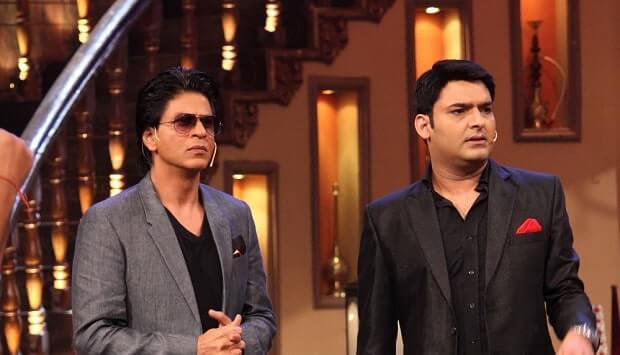
If that is not enough, stand-up comedian Kapil Sharma’s show has caught the fancy of non-traditional GEC-viewers and it has been extended owing to its popularity, while SAB TV has dedicated itself to just comedy shows.
“The audience wants to laugh and this is why the trend of comedy shows is on a high on TV,” said Kapil, host and producer of Colors’ Comedy Nights With Kapil.
“I’m the same Kapil who is doing comedy on Indian TV since many years. But the only difference is that I’m selling comedy in a new way and this is what people are enjoying. My comedy is not, my packaging is new,” Sharma told IANS.
His show boasts of top Bollywood celebrities and an audience full of youths as he focusses on issues which affect the common man.
It’s true that Shekhar Suman’s once cult show Movers & Shakers had an almost similar vein – he too picked up issues concerning the common man, but there’s something definitely new about Comedy Nights With Kapil.
TV also offers a platform in a big way to stand-up comedians – Raju Srivastava, Bharti Singh, Sudesh Lahiri, Krushna Abhishek and Sunil Pal, to name just a few.
As far as heartwarming ‘dramedies’ are concerned, the 1980s and 1990s saw many: Yeh Jo Hai Zindagi, Dekh Bhai Dekh, Hum Paanch, Flop Show, Shrimaan Shrimati, Zabaan Sambhalke, Office Office, Tu Tu Main Main, Yes Boss and Sarabhai Vs Sarabhai.
Cut to the 2000s. Shows like Khichdi, F.I.R., Malini Iyer, Kareena Kareena, Comedy Circus, The Great Indian Comedy Show, The Great Indian Laughter Challenge, Lapataganj and Taarak Mehta Ka Ooltah Chashmah cut through the clutter of saas-bahu melodrama to give TV viewers bouts of laughter.
With loads of fun and clean content, the comedy makes for a viable family-viewing experience.
Actor-producer J.D. Majethia of Khichdi fame believes the space for comedy shows has grown manifold over the years and it is pleasant to witness the boom in the number and kind of sitcoms and how they have entered the weekend programming.
The direction in which comedy is heading on the small screen is “perfect”, says producer Asit Modi, known for the much-loved Taarak Mehta…. However, it is a difficult genre, and sustaining its charm requires special skills.
“We need actors and writers with special skills for comedy. Everyone can’t make people laugh. India lacks adequate creative talent for comedy. There’s scarcity, and so the scope of the genre is limited. Moreover, to do clean comedy for TV is even tougher,” Modi told IANS.
His Taarak Mehta… has been running successfully for over five years, and it has crossed the 1,200-episode mark.
“New ideas from new people always help. As long as you give freshness and variety, things will work,” explained Modi, who also added that the basic ingredients of a good show are “a good story” and “a promise to entertain the audience”.
Majethia too is all for keeping up with times.
He said, “When we don’t wear the clothes that we used to wear years ago, or even live the life we used to back then, why must we be served the same content on TV? New times demand new things”.
Perhaps, that’s what he is targeting through his new show, reportedly titled Bh Se Bhade, featuring ace comedian Deven Bhojani.
People will identify with flawed hero in 24: Anil Kapoor
Anil Kapoor is confident that the audiences will relate to his character in his debut TV production 24 and it will cement his place in the hearts of viewers because of its realism.
Anil plays Jai Singh Rathod, the chief of anti-terrorist Unit of India, in 24.
“My character is such that people will identify with it. He is a common man, he is a hero but a flawed hero. He is like any other man. Every man today is trying to balance between his family and his professional commitments. He wants to keep both parties happy and that is tough,” the 56-year-old said at the launch of the show.
“My character loves his country, He is very patriotic and trying to save the future prime minister of the country, while on the other hand his family is also falling apart. So, I feel people will see my character as real and it will cement it’s place in their hearts and the show also,” added the actor known of hit movies Mr. India, Virasat.
Anil, who started his stint in the international cinema with Slumdog Millionaire, also featured in the eighth season of the American version of 24.
He said that the Indian adaptation of the superhit American TV series by the same name has been adapted according to Indian sensibilities.
“The story has been successful all over the world and we have adapted it in such a manner that it could hit the sensibilities of the Indian audiences, so they like it,” said the actor.
Being directed by Abhinay Deo, the show will go on air in October on Colors TV and the first season will have 24 episodes.
It also stars Mandira Bedi and Tisca Chopra, while Anupam Kher, Rishi Kapoor and Boman Irani will make cameo appearances.
TFA readies for Swan Festival of Lights
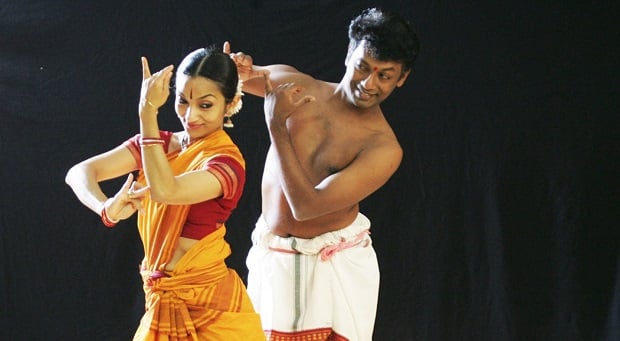
A not-for-profit organisation promoting music and dance will bring its creative expression alive during Deepawali, writes SAI NARAYAN

When it comes to presenting the best of Indian fine arts to Perth audiences, the Temple of Fine Arts (TFA) is a well-known name. The TFA organises and manages the Swan Festival of Lights, an annual Deepavali event which puts up a rich feast of multicultural dance, music and artistic performances. Their many production achievements include Indian dance-drama adaptations of A Midsummer Night’s Dream, Swan Lake, and the Chinese mythology tale Butterfly Lovers, along with a number of Indian epics including the Ramayana and Shakuntala. Established in 1981, the organisation has centres in Malaysia, India, USA, Singapore and in Perth, Australia.
Indian Link caught up with Sukhi Shetty-Krishnan, Director/Artistic Director of TFA, to get an inside view of the organisation and the vision behind it. There are a few international directors and she is one of them. How did it all start? Sukhi explains that the TFA started in 1981 when founder Swami Shantanand formed a little prayer group to celebrate Navaratri and other Hindu festivals.
“There were a couple of accomplished Kathakali and Bharatnatyam dancers in the group,” explains Sukhi. “To promote Swami Shantanand’s vision, the group decided to teach children about Hindu mythology through dance and music. Though primarily focused on Indian classical fine arts, the Swami’s vision was much more broadminded. His vision enveloped different forms of dance and music, not just Indian”.
“He introduced jazz as well, for example, and made us aware and accepting of other forms of dance,” Sukhi reminsces. The vision also encourages the ideal of self-growth through the development of discipline, humility and love as part of learning the art form.
In 2004, the Swami developed a plan specifically for Perth, resulting in the creation of the Saraswati Mahavidhyalaya (SMV), where he stated that 64 arts would be taught in various genres including visual arts, poetry, music, dance etc. The educational and learning aspect of the dance forms comes under the ambit of SMV, and TFA is its performing wing. TFA allows students and teachers to perform and exhibit their talents to the wider community.
There are about 200 students of SMV learning various dance forms like Odissi, Kathak and Bharatnatyam. A Bala Vihara is also conducted where children can learn mythology through dance and music. Bollywood dancing, didgeridoo and African percussion, tabla, veena, guitar, flute and keyboard are all part of the rich variety of programs on offer at SMV. The programs are for children and adults, but age is no bar, explains Sukhi.
What plans does TFA have for the future?
“One of the short-term goals is to get another schooling centre open in the city which would be able to cater for the community that is north of the river,” states Sukhi. “Besides this, there is the Swan Festival of Lights scheduled later this year during Deepavali, for which local and international talent would need to be organised and managed”.
A long term and ambitious dream project for the TFA, SMV and its affiliate bodies is to create an Art Sanctuary to be located at Kelmscott on 15 acres of land. It is envisioned that the Sanctuary would be a centre modelled on the Indian Gurukul system, providing education and workshops in holistic health, art, dance, music and yoga.
As the TFA is a not-for-profit organisation, what motivates the members of the organisation to keep going and growing. “The Swami’s teaching is to love, serve and give. When we see students enjoying their performances and the delight of the audiences… that’s the satisfaction that motivates us,” reveals Sukhi. She relates an interesting anecdote from the Swan Festival of Lights (SFOL) conducted last year.
“During the Ramayana performance, on one of the days, we had disruptions and performance cancellation due to rain,” she recounts. “The students were upset, especially the little ones who were enacting the monkey battalion. We decided to do the enactment on the grass, instead of the stage. The enthusiasm of the kids was amazing as they slipped and danced on the grass and in the rain. It was better than on the stage, because there was closer interaction with the audience, many of whom expressed their appreciation”.
With a growing interest in Indian art form and various dance schools coming up all over the city, how does she see TFA as being distinct from the others?
“Though the SMV teaches various dance forms like Bharatnatyam or Odissi in separate categories, the TFA brings these different art forms together in its productions. Whatever movement best conveys the message is utilised,” reveals Sukhi. “As Swami Shantananda’s vision envisioned the unity of various disparate art forms, TFA seeks to implement that vision in its productions. This is not always the case in other schools,” she claims. Having said that, she points out that far from being competitive, she would encourage every school that seeks to educate the community in the richness of our classical art forms.
How does Sukhi see the work of TFA affecting the wider Australian community?
“Indian fine arts are increasingly being seen as a link which can bring India and Indians closer to the wider Australian community. The Swan Festival of Lights sees a wide spectrum of people attending the shows, and significant numbers of them are local Australians who appreciate the dances, the music and the food,” she explains. There are currently at least 10 local Australian students learning at the SMV. Many Australian ministers see the opportunity for arts to create a stronger link between the two communities and countries. There is even some interest from the local community to celebrate the Deepavali festival together. She jestingly remarks that the time might come when Deepavali could even be a public holiday!
Sewing the seeds of change

An Aussie fashion designer’s passion for ethical clothing takes her to a Rajasthani village

Meg Wilkinson’s passion for textiles and clothing began with art. She completed a Fine Arts degree majoring in jewellery and metal smithing at the University of Tasmania.
“I think I was always a bit of a frustrated fashion designer,” laughs Meg.
After making jewellery for many years she went back to TAFE to study fashion and costume design and developed the idea of starting an ethical clothing business in India.
Meg’s first trip to India was 15 years ago. “I landed at 2.00 am and breathed in the Delhi fragrance,” says Meg. “My heart just opened and I knew I’d come home”.
What drives an Australian to start a quest to help people on the other side of the world? A passion for textiles and hand-embroidery, a desire to preserve traditional skills and the perseverance to produce clothing that directly benefits the workers.
“I met a lot of people who go to Pushkar to get clothes made,” said Meg, “because making it in Australia is too expensive”.
Whilst working for The Body Shop, Meg was inspired by their “Trade Not Aid” program, which advocates going into developing countries and buying products from the source. Meg wanted to buy directly from the artists and pay them a little above the normal wage. She saw the difference it made to their lives and village infrastructure.
“It didn’t cost much more but made a huge difference,” she says.
A “major life shift” enabled Meg to resume study and travel to India. Whilst staying in a guesthouse in Pushkar she fell in love with its manager, Savar Ram. She told him about her business idea and they started Beej together in 2008.
‘Beej’ is the Hindi word for ‘seed’, and with this enterprise Meg believes she is ‘sewing the seeds of change’.
Beej employs workers from a small village about 20 kms outside Pushkar. The initial set up was not without its difficulties.
“I wanted to create clothing that used traditional skills with a modern edge and I was aiming at women 30 and over,” says Meg. “I thought the local women would be fine to use traditional skills so I was shocked to learn that those skills were dying out because machine embroidery was replacing traditional hand embroidery”.
Meg had to train the women to create the embroidery for her designs. Once the training was underway many of the women’s grandmothers shared their memories about when they practised the craft.
“It was difficult work for the women at first,” says Meg. “They are used to hard work (as the village is a farming community) but now they can have a break and do work that’s more social and less physical”.
Meg keeps her collections and runs small, trying to be as sustainable as possible. She points out that the women aren’t available all year because of farm work so they can work for Beej as it suits them. The women can earn extra money as Beej pays Rs 200 a day minimum.
“Most women make Rs 70 on farms per day and I pay per piece rather than per day as an incentive. No one earns under 200 rupees and they are not tied to the job”.
Her practical approach is balanced with a desire to educate Australians about fair trade products. Her aim is to “empower people who have nothing and people who have everything”. She cites the recent building collapse in Bangladesh as an example of why there is a need for greater scrutiny of manufacturing practises.
“Ethical fashion is talked about but people are not acting on it,” says Meg.
She points out that consumers need to be wary of labelling and how fair trade goods are produced. Fair trade is a general term and a brand name and buyers need to be aware that “an item is Fair trade cotton only if it’s bought from that particular company”.
The same problem exists with the label “organic.” Cotton manufacturing using child labour has been reported in 6 of the 7 top countries that produce organic cotton. Beej has taken a considered approach to producing ethical clothing. The bright and beautiful clothing is made from surplus cotton and low chemical dyes. “We wanted to used Khadi hand-woven cotton, but couldn’t get enough so we buy from local cotton manufacturers who store an excess of cotton that would otherwise go to waste,” says Meg. “Our clothes are dyed with low impact chemical dyes that don’t run and we use Rangoli threads made in India”.
Beej aims to use “upcycled” material including Gujarat embroidery and employs local artisans.
In 5 years Beej has shown steady growth. They sell online and at selected Festivals and markets including Woodford. Music Festival, WOMAD, designer markets like Brisbane’s Finders Keepers and the Qld Fair Trade market. Meg wants to sell clothes “where people are excited about something that has a story and are giving back to the community. I want them to come to our stall and hear the background, knowing they’ve made a difference and started on the path of buying ethical products and supporting ethical trade. I want people to think”.
She concludes, “If you have a dream and follow it with a pure intention everything falls into place. It’s totally possible”.
South Asian origin candidates
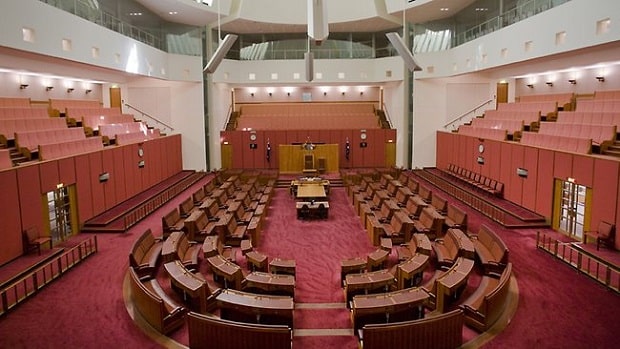

SENATE
NSW
Bhupinder Kumar Chibber (Labor)
Sam Swami Nathan (Independent)
VIC
Gurminder Sekhon (Greens)
Binoy Kampmark (Wikileaks Party)
WA
Suresh Rajan (Wikileaks Party)
ACT
Indra Esguerra (Greens)
HOUSE OF REPRESENTATIVES
NSW
Ammar Khan, Chifley (Independent)
Mohandas Balasingham, Grayndler (Palmer United Party)
Raheam Khan, North Sydney (Palmer United Party)
Ganesh Loke, Parramatta (Palmer United Party)
Kalpesh Patel, Parramatta (Independent)
Mohhamad Ashraf, Reid (Palmer United Party)
VIC
Alex Kaur Bhathal, Batman (Greens)
Ali Khan, Calwell (Liberal)
Dinesh Jayasuriya, Gorton (Greens)
Jatinder Singh, Holt (Palmer United Party)
Avtar Singh Gill, Isaacs (Palmer United Party)
Nihal Samara, Lalor (Liberal)
Manoj Kumar, Menzies (Labor)
Jag Chugha, Scullin (Liberal)
Shilpa Hegde, Wills (Liberal)
WA
Vimal Sharma, Cowan (Palmer United Party)
Vashil Sharma, Fremantle (Palmer United Party)
Kim Mubarak, Sterling (Independent)
SA
Balwinder Singh Jhandi, Barker (Palmer United Party)
Bikhar Singh Brar, Mayo
Come September (7th)


Come September is a 1961 romantic comedy film starring Rock Hudson and Gina Lollobrigida.
The local version at the moment is a comic, ho-hum election movie starring Kevin “selfie” Rudd and Tony “action man” Abbott. There seem to be no romantic leads and yes, there is no love in the air between the two major stars. In fact, spite and vitriol often surface between the two. While the critics have awarded the gong of “Best (better?) Actor” to the Coalition leader Tony Abbott, the People’s Choice Award category is still seeing Labor’s Kevin Rudd as the forerunner.
With the election campaign officially on the other side of the halfway mark, the Liberal-National alliance seems to be ahead in the polls. The experts at this stage are calling it an election for Tony Abbott to lose. That this is the analysis shows how well Kevin Rudd has changed the equation after replacing Julia Gillard. While terms such as annihilation and devastation were once being bandied about, now it seems to be a much closer contest.
An interesting side-show in this election campaign is the open hostility between the News Ltd media and the Labor Party. While the Labor Party tried to muzzle the press under former communications minister Stephen Conroy and failed, it seems that News Ltd is enjoying their potshots at the ALP through their tabloid Daily Telegraph. “Throw this mob out” screamed the headlines as the elections were announced. PM Rudd has been openly critical in his opinion of News Ltd; it will be interesting to see the kind of revenge he will seek should he be returned to power. As Julia Gillard found out, Kevin Rudd neither forgets nor forgives!
At the same time, if ALP loses the elections, it will be interesting to see what happens to one K. Rudd. If the Coalition were to lose, it is clear that Tony Abbott will be the fall guy and there will be a shoot-out between Malcolm Turnbull and Joe Hockey for leader. Under the Labor Party, the lines are not so clear. If Kevin Rudd is forced out, who will replace him? The strong union leader turned politician Bill Shorten at the helm will further bind the party to the union movement, the very image they are trying to change. There are few charismatic leaders in the Labor camp with a number of them electing to bow out, and so it will be an interesting conundrum for the ALP. But cometh the hour, cometh the man (or woman) and perhaps a new face leading the party post elections is just the tonic required to rebuild.
Having said that, whichever mob comes in next will have to sort out the financial mess that the Wayne Swan-Chris Bowen team leaves behind. It is a bit rich for the ALP to pressure the Coalition to reveal their costings, when even with the full might of the Treasury, they did not get a single number right in their budgets. With the mining tax turning out to be one of the worst government deals ever negotiated with the private sector, and total disconnect between overall earnings and expenditure, the Labor Party has racked up huge amounts of debt in their six years in government. Someone needs to pay it back. One expects this will be our future generations. We may have escaped the global financial crisis, but unless the right measures are put in place, one only has to see the state of some European economies to understand the crises which can unfold.
Bharat Mata ki jai!
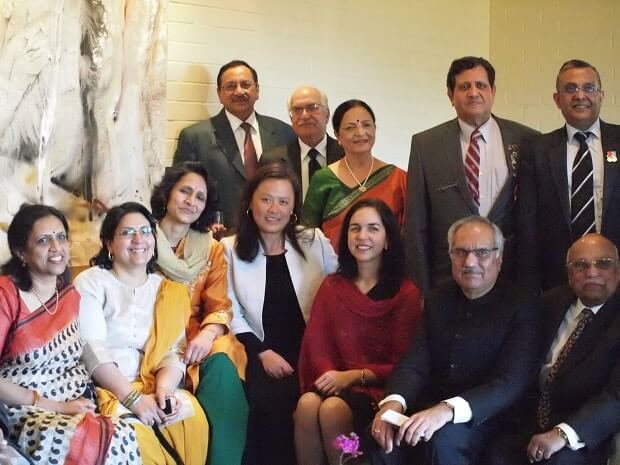
The Indian community across Australia celebrate Independence Day

CANBERRA
Representing our motherland in our new home
Responding to an invitation from the High Commissioner’s office, a group of retired service officers made a trip from Sydney to Canberra to attend the Independence Day celebrations. Apart from the fabulous weather, the great drive and very engaging company, the day is one to remember. The ceremony was held at the Commonwealth Club in Canberra and the guests were received by the High Commissioner Mr. Biren Nanda and his wife and other members of his office. The atmosphere was electric and there was an excitement in the air. It was great to see the Indian officers mingle with their serving counterparts from the Australian defence forces. As finger food and soft drinks were served, guests from the two countries mingled with each other sharing their thoughts and views.
Then it was time for the official ceremony. A toast was raised to the President of India which was followed by the Indian national anthem. A toast was then raised to the Queen and this was followed by the Australian national anthem. The true essence of being an Indian Australian dawned on me as I sang both the anthems with equal fervour and pride. The High Commissioner Mr. Nanda addressed the august gathering which included the chief guest Senator Lisa Singh and Andrew Leigh representing Foreign Minister Bob Carr. In his speech Mr. Nanda spoke about the bilateral ties between Indian and Australia and how the visit of former Prime Minister, Julia Gillard to India helped improve and tighten these ties as it opened a ‘new chapter’ in the Indo-Australian relationships. He also spoke about Prime Minister Kevin Rudd’s visit in 2009 that prompted the growth of relations between India and Australia in the fields of education and trade. He hoped that these relations would continue to grow and strengthen as ministers from both the countries continued to visit each other.
Senator Lisa Singh quoted lines from Nehru’s famous ‘tryst with destiny’ speech as she spoke about her Indian connections. She articulated that the Indo-Australian relations were strong, healthy and ever-growing. She spoke about the large number of Indian students studying in Australian universities and about the formal agreements between Australian and Indian universities, including student exchange, staff exchange and academic research. She also spoke about the Australia India Institute established in the University of Melbourne which has helped enhance the understanding and cooperation between the 2 countries. The senator’s speech was inspiring and delivered a strong message of continued friendship.
In his speech, Andrew Leigh spoke about his Indian connections, his visits to India and the vibrancy of the Indian nation. He spoke about the interesting Indian politics and was amazed at the way elections were held and offices formed in the largest democracy in the world. His speech was very refreshing and laced with humour.
As the ceremony concluded the feeling was one of exuberance and pride of being Indian Australian. As Indian Australians we make positive contributions to the fabric of the community that we are currently a part of. It is the Indians in Australia who create and build the platforms for better ties between the two countries; we are the representatives of our motherland in this adopted country of ours and we should always be conscious and aware of this responsibility.
Nima Menon
***
SYDNEY
A song for azaadi
The Independence Day flag hoisting ceremony in Sydney did not follow tradition this time round.
In a change from routine, the event was held around midday, as opposed to 9 am in previous years. Those of us who had to leave work on a week day to attend, expected to see a thin crowd but we were pleasantly surprised indeed. Gathered at the Consul General’s Pleasant Ave residence in East Lindfield, on a pleasant winter morning, were some 300 members of the Indian community, all geared up to sing the national anthem, many dressed in suitably Indian colours.
Lucky Singh wore her cherished tiranga jhanda as a dupatta over a plain white churidar suit (ok, not really, we know she’s way too patriotic for that: her chunni was daintily dyed in the national colours). Rekha Bhattacharya, an Allahabad University alumnus who has always worn white on Independence Day, brought out her pearl-white Assamese silk sari for the occasion. And the adorable Oscar was there again this year as every year, in his trademark Nehru cap and swashbuckling khadi suit worn over his favourite Gandhi-themed t-shirt.
Consul General Arun Goel was no doubt tickled pink that his little experiment had worked. He said at the outset that the change was in keeping with local demand as community members found it hard to get to the north shore at an early hour. As well, he declared, the new timing coincided with the timing of the real celebration back home.
Not changing tradition however, he unfurled the Tricolour, led the gathering in a rendition of the national anthem, and read out the message of the President of India on the occasion.
The President’s missive was a call to rise up to the many challenges that face the nation today. He spoke early on about the declining morals within society, a cause for concern for every right-thinking citizen. “We have allowed unbridled personal enrichment, self-indulgence, intolerance, discourtesy in behaviour and disrespect for authority to erode our work culture,” he declared. “The ideals of patriotism, compassion, tolerance, self-restraint, honesty, discipline and respect for women have to be converted to a living force”. He spoke of the need for a “judiciary that gives justice without delays”, and the need for world class universities as entitlements that will lead to empowerment of the people. The Uttarakhand tragedy and the Maoist violence in Chhatisgarh also found mention. To end, he reminded his people of their democratic duties in terms of the upcoming general elections, and somewhat spiritually, placed responsibility directly in their own hands if they wanted to see change in the larger society.
Afterwards, the gathering moved to an adjacent community hall for a cultural show. The regular culprits were up on stage, Vinod Rajput, Rekha Rajvanshi and others. But it was newbie Dawa Dolma that stole the show. Her strong Ae mere watan ke logon literally brought the house down. Dear Rekha Bhatta was reduced to tears in a hall that came to an absolute standstill. And if you thought it was because she is one of the older members of the community, what would you say to the twenty-something Deepa Gupta who openly jabbed away at her eyes with a tissue. CG Goel revealed later that Dolma rang his office out of the blue, to say she wanted to present this particular number on the occasion. Our very own Lata Mangeshkar was inundated with offers afterwards.
The brunch that followed – or should we call it a filling lunch – was very welcome after that emotional interlude. The fresh bhature, the biggest samosas you have ever eaten, the gulab jamuns and the masala chai were all lapped up eagerly.
Hurray for azaadi, a newfound singing sensation, and… oversized samosas.
Rajni Anand Luthra
***
MELBOURNE
And where were you on 15 Aug 1947?
A crowd of about fifty gathered at the India Consulate at 344 St.Kilda Rd, Melbourne to celebrate India’s Independence Day. The early morning ceremony saw the acting Consul General Raj Kumar unfurl the Indian national flag as the members of the Indian community collectively sang the national anthem.
Mr Kumar also read out the message of the Indian High Commissioner in Australia Mr Biren Nanda, to Indian nationals here.
“India’s relations with Australia have grown from strength to strength since the establishment of a strategic partnership between the two countries in 2009,” Mr Nanda observed. “Last year people born in India were the largest segment of new immigrants in Australia. The 400,000 strong Indian community in Australia is acting as a bridge between the two countries. They have the potential and the capacity to qualitatively transform our bilateral relations in the future”.
Community members then took the floor. The eighty-something Krishna Arora, everyone’s favourite “Aunty”, spoke warmly about her memories of mid August, 1947.
“I was a teenager in Delhi,” she recalled as everyone listened, enthralled. “There were feelings of happiness sweeping over the entire city. We sat glued to the radio, our only source of information. I remember the city all lit up in celebration. The India Gate area was decked up like I had never seen it before”.
No doubt the description was of the days before the religious riots between the Hindus and the Muslims broke out. Or perhaps, Mrs Arora cleverly chose to ignore that part of our history on this particular occasion!
84-year-old Gurminder Dhingra took the opportunity to remember Jawaharlal Nehru, India’s first and most popular prime minister.
A poem presentation in Hindi by XxXXXX was another highlight.
Over snacks, the discussion was all about the upcoming Regional Pravasi Bharatiya Divas to be held in Sydney later this year.
Ashish Chawla
***
ADELAIDE
Independence: To wish for glory
“Long years ago we made a tryst with destiny, and now the time comes when we shall redeem our pledge…..At the stroke of the midnight hour, when the world sleeps, India will awake to life and freedom. A moment comes, which comes but rarely in history, when we step from the old to the new, when an age ends, and when the soul of a nation, long supressed, finds utterance”.
These immortal words of Pandit Nehru delivered an ancient and proud nation into independence. Almost seven decades from that day challenges and promises remain with the country now truly established on the world stage and one to be reckoned with and not taken lightly.
Across the world, Independence Day is celebrated by Indian communities big and small. In Adelaide the celebrations were conducted with pomp and ceremony with the Indian community out in force, many proudly resplendent in national dress. The proceedings, organised by the Indian Australian Association of South Australia (IAASA), started with the singing of the Australian and Indian national anthems. Dr Rakesh Mohindra, the incoming President of IAASA reminded us of how our forefathers had to fight long and hard for the freedom we are enjoying today. That it was a day for us to reflect on the sacrifices made and our opportunity to pay homage to those brave souls. Guests included Mr Jay Weatherill, Premier of South Australia, Mr Hieu Van Le, Lt. Governor of South Australia, other ministers of the State, and local government representatives. South Australia has singled India out as a country with which it would like to establish trade links so it was not surprising to have the Premier, Jay Weatherill, state his desire to establish a broad-based economic and cultural approach on an institutional basis with India. Other speakers present also extolled the positives to be had in a relationship with India. Recognition was also paid to the large number of migrants from India who call South Australia home.
Following the speeches, the mood was lightened by music and dance from all corners of the country highlighting the variety of language, race, culture that is India. The programme commenced with the Bharatanatyam prayer dance Pushpanjali in welcome to the audience. This was followed by a touching performance of a patriotic song in Telugu by Sharda who dedicated the song to her mother and to her childhood when she was taught this song. A simple delivery, a lovely voice coming from the heart was quite captivating. The Temple of Fine Arts bravely put on a Gujerati Dandiya dance with children some of whom were of pre-school age. The brightly coloured clothes, the clicking of sticks and movement in dance could only be applauded by an appreciative audience. We had the aptly named and very accomplished Murali Ramakrishnan playing a haunting melody on the murali. The cultural programme came to an uplifting end with the Guru Nanak Society performing a blazing bhangra with energy, colour and carefree abandon.
The importance of celebrations of the Independence Day cannot be overstated as one can easily forget in the daily humdrum of life the sacrifices made by many for our futures. The roll-call of our saviours such as Mahatma Gandhi, Lokmanya Tilak, the debonair Bhagat Singh, Maulana Azad, Dadabhai Naoroji to name a few, goes on and on. But I leave you with the words of the mysterious, the enigmatic and the one who inspired fierce loyalty, Subhas Chandra Bose: “Mujhe khoon do, main tumhe azadi doonga”.
Avi Chandiok
***
BRISBANE
Celebrations as well as soul searching
The 66th anniversary of India’s Independence Day was observed on a warm sunny Thursday morning at the Honorary Indian Consulate in Brisbane. Although the turnout was a mere few people, it did not dampen the patriotic spirit burning strong in the hearts of those present.
The Indian flag was hoisted at 9am sharp by Archana Singh, Honorary Consul of India for Queensland along with Prof Sarva-Daman Singh, former Honorary Consul of India for Queensland. The Indian national anthem was sung with fervour.
Speaking on the occasion, Archana Singh, Honorary observed, “India can be very justifiably proud of all her achievements in all fields of industry, infrastructure, education, research and technology. Economic performance and growth rates are no doubt an important indicator of our tremendous achievement. However, hand in hand with the celebrations, some soul searching is also crucial to India’s future progress. It is only when every citizen becomes an integral part of the journey into the future and partakes of the benefits of freedom and development that we will be true to the memory of all freedom fighters. There is so much to be done. The mother that has nurtured and sustained us through trials and tribulations over the centuries, now more than ever needs careful attention”.
She further said, “We may not live in India, but in our own small ways, we can all honour and sustain her great traditions of social harmony, religious pluralism and freedom of thought and belief. This is the true essence of independence”.
Signing off with a Vande Mataram and wishing each other ‘Happy Independence Day’, people dispersed to either run to work or grab a bite of the hot fresh samosas. Not to forget devour sweet syrupy delicious gulab jamuns prepared by Archana Singh, Honorary Consul of India for Queensland, herself.
Tasneem Zavery
Winter whisperings

Warm and cosy, relaxing and reviving is the best way to enjoy this chilly season, writes VINAYA RAI

It is that time of the year when the cold wind blows and the ground is covered with frost, and we go ‘brrrr’ and ‘grrrr’. We keep grumbling about the cold and rain and wind. I don’t like the cold much either, but it is also a cosy time, isn’t it?
A time for warm cuddles and movie nights, soups and roasts, and baking days. A time to stretch our legs in front of the fireplace and spend a lazy evening listening to the rain and wind outside. It is a time for relaxation and rejuvenation. Not just for nature, but for us as well, I think.
I love that we can all get under a large quilt on the lounge and watch movies. Even my 20-year-old will snuggle up with his little sisters and watch a Hindi movie. I hear them whispering under the doona, adding their own bits to “What did he say?” or “Why did she do that?”. And Hindi movies are perfect for winter, don’t you think? Intrigue and masala! We watched Don 2 recently and the kids were fascinated by its twists and turns. And then we sat under the doona after the movie ended, talking about the original Don, the intrigues of smuggling and gangs in the India of the 60s and 70s. Now I think we will watch Jewel Thief, Deewar and movies of that era…educational, I call it!
As I try to get through the cooking while there is still some light, I hear the swoosh of the oven door opening. “Mmmm..!” goes my daughter. We love oven-baked food in winter. Even if it is just the normal vegie pasta that we always have, simply sprinkling it with cheese and sticking it in the oven seems to make it taste and smell just wonderful. And the heat from the oven or grill warms up the room so nicely too. So roasts and pies it is these days, and the kids are happy to bake cakes and muffins for dessert and snacks. A nice, warm family-bonding time? Definitely!
After reading all those English novels from Enid Blyton onwards, Adelaide’s winter was the first time that I could bake those kinds of dishes and eat them in front of an open fire. A dream come true! In our first home in Adelaide we had a proper fireplace and a walnut tree in the garden. Roasted walnuts are much better than roasted chestnuts, believe me! Gazing into the crackling flames of a log fire as you tell stories to your little ones, you can hear your imagination whispering to you, making those stories grow longer and those short winter evenings stretch lovingly.
In the morning, in our ugg boots and dressing gowns, we look out at the garden. The grass seems to have grown overnight and is heavy with dew. Sometimes nearly grey with frost. As I look at our banana plant, I know for the first time what burning cold means. The poor little thing looks like it has literally been burnt by fire! The large fig tree is bare of leaves. It seems to know that it does not need to provide shade at this time, and lets the sunlight stream in through its branches into the house. Oranges and mandarins are our happy fruit this season, and keep the common cold at bay.
Adelaide winters can be very wet, but the sun when it is out can be stingingly warm. Love those balmy days! Winter makes me appreciate that sunshine even more. And as I go inside out of a cold wind, I love the warmth of my home that much more. The kids will stay in, it seems to whisper to me, and all of you will be cosy within. I count my blessings and whisper my thanks for these loving winter evenings.
Indian-Australians call it for Liberals

PAWAN LUTHRA analyses results of Indian Link’s online election survey

The Indian Australian community has come out strongly in favour of the Liberal-National coalition in an online survey conducted by Indian Link. Data was gathered over four days between 16 and 20 August 2013, from just over 500 people across the country. Midway through the 2013 election campaign just over 50% of those surveyed indicated their support for the Coalition for the September 7 election.
The ALP secured 43.28% of the votes, compared to 50.75% for the Coalition, with the Greens picking up the balance.
An interesting observation however came from the question on preferred prime minister. Surprisingly, Indian Australians believe that Kevin Rudd will make a better prime minister, giving him a comprehensive preference of 52.6% of the votes over Tony Abbott at 47.4%.
Indian Australian voters seem to view the leadership style of Rudd – or at least the public leadership style – as much more likable.
It seems that the change from Julia Gillard did not make much difference to the voting intentions of the community. Over 70% of the respondents confirmed that it did not make a difference to them who the leader of the ALP is during this period. It appears that all the troubles with Labor, particularly with policy and not just with the personality issues at the leadership level, have turned Indian Australian voters off.

What was surprising was the strong gains that the Coalition has made into the perception of who will do more for the Indian Australian community. Traditionally, Labor has been strong in staking its credentials over the migrant vote. However, in the Indian Link survey, both Labor and Coalition seem to be neck and neck in securing just over 47% votes, with the Greens picking up the balance 5%. Palmer United Party did get a mention as working better for Australia’s Indian community. As the community matures from the working class migrant group to those establishing, growing or being involved in small businesses, there seems to be the emergence of a shift away from Labor towards the Coalition.

While we have certainly grown in numbers in recent years, it is also clear that entrepreneurial activity has increased within our numbers with the new arrivals, who are small to medium business owners rather than those in the professions. The doctors and academics made up the early Indian settlers of the 1970s and ‘80s, whereas among the newer settlers a larger number are entrepreneurs. And to them, Liberal is a better fit than Labor.

Influencing this decision is perhaps also the perception that the Coalition will forge better relations between India and Australia. With the Labor Party stalling on the progress of uranium sales to India, their heavy-handed approach to the international students’ issue of 2009-’10, and their clampdown on 457 visas, the Indian community seems to be leaning slightly toward the Coalition with a 51.5% vote as compared to 48.5% for Labor. This is also reflected in the respondents’ answers to which party will offer better immigration policies.
State-based affairs – whether Campbell Newman’s cost-cutting measures in Queensland or the Eddie Obeid-Ian MacDonald ICAC saga in NSW – seem to have played a marginal role in the decision of the final vote. Only 25% have indicated that state politics influenced their decision.

Interestingly enough, the debate on asylum seekers ranked the highest among various issues of concern to the voting intentions, with education close behind. The Australian economy was third as a factor, while cost of living ranked fourth in order of importance. In the marginal seats in Western Sydney, a region which a significant number of Indian Australians call home, the refugee issue is a hot topic, and it seems that the party which settles the asylum seeker debate most effectively will strongly gain from the Indian Australian vote.

At the last Federal elections in 2010, Indian Link polling had the election too close to call. Days later, the election results vindicated this finding.

This time round, the Indian Australian community has called it for the Liberal-National Coalition, opting to vote out the Kevin Rudd-led Labor Party.
It will be clear in just under two weeks if the Indian community in Australia gets it right two elections in a row.
Whatever the results, we urge the entire Indian Australian community who can, to go out there and make your vote count!


Students: visas and regulations

For Indian students choosing to study and live in Australia, the choice is no longer an attractive option

Over the last six years there has been a drastic decline in the number of Indian students coming to Australia for further studies, which has slowly started to impact the international education sector in the nation. An analysis by the immigration department shows the number of Indians studying in Australia dropped by 71% from 2007/08 to 2011/12.
According to international student data at year-to-date (YTD) May 2013, the number of Indian student enrolments for all sectors was 33,484 compared to 40,601 at the same time in 2012. This reflects an overall drop of 17.5% in 2013, in comparison to 2012 in the number of Indian students coming Australia.
Interestingly, the most popular field of education for Indian students continues to be management and commerce across Vocational Educational Training (13,394) and Higher Education (3,790) sectors.
So what are the reasons for this sharp fall in numbers? After speaking with Indian students and professionals, it is obvious that the tightening of new student visa regulations, the sluggish job market, changes in the general skilled migration rules leading to permanent residency, coupled with the high value of the Australian dollar has been a big dampener on many Indian students achieving the big Australian dream.
27-year-old Kirti Sharma who is a permanent resident feels the primary reason for the drop is the new stringent rules to get permanent residency in Australia.
“The majority of students who come to Australia come with the purpose of settling down here once they have finished their studies. You can’t get permanent residency anymore for studying cookery or hairdressing; accounting probably still exists in the list of courses which will give you a residency, but the IELTS (English test) score requirement is 8 which is a very high score for someone to achieve if English is not their first language,” said Sharma.
“Let’s not forget the strong Australian dollar which could also be a factor for lots of students, because it makes the course more expensive for students compared to say five years ago. In Indian rupees the course which I studied about six years ago will now cost you about 30-35% more because of the strong Australian dollar,” added Sharma.
Another daunting factor dissuading Indian students from selecting Australia as their first preference for higher studies is the lack of job opportunities available for them here after completing their degree.
“Indian students may not want to invest in an Australian university because getting a degree here does not necessarily convert into getting a job when one is on a student visa,” said Mandeep Singh, an MBA student from University of Technology Sydney. “Australian employers prefer local experience instead of relying on Indian work experience. This is where I fail to understand that even in an era of globalisation, a developed country like Australia is still way behind in infusing a multicultural talented workforce into the economy”.
Unfortunately for Singh and many like him, their fate solely lies on the visa they currently hold. “I will be graduating with a Master’s degree this year and wish to apply for graduate roles in big companies, but a temporary work visa doesn’t allow me to sit for interviews in such companies,” said Singh. “However, I am definitely eligible to apply in the same companies back in India where my degree is of utmost value”.
Danish Ali, another MBA student echoes the same feeling, “I have been living in Australia for the past five and half years. Despite my education here, I’m still not being considered for permanent residency; it is most unfortunate and frustrating for me”.
Alison Jenkins, Deputy Director, UNSW International reaffirms that permanent residency requirements is one of the reasons for the drastic drop in the number of student enrolments since 2008.
“The VET sector has been impacted the most due to changes in the PR requirements,” stated Jenkins. “The drop in numbers was also due to safety concerns after the highly publicised student attacks in Melbourne and the high Australian dollar”.
“Approximately 200 students have enrolled mostly in postgraduate programs at UNSW last year. India constitutes about 5% of our incoming international students. Approximately 50% are from South East Asia and the remaining from the rest of the world,” she added.
With tuition fee and the cost of living in Australia becoming more unaffordable, the demand for scholarships from India is on the rise. “There is always a demand for scholarships but unfortunately we have been unable to provide additional scholarships due to the higher education budget cuts this year,” said Jenkins.
Radhika Budhwar was among the four Indians invited from India to be part of a show called Dumb, Drunk and Racist back in 2012. The initiative behind this series was to project the true picture of Australia to a number of disillusioned Indians, who felt that this was not the safest country for their denizens. After the furore of negative media reports of crimes and robberies against Indians in Australia in 2008-09 that were described as racially motivated crimes, the issue of safety became a global concern. Radhika, an education advisor, did have a negative image about Australia and had stopped encouraging students to enrol for higher education in 2009; however her perception of Australia changed for the better after her visit.
“I wouldn’t label Australia as racist, but a few people are still a bit ignorant,” she said. “Australia is a fortunate country. Indian students have once again started to apply to Australian universities and the numbers have started to pick up again”.
In fact, an India-Australia 2013 Poll, conducted by the Think Tank – Lowy Institute for International Policy, disclosed some surprising results (previously published in Indian Link). To summarise, it revealed that Indian students had broadly positive views towards Australia, but still have lingering concerns about student safety. The survey highlighted that the controversies over the safety of Indian students a few years ago have not damaged the overall perceptions of Indians, and Australia is still considered as a place to gain an education. According to the survey, Australia ranks only second after the United States as a good place to be educated, according to 75% of Indians; and rates more highly than Canada, Singapore, Britain and Germany. Among its findings, 62% of Indians think Australia remains a dangerous place for Indian students, although 53% say it is safer than it was a few years ago, and 64% say any country can be dangerous for Indian students if they are not careful.