Home Blog Page 955

Qualities and values espoused by Don Bradman

0
Reading Time: 4 minutes

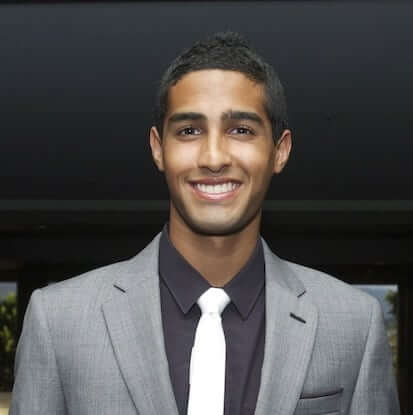
Young cricketer Amit Balgi from Wollongong is named 2014 Bradman Scholar

Wollongong cricketer and dentistry student Amit Balgi was recently announced as the Bradman Scholar for 2014, beating 60 other applicants around the country.

The scholarship gives Amit an allowance of $5,000 a year for three years to assist with his tertiary study expenses. He is undertaking a Bachelor of Dental Science degree at Charles Sturt University.

However, for Amit, the scholarship means much more than a dollar figure.

The Bradman Scholarship, first awarded by the Bradman Foundation in 1990, rewards excellence in sport, education and community involvement.

For legendary Indian batsman Sachin Tendulkar just being mentioned in the same breath as Sir Donald Bradman is a privilege. But even he cannot lay claim to being a Bradman Scholar.

Amit was chosen as the 18th winner of the scholarship by a panel of highly-distinguished names, including Bradman Foundation Chairman Dr Maurice Newman AC and former Prime Minister John Howard OM AC.

“He [Amit] certainly embodies the leadership qualities and values espoused by Sir Donald Bradman such as dignity, integrity, ambition, determination and modesty,” said

Bradman Foundation Executive Director, Ms Rina Hore.

Amit applied for the scholarship after seeing an advertisement in his cricket club’s weekly newsletter.

“After reading what the scholarship entailed, that is, being likened to Sir Donald Bradman, the greatest cricketer or even sportsman of all time, I just had to apply,” claimed Amit.

“I admire the great man, in all aspects of his career, both on and off the field. I thought that applying for this scholarship would firstly be an honour and secondly a chance for me to reflect on the person I’ve become”.

Late last month Amit received a call from the Bradman Foundation while he was in class practicing root canals.

“That’s when I was told that I had been awarded the scholarship. I honestly couldn’t believe it, and I had to sit down while Ms Hore from the Foundation detailed what the next step would be,” he said.

As a young teenager, Amit invested countless hours into improving his fitness, skills and technique on the cricket field.

Over an 18-year career, Amit has represented Illawarra Cricket, Emerging NSW Blues, Country Cricket, NSW Schools Country and played in first grade teams in Illawarra and Orange.

“It is as much mental as it is physical,” Amit said, “It can be both a team and an individual game”.

For Amit, a career highlight so far is being selected twice to play in the Stumping Serious Diseases Charity match, where he found himself playing alongside Adam Gilchrist, Viv Richards and Brian Lara.

Amit speaks passionately about his love for the game saying he enjoys the certain calmness of cricket as well as the sudden thrill and intensity. He claimed that cricket has improved all aspects of his life and has helped him develop in teamwork, communication, determination and humility.

“I love the game, and I owe the game for everything. The people I’ve met, the experiences I’ve had, and for the person I have become. I would not have been awarded this scholarship if it were not for the game of cricket”.

Amit has also been involved with community organisations and charity, including St John’s Ambulance, Vision Australia, Lifeline and the Indian Australian Cultural Association. He also took trip to India to help the less fortunate.

“I’ve met amazing people through these experiences and have learnt a great deal about people today, inequalities in society, and the difficulties people with disabilities face,” he said.

Of his trip to India, Amit claimed it was an eye-opening experience that contributed to his ambition to work in a health profession.

“At this moment, I’m trying to learn more about rural health and inequalities in health access within Australia, and I’m hoping that I can continue to study and work in a rural environment long after my graduation,” he said.

Upon reflecting on this great honour, Amit is thrilled and overwhelmed.

“It means everything to me to be the Bradman Scholar this year. To even be mentioned in the same sentence as the great man, is an honour and a privilege”.

According to Amit, being awarded the scholarship has taught him what it means to be a good person, and what it means to be a contributing member of society – much like how Sir Don was.

“It has also made me believe that anything is possible, and that people believe in me and my attributes as a person,” he added.

But what would Amit ask Sir Donald Bradman if he could meet him today?

“How did you get so extraordinary?” he proclaimed.

“I would love to know what his thoughts are on the game of cricket today and the way it is being played presently. I think he would have some interesting things to say”.

Amit mentions the important influences in his life that help him achieve his goals.

“I believe God has blessed me with this life and I’m so grateful for it. I must thank my parents for everything that they have done for me. My dad, Satish and my mum, Meena have supported me in everything I’ve done, and I know that this would not be possible without them,” he said.

He also credits his girlfriend, Nisha Fernandez, as being a great support in helping him through many challenges.

“I just want to thank these people”.

Amit advises young athletes and students who are struggling to manage their time, to use study and sport against each other.

“That is, when you study, you study – you study hard and when you play – you play hard. I used cricket as an outlet to my studies, a way of getting out frustration in some cases and even a way to relax. As hard as it may seem at some stages, finding a balance between sport and studies will benefit both in the long run,” he claimed.

“I believe I am a perfect example of being able to do this well,” he stated. And indeed he is.

A charity cricket match (Amit is 4th from the left, next to Adam Gilchrist)

Another election closely watched

0
Reading Time: 7 minutes

Transparency and accountability are the big issues in the AIBC elections

Sheba Nandkeolyar
Gautam Gupta
Dipen Rughani
David Trench

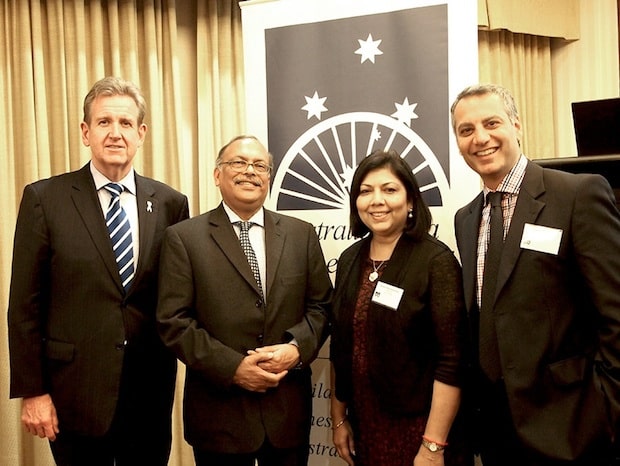
In August 2011, former Indian High Commissioner Sujatha Singh took direct aim at the Australia India Business Council (AIBC) in her address on the occasion of the 25th anniversary of the council.

In an extra-ordinary attack, she expressed her frustration that the AIBC had not fulfilled its potential in “exponentially expanding the economic relationship” between India and Australia. She publicly asked for it “to transform itself to become a truly effective body” and play a more important and representative role. She alluded to the fact that it seemed obsessed with process rather than focusing “on issues of substance”.

Singh conceded that on its own, the NSW chapter was functioning well, so it was apparent that her swipe was at the organisation’s operations at the national level which are yet to be at par “with the most professional Business Councils in Australia and India”.

Indian diplomats rarely speak out in unobfuscatory language and the audience certainly grasped (if not, gasped at!) the disappointment of the High Commissioner and the timing, venue and importance of her message delivered right between the eyes, at the organisation’s Annual Dinner in the presence of an array of senior politicians and business folk.

If the former High Commissioner, now Foreign Secretary and a well-respected diplomat, had to make this speech again, do you think she would have something different to say? This was the question which was asked to the major contenders for the posts of National Chair and Vice Chair for the AIBC National Election 2014.

Incumbent National Chair Dipen Rughani, who has been with the AIBC for over four and a half years and its National Chair for two years, did not respond directly to this query, stressing instead on the achievements of AIBC in the last 24 months. Rughani highlighted the achievements in forging closer relationships with partners in India such as the Federation of Indian Chamber of Commerce and Industry (FICCI) and the Confederation of Indian Industries (CII).

Contesting against Dipen Rughani for National Chair, is David Trench. David, based in Western Australia is Executive General Manager in charge of Market Development at Griffin Coal. He chose not to comment on the issue as he was not present at the function at which Sujatha Singh spoke, but was keen to talk about how to set AIBC up for a stronger future.

Where both the contenders show a point of difference, is Dipen Rughani’s insistence in having the right internal structures in place. “As we transitioned from the old unincorporated structure to the new company AIBC Ltd when I took over as the Chairman, the Board of Directors were keen to get our new organisational governance, processes and systems in place,” he told Indian Link.

David on the other hand is keen to get things moving more quickly. “Organisations that work inwardly or spend more effort working in the organisation rather than on the organisation are limited in their ability to see the larger image they portray. Spending large amounts of time on process in attaining accountability and transparency without considering the reasons and benefits of why, often leads to the organisation becoming “bogged” down and losing their nimble ability of meeting their core objectives. It is one thing to state you are open for business, available for engagement, when you stand behind a closed door with the lights off! Representative bodies are there to represent their members, the viewpoints and the common agenda; to achieve this they need to engage their membership, communicate, and be ultimately mindful that the more engaged the membership the more the agenda can evolve, so the organisation becomes sustainable”.

Aspiring for the position of National Vice Chair is current AIBC NSW President Sheba Nandkeolyar. Nandkeolyar is a successful business owner in her own right and wants to carry this over to AIBC to the national level. She is keen for AIBC National Directors to demonstrate accountability, integrity, transparency, inclusion, teamwork and passion for the Australia-India business relationship. “All Directors need to reflect the above and while the members have declined rapidly in one particular state, the rest of the states have not had any such issues,” she said. “The membership will grow rapidly if the above values are followed”.

“AIBC NSW has been at the forefront in terms of transparency, policy engagement and member initiatives, and I am truly pleased with the AIBC NSW Chapter,” Nandkeolyar added. “If I were to take on a national role, I would strive to ensure that all state chapters operate like the AIBC NSW, in a transparent and inclusive manner. The AIBC website which is meant to have all information listed publicly about the state chapters, will demonstrate this”.

Wanting to enter the team at the national level as Vice Chair is Gautam Gupta from Victoria. A councillor at one of the fastest growing local councils, Wyndham in Victoria, Gupta is scathing in his comments about the current workings of the AIBC. He feels that it has failed, and his experience is that both membership and revenue for AIBC have declined. In 2012, there were 541 eligible voters and this has dropped to 491 in 2014, he claims. “Instead of AIBC growing, we are going backwards”, he observed.

Gupta also alleges that monies are being spent without correct procedures and he is keen to bring in ethical standards that will transform the way AIBC conducts business by connecting business, government and communities. “In doing so I will use Australian ethical standards,” Gupta noted.

Gupta’s allegations of financial irregularities are strongly denied by current National Chair Dipen Rughani.

“The AIBC board fully documents our meeting minutes and decisions of the board,” stated Rughani. “The approved minutes are on our members-only section for all financial members to view. We have also uploaded our audited financials for 2011 and 2012 for our members to view. As far as the board is concerned, there are no financial irregularities, mismanagement or infighting. The members after recommendations from the board at the 2013 AGM have allocated a very reputable firm in Mann Judd to audit our accounts. We are looking forward to their report for 2013, which will be made available to our members as soon as it is approved”.

Not willing to let this go, Gupta claims that for the year ending December 2013, AIBC’s audited annual returns are still not available even though we are already into May 2014. “Even the 2012 returns were provided only recently after many emails,” he added.

He has his own vision of what needs to be done on creating greater transparencies and accountability in AIBC.

“It is important that a membership-based organisation treats all its members with respect,” Gupta noted. “That means, making sure all minutes are made available. There needs to be registers maintained to explain how we spend close to half a million dollars on admin and travel. It is not good enough that the financials are not audited in time and hence not available for scrutiny. If any executive is, or has the potential to use AIBC links for personal gain, then there must be a system to question, and if possible, to sack them. This happens at all levels of government in Australia and I see no reason why it should not be a standard we should aspire to. Furthermore, it is important to separate personal offices from AIBC offices. There are a few incidences where AIBC is operating out of personal/private businesses of office holders, where payments have been made to office bearers to render services without any tender process. This must stop. Business opportunities must be shared with all members and they should be encouraged to participate in the process without favour of fear”.

Regarding Singh’s comments, he said, “I am not sure of what information she will have today, now that she is not in the country to observe the situation at hand. However if she was disappointed then, she should be terrified now. The need for transformation has never been greater. We are almost at the end of our bandwidth where inaction will only serve to bring disrepute to our industry and businesses. Time for ethical transformation is now. It also highlights an issue to not have half of the National Executive from a single state. This will come at a cost to its national identity”.

Looking at how Business Councils of nations such as China and Israel work in Australia, AIBC is way behind and little seems to have been done to take advice of the former High Commissioner. Membership of AIBC has stagnated, sponsorships are down, state-based differences are limiting the growth, and where the India-Australia relationship is growing, it seems to be more organic rather than through the AIBC’s substantial promotion.

With Dipen Rughani, David Trench, Raja Jata and Sarabjeet Singh contesting the post of National Chair, and Sheba Nandkeolyar, Gautam Gupta, Raja Jata and David Trench contesting for the position of National Vice Chair, ballot papers of the 490 odd members of AIBC need to be in by 2 June.

There seems to be no dearth of passion by the contestants; the challenge will be for the victors to maintain the rage in a positive way as 2014 is shaping up to be a crucial year for the Australia-India business relationship. A change in government in India and the inclination by the Abbott government to build on the Labor government’s initiatives with India can provide a powerful momentum to consolidate AIBC’s position as a premier Business Council in Australia. If they fail to do so, the damage will be severe.

The euphoria is scary

0
Reading Time: 5 minutes

The excitement and the jubilation notwithstanding, some aspects of Modi’s win could be cause for concern

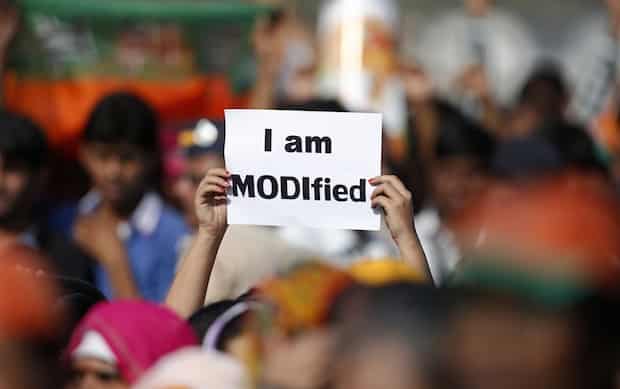
If you are a Narendra Modi supporter or fan, then it would be best if you do yourself a favour and skip this column. Alternatively, please take some blood pressure medication before proceeding further.

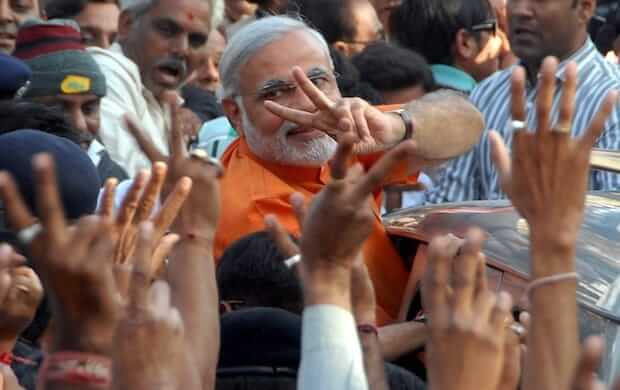
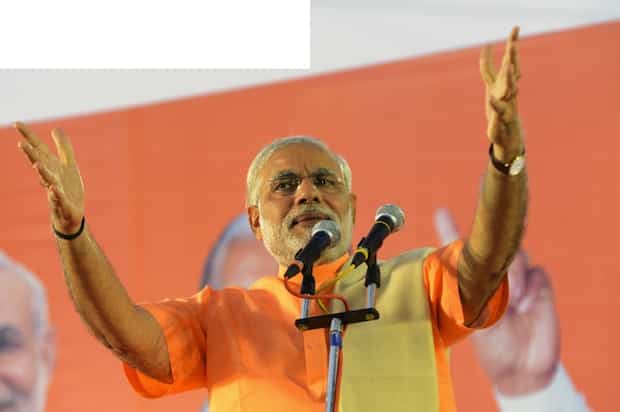
Prime Minister-elect Narendra Modi comes to power with the sort of expectations Indians had of Sachin Tendulkar whenever he came in to bat.

But Sachin had, even at the early stages of his cricket career, a track record and class stamped all over him. Not to mention, lots of innate decency.

Mr Modi is badly tainted by the murderous Gujarat riots of 2002 and his alleged culpability but ironically (and, tragically!) that seems to be his enduring appeal and that liability has been skilfully and wilfully converted to become his greatest asset.

The electorate had been waiting for the Congress party with baseball bats and has given it the most fearful lynching. It was eminently well deserved, too. Corruption was endemic; the Prime Minister was lame duck, ineffectual and wielded no independent power, and there was never a coherent vision articulated. The country was on auto-pilot whilst the plane was losing height precipitously.

Critics justifiably christened him Man Maun Singh. In his decade long Prime Ministership, just 3 Press Conferences were held. Even President Obama who was criticised for not giving many Press Conferences, fronted up 79 times in his first 4 years, alone!

The Modi Record

To anyone who wants to cite Mr Modi’s credentials as a great reformer and having an impressive record of governance, probity and development in Gujarat, I have this to say: it is a furphy.

The track record does not match the hype at all. In the Modi years, the Gross State Product (GSP) of other states has grown faster. Even the per capita GSP of Gujarat trails Goa, Maharashtra, Tamil Nadu and others. Nor is Gujarat the leader (or even in the first three) in unemployment rates. In Foreign Direct Investment (a pet project of Modi’s), Ahmedabad comfortably trails Mumbai, Delhi, Chennai and  Bangalore. In income inequality (both rural and urban) Gujarat trails over 15 other states.

Even by other measures viz. quality of life, human development index etc., Gujarat is a sluggish performer, certainly not the class leader. Don’t take my word, go to http://qz.com/171409/gujarat-by-the-numbers/

Why has Mr Modi not had the courage to abolish prohibition, even after 67 years of Independence? Not only is it a joke internationally, but widely lampooned and flouted in Gujarat itself. Never again should Indians sneer at policies of hardline Islamist Gulf states, whilst a ridiculous prohibition law exists in one of the most prominent states of an otherwise liberal democracy.

Can someone also enlighten me as to why, despite this hypocritical law, alcohol is so easily available in Gujarat and consumed with minimal fuss, by tens of thousands of people, everyday? If Mr Modi was such an efficient administrator, how come the enforcement of this idiotic law was (and continues to be) so lax and corruption-ridden?

Why did the BJP field over a hundred candidates with criminal records? Out of the 281 seats won, 98 have been won by people who have the slur of criminality. That is over 35 %, no less! If we were to make a three-egg omelette and have just one rotten egg in it, what would the end result be?

Why did the BJP align with an overtly communal party (Shiv Sena) which has a cynical disregard for rule of the law? Did you know that around 85% of the candidates it fielded are/were facing criminal charges or have been convicted of them? 15 out of their 18 elected MPs have criminal cases pending. It is dismaying, no less, to see them all waved into parliament enthusiastically by electors in Bombay, in particular.

Modi’s Muslim problem

India is a country of 1.25 billion in which one in seven people (or 14 % ie 175 million) are of the Muslim faith, the third largest Muslim population in the world. How can such a country prosper unless there is societal harmony, opportunities and equality for everyone, regardless of their faith?

Instead of spending money on sops to appease Muslims (but, which hardly reached them!) past Governments should have done much more to address issues of glaring inequity. Despite what many Hindus think, Muslims are a highly discriminated (not pampered!) minority in India. And, they need to be treated with respect – not told forever to “go to Pakistan”. By most education and employment yardsticks, it should be a concern for all thinking Indians that the Muslims have now fallen behind even the Dalits.

I hope the Modi Government not only withdraws the Haj subsidy (which is a sort of religious interference) but also imposes a pilgrim tax for organising religious events such as the Kumbh Mela or various pilgrimages to Amarnath, Kailash Mansarovar etc. The Indian State should have no role in the religious beliefs or practices of its citizens and it should subsidise no one overtly or covertly.

Education is certainly the panacea and should be a top priority for the Modi Government: education of the sort one gets in schools and universities and not in madrassas. The website of the Ministry of Human Resources talks about madrassa modernisation in the name of Muslims. In Uttar Pradesh, under both Mayawati and Mulayam Singh Yadav, the government failed to construct more schools and colleges. Instead, it was providing for madrassas and modernisation of madrassas. This is wrong because madrassas are religious institutions and the government should not play any role in them. Religious schools like madrassas create segregation – which is terrible both for Muslims and for India.

Job opportunities is another bugbear. It should not be as difficult for a Muslim to get a job in India as it is for a new Indian migrant in Australia. Of course, there is discrimination – in both places. Usually latent, often blatant.

Muslims also face naked and ugly bigotry whilst buying or renting property. The very people who are discriminating against them in this way, then have the gall to complain that they live in ghettoes – after virtually driving them in there.

Mr Modi is capable of tackling all the above issues pertaining to India’s most populous and restive minority. But, it is to be seen if ideological considerations queer his pitch. He ran a campaign that promised development and good governance, and avoided religiously divisive themes. Secularism is enshrined in the Indian constitution and that is what distinguishes India from Pakistan and unites our amazingly diverse matrubhoomi. He would do well to concentrate on developing India’s creaking infrastructure and creating jobs for the million odd who join the workforce, each month, and avoid the state’s foray into religion – be it mandir or masjid.

The incivility routinely demonstrated by Modi supporters on social media forums that I have recently seen is unbelievable. There is not just a hope for a better Bharat and a mahan Bharat, but sadly there is an ugly element of triumphalism and scorn for any differing opinion.

Above all, it should not be forgotten that more than two-third of Indians did not vote for the BJP/ Modi and notwithstanding that (with just 31% of the vote they won 282 seats), the BJP needs to govern for every Indian.

Read more about election results here:

Lotus Blooms in Oz

The Mauling of the Congress

‘Prime Minister Modi will rework, repair foreign ties’

Narendra Modi: From provincial to prime ministerial


Narendra Modi: From provincial to prime ministerial

0
Reading Time: 3 minutes

The journey of India’s PM elect reflects prosperity for India’s future


“I believe God has chosen me,” said Narendra Modi during the election campaign that catapulted the Gujarat chief minister to the very pinnacle of power as the next prime minister of India.

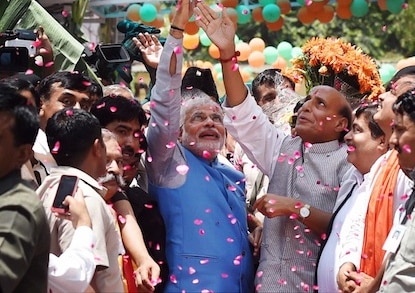
His words sounded prophetic on Friday in mid-Mayas the Bharatiya Janata Party won an absolute majority on its own, securing a record number of 282 seats in the Lok Sabha, and in the process reducing the Congress to its lowest number in the house.

It has been an extraordinary journey for the man, an outlier, who does not belong to any of the country’s enduring political dynasties or to the socio-cultural elite. He has been branded as a “Hindutva hardliner”, a “divisive, polarising figure”, especially because of the 2002 riots under his own rule in his home state. Modi has in a way taken sweet revenge as he savours the phenomenal poll results, his own glory and the finest-ever performance of the BJP in more than three decades of its existence.

At the height of a gruelling campaign, Modi had said in an interview that he sensed a very strong anti-incumbency wave against the 10-year Congress rule, marked by massive corruption and seemingly dysfunctional government.

As he travelled across this country of sub-continental size and bewildering diversity, he saw “an equally strong wave for the BJP and its NDA partners,” a yearning for change, for a “stable,” performing government in New Delhi.

To a large extent, his own carefully crafted image of a “strong and decisive” leader found resonance across the country and has no doubt played a role that is reflected in the poll results. In the 13 years he has been at the helm of affairs in Gujarat, Modi has built an image of a leader who delivers, someone who is interested in results.

In the last few years, when the Manmohan Singh government was ridiculed for being caught in a “policy paralysis,” Modi seized the opportunity and conveyed a vision of decisive government and development. And this he made the main plank of his electoral campaign that touched a chord, an instant connection, especially with the young, first- time voters and the country’s burgeoning middle class.

“[Modi] functions like a modern day CEO laying emphasis on the outcome and often allegedly putting the rules and normal norms in the backburner,” said one of his biographers Nirendra Dev.

This was facilitated by an aggressive use of technology and media, and well supported by the Sangh Parivar whose members pressed its cadres to canvass for the BJP.

In contrast, the campaign of the Congress led by its undeclared prime ministerial nominee, vice president Rahul Gandhi, was uninspiring.

Opposition leaders and independent observers, however, say that though Modi talked about development, the party indulged in some social engineering in states like Uttar Pradesh, and played the backward caste and communal cards.

But there are specific and deep social changes that seem to have helped the so-called Modi wave.

Increased urbanisation, inter-regional migration and spread of communication have bridged the rural-urban divide in voting behaviour. In fact, economic shifts and greater connectivity are creating a new kind of constituency, one that is neither classically urban nor rural, but a hybrid “rurban”.

According to demographer Sonalde Desai, though India has not become a non-agricultural country, farming has increasingly become a part-time job.

Recent surveys have shown greater divergence between states than between villages and cities.

Modi has been tapping into what he calls a “neo-middle class” made up of newcomers to the urban economy. The country’s travel from a state-run economy to one run more by private capital has led to a situation where aspirations are rising a lot faster than improvements on the ground.

A master strategist, Modi also saw to it that the Bharatiya Janata Party, which traditionally appealed to the urban middle class, this time moved into rural and semi-urban areas, and tapped especially youth.

Read more about election results here:

Lotus Blooms in Oz

The Mauling of the Congress

‘Prime Minister Modi will rework, repair foreign ties’

The euphoria is scary


Prime Minister Modi will rework, repair foreign ties

0
Reading Time: 4 minutes

As India makes way for a new BJP-led government, with the elections keenly followed by major world powers, foreign policy experts say the regime change is a signal to the world “that the world’s largest democracy is alive and kicking” and that the thumping majority gives Prime Minister Modi the mandate to rework and repair relations.

Former envoy Hardeep Singh Puri, who joined the BJP earlier this year, said the overwhelming mandate “gives Mr. Modi the mandate required to repair the relationships in the neighbourhood and rework other critically important relationships like those with the US and China”.

“Prime Minister Modi will have the flexibility and space to pursue India’s interests and ensure that India can contribute to global peace and security in a manner commensurate with India’s size and potential,” Puri, who served as India’s Permanent Representative to the United Nations and is likely to play a foreign policy role in the new government, told IANS.
According to former envoy G. Parthasarathy, the poll result “sends a signal to the world that the world’s largest democracy is alive and kicking.”

He furthered, “The success or otherwise of foreign policy will depend on how our economy surges ahead… Automatically, foreign policy will be in order when it becomes clear to the world that India is set to grow and welcomes foreign investment and collaboration”.
The former envoy to Pakistan and Australia said, “Most foreign investors have lost confidence (in India). Because of mismanagement of the economy, defence spending has fallen to a record low; this has affected our national security adversely”.
He added that India has problems in the neighbourhood which “have to be imaginatively addressed”.

Parthasarathy said despite the BJP winning a simple majority on its own, in a federal set-up in dealing with Sri Lanka the government will have to have consultations with Tamil Nadu.. With Bangladesh, the views of West Bengal and Tripura will have to be taken into account.
Well-known strategic analyst C. Uday Bhaskar told IANS that “One area where the BJP will have more freedom is in relation to the immediate neighbourhood, where in the past some state governments and dominant regional parties hobbled the centre. Tamil Nadu in relation to Sri Lanka and West Bengal apropos Bangladesh are a case in point. With Pakistan, the Modi line is that he will not be a prisoner of the past but the terrorism issue will have to be addressed”.

Bhaskar, a distinguished fellow with the Society for Policy Studies, also noted, “As regards the other elements of India’s foreign policies – whether China or the USA, a much more visible political context and content is on the cards. But as always, national economic resilience and the strength of the Indian rupee will be the bedrock of the credibility of Delhi’s external policies”.

Prominent foreign policy expert C. Raja Mohan said Modi’s emphasis on former prime minister Atal Bihari Vajpayee’s foreign policy legacy is politically significant. “It has offered much-needed reassurance all around that India will not abandon its traditional nuclear restraint, continue to seek peace with neighbours and promote regional prosperity through economic integration of the subcontinent.”

Former envoy Pavan K. Varma said it is “too early to say”, adding “foreign policy is a complex issue, it needs to be run on a planned framework and not on the basis of sentiment or emotion or jingoism.”

The Bharatiya Janata Party in its election manifesto had pledged to “revise and update” India’s nuclear doctrine. It had observed that the strategic gains acquired by the party-led National Democratic Alliance regime were “frittered away” by the Congress, and said its government would stress on “mending equations” and ties with neighbours.

Every third newly-elected MP has a criminal case

The number of parliamentarians with criminal cases has risen in the 16th Lok Sabha, with every third MP-elect facing criminal charges, an analysis of their election affidavits has shown.

An analysis of 541 of the 543 winning candidates by National Election Watch (NEW) and Association for Democratic Reforms (ADR) showed that 186 or 34 percent of the newly-elected members have disclosed criminal cases against themselves in their affidavits.
In 2009, 30 percent of the Lok Sabha members had criminal cases registered against them. This has now gone up by four percent.

According to a press release, of the 186 new members with declared criminal cases, 112 (21 percent) declared “serious criminal cases”, including those related to murder, attempt to murder, causing communal disharmony, kidnapping, crimes against women etc.
Party-wise, the largest 98 or 35 percent of the 281 winners from the BJP have in their affidavits declared criminal cases against themselves.

Eight of the 44 winners (18 percent) from the Congress, six of the 37 winners (16 percent) from the AIADMK, 15 of the 18 winners (83 percent) from the Shiv Sena, and seven of the 34 winners (21 percent) of the Trinamool Congress also disclosed criminal cases against themselves.

The analysis also showed a rise in the number of crorepatis (millionaires) in the Lok Sabha over the 2009 election.

The release said that of the winners analysed, 442 (82 percent) were crorepatis and the number was 300 (58 percent) in 2009.

The BJP has the highest number of crorepatis, the release said.
Of the candidates analysed, the average assets per winner was Rs.14.61 crore, whereas the average asset for each candidate was Rs.3.16 crore.

The release also said one of the newly elected members had declared himself to be illiterate.
A total of 125 (23 percent) winners declared that they have an educational qualification till Class 12 or below while 405 (75 percent) declared having an educational qualification of a graduate or above.

202 (37 percent) of the winning MPs declared their age to be between 25 to 50 years, 298 (55 percent) declared their age to be between 51 and 70 and 41 (eight percent) declared their age to be above 71. 61 (11 percent) of the newly elected members are women.

IANS

Read more about election results here:

Lotus Blooms in Oz

The Mauling of the Congress

Narendra Modi: From provincial to prime ministerial

The euphoria is scary


The mauling of the Congress

0
Reading Time: 6 minutes

BJP’s prime ministerial candidate Narendra Modi’s prediction that Congress would not be able to open its account in several states came true, with the party failing to secure a single Lok Sabha seat from Gujarat, Rajasthan, Himachal Pradesh, Tamil Nadu, Jharkhand, Jammu and Kashmir and Uttarakhand.

Congress leaders said that it was unprecedented for the party not to score seats across regions in a general election. The party also could not cross touch double digit in any state as it suffered heavy reverses in Andhra Pradesh, Haryana, Maharashtra, Assam and Uttar Pradesh.

The Congress lost all seven seats in the national capital of Delhi which were wrested by the Bharatiya Janata Party.

It was 0-25 for Congress in Rajasthan, 0-26 in Gujarat, 0-4 in Himachal Pradesh, 0-5 in Uttarakhand and 0-39 in Tamil Nadu.

Except Tamil Nadu, the party lost all seats to the BJP in the other states.
Modi had said in his rally at Valmiki Nagar in Bihar May 7 that Congress will be reduced to zero in many states where the anger against UPA’s “failure” to contain corruption was marked.

The party could win only one seat in Haryana, four in Maharashtra, two in Andhra Pradesh and three seats in Assam.

The Congress, India’s oldest party which had ruled the country for a decade since 2004, faced its worst humiliation, raising question marks about the future of the Nehru-Gandhi dynasty that has given India most of its prime ministers. Congress’ de facto prime ministerial candidate Rahul Gandhi, whose father, grandmother and great-grandfather were all prime ministers, was humbled by Modi in a way that the Congress plummeted to its lowest ever two-digit tally in a national election.

It was a graveyard for Congress stalwarts. Minister after minister, leader after leader, lost at the hustings, with only a notable few winning through to the 16th Lok Sabha. At least 23 ministers of Manmohan Singh’s government lost, including Home Minister Sushilkumar Shinde, External Affairs Minister Salman Khurshid, Communications Minister Kapil Sibal, Health Minister Ghulam Nabi Azad, Corporate Affairs Minister Sachin Pilot and Sports Minister Jitendra Singh. Manmohan Singh, who had announced his retirement earlier this year, did not contest. Outgoing finance minister P. Chidamabaram’s son Karti Chidambaram lost from his father’s constituency after the latter opted out of the contest. And so did Lok Sabha speaker Meira Kumar (Sasaram).

All BJP stalwarts won easily including L.K. Advani (Gandhinagar), Rajnath Singh (Lucknow), Murli Manohar Joshi (Kanpur), Nitin Gadkari (Nagpur) and Sushma Swaraj (Vidisha).
The only BJP leader who lost was Arun Jaitley, leader of the party in the Rajya Sabha who was trounced by former Punjab chief minister Amarinder Singh of the Congress in Amritsar. Jaitley was tipped to be the finance minister in a new Modi government.

Questions about Rahul Gandhi’s leadership

Rahul Gandhi, 43, who led the Congress campaign, managed to win his own seat of Amethi but with a considerably reduced margin compared to the 2009 elections.
He was up against rivals considered lightweight and could manage to salvage his seat, considered a family pocket borough, partly due to the efforts of his sister Priyanka Gandhi Vadra who campaigned there vigorously especially towards the fag end of the campaign.

But Congress leaders sought to firewall Rahul Gandhi, saying that they were collectively responsible for the results. They, however, said there would be introspection over the results as “too much was at stake.”

Rahul Gandhi started his national campaign late, almost four months after Modi had set into the role following his annointment as the Bharatiya Janata Party’s prime ministerial candidate in September last year.

Modi tapped into people’s discontent and anger over price rise, corruption, unemployment and a sense among the middle classes that India had wasted its opportunities during 10 years of Congress-led United Progressive Alliance rule.

Though Rahul Gandhi sought to paint Modi as “divisive” and dictatorial and talked endlessly of the UPA government’s welfare initiatives, his strategy did not succeed.
He had little to show by way of achievement in governance as he had not taken a role in government despite repeated invitations.

Modi, on the other hand, built his campaign around the Gujarat model of development, having led the state as chief minister from 2001.
He raised hopes of a bright, promising future among the people, basing his promises on the work he had done in Gujarat.

The Congress made a strategic move not to declare Rahul Gandhi as prime ministerial candidate but that did not prevent a “presidential type” contest between him and Modi in the age of television. Modi got much more television space than Rahul due to his oratory.

Unlike Modi, who used technology and social media to bolster his campaign, Rahul Gandhi appeared not to have brought any innovation to his campaign. The Congress scion is not on twitter, a social media popular among the youth.

Gandhi has been slammed by his critics for being a reluctant politician, a leader who goes into virtual hibernation after phases of political activism and does not follow through on the issues he raises. His not being present at the farewell dinner his mother and Congress president Sonia Gandhi hosted for outgoing prime minister Manmohan Singh was widely noticed in the media.

Rahul Gandhi addressed just over 160 rallies during the Lok Sabha campaign, a third of the number Modi addressed.

Congress promises structural changes but does not outline roadmap

Congress president Sonia Gandhi and her son Rahul Gandhi, have taken responsibility for the party’s defeat. Congress president Sonia Gandhi and party vice president Rahul Gandhi offered to resign owning responsibility for the crushing defeat in the Lok Sabha polls but the party rejected it while promising a thorough revamp and structural changes and admitting it was “unable toconnect with the electorate”.

The Congress has promised a thorough organisational revamp and structural changes as measures to win back confidence of people after the party’s worst defeat in a Lok Sabha election but did not spell out the way it will be accomplished.

Both the resolution adopted at the Congress Working Committee meeting in New Delhi and Congress president Sonia Gandhi’s speech gave the party’s disconnect with the voters as reasons that led to the party just winning 44 of 543 Lok Sabha seats.

Party sources said that there could be a reshuffle of All India Congress Committee office-bearers in the coming weeks. The party has little time for recovery as it has to face assembly elections later this year in Maharashtra, Haryana, and Jammu and Kashmir and possibly Delhi.

While an admission of failures is likely to go down well with the workers, who wanted the leadership to do some plain-speaking, there is still no clarity about the kind of change that will be brought about in structures of the party, its scale and its timeline.

Party vice president Rahul Gandhi has been advocating direct elections to fill various posts and opening up the organisation and the resolution indicated the party could go in that direction as it talked about creating “opportunities and structures that will pave the way of a thorough revamp of the organisation at all levels”.

Former minister Kamal Nath has suggested that CWC members should also be elected and not nominated by the Congress president.

However, a section of the party is not satisfied with the outcome of Rahul Gandhi’s moves to usher in internal democracy in Youth Congress saying that it had brought in a crop of leaders who were not adept in agitational politics.

While the resolution and Sonia Gandhi’s speech talked about the party having failed to read the profound changes that had taken place in the country during the ten years of UPA government, there was no indication from the party how these will be addressed in the coming days.

Sonia Gandhi said the party should ponder why its support base has eroded and if the party was in tune with the aspirations of the youth and keeping pace with the change.
She also said the party needed “clear-headed and fresh thinking that will help us correct our shortcomings” but did not elaborate.

According to Congress general secretary Janradan Dwivedi though there has been a feeling among Congress workers that Rahul Gandhi had not been properly advised by key members in his team. There is also palpable discontent among workers against many Congress ministers for “not paying them due regard” while in office.

There was also expectation among party workers of general secretaries being held accountable for the party’s poor performance in across states. The Congress could not reach double digit mark in any state and failed to open its account in many.

Sources said that general secretaries offered to be held accountable at the meeting but the common refrain at the meeting was for “collective responsibility”.

Rahul Gandhi led the party campaign that was heavily built around the UPA regime’s achievements though there was a sense of dejection among voters on issues of price rise and corruption – which Manmohan Singh, speaking at the meeting, termed the ones which the government failed to communicate with the people.

Sources said that most members harped upon lack of proper communication during the last few years.

Read more about election results here:

Lotus Blooms in Oz

‘Prime Minister Modi will rework, repair foreign ties’

Narendra Modi: From provincial to prime ministerial

The euphoria is scary

Lotus blooms in Oz

0
Reading Time: 3 minutes

Fledgling organisation Overseas Friends of BJP has a dramatic debut year

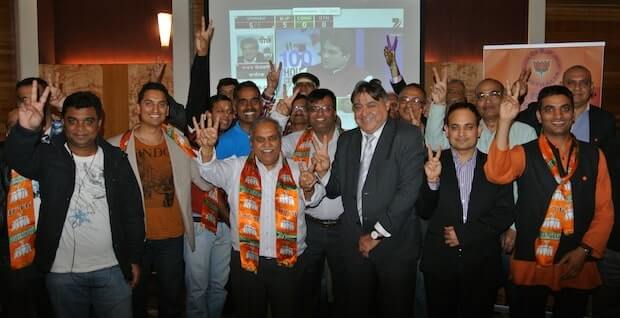
Some 200 people gathered at Burwood Club on May 16 to watch the elections results from India come in. They broke out in cheers every so often as the lotus bloomed and the Congress wilted (some even chanting the Har Har Mahadev slogan), and passed the laddoos around.

They were assembled there at the behest of the fledgling organisation Overseas Friends of BJP (OFBJP), which organised similar events in Melbourne, Brisbane and Adelaide.

The message went out via the organisation’s Facebook page days before, asking people to join in for a “Vijai Diwas” (victory day).

Were they so sure of a victory?

“Yes, most definitely!” an exuberant Rahul Jethi, convener of the OFBJP, told Indian Link. “I had been in India recently and had some assessment of the ground realities over there, and the general mood of the people”.

Jethi was motivated by a social media campaign started in the US but aimed at the Indian populace, urging them to come out in droves vote in the 2014 elections.

Amongst the people who attended were members of the Liberal Friends of India, NSW Member for Granville Tony Issa, Councillor Gurdip Singh, and the Hindu Council of Australia’s Nihal Agar and Sanjeev Bhakri.

Yet Jethi reveals that other than these handful community stalwarts, more than half the attendees were not even known to him.

“It was transformational for us as an organisation too, to see that we had reached out to so many regular folk. They were people who believed that change is required in contemporary India, and who in some way, shape or form, support the BJP ideology. They came after work on the Friday night, helped share the laddoos around, and afterwards, shook some booty!”

The OFBJP was formed in March last year.

“I’ve been a follower of the Bharatiya Janata Party since high school,” Jethi revealed, “and have been particularly motivated by the groundswell taking place recently seeking a change. Party headquarters in India gave the nod last year, and we had a soft launch in September with the opening of three chapters in Sydney, Melbourne and Brisbane”.

When senior leader Venkiah Naidu was on a private visit here in December, they took the opportunity to make a formal launch.

But the group has been active since early last year, with monthly events such as Google hangouts with Narendra Modi, Subrahmaniam Swamy and Sushma Swaraj, and Chai pe Charcha sessions.

After the elections results stunned the world, it’s been nothing short of Modi mania for friends of BJP all over the world, as they take to social media making much of incidents such as Modi’s blessings from his aged mum, his crazy cavalcade through the streets of Delhi, his thank-you visit to Varanasi where he prayed at the banks of the Ganges, and his bowing down in obeisance at the steps of Parliament House. The utterances of the prime minister-elect, such as “I am a prime worker of the people,” are being touted as pearls of wisdom. Meanwhile the smart one-liners about the decimated Congress party continue on unabated.

Buoyed by the election results, the OFBJP are seeing a major role for themselves at the community level here, as well as in the mainstream. Going forward, the organisation claims its agenda is to play a constructive role in enhancing the India-Australia relationship.

“We are Australian citizens first, but want to do our bit to increase people-to-people contact between India and Australia as well as trade and polity. To do this, we hope to be engaging with both sides of the political divide here in Australia”.

Jethi laments that the community sentiment is not adequately represented in the political arena.

“The existing organisations stop short at being cultural organisations, with no political agenda. Our organisation has very definitive political aims. We hope, for instance, to take delegations to India to help achieve these aims”.

No doubt a visit by Prime Minister Modi will be a major highlight. Prime Minister Abbott has invited his Indian counterpart for the G-20 summit in Brisbane later this year, and should Modi take it up, it will be a momentous trip not only for OFBJP but the Indian community at large.


For more on OFBJP, visit www.ofbjp.org.au

Read more about election results here:

The Mauling of the Congress

‘Prime Minister Modi will rework, repair foreign ties’

Narendra Modi: From provincial to prime ministerial

The euphoria is scary

Jhak marke!

0
Reading Time: 3 minutes

Neeraj Shridhar reaches out to his Sydney fans in his inimitable east-meets-west style

Photo: Sachin Wakhare

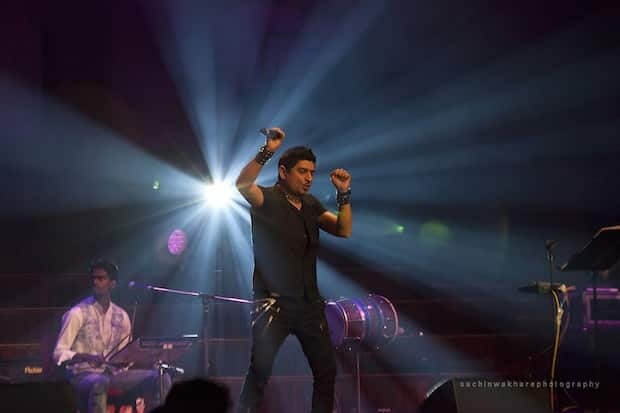
Neeraj Shridhar looked every bit the rock star as he walked on to the stage. Black leather wristbands with studs, metal chains, dog collar, unusual style of facial hair… and of course wildly cheering fans.

He looked like he was all set to rock the house, and that is exactly what he ended up doing.

His particular style of music, which effortlessly blends the contemporary with the more traditional, has won him many fans. The stylised modern treatment that he has accorded to age-old prayer-songs Tum hi ho bandhu and Raghupati Raghav are but two examples of his innovative techniques that have won him so much acclaim. Neeraj, also known as Bombay Viking, is one of the new breed of musicians who has successfully reached out to those on the sub-continent who want the best of both worlds.

Some 1,000 Sydney fans, of all ages, came out this time to sing and dance along with him as he entertained with his very best.

The top five Neeraj Sridhar favourites on any one’s list, were all there: Love mera hit hit, Hey Baby, Prem ki naiya, and several others. Some of his lesser known numbers like Aa raha hoon main and Tera mera pyaar sanam were unusually refreshing and got a great response too.

Shridhar also had the audience eating out of his hands as he narrated many interesting incidents and shared anecdotes relating to almost each number. His stories themselves were enough for us to understand what a genuine artiste he is, and how down-to-earth as a human being. He engaged brilliantly with the audience, even getting off stage and sitting amongst the crowds, passing the microphone along to some thrilled people and even shaking a leg with some.

Surely his banter with the audience that night will be remembered just as much as his music.

Like a true entertainer, Shridhar saved the best for the last; hits like Jhak marke, Twist, Chor bazaari and Tum mile. He seemed to have a huge collection with him and was eager to perform more.

Due to time restrictions however, towards the end it was a rush-rush situation and unfortunately his best numbers like Tumhi ho bandhu and Raghupati Raghav could not be enjoyed to their full potential. He seemed to be in the mood to go on and on but sadly had to be cut short.

Towards the end though he seemed to run out of energy a bit and even confessed how difficult it was for him to pull through some of the high energy numbers! That’s ok, Shridhar; even ageing rock-stars are cool these days!

Luckily, Neeraj had the confident Gorisha supporting him very ably.

Earlier in the evening, when Gorisha came on stage accompanied by all the band members, she had lit up the atmosphere with her strong voice, melodious notes and perfect choice of songs. Her rendition of Senorita was so magical that people were already clapping and tapping their feet. With each successive number she had the crowd eager to shake a leg! And sure enough, soon the aisles were full of people dancing and partying away.

It was a fabulously fun-filled evening, and the fact that this was at one of the most spectacular venues of Sydney, the Sydney Town Hall, made it even more so.

Earlier in the evening, the warm-up acts managed to entertain, even as the show started fashionably late like most Indian shows. The local artistes were a mixed bag with fresh faces and raw talent and some hit number performance up their sleeves. Along with the MCs, they had set the backdrop well for Bombay Viking.

The organisers could easily take pride in the fact that their debut venture was indeed well received. If people’s joy could be a measure of the success of the evening, then indeed it was a hit! The atmosphere was no short of a grand party with good music at a fantastic venue.

In many ways, Neeraj Shridhar is a symbol of what contemporary India stands for; eager to modernise, while still being firmly rooted in its own culture. And if you looked around at the crowd that gathered at the Town Hall that night, that is exactly how they themselves would have come across to you.

India and Oz agree to grow old together

0
Reading Time: 2 minutes


The Australian government is partnering with India to implement a new social security strategy that makes retiring easier for citizens of both countries.

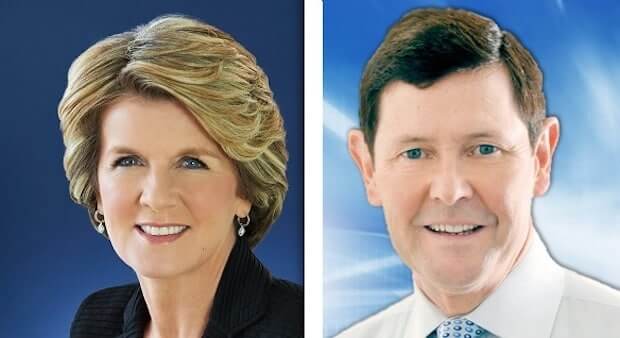
Minister for Social Services Kevin Andrews and Minister for Foreign Affairs Julie Bishop announced that Indians and Australians would now have greater access to pensions from both countries.

“The Australian government understands the reality that many people live and work in more than one country and the need to safeguard their retirement income,” said Mr Andrews.

The agreement will allow former Australian residents living in India to claim the Australian Age Pension without returning to Australia. It will also enable former Indian residents in Australia to access Indian retirement pensions.

According to Mr Andrews, it will no longer be a compulsory requirement for businesses to pay contributions to superannuation and pension insurance systems for temporarily seconded workers in both countries.

“This will not only reduce costs for business but facilitate improved economic links between our two countries,” he said.

“This new agreement will give people more freedom to move between Australia and India, knowing that their pension rights will be recognised and protected”.

Minister Bishop emphasised how the agreement reflects the value that the Australian government places on its relationship with India.

“The bilateral relationship between our two countries is a foreign policy priority due to our economic and strategic ties, shared history and strong people-to-people links,” she said.

“The new agreement delivers on our commitment to broadening, deepening and diversifying this key regional relationship”.

Australia also has social security agreements with 29 other countries.

The agreement with India will come into effect in July 2015 following legislative and administrative processes in both countries.

Cosmetic tricks to hide your age

1
Reading Time: 3 minutes

Simple steps to looking younger and feeling confident

While it is biologically impossible to be 20-something our entire lives, with a few little tips and the proper cosmetics, we can retain youthful skin and look younger for longer.

The other day I met a woman in her fifties, although she looked much younger. When I asked her secret to her youthful skin, she said she does what she can to remain calm and happy. However, while it is true that happiness is the best cosmetic, we can’t all be calm and happy all the time.

So, while maintaining a skin care routine is a must, here are some tips to keep in mind so that no matter what your age, you look younger and graceful.

  1. Go easy on the cake

If you are using make up, keep it as subtle as possible. Use water based moisturiser and foundation so that it blends into the skin. Using a cream based foundation can give your skin a caked-up look and instead of hiding the fine lines, highlight them. Always use a shade closest to your skin tone and blend it evenly so that it doesn’t show. Remember, the aim of a foundation is to give your skin an even look no matter what your age.

  1. Keep brows thick

Keeping your eyebrows thin and with a high arch is going to make you look much older. So let them grow out a bit, and keep your eyebrows thicker. In other words, no thin pencil line like eyebrows. If you have a scanty growth of hair on your brows, use a filler pencil to give them shape and a thicker look. This will also keep attention away from crow’s feet, bags or lines under the eyes.

  1. Use subtle colours

While choosing colours for lipstick, blush or eyeshadow, keep it as muted as possible. Unless it is a very formal occasion, go for grace and dignity over bling and bright colours. Not only will you carry off your outfit well, you won’t come across as someone trying to compete with her daughter in the glamour quotient. Besides, when you are older, less is more – a look that helps you come across as someone younger. If you wear too much bright coloured makeup, you will look like you are trying too hard to retain your youth and that actually works against you.

  1. Avoid dark lips

Even if the outfit you are wearing is a dark colour, go with shades of nude, browns and peach for lip colour. You can use an underlying dark colour to give a dash of colour but as far as possible, use shades that are very understated. If you must highlight anything about your look, make sure it is your outfit. A classy gown, a modern saree that drapes well or a salwar kameez in a colour that suits you can do all the talking for you.

  1. Highlight your best feature

If your eyes are your best feature, use eyeliner and mascara [not too many coats] to give them the attention they deserve. Keep the eyeshadow subtle and muted. If you have classic high cheekbones, use blush to enhance their shape and not horizontal blotches of pink or orange which will only make you look overly done up.

If you are really tall, wear outfits that enhance your height. If you happen to be short, stay away from the Anarkali kurtas and tent shaped tunic tops, which will only make you look shorter. Wear something that makes you look taller as it will also make you look younger. If your makeup is muted, your lack of height is the last thing anyone will notice about you.

At any age, it is important to remember that being comfortable is what works best. And if you can combine style with comfort, you’ve hit the jackpot. Just bear in mind that overtly trying to hide your age only makes matters worse. It is best to keep the look classic and understated at all times, especially with makeup and the colours you choose, for both your wardrobe and your face.