Home Blog Page 947

Indian scientists tap into geoinformatics

0
Reading Time: 3 minutes

Indian scientists have devised sophisticated technologies to map potential natural hazards to aid in disaster mitigation, writes SAHANA GHOSH.

Uttarakhand is yet to recover from the massive rain-triggered floods that left thousands dead last year and exposed the gaps in disaster management strategies. Now Indian scientists have devised sophisticated satellite-based and computer-centric technologies to map potential natural hazards to aid in disaster mitigation.

Geoinformatic tools (the application of technology to geographical sciences), such as remote sensing (RS) and geographic information system (GIS), were successfully put to use by researchers at the Jadavpur University’s School of Oceanography to scientifically analyse and prepare zonation maps of Bihar.

The procedure, which can be extended to the entire country, was used to map earthquakes, floods and droughts and an emerging environmental phenomenon – urban heat islands.

“This study reveals the actual zonation of different natural hazards on the basis of which the policy makers can formulate future plans. It can be a pathway for making such efforts for every individual state and then compiled together as a country report, said Tuhin Ghosh, joint director of Jadavpur University’s School of Oceanographic Studies. “It can be charted for various climate zones too,” he added.

The report, titled ‘Natural Hazard Zonation of Bihar (India) Using Geoinformatics: A Schematic Approach’, can be read in Springer’s Briefs in the Earth Sciences’ series of publications.

Though previous attempts were made for similar studies, Ghosh contended the report compiled by him and researcher Anirban Mukopadhyay is the first to put all the data – of intensity and distribution of hazards – on a common platform, that is, GIS.

GIS is a computer system that integrates, stores and analyses geographical data for informed decision-making, while remote sensing, with the help of open source (freely available) satellite data and sensors, can help one identify, locate and measure objects without coming in direct contact with them. In addition, these systems save time, are cost-effective and need less human resources when compared to physical surveys for big areas, for example, while developing state-wide reports, said Ghosh.

Lauding the project, environmentalist P. K. Joshi, who has expertise in RS and GIS, said the information gleaned from a blend of such zonation data, with inputs from governmental agencies (like the Indian Meteorological Department) and non-governmental agencies can be conveyed directly to the people through cell phones that are nowadays geoinformatics-enabled.

Though geoinformatics encompass all the analysis done by IMD, there is a definite edge in mapping hazards, Joshi said. “It can help in retrieval and integration of many more biophysical parameters and provide more robust geo-statistical analysis. “Integration of other socio-economic data sets is much easier and powerful in a GIS environment which can directly feed the policy and decision makers,” Joshi, head and professor, Department of Natural Resources at New Delhi’s The Energy and Resources Institute (TERI) University, told IANS via email. “It could guide in rescue efforts in disasters of huge proportions, like Uttarakhand,” he added.

In addition, GIS is a “handy tool” for administrators to comprehend the spatial dimension of hazards, according to Chandan Ghosh, professor and head, Geo Hazards, at New Delhi’s National Institute of Disaster Management (NIDM).

And if these maps, in scaled-down and detailed versions, are made available to district administrators, they can facilitate easy identification of roads and landmarks while planning for rescue operations, Chandan Ghosh reckoned.

“From such studies, what is needed the most is the preparation of ‘live inundation map’ or ‘computer animation of virtual flood situation using rainfall and water flowing from adjoining water bodies’,” Chandan Ghosh told IANS via email, adding it could enable officials to visualise a near-real situation of floods and help in marking danger and safe zones.

At the heart of the matter and for large-scale policy making, there is a pressing need for a change in mindsets and accepting and adopting new vistas for efficient disaster management.

“Continuous study, analysis, formulation and updating of hazard zonation can maximise the preparedness strategy and minimise the cost and effort therein. Also, awareness and capacity-building regarding potential natural hazards in every level of stakeholder in the governance, society and industry are important,” said Tuhin Ghosh.

IANS
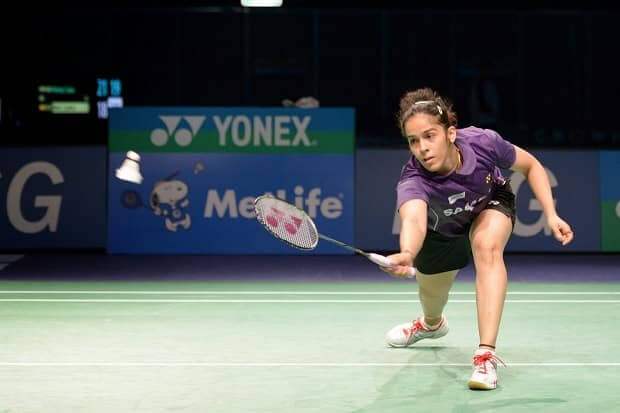
 

Chak de, Saina!

0
Reading Time: 4 minutes

India’s Saina Nehwal takes the women’s singles title at the 2014 Star Australian Badminton Open

Sunday, June 29 was a proud day for India as badminton player 24-year-old Saina Nehwal became the first non-Chinese player to win the women’s singles title at a Super Series in 2014, after defeating Spain’s Carolina Marin 21-18, 21-11 in 43 minutes.

The pair had met once before, and Saina also won in that instance. The first game of the women’s singles finals had some semblance of a fight between six-seed Saina and Carolina; the second game, however, was quite one sided.

Saina moved around the court quickly and returned difficult shots easily. Her younger opponent, considered one of the feistiest players on the circuit, had played well until the semi-finals, but struggled to match Saina.

In the first game, Carolina narrowed the gap time and again but Saina was able to exploit her weaknesses to the hilt, especially around the net. Carolina did not help herself as she committed a service error to gift an easy point to Saina. This ruffled her confidence and the rhythm of her serves. Carolina played some good strokes but they were neither consistent nor enough to snatch an advantage. Saina on the other hand made few unforced errors and was ruthless in smashing her opponent.

For every point that Carolina won she let out a victorious shout, but Saina was generally composed except for a couple of times when she pumped the air after winning a major point. After winning the championship, Saina let out a victory cry and threw her racquet into the crowd. Except for the initial exuberance soon after her victory, Saina remained quite calm and composed thereafter.

“This is one victory which answered all the doubts,” Saina said. “There were many who thought I could never win again. This is a very special triumph for me because I believed I could win very soon and it happened”.

When asked how it felt to win the Australian Super Series, she said that the victory was quite unexpected and although she felt happy to have won, the feeling of winning had not yet sunk in. “Surely this was the biggest challenge because I had to prove that I still am one of the best players in the world,” a confident Saina stated.

Her march to the finals was dramatic. In the quarter-finals, Saina had vanquished Japan’s Eriko Hirose in straight sets: 21-18 and 21-9. In the semi-finals, Saina played cautiously against the number one seed, Wang Shixian from China. Saina won the gruelling match 21-19, 16-21 and 21-15. This was a major victory considering her opponent was better ranked, and the stadium reverberated with loud cheering for Wang Shixian.

Coming to Australia for the championship, her parents felt that she did not stand a chance of winning but could only play her best. Saina light-heartedly told the media that she would party all night to celebrate this surprise win.

Saina complained about the blisters on her feet that caused much agony throughout the tournament. During the semi-finals she had to take time out during the match as her feet had to be attended to by her physio. She said that her feet hurt as she walked from her hotel to the stadium! Saina thanked her physio profusely saying that without her help, and words of encouragement, she would not have been able to play in the finals. But while she was on court destroying her opponent, no one realised that her feet were sore and in bandages!

Few in Australia discuss the game of badminton. But leading up to the Star Australian Open Badminton Super Series Championship, I was amused to hear my colleagues, who are diehard rugby followers, talking about badminton. Earlier in the week a leading Sydney newspaper had carried an article on Lin Dan, the bad boy of badminton, and Olympic bronze medallist, Saina, who were in town for the competition from 24-29 June. The $750,000 tournament in Australia was the eighth Super Series tournament this year and hugely popular.

The Sport Centre in Sydney Olympic Park drew a record crowd for the Superseries finals and unlike previous years, the capacity crowd had a sizeable number of people of Indian origin. I was also pleasantly surprised to see two large Indian flags prominently displayed in the stands to cheer on Saina Nehwal in the finals. This atmosphere was in contrast to the earlier qualifying rounds where Saina was cheered loudly by just two very enthusiastic supporters!

In the climax of the Australian Open Badminton championship, the bad boy of badminton, Lin Dan won against Indonesia’s Simon Santoso: 22-24, 21-16, 21-7. The first game was a see-saw battle where Simon upstaged the double Olympic and five time world champion. But in the next two sets Lin Dan proved to us why he is considered a great. It was the finest exhibition of strokes that one could hope to see.

I always look forward to the men’s doubles as they are fast and furious. Although my favourite doubles player, Kido from Indonesia, lost in the semi-finals, I was mesmerised by the Korean pair, Yong Dae Lee and Yeon Seong Yoo who won comfortably 21-14, 21-18.

For the past three years I have been attending the Australian Badminton Open, and this was the first year when China did not dominate the finals. It was good to see representation in the finals from many countries across the world.

Here is some spicy news that I came across – Saina Nehwal has just been named on the Indian FHM 100 Sexiest Women’s list. At number 85 Saina is ahead of Miley Cyrus and only five spots behind Beyonce on the list!

And which international sportswoman has the most Facebook followers? If you thought it was one of the Williams sisters or Anna Kournikova you are wrong. It is Saina Nehwal!

Click here for more photos from Saina’s victory

The spirit of service

0
Reading Time: 2 minutes

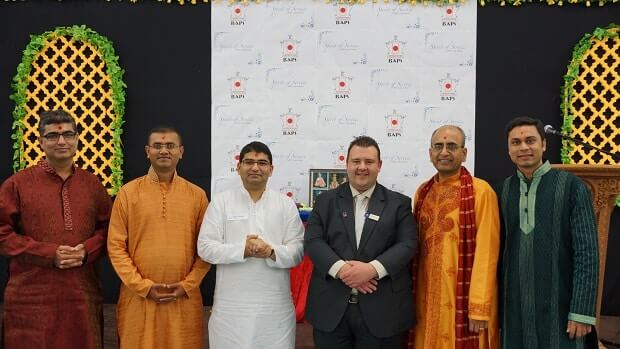
The Adelaide centre of BAPS Australia holds its inaugural community dinner, reports RAJINI VASAN

At a recent gala event, the Adelaide centre of BAPS Australia spelled out its aims and activities as an organisation to members of the wider Australian community.

Its inaugural ‘community dinner’ was held at Klemzig Primary School, Klemzig, in late June under the auspices of the current leader of BAPS, His Holiness Pramukh Swami Maharaj. It was aimed at bringing awareness to the guests about BAPS and its activities of selfless service.

Dr Susan Close (Minister for Manufacturing and Innovation, Minister for Automotive Transformation and Minister for the Public Sector), Ms Gillian Aldridge (the Mayor for Salisbury) and Mr Chad Buchanan (Councillor for West Ward) were among the 65 plus guests who attended the dinner. Representatives from various Indian communities were also present.

Guests were made aware about the five core pillars of BAPS; Health Awareness, Educational Services, Humanitarian Relief, Environmental Protection and Preservation, and Community Empowerment. Programs for children and the youth were also outlined as well.

Details were also provided about the forthcoming BAPS Shree Swaminarayan temple at Green Fields.

The prayer for peace and harmony, Shanti Path, was recited, and the BAPS community’s youngest members made a cultural presentation.

The evening was a culinary delight with a range of Indian vegetarian delicacies and desserts prepared and served by a contingent of over 50 BAPS volunteers, a testament to their commitment and dedication to the spirit of service.

BAPS received accolades for its work from all present including a glowing tribute from Minister Susan Close who remarked on how visionary the work of BAPS was and how relevant to the times. Ms Aldridge reiterated Salisbury Council’s commitment to working with BAPS in the realisation of the Mandir project as well as other notable community initiatives.

At the conclusion of the event, mementos were presented to all the invited dignitaries.

The Adelaide centre of BAPS Australia hosts its weekly assembly at Klemzig Primary School. For further information on upcoming events please contact BAPS on adelaidemandirpr@gmail.com.To learn more about BAPS, please refer to www.baps.org

Speaking out against domestic violence

0
Reading Time: 2 minutes

The community comes out to support vulnerable women

Interfaith communities comprising Hindus, Muslims and Sikhs have come together in Queensland recently to spread awareness of domestic violence (DV) and its effects.

Coordinator of the DV awareness campaign, Yasmin Khan, said the group wanted to take a proactive approach. ““We wanted to own some of the problems in the community for once and we wanted to take on a leading role,” she said. “Living in Australia, we wanted to show the women of our communities that we are aware that this [domestic violence] is happening and we are there for you.”

The domestic violence awareness campaign was officially launched in May at the Centre for Inter faith and Cultural Dialogue at Griffith University by Tracy Davis, Minister for Department of Communities, Child Safety and Disability services. The initiative came about after Khan requested funding in November 2013, and approached the local Sikh community to implement the campaign.

“Some of these women don’t have the structural or family support and they suffer in silence,” Yasmin Khan said, giving some insight as to why women often shy away from coming forward to talk about these issues.

The campaign is a series of four posters that have been sent across to gurudhwaras, mosques and temples across Queensland and also to community groups that work with migrant women.

“She may not have the ability to gain access to support services or may be isolated in a new country. She may be married into a respectable family and doesn’t want the gossip or she may be new in the community and no-one knows who she is or cares,” Yasmin said.

“Some women don’t want their family broken up, they just want the abuse to stop. Unfortunately they may have grown up in a violent household and seen their mother experience violence, and many believe that is their lot in life.   That’s why it’s important for men to stand up to other men who are perpetrators. Remember, these women could be your sister, your mother or your daughter.”

The only statistics collected about domestic violence are for Aboriginal and Torres Strait Islanders. There is no collation of data on ethnicity or religion.

“Social networking sites like Facebook and Twitter have helped us take this campaign forward, I have already got responses from people from different parts of the world,” Yasmin Khan said.

The new domestic violence campaign has also paved the way for, “a future community support system for DV and other community issues, this would be a first for Queensland, we are currently in talks for setting up of this support,” Yasmin said.

Anyone interested in volunteering the new community centre, especially if you are a qualified counsellor or psychologist in Brisbane, please get in touch with Yasmin at yasmin@eidfest.com.au. “We’ll welcome you as we bring this community group together”.

Juggernaut marvel!

0
Reading Time: 3 minutes

Brisbane witnesses its first ever Festival of Chariots

People ran out of the shops, or stopped by the roadside on the Saturday morning to get a good look.

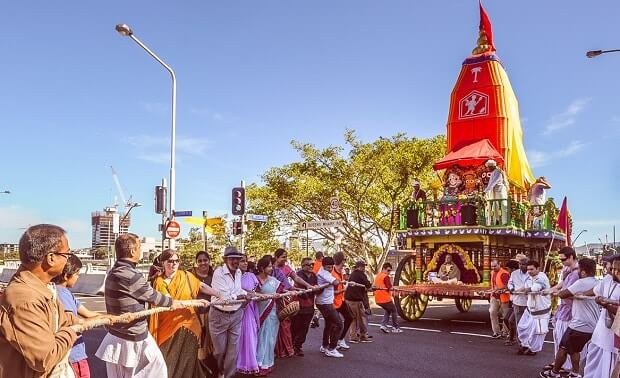
A magnificent hand-drawn chariot was being pulled through the Brisbane CBD, with much fanfare and joy.

The Festival of Chariots, the oldest and biggest street parade in the world was held for the first time in Brisbane this year. It was organised by the International Society for Krishna Consciousness (ISKCON).

“We received permission from the Brisbane City Council to lockdown the CBD as the chariot passed through the streets,” said Niti Sheth, festival organiser, speaking to Indian Link at King George Square.

Specially brought in from New South Wales, the wooden chariot had a large red and yellow canopy decorated with swans, flowers and flags. It carried the deities of Jagannath, Baladev and Subhadra. Attached to the chariot were two thick ropes which were pulled by over a hundred people.

Its journey began from Queens Park winding through the streets and ending at King George Square.

Talking about the festival, Sheth said, “This festival dates back to over 2000 years, originating in Jagannatha Puri on the east coast of India. It is traditionally known as the Rathyatra. It was taken to the US in 1967 by the founder of the Hare Krishna movement, His Divine Grace AC Bhaktivedanta Swami Prabhupada. The festival is now celebrated in over 200 cities across the world”.

In India, thousands gather at the Jagannatha temple to witness a massive royal chariot carrying the temple deities, pulled through the city streets. (Those who saw the parade in Brisbane’s CBD, will have no doubts now about the origin of the term ‘juggernaut’). It is a privilege for Hindus to get an opportunity to participate in the pulling.

In its Brisbane avatar, the free festival became a celebration of peace, harmony and joy, extended to a fun filled day at King George Square, where there was something for everyone. With dances and drama, vedic culture and Ayurveda stalls, henna, face painting and craft workshops for kids, gift shops, there was India in the air! The delicious vegetarian meal being served at no cost, was particularly popular.

People from diverse cultures thronged the venue to be a part of this wonderful festival.

Tirene, an onlooker, fund herself absorbed in the sari-draping demonstration. “This festival is so colourful and it is all so welcoming,” she told Indian Link.

Narada Rishi, an ISKCON devotee, said, “It is good to see ancient culture being embraced in our modern times. It has been such a successful turnout and the crowd has been so receptive”.

Chef Ranchor Dasa, also of ISKCON, was passionate about the vegetarian cuisine that was being so popular on the day.

“We are what we eat,” he said with conviction. “We need to expose people to the delicious vegetarian cuisine and create opportunities for holistic vegetarian food”.

He conducts weekly vegetarian cooking classes at the Govinda’s Vegetarian Restaurant in Brisbane. He shared a sweet recipe with us:

Blueberry Halva

Ingredients

1 cup semolina

1 cup sugar

2 cups water

¾ cup butter

1 cup blueberries

Method

Roast the semolina with the butter. Boil the water and sugar. Merge the syrup in roasted semolina. Stir in the blueberries. Cover for five minutes.

As a modern twist to an old favourite, Ranchor Dasa’s generously-shared recipe might as well have been an interesting parallel to the festival itself.

India up in space

1
Reading Time: 2 minutes

India launches 5 foreign satellites, Modi wants 1 for SAARC

India recently launched five foreign satellites into orbit, prompting a call from Indian Prime Minister Narendra Modi to develop a SAARC satellite to be “dedicated to our neighbourhood as a gift from India”.

“Truly, this is a global endorsement of India’s space capabilities,” said Modi, who applauded as the Polar Satellite Launch Vehicle-C23 – 44.4 metres tall and weighing 230 tonnes – tore into the sky with orange flames fiercely burning at its tail.

The rocket, which took off at 9.52 a.m., was the first space mission after Modi’s National Democratic Alliance (NDA) government took office.

The five satellites — one each from France, Germany and Singapore and two from Canada — were launched under commercial arrangements that ISRO’s commercial arm Antrix Corp entered into with the respective foreign agencies.

The around 20-minute launch mission turned out to be a grand success.

“Today, I ask our space community to take up the challenge of developing a SAARC satellite that we can dedicated to our neighbourhood, as a gift from India,” Modi said after witnessing the space mission.

“A satellite that provides a full range of applications and services to all our neighbours… I also ask you to enlarge the footprint of our satellite-based navigation system to cover all of South Asia,” he said.

The rocket’s main luggage was the 714-kg French earth observation satellite SPOT-7.

Piggybacking on it were four small satellites: 14-kg AISAT of Germany; NLS7.1 (CAN-X4) and NLS7.2 (CAN-X5) from Canada (each weighing 15 kg); and the 7-kg VELOX-1 of Singapore.

Around 18 minutes into the flight, the rocket first ejected its heaviest luggage – SPOT-7.

India had launched another French satellite SPOT-6 in 2012. The latest in the SPOT family of satellites is SPOT-7.

The ejection of SPOT-7 was followed by AISAT (Germany), NLS7.1, NLS7.2 (Canada) and VELOX-1 (Singapore).

Modi said, “We have perfectly placed five satellites into their orbits 660 km above the Earth. India’s advanced space programme puts her in an elite global group of 5-6 countries. This is one domain in which we are at the international cutting edge. A domain in which we have pushed beyond mediocrity to achieve excellence. We have launched satellites of advanced nations. PSLV itself has launched 67 satellites; of which 40 have been foreign satellites, coming from 19 countries”.

“Even today’s satellites are all from developed nations – France, Canada, Germany and Singapore,” Modi continued.

He added that inspired by the vision of former prime minister Atal Bihari Vajpayee, “we have sent a mission to the Moon. Another is on its way to Mars as we speak… We have also developed our own satellite-based navigation system. I am told this will be fully deployed by 2015”.

Starting from 1999, India has launched 35 foreign satellites till date using its PSLV rocket. The successful launch of five satellites Monday takes the tally to 40.

India began its space journey in 1975 with the launch of Aryabhatta using a Russian rocket. It has completed over 100 space missions including missions to moon and mars.

IANS

Diwali at school

0
Reading Time: 3 minutes

Celebrate India launches essay competition for primary students

When the Celebrate India organisation was founded some eight years ago, the main intent was to undertake activities that would give mainstream Australians a feel of Indian culture.

Today, the group can claim it has accomplished this successfully, given they have taken the festival of Diwali straight to the heart of Melbourne city, attracting thousands of citizens as well as those in the topmost rungs of government, as guests.

But of course Celebrate India will not merely rest on their laurels.

Led by Arun Sharma, the not-for-profit organisation has come up with a unique initiative that will take the Indian festival of lights to primary schools across the state.

An essay competition on Diwali has been launched for students in Years 5 and 6, designed to encourage them to explore and share their experience of Indian culture. Entrants will submit a piece of descriptive writing, 300 – 350 words long, on the similarities and differences between the Indian festival of Diwali and Christmas.

Some attractive prizes have been announced, including two Air India tickets to India, and a 6-week AFL Leadership Program (including a visit by an AFL player) for the school with the most entries. Winners will be announced at the mega Diwali celebration to be held at Fed Square later this year.

Sharma has been working on the project for nearly two years now.

“It all started with a little experiment last year,” he told Indian Link. “We worked with one school that has adopted the study of Hindi across all year groups. Focussing on two classes, we ran a simple essay competition on Diwali. Some twenty students entered, and we received some beautiful pieces. We featured them in our magazine. This got us excited, and we decided to take it further”.

The Education Department was immediate in its support to take the initiative across the state.

“Nearly 5000 schools will now be approached to participate,” an excited Sharma revealed. “Even if we get ten entries from each school, it will be a fantastic response!”

And a logistical nightmare for purposes of assessment, he confessed, but he is not fazed. Especially given the response he has received when requesting support. The Education Department jumped at the idea as soon as it was presented, and the Government of India was just as quick to offer assistance. Air India was happy to oblige, and the AFL, which has been pushing hard recently to increase its multicultural reach, came on board too.

This got some fabulous prizes lined up; more are currently being worked out.

“I’m looking at the bigger picture here,” Sharma revealed. “To promote social inclusiveness, there’s no better place to start than at the earliest possible age levels. Giving young kids a feel of other cultures helps in building familiarity, decreasing discrimination and racism, and therefore in promoting harmony. With the essay contest for instance, not only the participating kids but teachers as well will become involved, for whom we have developed a teacher’s resource kit on Diwali. Then, hopefully the families of the students will become involved too”.

This possible trickle effect will ultimately help in promoting acceptance.

“I’ve just been told that when this venture was described at a school principals’ national conference, there was widespread positive feedback,” Sharma revealed. “No other non-English speaking community in the country has ever suggested such an initiative. In Victoria at least, I believe students are required to spend a stipulated number of hours in activities of a multicultural nature, and programs such as these easily fit in there. So we’re hoping that other schools, even private schools, take up this or similar projects”.

Of course there are other aims too, Sharma revealed, one of them being to reach out to our own kids in a different way.

“For our second generation kids, who are not as connected to our traditions, it will be meaningful to see mainstream community participating in an Indian activity and enjoying it”.

Speaking to Indian Link before the official launch of the program, Sharma mentioned that he has been seeking support from a variety of other platforms.

“We’ve approached the mainstream press, VMC, and many parliamentarians. To the Indian community at large, we say, get behind this initiative and help us make it a success”.

The competition runs from 30 July to 20 September.


More than a temple

0
Reading Time: 2 minutes

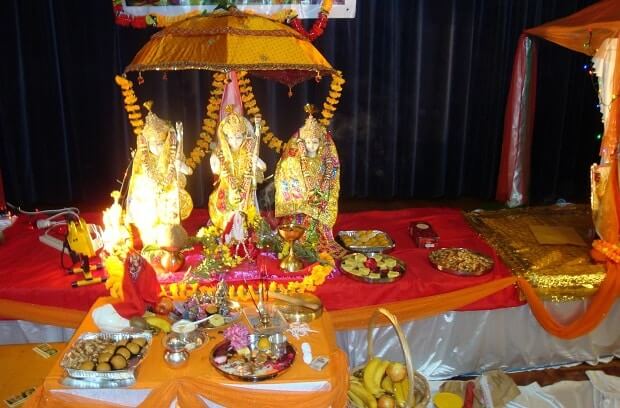
For the Sankat Mochan Samiti, it was a long-cherished dream realised. They celebrated the grand opening of a temple dedicated to Lord Hanuman in south-east Melbourne recently.

They call it ‘Kendra’, or centre, to denote that it binds rather than segregates humanity.

Fighting the deplorable 8 degrees of soggy Melbourne weather at 9am on Sunday,15 June, a hundred plus of us were already congregated at the venue. A select forty of us took our seats in groups of eight around five individual sacrificial fires known as Havan Kunds. Simultaneously and without breaking the continuity of the rhythm, we chanted the ahutis, all eleven thousand of the Gayatri Mantras discipline, and burned consecrated saamagri to seek god’s blessings for our physical and spiritual purification.Volunteers in the background continued to refurbish the hall. The day’s activities included Murti Pran Pratishtha, the actual moortisthapna and pranpratishtha, supported by aarti and Shanti Path. The ceremony ended with offerings of prasad and mahaprasad.

The Kendra boasts two hundred plus square metres of the hall that is used for spiritual activities, and eight square metres of office space. In Ram Darbar, the devotees perceive the sanctified manifestation ofHanumanji, DurgaMata, Ganeshji, ShirdiSaiBaba, Shiva-ling, and also Navagraha, the nine planets that determine destinies. The Kendra will be further augmented with deities in years to come.

Just as unconditionally as Hanumanserved Lord Rama, the Sankat Mochan Samiti,a welfare organisation, is committed to providing physical, moral and spiritual guidance to those of any colour, caste or creed in need. Irrespective of one’s religious beliefs, the Samiti involves itself in providing cultural heritage education to members of the fastest growing community inVictoria, the Indian community. Juxtaposed imaginatively in a refurbished shedat 1289A North Road in Huntingdale, the Kendra is by the Monash University bus stop and a convenient walking distance from the station, off street parking aplenty. For more information, please contact Samiti President Dr. Sunila Srivastava on 0427 274 462.                                                    

Model, actor… and change agent

0
Reading Time: 2 minutes

Mr Melbourne launches new organisation to encourage social change, writes RAVI SINGH

Mr Melbourne Australasia 2013 Puneet Gulati recently officially launched his not-for-profit organisation One World Family (OWF).

The launch took place at his residence, with prominent figures including Assistant Commissioner of Police Victoria Mr Andrew Crisp and Director of the Victorian Multicultural Commission Senior Sergeant Mr Rudy Monteleone in attendance.

The concept of OWF focuses on raising awareness of issues through visual mediums. Projects are filmed in documentary form and presented to the world through a Webisode posted on OWF’s YouTube channel. The documentaries aim to make people think about the power of the common man and his ability to do something special for the community.

OWF’s first project ‘Hope to Homeless’ aims to better the lives of homeless people and raise awareness of the increasing prominence of homelessness, particularly in the western and northern suburbs of Melbourne.

‘Hope for Homeless’ has already made an impact by providing a makeover for a homeless man, sponsored by Penny’s Salon in Box Hill. The man was then given private accommodation and work so that he could earn money and start a new life.

Mr Andrew Crisp said he is impressed with the organisation’s focus on homelessness, as it is a difficult issue for police to deal with and is always prioritised in order to keep homeless people safe.

OWF plans to further the organisation’s impact by raising awareness of a broader range of issues from violence related causes to environmental concerns. Their main objective is to empower people to influencing change. If OWF can do it, so can they.

OWF will maintain the Webisode and visual media strategy. They strongly believe that visual media, along with the vision of OWF, has greater power to impact viewers. Audiences can learn from both the good and the bad by watching responses to situations surrounding an issue.

OWF hopes to gain the support and sponsorships of local and international businesses to enhance their cause. Being a not-for-profit, they also rely heavily on public donations and support.

Comedy Central

0
Reading Time: 2 minutes


Class clown to comedian

Sydney funny man Neel Kolhatkar entertains audiences across Oz

Food Fails

UZMA BEG compiles readers’ stories about all things disastrous in the kitchen


Curtains for “you’re”…

Curtains for “you’re,” and please don’t reply “your right”

Did that light your fire?

Indian writings of pleasurable things between the pages win Bad Sex Awards for all the wrong reasons

Top Ten Comedians with Indian links

Indian origin comedians who can laugh at themselves are hitting a home run with audiences globally

It’s a ‘Modi’ fied India

… where a thousand lotuses bloom