Home Blog Page 944

Vivekananda in ten minutes

0
Reading Time: 3 minutes

A marathon of 22 awe-inspiring short plays spread the message of Vedanta

Following the success of the stage production Oneness: Voice Without Form in 2013, the Ramakrishna Sarada Vedanta Society of NSW have made another theatrical effort this year to send out the message of Vivekananda. Their ‘Vedanta Ten Minute Play Festival,’ showed at King Street Theatre Newtown in early June.

Short play expert Alex Broun, who directed Oneness, was at the helm of affairs again this year. The festival involved a journey of self-discovery through 22 ten-minute plays set in contemporary Australia as well as 18th century India.

Nearly 100 writers, directors and actors were involved in the production. Some 400 people came in to watch the festival over three days. The marathon of plays focused on a diverse group of historical and fictional characters linked by the theme of ‘humanity’s search for meaning and peace’, and was inspired by the teachings and life of the mystic Swami Vivekananda.

The audience included those who are acquainted with the teachings of Vedanta as well as many who are not. For them all though, the messages from the life of Vivekananda, as depicted on stage, would have struck a chord.

The grandmother who talks to the kids about equality of all creatures in Hand of God, a born again Christian woman who questions her mother’s apparent obsession with Vedanta and Yogic lifestyle (Before the Consecration), a man who undergoes a spiritual transformation after a near-death experience (What Happened to Barry), and the neighbours who squabble in Enchanted, all draw attention to Vivekananda’s philosophy of life.

In one of the most power-packed performances of the festival, actors Pheona Mulligan and Aishveryaa Nidhi performed in Guru Keith, a story about a man who keeps a terrible secret from his wife about the accidental death of their daughter. Instead of supporting his wife and sharing the burden of grief, he hides behind his new found philosophies of religion.

Mahila, directed by Aishwaryaa Nidhi and starring Aaron Scully and Tania Starr, was based on the Vedanta philosophy of reaching one’s fullest potential by work and mental discipline.

The Awakening told the story of the young Vivekananda’s encounter with the Goddess Kali which led to his deep spiritual arousal. Actors Veena Ramaswamy as Kali, Carlos Sivalingam as Ramakrishna and Robert Rhode as Narendra impressed in their roles.

A more contemporary tale,Vivekananda in 2020 was a perfect example of how the spiritual master’s teachings cross all the boundaries of time, places and cultures. While the latest in technology mayhave enabled user experience of the ‘present’ ‘past’ and ‘future’, has it really helped in solving our problems? Vivekananda became one of the speakers ‘from the past’, reflecting views that related appropriately to the modern world problems. Rajshri Roy as one of the conference chairpersons impressed the audience with her extraordinary dialogue delivery at the ‘conference’.

The Vedanta fundamental of selflessly taking up an idea and living, thinking and dreaming of it, was expounded beautifully in Sins of the Father. Learning that his father educated him through money raised from bribes, a young man decides to dedicate himself to educating poor children for free of cost.

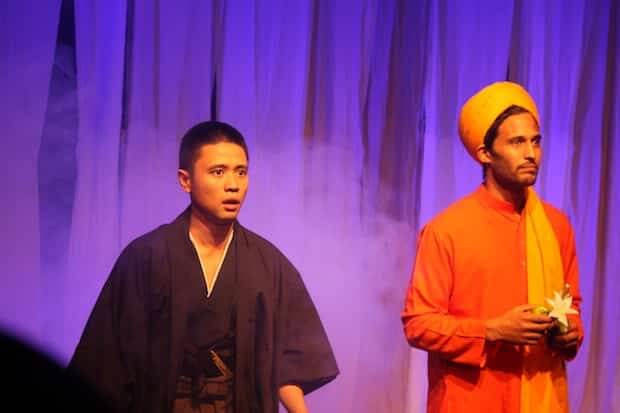
That Swami Vivekananda transcends the boundaries of time and space came out loud and clear in Okakura and Vivekananda. Here, director Miyoko Hiramatsu brought us insights from the life of a famous Japanese art scholar Okakura who was greatly inspired by Vivekananda. A great story about conserving traditional cultures like the Japanese and the Indian, the play also symbolised Swami Vivekananda’s words, “Every soul attains perfection”.

Indeed, this was one of the many ‘take-away’ messages from the festival.

Capital growth

0
Reading Time: 4 minutes

Check out this list of fascinating books that paint a picture of Delhi through the ages 

Thomas Metcalfe, while working as the Governor General’s Agent at the Imperial Court of the Mughal Emperor, sent his daughter the ‘Delhi Book’ in 1844, which was an album of 120 paintings of the city by Indian artists. Metcalfe wrote his own descriptive text alongside the paintings, and the album remained in the family for almost 150 years before being added to the British Library collection. Ever since, Delhi has prompted historians, novelists, academics and travel writers, to put pen to paper and capture the elusive spirit and soul of the city.

There is the definitive work of Delhi-at-the-time-of-the-Mutiny by Mahmood Farooqi (2010) called Besieged: Voices from Delhi 1857 whereby an author, a historian and a raconteur captures the pall that fell over the rebel government of Bahadur Shah Zafar in Delhi, around whom the sepoys rallied and marched against the British in Shahjahanabad. Farooqi laboriously translated Urdu documents from the time of the Mutiny in the National Archives to evoke the mood of that seminal moment in Delhi’s history.

Two other books New Delhi: Making of a Capital, by Malvika Singh and Rudrangshu Mukherjee (2009) and Delhi Metropolitan by Ranjana Sengupta (2007) trace the evolution and emergence of the modern city from the time the British moved the capital to Delhi in 2011: from the new city that Lutyens planned, to the colonies that came up to absorb the influx of refugees at the time of partition, to the new metropolis of 16 million people that it is today.

Two works of fiction Twilight in Delhi by Ahmed Ali (1940) and Delhi by Khushwant Singh (1990) paint vastly different images of the city through their protagonists. Ali’s novel chronicles the disintegration of a Delhi family that traced its lineage to one of the city’s sultanates. When the patriarch of the family visits the 1911 Durbar, he grieves when he sees the descendants of the exiled Bahadur Shah Zafar begging in the streets. Singh’s protagonist inimitably describes Delhi as the “mistress to which he returns when he has had his fill of whoring in foreign lands”.

Two other books can be said to be predominantly about Delhi at the time of the Emergency. They are Salman Rushdie’s Midnight’s Children (1981) and Emma Tarlo’s Unsettling Memories (2003). Rushdie riles against the excesses of the Emergency in his novel; so does Taro, but as an anthropologist who uncovers files of the Municipal Corporation in Delhi that involve the forced sterilisation of the poor.

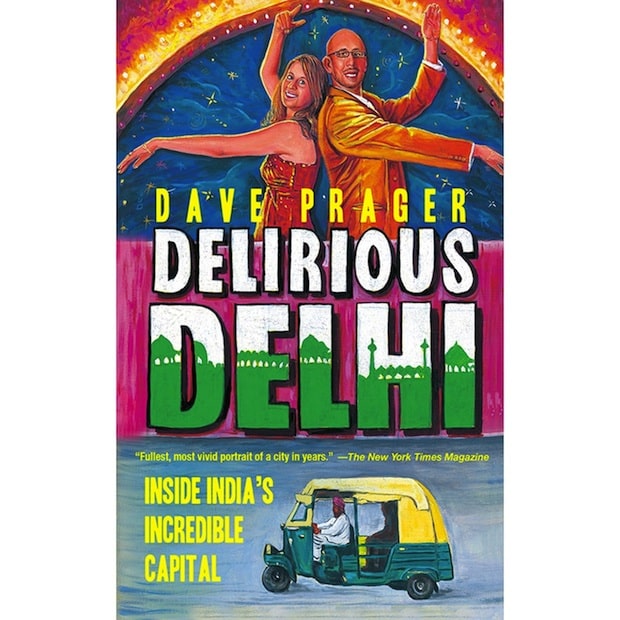
Then there is the book about Delhi for expatriates by Dave Prager titled Delirious Delhi (2013). Prager and his wife moved to Delhi from New York.  His was a love-hate relationship with the city before he found a balance between the best and worst their new home had to offer. Prager structures his book as a guide for other expatriates, with chapters on food, shopping, workplace culture and transportation. It especially highlights Delhi’s traffic, about which Prager seethes. However, the book is more than just a how-to guide. It is an appealing memoir, as Prager is a solid storyteller, and the book is an enjoyable tour through the city. Highly recommended for anyone wishing to travel to the city.

Dalrymple’s City of Djinns (1993) remains one of the most popular books on the city ever written.  His Delhi is the city of multiple empires and kingdoms, shaped by money, food, art and literature. More recently, Sam Miller published Delhi: Adventures in a Megacity, which is almost entirely his view of the place as a walking city: through manholes, obstacles and speeding traffic, through Noida and Gurgaon and the most absurd sights.

This brings us to a recently published book called Urban Villager, written by Vandana Vasudevan (2013) on the recent urban expansion that has led to the growth of satellite towns such as Noida, and the city’s push further into what were once rural Uttar Pradesh and Haryana.  There, modern gated communities jostle for space among erstwhile and urrent villages, in a never-ending search for new land for ‘developments’ that are shorn of any character or ingenuity. Arvind Adiga, writing in his novel White Tiger (2008), said Gurgaon was built by the rich and had “no parks, lawns or playgrounds – it was just buildings, shopping malls, hotels and more buildings. There was a pavement outside, but that was for the poor to live on”.

Rana Dasgupta, another novelist who made Delhi his home in 2000 when he moved there from Britain, has recently written a book on his adoptive city called Capital: A Portrait of Twenty First Century Delhi (2014). It is a brilliant and compelling book that examines the growth of Delhi since the country embraced free market principles in 1991. He writes with the elegance of a novelist and the incisiveness of a chronicler, and argues that globalisation has been catastrophic for capitalism. The nexus between politicians and developers has only fuelled corruption and the market economy has curtailed the rights of the poor. It has ruptured the delicate fabric that held the city together since Partition when over one million Hindu and Sikh refugees poured into the city. A city that once fuelled the ambitions and hopes of millions of people, now serves only the rich. Dasgupta concludes, rather sombrely, that for this reason, Delhi will never be a city like any in the West.


The classical greats revisited

0
Reading Time: 3 minutes

It’s a weekend-long tribute to Carnatic music’s most enduring

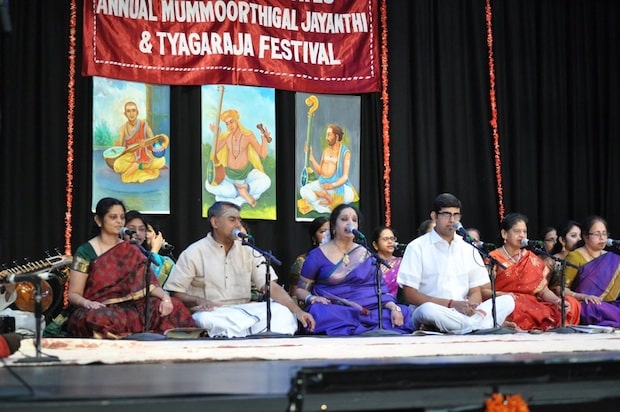
The annual two-day Mummoorthigal and Thyagaraja Festival organised by the Ravichandhiras of the Academy of Indian Music Aust Inc. and Sruti Laya Kendra, India, was held at the Kel Watson theatre in late May.  This is the 167th anniversary of Saint Tyagaraja. This event pays tribute to his contribution to Carnatic music, as well as that of his illustrious contemporaneous composers Muthuswamy Dikshitar and Shyama Shastri.

The gala event began with a traditional puja at the altar, followed by the congregational singing of the Pancharatna kritis, the five immortal ‘gems’ composed by Thyagaraja.

For the Carnatic music connoisseurs of Melbourne, this is a much awaited event in their annual music calendar. There are few that can equal the grandeur and the splendour of the top vocalists, instrumentalists and percussionists rendering these great compositions together. It is a truly uplifting experience. This year, they were joined on the stage by visiting artistes Sikkil Gurucharan, Shaswati Prabhu (vocalists), mrudangam maestro Karaikudi Mani, violinists Sriram Kumar and A G A Ganasundaram, and Bangalore Amrith, kanjira player. Maestro Karaikudi Mani has performed with many international artistes including Jazz musician Paul Grabowsky of the Australian Art Orchestra.  A series of his compositions were adapted by the Australian Art Orchestra into jazz and released as album Into the Fire in 2000.
The Talented Young Musicians Ensemble (TYME) is an initiative of Sri Ravichandhira to encourage and promote young, emerging artistes of Melbourne by giving them a platform and an opportunity to perform before top Carnatic musicians and dancers from India, as well as a discerning audience. The group got all of this and much more at the festival this year, presenting some interesting items, one of which was directed by Gurucharan himself assisted by the Iyer brothers.

The TYME segment consisted of more than 35 vocal, percussion, instrumental numbers.

A competent and lilting bharatanatyam presentation was also made by a number of students nominated by Melbourne’s reputed dance schools under the coaching and able guidance of Shanthy Rajendran, which aptly included, among the items, Thyagaraja’s Sri Ganapatini in raga Saurashtram. These were followed by individual concerts by the cream of Melbourne’s Carnatic music community, all familiar and established artistes and teachers.

One of the highlights of the entire event was the full-fledged vocal concert by Sikkil Gurucharan. He was supported on the violin by Sriram Kumar, on the mrudangam by Karaikudi Mani and on kanjira by Bangalore Amrith. The percussion interlude by Guru Mani and Amrit was a stunning masterpiece.

The second day began with a TYME ensemble. The instrumental segment was presented under the able guidance of A G A Gnansundaram which reflected the true Lalgudi padantharam. Percussion was overseen by Balasri Rasiah, which gave some insight into distinctive styles of structures composed by the stalwarts. After some individual vocal and instrumental concerts by the cream of Melbourne’s Indian classical artistes, AGA Ganasundaram presented a violin solo. Rajeshwari Sainath, a well-known bharatanatyam artiste, who is no stranger to Australia, having performed here on many occasions such as TEDx Sydney where she was hailed for her ‘imaginative splendour that goes beyond technique’, gave a brilliant performance, consisting of a full repertoire: beginning with a mallari, a varam in valaj composed by the legendary music critic, the late Subbudu.  In it, a marathon item, Ms Sainath not only displayed her mastery over natya, but also nritta by weaving intricate patterns with her footwork, the jatis having been composed by her uncle Karaikudi Mani himself, and adavus which would have been a challenge to dancers even much younger.

Vocalist Saaswathi Prabhu (a disciple of the legendary Lalgudi Jayaraman) impressed with her pleasing and tasteful selection of music. Young Sai Nivaeithan who recently obtained B high grade in All India Radio made us proud by his effortless delivery of Nadham mixed with dexterity on his mridangam.

The festival director Ravi M Ravichandhira OAM, said the event has now become an integral part of Melbourne Indian community’s cultural calendar and was recognised by leaders in government, Australia Council, Department of Foreign Affairs, and the community, as evidenced by the presence of both Liberal and Labor leaders this year. It has grown in the last 25 years to become perhaps the second largest conference and festival of its kind outside India.

The festival’s overseas guest of honour was Prabhu Yagyaraman, the Secretary of one of the most respected sabhas / musical societies in Chennai, the Krishna Gana Sabha. He had high praise for the way in which the festival was being conducted, keeping classical traditions alive in a land far from home.


Prevailing over saffron traditionalists

0
Reading Time: 3 minutes

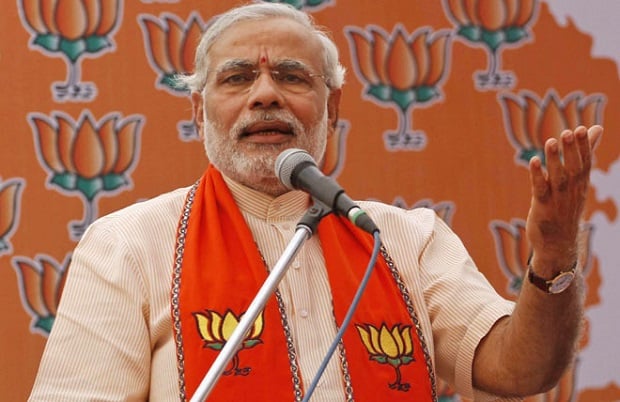
As PM, Narendra Modi has to date showed that his vision for India is a forward-thinking one, writes AMULYA GANGULI 

The Hindutva fundamentalists may be slowly realising that the Bharatiya Janata Party’s victory is unlikely to help their cause as much as they would have liked.

For instance, any sense of elation which they felt when Narendra Modi said during the election campaign that the Bangladeshi infiltrators would have to pack their bags and leave on the day the results were announced, must have dissipated by now.

It isn’t only the good neighbourly relations which New Delhi wants to establish with Dhaka which must have disheartened the saffron camp but also the suggestion for visa-free entry for Bangladeshis below the age of 13 and above 65 years, which has been opposed by Assam Chief Minister Tarun Gogoi.

What these overtures emphasise is the primacy of development on Modi’s agenda, calling for eschewing any possibility of tension in the South Asian region. Since this may not be feasible where China and Pakistan are concerned, New Delhi is apparently keen to establish benign ties at least with Dhaka, ignoring the earlier imputations by the Rashtriya Swayamsevek Sangh (RSS)-led Sangh Parivar that the illegal immigrants not only intended to tilt the demographic balance in India in favour of Muslims but also act as “sleeper cells” associated with terrorists.

What is evident from this turn of events is that development has aspects other than mere economic growth. It is not only a matter of roads and bridges – and bullet trains which seem to hold a special fascination for Modi – but also reducing all manner of controversies to the minimum since they may queer the pitch for investment.

The government’s exhortations, therefore, to its supporters to be careful in their comments on the social scene are in sync with its desire for a business-friendly environment. Any hint of misogyny, or an attempt at what has been called a psycho-analytic explanation for crimes against women, are to be avoided.

Hence the speed with which a Goa minister retracted his disapproval of women wearing short dresses in pubs or bikinis on the beach. A few days earlier, in the same state, a proposal to send a team of legislators to Brazil ostensibly to learn about the handling of World Cup matches was nipped in the bud.

The keen-eyed Modi government, which appears to keep a close tab on events far and near, is clearly aware that neither an egregious display of conservatism nor an uncalled-for trip at the tax-payers’ expense will enhance its image of purposefulness.

It is aware that an economic program, which highlights the capitalistic agenda represented by glittering malls and multiplexes, cannot be implemented in an atmosphere where women have to be careful of not offending ultra-orthodox sentiments.

This very point was stressed by former finance minister P. Chidambaram in the context of the Shiv Sena’s Maratha chauvinism and the Congress-led Maharashtra government’s ban on bar girls in Mumbai. His view was that a city aspiring to be the financial capital of India cannot allow “parochial and jingoistic statements and misconceived intentions that belong to moral policing”.

Despite the caution, the Chavan government is bent on banning dance bars to please the conservatives.

But by openly disapproving of such sections in the saffron ranks, Modi has shown an assertiveness which is not common among Indian politicians who tend to take the line of least resistance, especially where conservative sensibilities are concerned.

However, by sidelining some of the key preferences of the Hindutva camp on matters of religion such as the Ram temple, or on the social scene such as women’s dresses, the government has underlined its wish to follow a new course, which is markedly different from what used to characterise the BJP and the RSS in the 1990s when the traditionalists held sway. The primary objective now is on containing price rise and reviving the economy.

There is little doubt that the present scene will be disappointing for any group in the Sangh Parivar which believes that there will be a return to the ’90s, such as when Ashok Singhal of the Vishwa Hindu Parishad (VHP) said that only Modi can save India from “total Islamisation”.

Modi can be said, therefore, to have prevailed against the traditionalists. His trump card is economic revival. If the growth rates go up and there is hope that the employment situation will improve, his acceptability will be even wider than at present even if his “bitter medicines” in the shape of extracting user charges from the public are criticised by his political opponents.

But outside the field of economics, Modi’s main achievement may well be the taming of the saffron extremists.


Fashion for a cause

0
Reading Time: 3 minutes

A selfless Sydney teen finds a unique way to raise funds for the Leukaemia Foundation

A 14-year-old with a passion for fashion, planning and executing a flawless show to raise money for the Leukaemia Foundation, certainly grabs everyone’s attention!

I felt fortunate to attend Pri Kumar’s Charity Fashion show, held recently at the Pennant Hills Community Centre, and make a small contribution to this noble cause. It was an event that was planned and executed with great precision.

To wake up one day with what you think is a brilliant idea is not uncommon for a 14-year-old, but to actually see it come to fruition involves effort, planning and sacrifice too. That is exactly what Pri Kumar did when she was struck with the idea of organising a charity fashion event.

Pri was attracted to fashion from a young age, and using her entrepreneurial skills she has even designed and published her own fashion magazine in the past. She managed to sell a few of these for $5 each. This gave her even more conviction that she could put together a fashion event for a good cause and make it a success.

After a good couple of months of research, planning and getting her team of models, makeup artists and impressive performers together, Pri did indeed make the event as close to a professional fashion show as she could. Her excited teenage friends did a great job of walking the catwalk with style and attitude. All the models were only between 13-15 years of age but as an audience you could hardly tell! It was interesting to see a mixture of girls with varied heights and cultural backgrounds, which only made the event richer.

Three rounds of themed outfits were on show and they were creatively put together to say the least! The clothes were certainly both trendy and wearable, and had a great vibe. The last round showcased outfits by Studio Ten, a local boutique that sells celebrity-inspired outfits at an affordable price. Studio Ten were generous in sponsoring the last segment and the outfits were much appreciated.

Some of the other sponsors did a great job too, and Pri made it a point to thank them abundantly for their support. She networked and roped in all the relevant people in a way that is really commendable for a teenager. Pri was also extremely grateful to her parents for their unconditional support and expressed an emotional ‘thank you’ at the end of the event.

The show boasted all the elements of a professional event management production – raffle prizes, designer goodies on sale, impromptu light-hearted stories and well-scheduled performances. The event began on time and was well managed in terms of timing. The venue had been set up well, and decorated with lively pictures that told the story of how the event came about. The turnout was encouraging and Pri could easily take pride in that fact that she managed to raise a decent amount to donate.

It was good to see another teenager who has done herself proud with fundraising, come and narrate her story and spread awareness about leukaemia. It was easy to tell that Pri had the backing of not just her family and friends but also her teachers, acquaintances and all associated with her through this journey.

The willingness this young generation showed, to do something for the underprivileged and less fortunate people of society, was inspiring.


A visionary philosophy

0
Reading Time: 3 minutes

Sydney charity Vision 2020 is committed to transparency in its fundraising for the less fortunate

Sydneysiders have never shied away from lending a helping hand, be it for natural disasters, unforeseen emergencies or when people in distress do not know who to turn to for help. They have reached deep into their pockets and have lent a shoulder whenever they are called upon to do so.

Foremost among the many not-for-profit organisations is Vision 2020, which has an enviable track record. They have organised two charity fundraising events each year since 2007, one an outdoor event, the other an indoor event usually held close to Diwali. The organisers have successfully raised well over $130,000 to support over a dozen projects in South Asia and East Africa.

A small group of committed people initiated Vision 2020 on the eve of Mahatma Gandhi’s birthday in 2002, and resolved to make a difference to the lives of the less fortunate in the developing world. In the process they found an additional dimension to their own lives by raising and funding projects that are a worthy cause. All projects funded by them so far have been identified and suggested by their members and friends. Their team has carefully scrutinised every project and seen to it that the funds are used as projected.

In a recent interview with founding member and, until recently, the President of the organisation, Mr S. Nagarajan, he said the voluntary body aimed to have membership open to anyone who wants to sponsor or make a contribution to the betterment of the community.

The Vision 2020 team choose to make their activities completely transparent with the objective of ensuring 100 per cent of the charity proceeds go to the projects they sponsor. Their treasurer explained the prohibitive administrative costs of some high profile organisations were disappointing members.

Vision 2020 is registered with the Department of Gaming and Racing as an approved charity for fundraising. To ensure that they comply with all the requirements of a voluntary body, they have appointed an independent auditor who certifies the accounts and works on a voluntary basis like all other members of the team.

The organisation is also committed to ensuring that all its activities are free from any form of discrimination. It is free to transcend geographical boundaries. Projects chosen for sponsorship are for those definitely in need of help, and the recipients must be willing to help with evaluation of how they use the funds until project completion.

It goes without saying that the activities of Vision 2020 have gained momentum in the community as they have an ‘open door’ policy to new participants, and they welcome suggestions from members as long as they fall in line with the unwritten charter of helping the needy.

Charity work is primarily based on reason not emotion. Since Indian origin people are the dominant group among the members, it is natural that most of the projects funded by Vision 2020 are based in India, although they have also supported the Sahara Children’s home in Nepal and have extended their assistance to Somalian Disaster Relief with a contribution of $7200 through the UNHCR Somalia Relief Appeal.

Among the causes that Vision 2020 has supported are aged care homes, orphanages and institutions for the destitute. They have also ensured good health care is provided for children with muscular dystrophy and children with cerebral palsy, autism, brain damage or other mental impairments.

It was a policy decision made by Vision 2020 to fund one-off infrastructure projects where the organisation could see tangible results and monitor the quality of the project outcome. Wheelchairs, electricity generators, disabled-friendly vehicles, building ramps, toilet blocks, class rooms, and hostel buildings are some examples of solid, sustainable projects that they have funded so far.

It is unsurprising that their most recent endeavour was a sterling effort; a “Vision Walk” in May at Parramatta Park aimed to raise $16,000 towards construction of an eye care vision centre to be undertaken by Nav Bharat Jagriti Kendra in Chouparan Block in rural Bihar (details available at www.nbjk.org). There were about 170 enthusiastic participants and judging by the response, it was another feather in the cap of Vision 2020 whose members and supporters have been involved in charity work for some years now.

Vision 2020 have also created a new opening for people with a charitable slant. They have introduced a ‘Gift Voucher Scheme’ whereby willing donors are able to buy the vouchers in various denominations from $10 to $100. There are several social invitations that specifically suggest charitable donations to substitute gifts at weddings, anniversaries, birthdays and other special events. Given the great work of Vision 2020, this would seem to be a most appropriate alternative.

For details visit their website: http://vision2020.org.au/

Tackling the smoking problem in remote Australia

0
Reading Time: 4 minutes

A public health activist and researcher in Arnhem Land takes up the fight against a deeply entrenched cultural practice

Following World No Tobacco Day not so long ago, a documentary film was released earlier this month that explores the problem of smoking in a remote Aboriginal community.

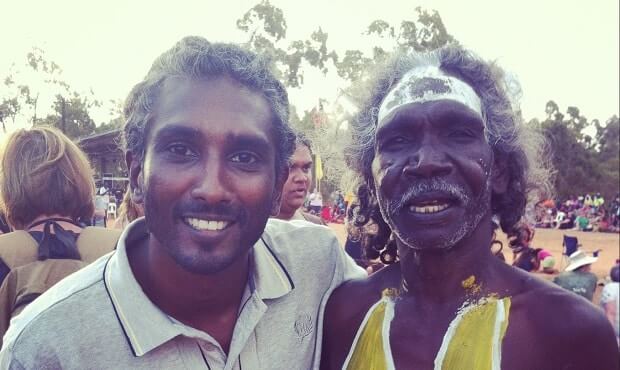
Produced and directed by Kishan Kariippanon, a doctor and public health communications researcher who lives and works in the Nhulunbuy in Arnhem Land, the film The Tobacco Story of Arnhem Land looks at the culturally entrenched practice of tobacco use in this community.

Smoking is the leading preventable cause of ill health and death among Indigenous Australians and contributes significantly to the gap in life expectancy. Previous efforts to stop smoking have not been successful. So Dr Kishan decided to take a different tack.

Inspired by Tamil film director Venkat Prabhu, Kishan has used the Tamil cinematic style to shoot this documentary.

“I like the way they show emotion in Tamil movies,” Kishan revealed to Indian Link. “I want Aboriginal kids to watch my film, absorb the story and its lesson, and share it”.

He has a practical approach to the smoking problem.

“It is ridiculous to expect people to quit when they have been smoking since they were children,” Kishan explains. “Smoking is ingrained in their culture; they even have a tobacco dance at funerals. My style is to take baby steps in changing behaviour – don’t smoke in front of grand-kids, don’t ask children to pick cigarettes for you, and don’t smoke in your house or your car where there are kids”.

Kishan Kariippanon is currently researching the interplay of social media and mobile phones amongst Yolngu (Aboriginal) youth, observing their use of Facebook and mobile phones, and how this could be used to promote their wellbeing.

Arnhem Land is one of the few areas in Australia where Aboriginals still live a traditional life.

So how did Kishan, a Malaysian with an Indian background, land in Nhulunbuy?

“I worked for three years at Darwin at the Centre for Disease Control, looking at sexual health and policies around young people. One of my aims was to help make the clinics more youth-friendly. During this time I realised that there was a lot of social media use by Aboriginal kids in remote communities. They do not have a TV or landline, but they do whatever they can to access Facebook and YouTube through their mobile phones. I was intrigued and decided to research this for my PhD,” Kishan says.

Speaking at TEDx Darwin, Kishan argued that promoting health to Indigenous youth needed a serious rethink. Social media and mobile technology could be put to good use to accomplish this, he suggested.

A doctor who heard Kishan’s talk at TEDx invited him to be part of his scabies project in Arnhem Land.

Shortly thereafter, Kishan moved with his family from the relative comfort of city life in Darwin to a tin-shed house in Nhulunbuy.

The move was crucial to his being accepted by the Aboriginal community.

“They felt that this guy must be serious, if he’s decided to move so close to us!” Kishan says with a laugh.

He adds with a twinkle in his eye, “I used my cooking skills to entice the elders. They loved my chicken curry, rice and pappadums!”

“Growing up in a multicultural society like Malaysia, and having the rich heritage of India, certainly gave me an advantage as some of the cultural protocols of the Aboriginals came naturally to me,” he continues.

Kishan’s earnestness in understanding the Aboriginal culture was evident and soon he had the trust of the Yolngu people. He even started learning their language by mixing with the locals. The more he understood the people, the more he was struck by the similarities of their culture and language to that of Asia.

“Specific Yolngu clans are distinctively similar to South Indians,” Kishan observed.

It has been a long journey spanning continents and remote corners for this intrepid man.

Volunteering in Siberia after high school in Malaysia, he stayed on to complete medical school in Russia. Soon he was packing his bags for Timor Leste, when the civil crisis broke in 2008, to volunteer as a doctor. Kishan’s multi-lingual skills proved very useful and he had a busy life at the clinic seeing 150 patients a day. But this was soon to change.

His keen observation skills helped uncover a human trafficking syndicate. When the number of young girls who came to test for HIV at the clinic reached 26, Kishan suspected that the girls were being trafficked. He took his hunch to the police. The perpetrators were caught and a massive ring from Timor Leste to Cambodia to Damascus to the Middle East, was uncovered. Thanks to him the young girls were saved, but it was no longer safe for him to remain in the country. Soon he was off to Melbourne to do a Masters’ degree in Public Health.

“And that was the end of my short clinical practice,” laughs Kishan, happily going wherever life has taken him.

Today, he is passionate about Aboriginal affairs.

When asked if ‘Closing the Gap’, the government program on reducing the 17-year life-expectancy gap between Aboriginal Australia and other Australians has worked, Dr Kishan is emphatic that it has.

“Only in the 1970s were Aboriginal people given citizenship rights. Before that they came under the Flora and Fauna Act! This segregation and other factors have had a long term effect on the psyche of people. ‘Closing the Gap’ is definitely a good start. Things are slowly getting better. The difference in culture is definitely a barrier. We need more participatory decision-making processes, a trans-cultural approach to solutions,” says Kishan, who now has a first-hand understanding of the issue.

For more about Kishan Kariippanon’s film The Tobacco Story of Arnhem Land, visit www.miwatj.com.au


All dolled up and ready to canter

0
Reading Time: 3 minutes

Indian artist Ajay Sharma rides his majestic steed into Sydney’s art scene

The horse has interesting symbolism in art.

It is a symbol of energy, of a driving force that carries you through life. It also represents freedom of expression, especially as the instinctive wild and tamed aspects of personality are balanced. As such, the horse is a perfect medium for Indian artist Ajay Sharma’s work.

In a recent Sydney exhibition The Speed of Life, he uses a series of horses to lament the loss of traditions and family values, and an increasing disconnect with nature, as a result of modernisation and globalisation.

In Family, we see a brilliant blue horse at a gallop, with a giant Rajasthani umbrella in the background. There are intricate patterns painted in gold on the horse, but look closely and you’ll find the front half subtly different from the back half. The back of the horse is embellished in great detail, whereas even the gold seems a bit dull on the front of the horse.

“The back half represents tradition, and the front half, modernity,” Sharma explained to Indian Link. “The horse stands for today’s youth in India. They have strong roots in tradition but want to gallop ahead with the new ways of the world. Notice the hooves in the front are differently coloured too”.

And the umbrella?

“That’s the shelter that the family will always provide”.

Ajay Sharma, India’s leading miniaturist, was in Sydney recently, invited by the Sydney-based AirSpace Projects, to present an exhibition and a workshop on miniature painting.

The exhibition was held at Marrickville and opened by Rosana Tyler, Deputy Mayor of Marrickville and Pawan Luthra, CEO of Indian Link.

Most Indian homes have some samples of Indian miniature art on their walls, even here in Australia, whether of Mughal life or of the eternal lovers Radha and Krishna. Ajay Sharma’s work is a modern take on a centuries-old tradition.

India’s miniature art originated hundreds of years ago and evolved through Persian, Islamic, Mughal, Rajput, even British, influences. Today it has survived to tell its own tale as an amalgam of all of these influences. Yet, as Sharma has proved, it can still be an independent and innovative art form that can be used to cast a contemporary look on life.

In a career spanning some 40 years, Ajay has devoted himself to conserving and perpetuating this age-old practice. He heads a studio of artists and students in Jaipur, India, launched in 1984, where all aspects of the art form, including composition, drawing, conservation, copy work, and the research and preparation of pigments, are practiced.

During his Sydney visit, Sharma shared some fascinating stories about his art, such as the process in which he creates the wasli paper on which the works are made. He also described how, in the early days, he made his own paintbrushes by physically catching the squirrels to extract the fine hair from their tails, and how he creates his particular blend of smoky black, by using soot. All other colours and materials are also produced in the traditional way, using locally sourced supplies.

Sharma has been instrumental in taking the Rajasthani style of miniature art to some of the world’s leading art institutions, in the form of both exhibitions and workshops.

Many non-Indian artists have now taken up the art form. These include Scottish artist Olivia Fraser, who collaborates with Sharma on a regular basis. There’s an interesting story here: Olivia Fraser’s ancestor James Fraser worked on many Indian miniatures himself in the early 1800s. They lay forgotten, in a trunk somewhere in Scotland, till 1979 when the family discovered them. Today as the ‘Fraser Album’, they are considered a valuable collection of Indian art that depict life in the Mughal era.

Ajay Sharma’s own work is a comment on contemporary India: the psychosocial implications of rampant and unsustainable modernisation in a society that is grappling with the notion of tradition versus modernisation.

In sync with her dreams

0
Reading Time: 3 minutes

Despite being the only Indian on the World Cup team, when it comes to synchronised swimming, Prateeti Sabhlok is no fish out of water, DHANYA SAMUEL reports.


It’s a sport that immediately brings to mind graceful swimmers performing intricate, rhythmic, complex dance and gymnastic moves to beautiful music, in the water. An extremely difficult sport, synchronised swimming requires superior swimming skills, flexibility, endurance, strength, extraordinary breath control, artistic inclinations, precise timing and control of the body in water. And this is exactly what Prateeti Sabhlok has achieved as she trains hard with her team to represent Australia at the upcoming Synchro World Cup to be hosted in Quebec City, Canada from 2-4 October, 2014.

A sport where you find very few Indians, Prateeti has given us much to be proud about. She has been the Victoria State Junior Figure Champion for three years in a row – 2011, 2012 and 2013. She is also the first Indian to be awarded the Ros Keeble Achievement Award this year for the highest swimmer contribution to the sport of synchronised swimming.

Prateeti has been regularly participating in national level competitions since 2007, and was also selected to be a member of the Australian Talent ID Squad in 2009. She was part of the team that represented Australia in the 2010 Oceania Championships in Samoa and also the 2011 New Zealand Championships held in Hamilton, New Zealand. Her skills and talents did not go unnoticed and she was one of three Victorian girls (in a team of eight) selected to represent Australia at the Canadian Open Championships held in May 2014, where her team brought honour to Australia by winning the silver medal in two categories – Team (Tech) and (Free) Routines.

A native of Delhi, Prateeti has been living in Victoria since the age of five. She loved to swim and was introduced to the fascinating world of synchronised swimming by her mother. “I fell in love with this beautiful sport and started to train as a synchronised swimmer from the age of nine,” she told Indian Link. Prateeti mostly trains at the PLC Aquatic Club, Burwood and sometimes also at Victoria University, Footscray.

In preparation for the upcoming World Cup, Prateeti trains hard for eight to 10 hours, five to six times every week concentrating on fitness, flexibility, swimming and synchronised swimming skill work with her current coaches, Erika Leal-Ramirez and Dilini Narmada. She does all this while pursuing a Bachelor of Arts degree at the University of Melbourne. “The training camps are intensive and are held interstate as all the girls training to compete at the World Cup are from different parts of Australia and must fly to one location, usually Canberra or Perth”.

When asked if she faced any difficulties being an Indian in this field, “I have only received support and encouragement from all corners so far”. She also mentioned that though she is the only Indian, her other team members belong to diverse backgrounds which lends a multicultural camaraderie to the whole team. Their primary focus is their love for the sport which shines through in every team event they take part in.

But there is one difficulty that Prateeti encounters and that is lack of funding. Synchronised swimming hardly gets any kind of federal funding or support which leaves the swimmers to raise their own funds for travelling expenses, gear and training sessions. Apart from Meadore, which provides training bathers for the team, Prateeti and her team are unsponsored and struggling to meet expenses. Most of her expenses have been paid out of her family’s pocket and the remaining through fundraising programs. For this reason, the team approached Sportaroo, an online fundraising website to try and raise money to meet the cost of their training and make their World Cup dream a reality. The money raised through the website will be distributed equally amongst the team members.

Prateeti dreams of participating in the Olympics one day and that dream can become a reality with a little bit of help from all of us. Head over to https://www.sportaroo.com/synchrosisters and spare a few dollars to help this vivacious young girl achieve her dreams and make us proud.

Rishi Desai’s Butter Quail recipe

0
Reading Time: 2 minutes

Quail requires a sauce that complements the game-like flavour of the meat but doesn’t overpower it. Measure carefully the quantity of spices used in this dish. Serve with buttered NaanBread to scoop up the sauce.


Serves: 1 / Preparation time: 30 minutes / Cooking time: 30 minutes

INGREDIENTS

3 teaspoons cumin seeds

3 teaspoons coriander seeds

6 garlic cloves, sliced

1 cm (3/8 in) piece of root ginger

Juice of 1 lemon

2 quails, deboned

250 g (9 oz) butter

1 large or 2 small onions, finely chopped

2 tomatoes, diced

1 tablespoon honey

¼ teaspoon ground cloves

¼ teaspoon ground cinnamon

¼ teaspoon ground nutmeg

1 teaspoon ground cayenne pepper

1 teaspoon chilli powder

1 teaspoon turmeric

50 ml (2 fl oz/¼ cup) thickened (double, heavy) cream

¼ teaspoon salt

Vegetable oil, to drizzle

Naan Bread (see recipe), to serve


METHOD

Heat a frying pan over medium heat, add the cumin and coriander seeds and dry fry for 1–2 minutes, or until fragrant. Crush in a mortar using a pestle. Set aside.

Make a paste by crushing 4 of the garlic cloves, the ginger, lemon juice, and half of the crushed cumin and coriander seeds in a blender.

Rub 1 tablespoon of the paste onto the quail, place in a ceramic bowl and refrigerate for 30 minutes to marinate.

Meanwhile, melt half the butter in a small pan over medium heat. Add the remaining paste and cook for about 1 minute, or until fragrant. Add the onions and remaining garlic cloves and cook for about 5 minutes, or until translucent. Add the tomatoes and honey, and cook for 5 minutes, or until they start to break down. Transfer to a blender with the remaining cumin and coriander, cloves, cinnamon, nutmeg, cayenne, chilli powder and turmeric, and blend to a puree. Preheat the oven to

180ºC/35ºF/Gas mark 4.

Melt 50 g (1 ¾ oz) of the butter in a pan over medium heat. Add the puree and simmer for about 5 minutes, until thickened. Strain through a fine sieve into a clean pan and place over medium heat. Slowly stir in 50 g (1 ¾ oz) of the butter and all the cream and cook for 5 minutes, stirring regularly. Season with salt. If the sauce separates, whisk in 1–2 tablespoons water until combined.

Place a chargrill pan over high heat. Drizzle the quail with oil. Cook for about 1–2 minutes on each side. Transfer to the oven and bake for 3–5 minutes. Cover loosely with foil, and set aside to rest for 5 minutes. To serve, spoon the sauce onto the plates, top with quail and serve with naan bread spread with the remaining butter.