Home Blog Page 937

The pain of PIN

0
Reading Time: 3 minutes

Without being able to sign for purchases, we’re in danger of losing our identities completely!

August means a lot to us Indians. We got our freedom that August midnight in 1947. Who can forget that immortal line of Pandit Nehru: “We made a tryst with destiny… At the stroke of the midnight hour, when the world sleeps, India will awake to life and freedom”.

It seems then a cruel tryst with destiny that in this same August monthAustralian-Indians like me have lost our freedom, our very personal identity. We are now compelled to use a set of numbers to establish who we are at every point of purchase – for every transaction of goods and services, for our very existence – food, fuel and even funerals. You get my point. From the first of this month, “No PIN, no service”.

We have all been pinned with a set of numbers like the old convicts. As a croweater from South Australia, we take pride in our State not having convict origins like our eastern neighbours. But the corporate conglomerates have now conspired to convert the whole country into one big convict continent.

Although techno-crazy Gen Y have been happily tapping the numbers effortlessly on the EFTPOS gizmos for years, I have been persistent with my signature option. That seemed to be one of the best ways to remember my name, with my memory slowly but surely failing with advancing years.

Now, I can’t sign my lovely name even when I part with my hard-earned, self-funded super at the supermarket checkout. To the chicks at these counters, in the past, whenever they asked “Sign or PIN” my standard response, until the dawn of August had been, “PIN is Pain In (the) Neck, I sign”. That one line joke has now been buried and cremated like Workchoices.

I have no choice now. I long to see my name scripted a few times a week in cursive style – even if it’s getting corrosive with slow and shaky digits. With the disuse of my name, I am afraid I may spontaneously pronounce the digits as my persona whenever I introduce myself to someone.

Your name, whether it sounds lovely or not, is your unique identifier. Your URL. And the freedom not to use it is soul destroying.

Imagine the length every expectant couple goes through to come up with a name for their little bundle of joy – researching baby name books, consulting astrologers and numerologists. “Swami Googleananda” is, of course, the top consultant now.

In my generation, the choice was easy – names of Gods or Goddesses, or the star under which one was born – from Ashwini to Revathi. Now Bollywood stars reign supreme. There is an Aishwarya down every alley.

Replacing such divine names with dull digits is a downright degradation of human dignity. Like it or not, we need to move with the times.

My wife and I have been deferring the digital conversion until the day of deliverance. When it was no longer possible, we held an emergency session on the last day of July to work out a strategy – what set of numbers to choose and how to remember them. Unlike the baby boomers we have less number of plastic fantastic in our possession, just three credit cards each to cover all bases – internal purchases, international travel, Flybuys and Frequent Flyer points.

Our Strengths, Weaknesses, Opportunities and Threats (SWOT) analysis indicated that the choice of digits should be determined by the method of memorising. Suggestions ranged from a simple slip of paper in our wallets to the tattooing on a bicep, like the army folks. We finally settled on storing them on the mobile. No one goes out without a mobile these days.

And as for the choice of numbers? We adopted the strategy of the corporates who add their names to their 1300 number. Digital phones come in handy. In my case it is LP Ayer (572937).

From now on I can use that set of numbers as my nom de plume. If you can come up with a better one please let me know, I will give you full credit.


Why Section 18C should have been repealed

0
Reading Time: 4 minutes

If we don’t allow for free speech for the worst members of our society, then such ‘free speech’ doesn’t hold much weight

Prime Minister Tony Abbott recently backed down on controversial plans to make amendments to Section 18C of the Racial Discrimination Act. The proposed laws had been drafted by Senator George Brandis in a bid to allow people the “right to be a bigot”.

Many community leaders, including the Member for Hornsby in the NSW Parliament, Matt Kean (‘Section 18C – A protection we cannot afford to lose’, Indian Link, Sydney, July 2), argued that section 18C should not be repealed despite concerns over its suppression of Australians’ freedom of political communication.

Section 18C makes it unlawful to “offend, insult, humiliate or intimidate another person or a group of people” where “the act is done because of the race, colour or national or ethnic origin of the other person or of some or all of the people in the group”.

In defending Section 18C, Mr Kean claimed that freedom of speech is not absolute, citing as an example the law against defamation, which places limits on the ability to make false statements.

Mr Kean argued that liberal democracy would continue operate just fine with Section 18C continuing to remain in effect: “As a society, we recognise that these restrictions do not hurt our democracy or way of life. Indeed, we understand that they are necessary to maintain it. And laws against hate speech are no less necessary, because racism and bigotry tear at the heart of our social fabric”.

Although Mr Kean wrote in a general way about how Section 18C would supposedly maintain a freedom-loving society (albeit free of outward racism), he omitted any reference to the actual operation of the provision and how critics have shown it has suppressed reasonable public discourse. Besides, his example of defamation laws is exactly the opposite of the truth: defamation laws are probably a greater restriction on legitimate speech than 18C ever has been.

In theory it sounds nice to pass a law against racist speech. But what is racism anyway? Racism is more than just making politically incorrect comments that are potentially offensive to some ethnic groups, keen to avoid criticism. It should require something more – for example, physically excluding someone from public property or firing a public employee due to race.

Yet Section 18C has been used to suppress merely controversial comments rather than explicit racism involving exclusion from public property. One of the best examples of how Section 18C has been abused is in the Andrew Bolt case, which was a classic instance of the Racial Discrimination Act being used to suppress legitimate opinion.

Bolt wrote a controversial column criticising the idea that Aboriginal people should receive special treatment that other Australians don’t receive. He made a fair point since the rule of law requires everyone to be treated the same. Bolt was found to have been factually inaccurate about some of his claims regarding specific Aboriginals, but his general principle is correct.

Bolt says he’s not a racist. He didn’t display outward signs of racism that would have justified him being associated with bigotry. All he did was his job; as a newspaper columnist, it’s his job to provoke thought. So why was Bolt found liable under Section 18C?

Defamation laws are even worse. To consider that defamation laws are a good idea is an unthinkable response that assumes the status quo is just. Look into it and the only reasonable conclusion is that defamation laws are frequently used by the rich and powerful to silence their less well funded and less legally astute opponents. Academics have shown how defamation laws have been used to protect corrupt politicians.

Defamation laws and hate speech laws are founded on the wrong assumption that you own what other people think about you. As Murray Rothbard explains in The Ethics of Liberty however, in a free society everyone owns themselves and nobody should have the power to become the ‘thought-police’. “We can, of course, readily concede the gross immorality of spreading false libels about another person,” he explains. “But we must, nevertheless, maintain the legal right of anyone to do so”.

Certainly, there are exceptions. You can’t be a racist if that racism includes planning acts of violence against ethnic groups (as the Ku Klux Clan did in the United States). But that’s already covered by existing criminal laws and doesn’t require the superfluous civil liability of Section 18C.

All who purport to favour free speech would do well to pay attention to the American founding fathers who specifically included a guarantee of free speech in their Constitution to prevent do-gooders deciding what is, and isn’t, acceptable when discussing social issues. Unfortunately, in Australia we don’t have as strong a constitutional protection of free speech and so one can’t criticise our leaders or other citizens easily, as evidenced by the fact that several politicians and judges have brought forward suits for defamation.

The best way to suppress ill-considered views is to argue against them in public forums, and to have privately funded bodies set up to fact-check claims. Bigots should be shunned from popular social groups and non-violent measures, such as boycotting their products, should be taken to send them a message that their views are unacceptable.

Stopping racism and bigotry has never been about Section 18C. There are many other ways to combat these evils without giving judges and politicians even more power than they already have.

Making a difference one village at a time

0
Reading Time: 5 minutes

Clary Castrission and the 40K Foundation are improving education in rural India, DEEKSHA CHOPRA reports


Sahana is just 10 years old and lives in a remote village called Chokkanahalli, outside Bangalore in India. Her father died a number of years ago, leaving her single mother to look after her and her elder brother. Although Sahana was going to the local government school, her mother was alarmed at Sahana scoring less than 20 per cent in her maths exams. Sahana was failing because her teachers are generally absent two days per week. This is the apathy directed at most children studying in remote villages of India who are victims of a lack of available quality teaching.

A recent study by Pratham, India’s largest non-profit organisation, tested 600,000 children in basic maths and reading in 16,000 villages across India. The 2014 report found that only 50 per cent of third graders could write the alphabet letters that were dictated to them.

After her mother’s initial alarm, Sahana was enrolled in an education program called ‘40K PLUS’, which is an after-school centre that uses innovative technology to deliver quality education to children in Indian villages.

10-year-old Sahana

Once Sahana started attending classes at these pods (centres), her aptitude was tested and it was discovered she couldn’t even count up to 20. Three weeks after joining PLUS, Sahana won her first “Counting Superstar” badge. Sahana learnt more in three weeks at 40K PLUS than she did in four years at her local school.

Sahana, and hundreds of other students like her, can now dream of a brighter future thanks to this educational program that was put together by a dynamic group of young professionals, hailing from Australia.

Members of the group left their cushy corporate jobs to start working for a social enterprise whose goal is to provide world class education in a village environment, with a mission to change one village at a time.

The 40K PLUS program is the brainchild of founder and CEO of the 40K Group, Clary Castrission. He was recently awarded the medal of the Order of Australia in 2014 for his service to international relations through providing educational opportunities to people in India.

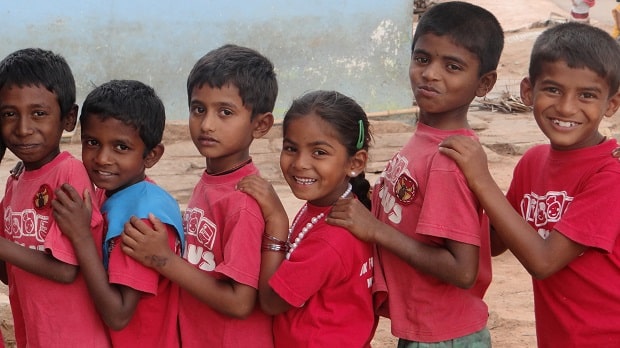
40K Foundation CEO Clary Castrission and local village children

It was a holiday with his girlfriend to India in 2005 that changed Clary’s life forever. He lived for a few months with the quarry workers outside Bangalore. Witnessing the struggles of poverty affecting so many children, he made a promise to build a school for the community. He and his girlfriend naively figured that they only needed $40,000 (40K) to build the school.

Five years and $400,000 later, in October 2010, 40K together with their project partner, The Lovedale Foundation, officially opened the Banyan School to its first children. Had it not been for 40K’s work, the 200 children who are now at the school would still be spending their days in a nearby quarry with their parents.

“We never changed the name 40K because it represents something that we never want to lose sight of; the naivety, creativity, drive and power of youth,” Clary Castrission told Indian Link.

“The Banyan School was just the beginning for us. In moving forward, we wanted to be more cost effective and if we want to extend our reach to thousands more kids, then building schools was not going to be the answer. So we decided to launch 40K PLUS,” Castrission said.

The 40K PLUS program has become popular among many students in Chokkanahalli village who make their way to their local 40K PLUS pod for the one hour class. The centres run two one-hour sessions each afternoon so over 40 children from a village can enrol in the program. “The enthusiasm and excitement among the children is palpable,” Castrission said.

Arvind, who is 11 years old, can’t stop smiling and runs to the centre with his friends every afternoon.

“Our classes are a lot of fun,” Arvind said. “We learn all our lessons on the tablets and get rewarded with star badges when we pass each lesson. I have made wonderful friends at the centre. We also get to play games”.

Parents are proud and more than happy to send their children to the pods, which costs them $4.00 or Rs 200 per month for each child.

Local mother Kartika said, “Since my daughter joined the 40K PLUS learning centre she has shown considerable improvement in school”.

The kids, aged between five and 12, are provided with tablet technology, fully loaded with a customised digital curriculum based on the school curriculum in Maths and English. And rather than just learning on the tablets, they benefit by learning from each other. In a quest to win badges by mastering a level of the learning game, many of the children become the teachers.

With the lack of qualified teachers in the villages, the program has been designed in a way that it does not require formally trained teachers. Instead, women from the village are hired as facilitators in the centres and are trained by the management.

“Using tablet technology and a digital curriculum allows us to have much less reliance on finding qualified teachers in each village,” Castrission said. “We believe that you can replace the teaching function by empowering kids to actually teach themselves through a technology pathway. We actually are empowering ordinary housewives and college students, and creating employment opportunities for them to facilitate these classes. The teachers instead play in a role in focusing the class on the learning module, motivation, facilitation and positive feedback,” Castrission added.

40K PLUS has been in operation since February 2012. Each pod class can accommodate 22 students, and so far they have set up 17 pods in North Bangalore with the capacity to educate 415 children living in rural villages in India.

Castrission said, “Our goal is to reach 15,000 children in the next three years with a quality education, and reach a scale all across the country”.

Learn more about the 40K Foundation at 40k.com.au/

Veggie Might

0
Reading Time: 6 minutes

Packed full of vitamins and nutrients, adding vegetables will make your next meal a culinary delight


Indian cuisine boasts a huge variety of ways in which to cook vegetables. With the wonderful produce available to us in Australia, and with the wealth of methods in our traditional cuisine, there should be nothing stopping us from dishing up some truly scrumptious vegetable dishes.


Karela Masala

5 medium-sized karela or bitter melon

3-5 tbsp shredded coconut

3 medium onions

1 medium tomato

1 ½ tbsp khus khus (poppy seeds)

½ tsp turmeric

Red chilli powder to taste

1 ½ tsp coriander powder

1 tbsp tamarind paste

½ tsp mustard

1 sprig curry leaves

Salt to taste

3 tbsp oil

Soak the tamarind in half cup warm water.

Wash and cut bitter melon into rings, remove hard seeds, but retain softer ones. Sprinkle salt over and set aside for 30 minutes. Dice onions and tomatoes. Grind together tamarind, coconut and khus khus into a smooth paste. Remove into a bowl and add salt and the other spice powders. Rinse out blender with water and reserve liquid.

Heat 1 tbsp oil in a heavy-bottomed pan or kadhai. Squeeze out water from bitter melon and fry in hot oil till half done. Remove with a slotted spoon and drain on kitchen paper. Add the remaining oil to the pan. Add mustard and curry leaves and wait till seeds splutter. Add onions and cook till colour changes. Add tomatoes and stir. Introduce ground mixture and liquid from the blender and stir till well-mixed. Bring to a boil. Then add in the bitter melon, cover and simmer till melon is well done and the sauce thickens.

Serve hot with rotis or plain rice.


Celery Indian Style

1 bunch celery

½ cup yellow moong dal

Red chilli powder or dry red chillies to taste

Pinch asafoetida

½ tsp turmeric powder

Salt to taste

1 tsp powdered jaggery or brown sugar

½ tsp cumin seeds

½ tsp mustard seeds

1 tsp dhana-jeera powder

1 sprig curry leaves

2 tbsp oil.


Wash and soak moong dal in water for half an hour. Wash and cut celery into match-stick length pieces.

Heat oil in a heavy-bottomed pan or kadhai. Add mustard and cumin seeds and allow to splutter. Then add asafoetida, turmeric, red chillies and curry leaves.

Add soaked moong dal and stir briefly. Then add celery. Cover and cook for 15 minutes or till cooked. Keep stirring intermittently. When done add salt, brown sugar and dhana-jeera powder.

To garnish, sprinkle fresh grated coconut over, and top off with coriander leaves.


Kadhai Babycorn

2 cups chopped babycorn (either canned or fresh)

2 large capsicums (one green and one red), deseeded and chopped finely

1 large onion cut into thin strips

1 tsp chopped garlic

1 tsp chopped ginger

5-6 tsp tomato sauce

1-2 tsp kasuri methi (dried fenugreek leaves)

1 tsp coriander seeds

1 tsp cumin seeds

2 tsp chilli powder

1 tsp sugar

Salt to taste

3-4 tsp oil

Fresh coriander leaves for garnish


Dry grind the kasuri methi, coriander seeds and cumin seeds together and make a fine powder.

Heat oil in a heavy-bottomed pan or kadhai and add the chopped onion and the ginger and garlic. When the onions turn translucent, add the chopped capsicums and stir well. Now add the tomato sauce and the dry powder. Mix well and add the cut babycorn. Add water if needed, cover and simmer till almost done (about 10-15 minutes). Then add the sugar, salt, chilli powder and the fresh coriander. Simmer for a further five minutes.


Besan-stuffed Banana Chillies

10 medium banana chillies

4-5 tbsp oil for frying

Salt to taste.

For stuffing:

1 cup besan (chickpea flour), sifted

Red chilli powder to taste

4 tsp cumin powder

Salt to taste

4 tsp ghee

Pinch asafoetida

1 tbsp kasuri methi (dried fenugreek leaves)


Mix together the ingredients for stuffing.

Wash banana chillies well and dry with tea-towel. Cut the stems carefully.

Slit each vertically in the middle, leaving the ends intact. Stuff in the besan masala carefully.

Heat oil in a flat-bottomed pan. Lay as many banana chillies as possible in the oil in one layer. Cover and cook on medium heat turning the chillies over carefully once or twice.

When done, sprinkle salt and red chilli powder over.


Besan Capsicum

500 gms green capsicum

2 tbsp besan (chickpea flour)

1 tsp fresh grated ginger

Green chillies to taste, finely chopped

Pinch asafoetida

Salt to taste

1 tsp ajwain (carom)

1/3 tsp turmeric powder

1/3 tsp coriander powder

1/3 tsp amchoor (mango powder)

1/3 tsp garam masala

1/3 tsp aniseed

Oil for frying.


Heat oil in a heavy-bottomed pan and add asafoetida and ajwain.

Put in chopped capsicum and cook till soft. Add salt, turmeric, coriander powder, aniseed and cook briefly. Then add besan, garam masala and amchoor. Mix well and cook for a further minute or two.


Capsicum Cabbage

2 cups shredded cabbage

2 capsicums (1 red, 1 green)

½ cup kasuri methi (dried fenugreek leaves)

3/4 cup paneer, grated

1 tbsp oil

1 tsp mustard seeds

Red chilli powder to taste

½ tsp turmeric

1/4 tsp black pepper

Salt to taste

Fresh coriander leaves.


Chop capsicums finely. Heat oil in a pan and add mustard seeds. When they splutter, add cabbage and capsicum and sauté for 2-3 minutes. Then add all other ingredients, cover and cook till capsicum and cabbage are done. Keep stirring intermittently.

Serve hot sprinkled with chopped coriander leaves.


Mushroom with Paneer

150 gms mushrooms, sliced

150 gms paneer, cubed

3 onions, chopped finely

3/4 cup tomato puree

1/2 tbsp ginger paste

1/2 tbsp garlic paste

Green chillies to taste, chopped

2 tbsp oil

1/4 cup milk

Salt to taste

Chopped coriander leaves for garnishing

Mix together:

1/2 tsp turmeric powder

1 tsp coriander powder

1 tsp cumin powder

1 tsp garam masala

1/2 tsp red chilli powder.

Heat oil in a pan. Add ginger-garlic paste and simmer for 5 minutes. Add onion pieces and fry till golden brown. Add the mixed powder and simmer for a minute. Add green chillies and salt and mix well. Add sliced mushrooms and cook on medium heat till half done. Add tomato puree and mix well. Add milk and paneer pieces. Cook till sauce thickens. To serve, garnish with coriander leaves.


Garlic Curry

250 gms garlic

8-10 shallots

Green chillies to taste, chopped finely

Red chilli powder to taste

2 tbsp coconut oil

1 tsp fenugreek seeds

½ tsp turmeric powder

1 ½ cup coconut milk

2 tsp tamarind pulp

¼ cup hot water

Salt to taste.


Peel garlic cloves and shallots. Heat oil in a heavy-bottomed pan and fry garlic, shallots and green chillies over low heat. Then add fenugreek seeds and stir till golden in colour. Add chilli powder and turmeric, stir briefly and add coconut milk and salt. Allow to simmer.

Before boiling point, reduce heat and cook for 20 minutes, or till garlic is soft. Dissolve tamarind in hot water and strain into curry. Cook till well-mixed.

Serve hot with boiled rice.


Carrots with Dill

250 gms carrots

2 bunches fresh dill

3 tbsp oil

½ tsp cumin seeds

Pinch asafoetida

Green chillies to taste, chopped finely

1 tsp fresh grated ginger

1 tsp coriander powder

¼ tsp turmeric powder

Salt to taste.

Cut carrots up into discs. Heat oil in a heavy-bottomed pan or kadhai, and put in cumin seeds and when they splutter, asafoetida. Stir for a second and then add ginger and green chillies. When brown, introduce the carrots, turmeric and coriander powders. Mix well, then put in the dill and the salt. Stir and cook, covered, on medium heat till carrots are done.


Eggplant in Tamarind Sauce        

500 gms eggplant (use the long thin variety)

½ cup fresh grated coconut

3 medium-sized onions, sliced

2 tsp ginger paste

2 tsp garlic paste

50 gms peanuts

3 tbsp til (sesame) seeds

3 tbsp tamarind paste

Dry red chillies to taste

Pinch asafoetida

Oil for deep frying

1 tsp turmeric powder

1 tbsp poppy seeds

Salt to taste

1 sprig curry leaves.

Heat a little oil and roast together coconut, ginger, garlic, peanuts, sesame seeds, dry red chillies, asafoetida and poppy seeds together. Grind the roasted ingredients into a paste.

Slit the eggplant into four and deep fry them till cooked.

Heat some oil again; add the ground paste and fry. Add the fried eggplant and tamarind paste and cook till masala is incorporated into the eggplant. When done, check seasoning and serve garnished with fried curry leaves.


 

Top Ten: Quirky businesses started by women

0
Reading Time: 4 minutes

From offering to whack other peoples’ children, to establishing a multi-million dollar Other World Kingdom where women rule and men are slaves, there has been no dearth of zany business ideas from creative women thinking outside the box. Here is a list of the top ten quirky ventures spinning gold for their female initiators, writes FARZANA AHMAD

10. Purple Cloud Studio

Michele Palenik designs cremation keepsakes to keep her Purple Cloud Studio afloat. She is a marine biologist and artist who was inspired by her husband’s funeral directory business to create mementos for families using the cremated ashes of their departed loved ones. Her jewellery, plates, spoons and other novelty items are well received all over the world. Michele usually asks for only a teaspoon of the ashes, and then turns it into something amazing to be cherished by family and friends forever. Quirky? We thought so.

9. Baby Bangs

Her slogan ‘For the girl who has everything – except hair!’ is self-explanatory. Lisa Campbell’s Baby Bangs are touted as the first and only ready-to-wear hairstyle hairbands for baby girls. Lisa, a hair replacement artist, started experimenting with the miniature hair pieces after the birth of her granddaughter Wren. Two years later the first Baby Bangs were in production offering babies with little or no hair a chance to dazzle in stylish and super comfy-to-wear hair pieces.

8. Anger room

Smashing plates and punching a hole in the wall does help when you’re in a foul mood, but the guilt that comes after makes it not a popular option for relieving stress. Donna Alexander of Dallas has delivered a solution. She came up with the concept of the Anger Room, where she promises you won’t get in trouble for letting loose. Clients can choose from baseball bats and other items, to unleash their rage in rooms designed to imitate workplaces and homes. Destroy furniture, computers, mannequins, glass, crockery – anything to feel better. Try it! They swear it works.

7. YourNovel.com

Ever wanted to be the star of your favourite novel? Well now you can. Kathy Newbern founded YourNovel.com in 1992, in partnership with her husband, to make such fantasies true. You supply the details including a photograph of yourself, theme and location, and for a small sum you can have a personalised romance novel, written to your specifications and starring you. How cool is that!

6. HungryPod

Is ours the laziest generation to ever live? Well, judging by the more than $100,000 a year Catherine Keane pocketed for uploading music to other people’s iPods, we’d be tempted to say, yes. Catherine had a light bulb moment in 2004 when a friend offered her $500 to upload his CD collection to his iPod. Her online business HungryPod.com started converting CDs into MP3s for iPods and offering music consultation services. HungryPod was sold to a competitor in 2008 but still continues to yield cash.

5. Slobproof fabric

Imagine furniture that will remain pristine no matter how much abuse your clan dishes out. Debbie Wiener’s Slobproof fabric is the answer to many homemakers’ frustration. The miracle fabric promises to remain spill, moisture, bacteria and odour free for years making it an ideal solution for messy kids and pets. Debbie admits she was forced to come up with the Slobproof fabric to help her cope with her family of slobs comprising a husband, two boys, a dog and a bird. Nowadays the business is booming with more people attempting to slob-proof their homes than ever before.

4. Cheese Sculptures

Sarah Kaufman of Wisconsin is better known as The Cheese Lady. She has carved a niche for herself as an artist using a unique medium… you guessed it! She creates amazing sculptures using huge cheddar cheese blocks. She sells her creations through her website www.sarahcheeselady.com and is often invited to give demonstrations, attend food fests and make commissioned sculptures for special events.

3. Mrs Brown’s Bath Bakery

Fancy a choc-mint cake batter shampoo, frosting toothpaste or peanut butter cookie foot scrub? Dream no more. Nadine Brown has you covered with her chemical free, organic, food grade bath products that look and smell deceptively like real, edible desserts. Nadine set up her Mrs Brown’s Bath Bakery in Tucson, Arizona in 2011 with the aim of combining her passion for food and organic personal cleaning products. The result is a successful business that continues to grow.

2. The Snuggery

The Snuggery is the brainchild of Jacqueline Samuel who utilised her womanly instincts to answer the human need for physical touch in boosting relaxation, restoration and feel good factors. As a professional non-sexual snuggler, Jacqueline snuggles with up to thirty men every week, helping them de-stress while they sleep. A Single Snuggle session of 45 minutes will set you back $50 and then there is the Double Cuddle…

1. CitiKitty cat toilet training kit

At first glance it seems like a joke. Seriously? Training cats to use toilets? Don’t be deceived, not only is it a legitimate business but one that is churning the moolah like only a clever idea could. Rebecca Rescate of New York launched her CitiKitty cat toilet training kit in 2005 after experimenting with various ways to toilet train her own cat. The idea became a runaway success amassing a fortune for the young entrepreneur.


“Food is my religion”

0
Reading Time: 3 minutes

Former MasterChef contestant Neha Sen follows her foodie dream

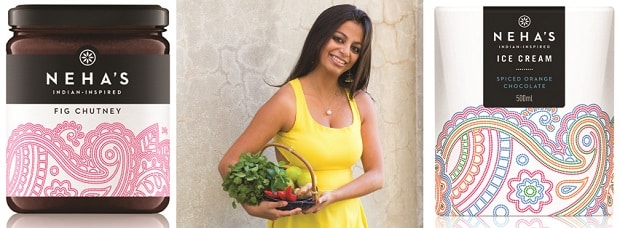
Cardamom sprinkled in a rich, thick cream inspired by the kulfi. A mango, honey and yoghurt-based ice cream tasting like an Indian Lassi. Chocolate ice cream with orange pieces and a subtle hint of Indian spice blend to tingle the taste buds. Spiced tomato chutney with a twist from her mother’s kitchen in India. These are some of the Indian-inspired products that recently took out the Royal Melbourne Fine Food Awards 2014, and describe a food journey at its best.

Brisbane-based Neha Sen, a MasterChef Australia contestant in 2013, has mixed and matched Indian flavours with the best of Australian produce in her recently launched range of ice-creams and chutneys. After her Queensland launch at the Regional Flavours event held at South Bank, Brisbane, Indian Link caught up with the lovely and chatty Neha to get an insight into her delightful relationship with food.

“Food and cooking are my best friends,” Neha said. “I have experienced the highest of highs and got through the lowest of lows through food”. Her earliest fond memories of food are of sitting around a table eating with her family back home in India – during breakfast there were already conversations on what should be cooked for dinner. Her relationship with food is so strong that she says, “Food is my religion and gourmet markets are my church. I cannot comprehend a life without great food”.

Her Australian journey with food began with the MasterChef 2013 series, where she hurriedly applied with only four hours left before the deadline. It was surreal when she received a call from the production team, she told Indian Link. Her homemade cardamom ice cream and chutneys impressed the judges, and she secured her place among 23 other contestants. Neha was the only person selected from Queensland.

Through MasterChef she learnt a lot from fellow contestants and the judges. Facing life after the show, Neha clearly remembers the words of judge George Calombaris. “He said, ‘it does not matter where you finish, you just have to have a go'”. Emerging outside from the MasterChef kitchen, Neha says she was a completely new person. “I became gutsy and stronger. I didn’t doubt myself anymore and was ready to take on any risk”.

Coming from a marketing background, she realised there was no going back to her job, but instead had an idea of the new food path she wanted to tread.

“I wanted to introduce to the Australian palate something more than just butter chicken and chicken tikka masala, as India has a lot to offer,” Neha explained. She started creating Indian flavours, along with traditional Australian ingredients, in her home kitchen, using her husband Marcus as the first taste tester.

Using their savings that were kept aside for a new home, Neha decided it was time to take her foodie dream forward, taking her meals from the kitchen to the shelves. Last year she started meeting and collaborating with numerous industry experts to get the best results for her vision of marrying Indian and Australian flavours.

“I have been blessed to meet the right set of people,” she said. “It is through their goodwill that I saw my dream becoming a reality”.

Within the span of ten months, Neha’s ice creams and chutneys have found a place at niche delis in Melbourne and Sydney, and now Queenslanders will get to taste these wonderful products, available at a growing list of selected stores.

Neha is still pinching herself. “Sometimes I still feel it’s all a dream, it is quite overwhelming to see my products on shelves and being well received by Australians. Australia has given me the freedom to choose a new path and has given me the chance to explore my passion for food. MasterChef has opened the door, now it is up to me to take that chance!”
To all aspiring cooks out there, Neha advises, “Give it a go! Food binds us together, brings in love, happiness and cheer”. She currently has further plans to take her Neha’s brand nationally and also intends to introduce new flavours and products in the near future.

India’s oral literature is dying

0
Reading Time: < 1 minute

According to parliament, many Indian languages are losing their oral literature, and globalisation is not to be blamed for the loss of this intrinsic fabric of culture.

In a written reply in the Lok Sabha, Culture and Tourism Minister Shripad Yesso Naik said: “It is true that globalisation is affecting languages in the sense that many languages under pressure are losing oral literature and words related to culture, especially food items, dress and ornaments, rituals, flora and fauna”.

“But globalisation is not the cause of language death. When the speakers of a language start to realise that their language does not have a global functionality, they begin to abandon it or shift towards a stronger language,” he added.

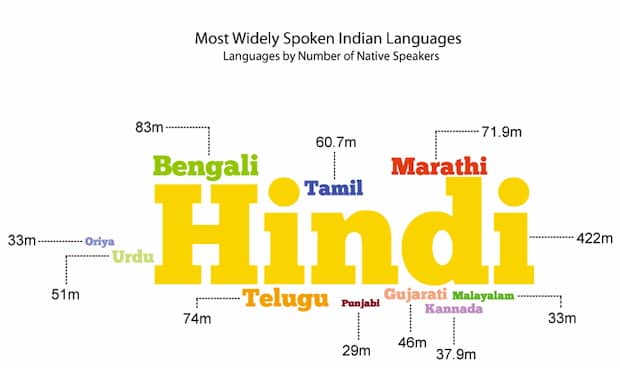
India has 22 official languages. According to a study conducted by People’s Linguistic Survey of India in 2013, the country has 780 spoken languages of which 220 languages have been lost in the past 50 years.

“A language dies when its speakers dies,” Naik said, in particular reference to a language of Andaman and Nicobar Islands, Aka-Bo, that died recently when its last speaker passed away in 2010.

India's oral literature is dying

0
Reading Time: < 1 minute

According to parliament, many Indian languages are losing their oral literature, and globalisation is not to be blamed for the loss of this intrinsic fabric of culture.

In a written reply in the Lok Sabha, Culture and Tourism Minister Shripad Yesso Naik said: “It is true that globalisation is affecting languages in the sense that many languages under pressure are losing oral literature and words related to culture, especially food items, dress and ornaments, rituals, flora and fauna”.

“But globalisation is not the cause of language death. When the speakers of a language start to realise that their language does not have a global functionality, they begin to abandon it or shift towards a stronger language,” he added.
India has 22 official languages. According to a study conducted by People’s Linguistic Survey of India in 2013, the country has 780 spoken languages of which 220 languages have been lost in the past 50 years.
“A language dies when its speakers dies,” Naik said, in particular reference to a language of Andaman and Nicobar Islands, Aka-Bo, that died recently when its last speaker passed away in 2010.

Vietnam’s historic Hindu kingdom

0
Reading Time: 4 minutes

Ancient ruins in the My Son Sanctuary speak of a grand Hindu heritage

Travelling to Vietnam, we didn’t know what to expect. It would be very similar to its neighbour Cambodia, we thought. To our surprise, Vietnam is ahead of its time, running on par with the Western world. As we ventured through the country, taking in the culture, the beauty of Halong Bay, and the aromatic flavours of the cuisine, we stumbled across a hidden gem.

Buried deep behind the hustle and bustle of the modern exterior is a history close to home, a history still alive deep within the streets of Vietnam. Travelling through Danang, one of the main port cities and the biggest city on the coast of the South China Sea, we ventured up to My Son.

The My Son sanctuary is located near the village of Duy Phu and is listed by UNESCO as a world heritage site – for very good reason! While experiencing and learning the Vietnamese culture we stepped into the past and opened the doors to our own culture – Hinduism.

My Son sanctuary took us back into the depths of Vietnam’s ‘Indian’ past. The sacred sanctuary was once a site of religious ceremonies for kings and ruling dynasties of Champa, as well as a burial place for Cham royalty and heroes. Now it is a cluster of over 70 abandoned and partially ruined Hindu temples.

Constructed between the 4th and 14th century AD by the kings of Champa, the temples are primarily dedicated to the worship of Lord Shiva and some are dedicated to Lord Vishnu.

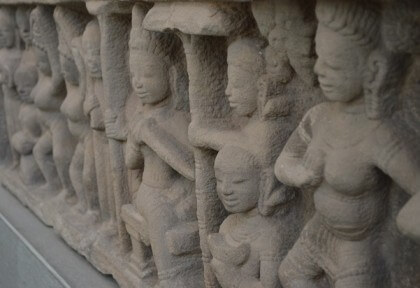
Each temple was constructed from red stone and, even though there were only ruins of the temples left behind, they stood tall reflecting majestic beauty. We couldn’t help but be absolutely mesmerised by the intricacy of the architecture. To think that such magnificent structures were built in a time when there were no machines! Each relief was created to tell a story. With images of gods, goddesses and characters, depicting epics and phases from Hindu scriptures, they were carved with precision and detail.

Along with the temple ruins, stand murtis (statues) of Lord Ganesh, Lord Vishnu and Garuda, some still fully intact after all these centuries, and some which were partially ruined during the wars of Vietnam. It was striking to see how such beautiful sculptures and intricate carvings were crafted centuries ago, making us wonder how each one was created and what tools were used. Surely they would have been created by hand, using natural resources, or did they have machines which we don’t know about?

Although many of the masterpieces and parts of the carvings from the temple walls have been removed from the actual site and placed in the Cham Museum for preservation, we were still able to see a few of the relics in their original charm and placement. One of the most visually striking pieces is a stone-carved Shiv Ling sitting in the centre of one of the smaller temple ruins. It spans the entire width and length of the temple and is the largest Shiv Ling I have ever seen. The years and wars seem to have had no impact on this artefact whatsoever, as it stands in the centre of the temple in its original condition with not even a chip in the stone.

Currently, parts of the ruins are undergoing restoration. Although this will preserve the history of the area, the structures will no longer carry the same story and beauty of history in their appearance. It will be interesting to go back and see the ruins in ten years!

A trip to the Cham Museum gave us better insight into this magnificent slice of art history. The Cham Museum was established at the end of the 19th century by the Ecole Francaise d’Extreme Orient with a collection of artefacts.

Today the museum displays approximately 300 of the sandstone and terracotta sculptures, each collected from the Cham temples and towers. Each sculpture reflects the royal glamour and the eventual downfall of the Cham kingdom.

The timeless pieces each tell a story of their own and reflect the high level of love and passion for art the Cham people carried.


The entire experience was like travelling back in time through an old, thick history book, which enabled us to visually experience and learn about the eight centuries of the Cham culture. We also learned that the Cham people still exist within Vietnam, practising the same religious beliefs, rituals and ceremonies as other Hindu people in the world. One of the prominent cultures today within Vietnam, alongside Buddhism, is Hinduism.

When we think Hinduism, we automatically envisage India and Indians, regardless of which part of India we come from. We also know that Hinduism gave rise to Buddhism and Jainism. However, this experience opened our eyes to an entirely new aspect of Hinduism we didn’t know existed, ‘Cham’.

It just goes to show how deep and how far the roots of Hinduism are spread, leaving us with the question, do we have ancestral history which derives from the Cham culture, that we do not yet know about?

Final wrap up: Glasgow 2014 Commonwealth Games

0
Reading Time: 4 minutes

A final wrap up of India’s performance at the Glasgow 2014 Commonwealth Games

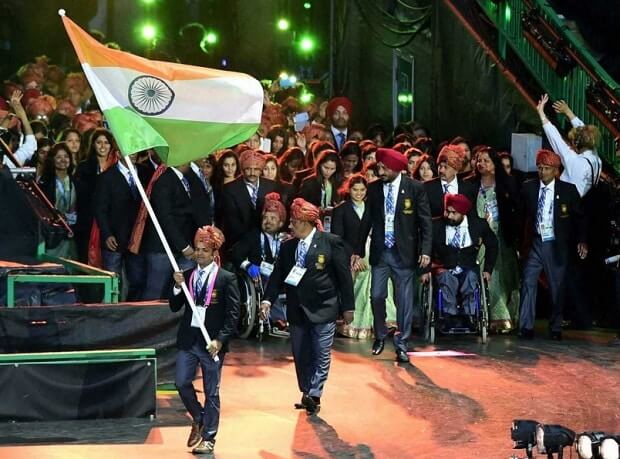
India has finished in fifth place at the 2014 Commonwealth Games in Glasgow. The team haul included 15 GOLD, 30 SILVER and 19 BRONZE medals, making a total of 64 medals.

It was India’s third best showing in the Commonwealth Games after the 100 plus bounty at home in Delhi four years back and the 69 medals they picked up at Manchester in 2002.


Final Medal List for India

GOLD

Sanjita Khumukchan: women’s 48 kg weightlifting

Sukhen Dey: men’s 56 kg weightlifting

Abhinav Bindra: men’s 10 metre air rifle shooting

Apurvi Chandela: women’s 10 metre air rifle shooting

Rahi Sarnobat: women’s 25 metre pistol shooting

Satish Sivalingam: men’s 77 kg weightlifting

Jitu Rai: men’s 50 metre pistol shooting

Amit Kumar: men’s freestyle 57 kg wrestling

Vinesh Phogat: women’s freestyle 48 kg wrestling

Sushil Kumar: men’s freestyle 74 kg wrestling

Babita Kumari: women’s freestyle 55 kg wrestling

Yogeshwar Dutt: men’s freestyle 65 kg wrestling

Vikas Gowda: men’s discus throw athletics

Dipika Pallikal and Joshana Chinappa: women’s doubles squash

Parupalli Kashyap: men’s singles badminton


Joshna Chinappa and Dipika Pallikal celebrate winning Gold in women’s doubles squash


SILVER

Mirabai Chanu Saikhom: women’s 48 kg weightlifting

Shushila Likmabam: women’s 48 kg judo

Navjot Chana: men’s 60 kg judo

Malaika Goel: women’s 10 metre air pistol shooting

Santoshi Matsa: women’s 53 kg weightlifting

Prakash Nanjappa: men’s 10 metre air pistol shooting

Ayonika Paul: women’s 10 metre air rifle shooting

Anisa Sayyed: women’s 25 metre pistol shooting

Shreyasi Singh: women’s double trap shooting

Ravi Katulu: men’s 77 kg weightlifting

Gurpal Singh: men’s 50 metre pistol shooting

Gagan Narang: men’s 50 metre rifle prone shooting

Vikas Thakur: men’s 85 kg weightlifting

Harpreet Singh: men’s 25 metre rapid fire pistol shooting

Sanjeev Rajput: men’s 50 metre rifle 3 positions shooting

Rajeev Tomar: men’s freestyle 125 kg wrestling

Lalita: women’s freestyle 53 kg wrestling

Bajrang: men’s freestyle 61 kg wrestling

Sakshi Malik: women’s freestyle 58 kg wrestling

Satywart Kadian: men’s freestyle 97 kg wrestling

Geetika Jakhar: women’s freestyle 63 kg wrestling

Seema Punia: women’s discus throw athletics

Achanta Sharath Kamal and Anthony Amalraj: men’s doubles table tennis

L Sarita Devi: women’s 57-60 kg boxing

L Devendro Singh: men’s 49 kg boxing

Mandeep Jangra: men’s 69 kg boxing

Rajinder Rahelu: men’s heavyweight powerlifting

Vijender Singh: men’s 75 kg boxing

India: men’s hockey

Jwala Gutta and Ashwini Ponnappa: women’s doubles badminton


BRONZE

Ganesh Mali: men’s 56 kg weightlifting

Kalpana Thoudam: women’s 52 kg judo

Swati Singh: women’s 53 kg weightlifting

Rajwinder Kaur: women’s +78 kg judo

Omkar Otari: men’s 69 kg weightlifting

Mohammed Asab: men’s double trap shooting

Punam Yadav: women’s 63 kg weightlifting

Manavjit Sandhu: men’s trap shooting

Gagan Narang: men’s 50 metre rifle 3 positions shooting

Lajja Gauswami: women’s 50 metre rifle 3 positions shooting

Chandrakant Mali: men’s 94 kg weightlifting

Navjot Kaur: women’s freestyle 69 kg wrestling

Dipa Karmakar: women’s vault gymnastics artistic

Pawan Kumar: men’s freestyle 86 kg wrestling

Pinki Jangra: women’s 48-51 kg boxing

Sakina Khatun: women’s lightweight powerlifting

P.V. Sindhu: women’s singles badminton

R.M.V. Gurusaidutt: men’s singles badminton

Arpinder Singh: men’s triple jump athletics


NEWS

In badminton, Parupalli Kashyap broke a 32-year jinx to claim the men’s singles  gold, while the women’s doubles pair of Jwala Gutta and Ashwini Ponnappa, and the men’s hockey team, clinched silvers to cap an creditable Indian showing at the 20th Commonwealth Games which closed Sunday.

Indian shuttler Parupalli Kashyap clinched a hard-fought men’s singles gold medal at the 2014 Commonwealth Games
Image: NDTV

The day’s hero for India was second seed Kashyap, who emulated former champions Prakash Padukone (1978) and Syed Modi (1982) to win the men’s singles title.

The 27-year-old clinched his first major championship by defeating Singaporean sixth seed Zi Liang Derek Wong 21-14, 11-21, 21-19 in just over an hour at the Emirates Arena.

Much was expected from Jwala and Ashwini but they could not replicate their gold medal-winning performance of 2010 and had to be content with the silver, losing the final 17-21, 21-23 in 41 minutes to Malaysian second seeds Vivian Kah Mun Hoo and Khe Wei Woon.

Reminiscent of the 2010 Games, India again lost to Australia in men’s hockey final — but this time the margin was halved to 0-4 — and settled for the silver medal.

India were impressive in their 2-4 loss to Australia in the group games. But when it mattered the most, the goals dried up for India.

The cycle road race brought disappointment as all the six male cyclists on show Sunday failed to finish.

In squash, Dipika Pallikal and her partner Joshana Chinappa won a gold medal in the women’s double event in Glasgow, which was a first ever medal for India in the racquet sport. Pallikal, who is engaged to Indian cricketer Dinesh Karthik, took to Twitter after her win to express her joy and thankfulness for her husband’s presence at the event, saying: “So glad I could have my man with me on such a magical day!”

 IANS