


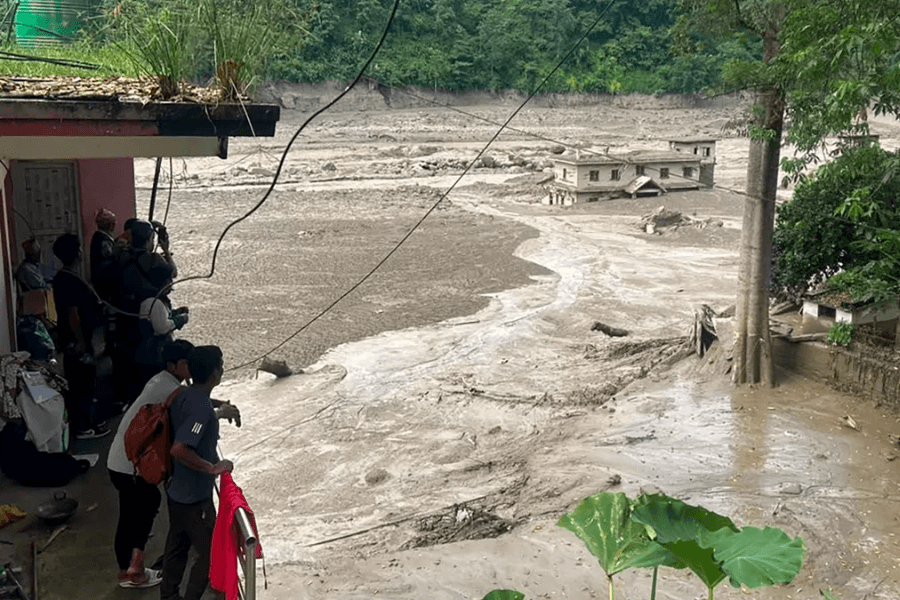
On 26th August, across the Nepal-Tibet border, what seems like a sudden ice-rock avalanche or glacier collapse sent massive volumes of debris and water cascading down the Bhote Koshi River. The intensity of the flood tore down buildings and bridges in an instant, and transformed known places and entire landscapes in the blink of an eye. A week later, the death toll stands at over 1,100 and those missing at close to 4000.
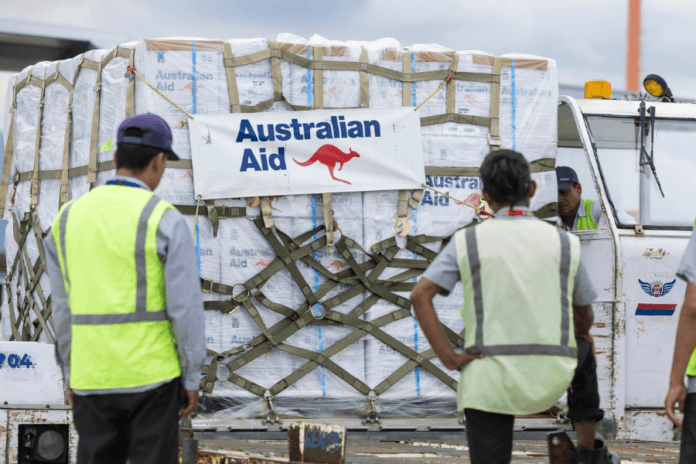
Within a few hours of the news about the devastating Nepal-Tibet flash floods spreading around the world, the Non Resident Nepali Association (NRNA) Australia had organised a fundraising drive through the Gofundme web portal and donations had begun pouring in. In three days they had mobilised and transferred an initial donation of over forty thousand dollars to the Prime Ministers’ Disaster Relief fund in Nepal.
The figures are nowhere in the tune of what Nepal has stated as necessary – four to five billion US dollars – for recovery. But the brisk organising by the Nepalese diaspora is indicative of what many South Asian migrant communities have been doing after natural disasters – sending money back home in even greater sums than their usual remittances. This money helps with relief, recovery and rehabilitation after disasters.
With climate change escalating on the one hand, and wealthy countries failing to make substantial contributions against agreed climate funding goals on the other, these green remittances often stand as the only consistent way in which money for climate adaptation and resilience building flows to vulnerable countries such as Nepal and Bangladesh in South Asia.
green remittance
This flood is not as sudden as it seems; it is in fact the final link in a chain of events unfolding across the world’s youngest mountain range. Stretching across eight countries and over 3,500 kilometres, from Afghanistan in the northwest to Myanmar in the southeast, the Hindu Kush Himalayas are home to over 241 million, and supply water through its mighty snow-fed rivers to 1.65 billion people. Climate change is impacting the mountains in a complex and often unpredictable way, and is increasing their instability.

Overall, for South Asia that is home to one fourth of humanity, the stakes from a warming climate are very high. Hundreds of millions of South Asians still lead largely subsistence-based livelihoods. Over sixty per cent – between 700 and 800 million South Asians – still live in villages and largely depend on farming for survival. Being mostly small-scale, low-tech and monsoon rain-dependent, farming, on which the majority of South Asians still depend, is severely climate impacted.
Climate-induced disasters are increasing in scale and intensity across South Asia, and more diaspora efforts are going into organising relief and support payments. After last years’ floods across the Punjab region in India and Pakistan, and Cyclone Ditwah that swept through Sri Lanka, this year’s monsoon has brought floods in Bangladesh leaving millions stranded, and Assam in India’s northeast costing over a hundred human lives and displacing another 700,000. And now the Nepal-Tibet disaster!
South Asians are now Australia’s largest migrant group, and with increasing post-disaster remittances back to their communities, their climate finance contributions to South Asia are increasing with time. And this is where, and why, South Asian diasporas living in wealthy countries like Australia can play a crucial role as advocates for climate justice for their communities back home. They can join the dots between their own climate-disaster fundraising, and the obligations of wealthy countries for payment of climate finance and loss and damage compensations for irreparable climate damage to vulnerable countries.

At solidarity gatherings in Sydney and Melbourne organised by Sapna South Asian Climate Solidarity after the Punjab floods last year, participants drew the connection between their contributions for flood-recovery and community-rebuilding back home, and Australia’s obligations towards South Asia. But this conversation needs to grow in the Australia’s South Asian community. In fact, in the face of this extreme disaster in Tibet and Nepal, the warnings it sends for the Himalayan region broadly, as well as a major part of South Asia that depends on these mountains, it is imperative for South Asians in Australia to listen to the voices from Nepal for climate justice, and ask for Australia’s climate accountability towards South Asia. green remittance
Right now, Nepal is calling for accountability by highlighting the disproportionate burden it bears for the climate crisis despite producing less than 0.1% of the world’s emissions, sending a climate bill to the world’s top carbon emitters, and demanding compensation from the international fund for loss and damage. As South Asians living in Australia, and organising for climate-disaster relief for our communities back home, moments like these call for supporting these South Asian climate justice appeals from Australia. Now is the time to ask Australia to do its fair climate share towards South Asia, over and beyond offering humanitarian relief.
Sapna South Asian Climate Solidarity has organised three webinars to unpack the interlocking challenges in the Himalayas, recognise what climate justice means for mountain communities, and learn what we can do from Australia. You can register for the webinars at https://sapnasolidarity.org/join-an-event
green remittance
READ ALSO: South Asian climate collective Sapna wins Environment Vic award