

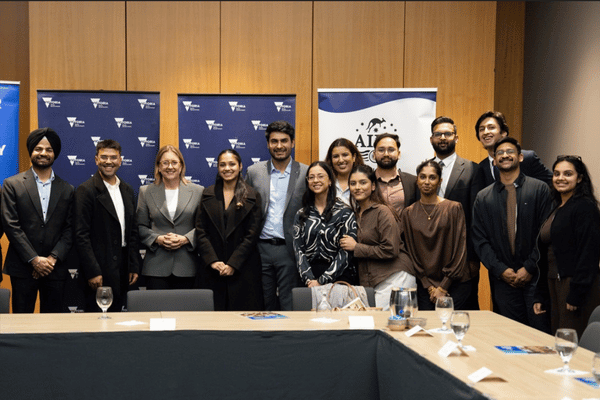
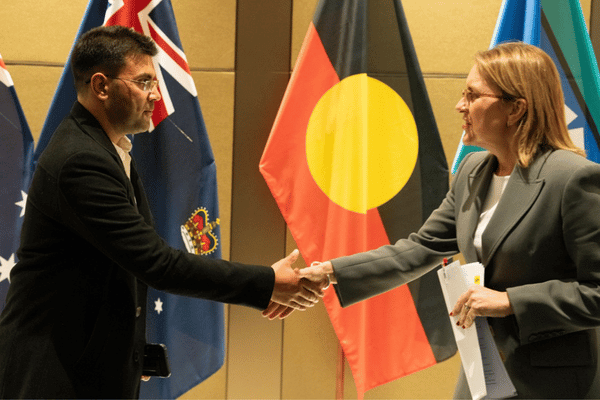
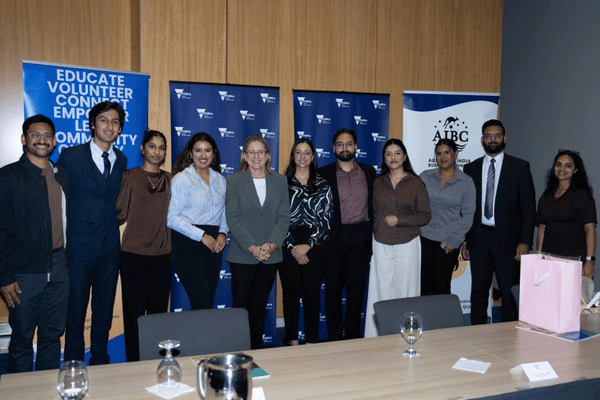
Melbourne’s emerging Indian community leaders gathered at the Investment Centre Victoria this week for the inaugural Youth Leadership Roundtable, chaired by Victorian Premier Jacinta Allan.
Designed to strengthen engagement between multicultural youth communities and the Victorian Government, Kushagra Nigam was privileged to initiate and host the roundtable on behalf of the Australia India Business Council, alongside the Indian Youth Association of Victoria President Rhea Verma, Vice President Rashim Joshi and Treasurer Ishaan Nigam.
The hour-long discussion brought together young entrepreneurs, professionals, community representatives and emerging leaders from Victoria’s Indian diaspora to discuss some of the most pressing economic and social issues facing young Victorians.
Participants were selected through an expression of interest process aimed at bringing together a diverse cross-section of youth from the Victorian-Indian community.
Among the senior attendees was Fiona Letos, Executive Director of Global Victoria, and representatives from the business, education and community sectors. The first roundtable of its kind, it was supported by the Victorian Government, signalling a growing focus on youth-led policy conversations and multicultural engagement.
Discussion points
A central theme throughout the discussion at the Vic youth leadership roundtable was the increasing pressure young Australians face amid the rising cost of living. Participants spoke candidly about the difficulties of balancing full-time employment with full-time studies, making it particularly challenging for young professionals to establish themselves in competitive industries while managing rising rental and housing costs.
The Premier acknowledged the concerns raised and engaged directly with participants, with attendees describing the session as highly collaborative and solution-oriented. Conversations explored how government, industry and youth leaders could work together to identify scalable and practical responses to affordability challenges.
Housing affordability was also heavily discussed, participants raising concerns around the limited adoption of innovative housing models, particularly modular and prefabricated homes. While such housing solutions are increasingly being accepted by the Victorian Building Authority, broader uptake continues to face resistance from councils and land developers.
The discussion highlighted the need for creative and future-focused approaches to housing policy, with attendees advocating for faster approvals, increased collaboration between government and industry, and greater openness toward alternative housing models to support Victoria’s rapidly growing population.
Another major topic was Victoria’s growing startup and entrepreneurship ecosystem. Young entrepreneurs noted limited early-stage support, barriers to scaling businesses, and the need for stronger pathways connecting multicultural founders with investors, mentors and government-backed innovation programs.
Participants also discussed the importance of increasing Victorian exports through stronger local manufacturing capabilities, particularly in sectors aligned with future workforce demand and advanced technologies. Attendees argued that supporting local manufacturing could create long-term economic opportunities while strengthening Victoria’s international trade competitiveness.
One of the most significant opportunities identified during the roundtable centered on the future role of Victoria’s TAFE sector. Participants highlighted the potential for TAFEs to expand their intake of international students, creating increased export revenue and developing skilled workers in priority industries facing workforce shortages.
Victoria’s vocational education sector could play a critical role in addressing the skills gaps while simultaneously strengthening the state’s position as a global education destination.
Participants raised the need for broader AI training, upskilling initiatives and clearer policy frameworks surrounding the responsible use of AI within schools, universities and workplaces. They discussed concerns around the pace of technological disruption and the importance of ensuring young people have the practical digital capabilities needed for future employment markets. The need for AI governance and education policy development was also emphasised, particularly as institutions adapt to rapidly evolving technologies.
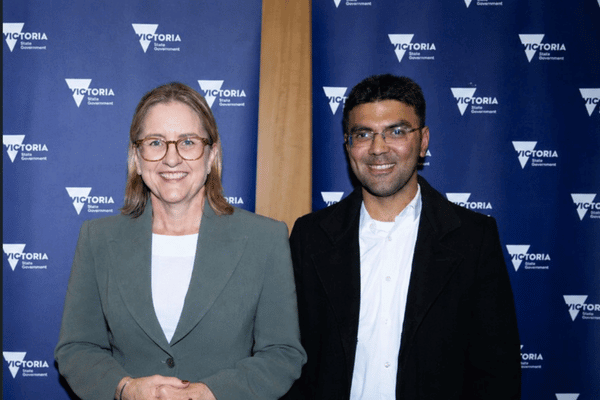
The beginning of ongoing dialogue in the Vic Youth Leadership Roundtable
Creating direct dialogue with government leaders, the roundtable ensured young multicultural voices contribute meaningfully to Victoria’s future.
Attendees described the event as a significant step toward strengthening collaboration between government, business and multicultural youth networks, with many hopeful the inaugural session would lead to future roundtables and long-term engagement initiatives across the state.
This report was prepared with inputs from Kushagra Nigam, Rhea Verma, Rashim Joshi and Ishaan Nigam.
READ ALSO: The Indian Youth Association of Victoria: Desi youth group redefining community