

Vanuatu
In 1774, English explorer Captain James Cook, while mapping the Pacific region, encountered a cluster of islands that reminded him of the Hebrides archipelago in Scotland.
He named them the New Hebrides, a designation later replaced by Vanuatu after the islands gained independence from joint British and French colonial rule. The two powers had administered the archipelago under a Condominium established in 1906.
“It was more of a pandemonium than a condominium,” an elderly local commented to me during my recent visit to Port Vila, the capital of Vanuatu.
He spent a considerable portion of his life under that intricate regime, and it is quite understandable how difficult his daily existence must have been when subjected to the governance of two administrative systems, requiring navigation through two separate legal, administrative, and educational frameworks, along with various cultural influences. Additionally, there were two distinct police forces tasked with maintaining law and order in an area six times smaller than Tasmania.
This historical context renders Vanuatu unique, as only two other nations in the world – Sudan and St Martin – have the experience of such a similar situation.
However, after independence, that pandemonium has gradually vanished and present-day Vanuatu unfolds to visitors an unspoiled and pristine territory, ideal for a tranquil holiday with soothing nature and smiling locals as companions.
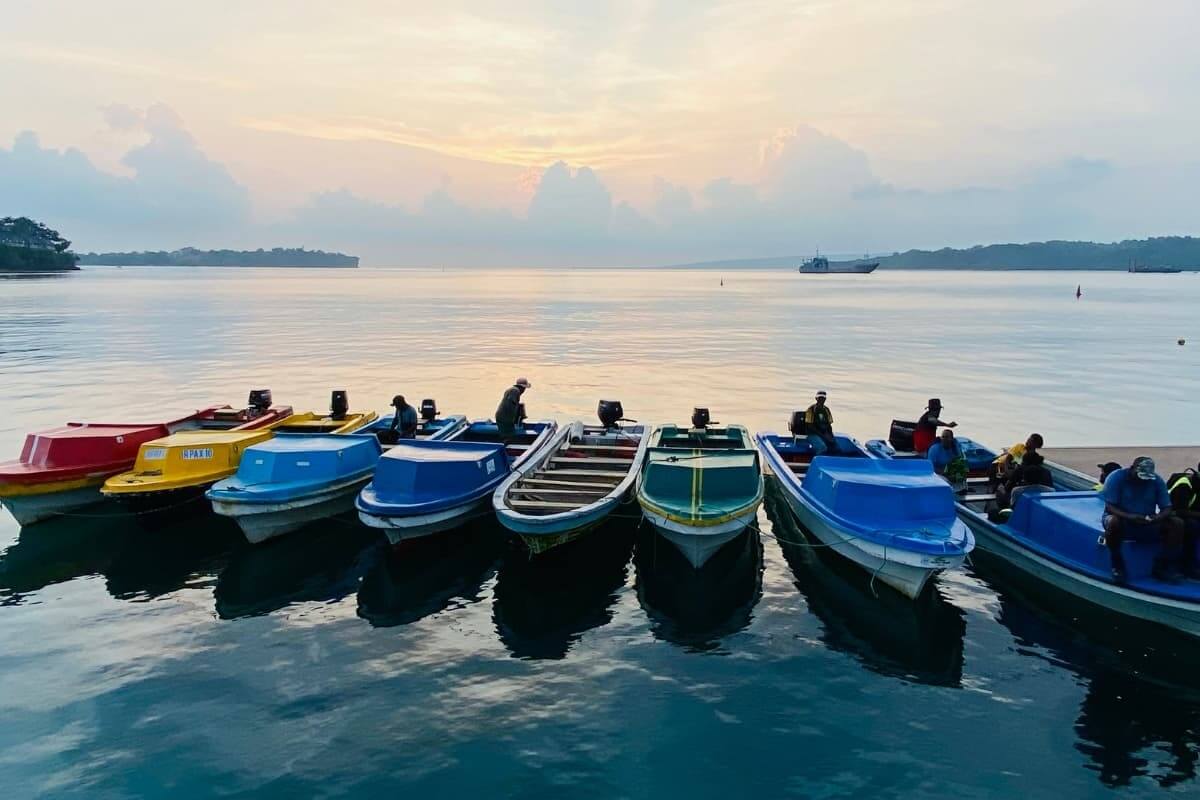
Vanuatu consists of 83 islands located in the South Pacific Ocean and is just three and a half hours by air from the east coast of Australia. The island of Efate, which is home to the capital city Port Vila and the international airport, is the most significant island in the nation. It functions as the political, commercial, and economic centre of the country. Additionally, Port Vila is a prominent stop on the itineraries of cruise ships traveling through the Pacific Ocean islands.
Other islands of importance in Vanuatu are Espiritu Santo known for its mountains, rivers, and World War II history, Malakula notable for its cultural diversity with many distinct indigenous languages and traditions, and Tanna which houses Mount Yasur, one of the world’s most accessible active volcanoes. Most of the nation’s population of 365,000 lives on these four islands.
Because of its position along the Pacific ‘Ring of Fire’, Vanuatu’s climate is tropical, with warm temperatures all year-round. This geographic feature paired with proximity to Australia, makes the destination a popular hideout for Aussies keen on getting a relaxing break from a hectic urban routine.
After touching down in Port Vila, I felt like stepping into another world where the atmosphere appealed as laid back, slow-paced and grounded. Shaped by ocean breezes, lush greenery, and close-knit communities, its modest infrastructure reflected a simple rhythm of life, with few visible markers of 21st-century urbanization. In Vanuatu, there are no towering high-rises dominating the skyline, no global fast-food chains like McDonald’s, and traffic flows without the aid of traffic lights. Roads are modest, and development is low-density, blending into the natural environment rather than reshaping it. This absence of heavy commercialisation gives the domain a distinct charm, where tradition and nature remain central, and daily life unfolds at a pace that prioritises people, culture, and rituals.
However, the hotel I stayed in while at Port Vila, known as the Grand Hotel and Casino, featured ultra-modern amenities beautifully enveloped in the traditional warmth of the island.
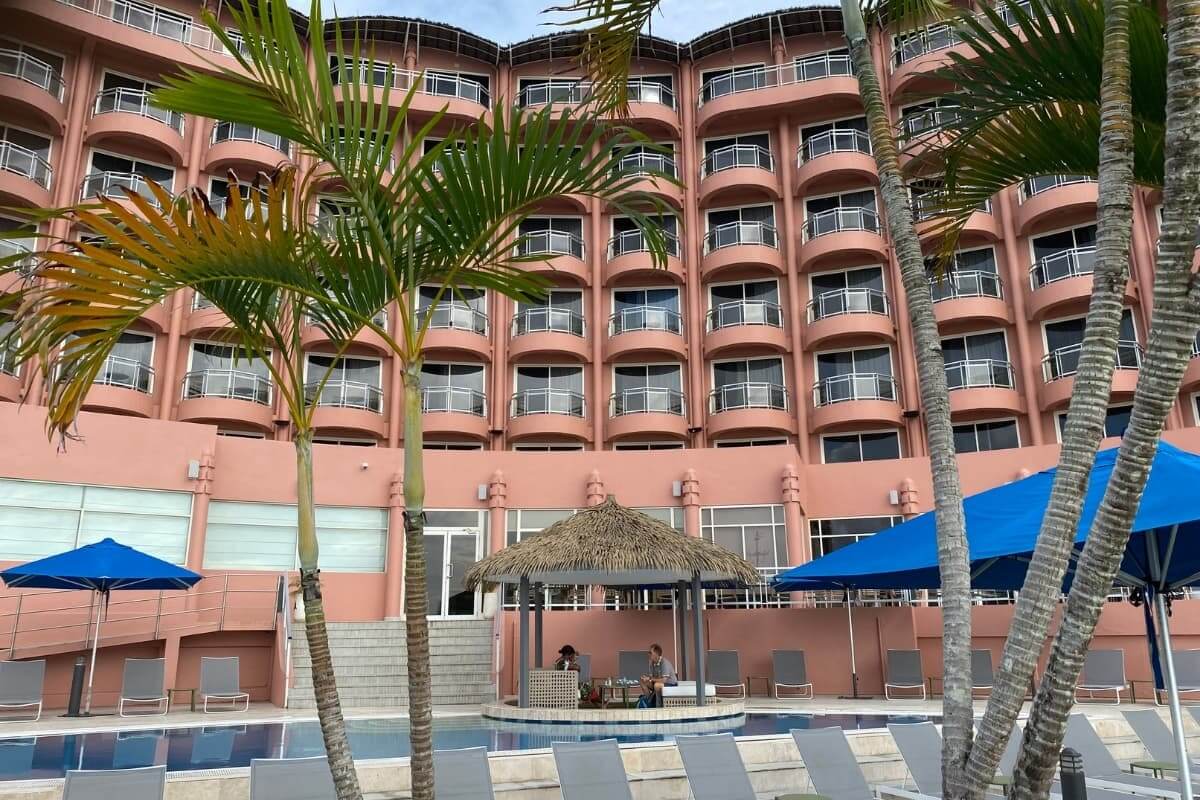
This establishment has recently reopened following an extensive renovation after the catastrophic earthquake that struck in 2024. Situated less than thirty minutes from the airport, this eight-story building stands as a sleek oceanfront landmark, inviting vacationers to relax with sweeping views of the harbour and soothing Pacific breezes.
Most conveniently, the hotel is within walking distance of major city attractions, including the Vanuatu Parliament House, National Museum, Sacré-Coeur Cathedral, and the lively Mama’s Market, and numerous restaurants and cafes offering a variety of culinary delights.
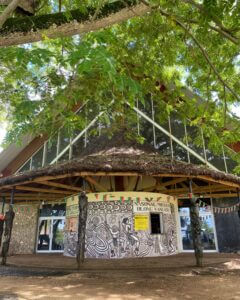
Similar to its neighbouring island nations – Fiji, Solomon Islands, and New Caledonia – Vanuatu is part of the region referred to as Melanesia, which is a cultural and geographical collection of Pacific Islands. Consequently, the history of this nation is profoundly intertwined with ancient Melanesian culture, with human habitation tracing back over 3000 years. The National Museum serves as an excellent venue to learn more about the intricate history of the archipelago and to view various examples of Melanesian art and crafts. However, an exhilarating experience awaits at the bustling Mama’s Market, where women dressed in vibrant island attire arrange pyramids of pawpaw, bananas, island cabbage, and shiny eggplant, while fishermen bring in yellowfin tuna, still shimmering with silver.
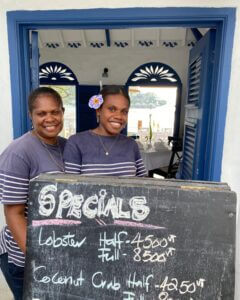
While mingling with the locals at the market, I found them to be straightforward, amiable, and easy to engage in conversation, often punctuated with laughter, which helped me comprehend why Vanuatu is considered one of the happiest places on Earth. They seemed content with their simple way of life and appeared somewhat detached from global events. Many individuals I conversed with were unaware of the ongoing conflict in the Middle East and had not heard about the recent terrorist attack in Sydney.
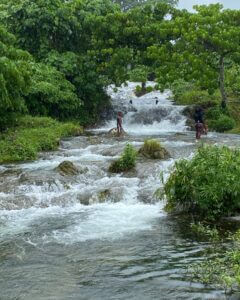
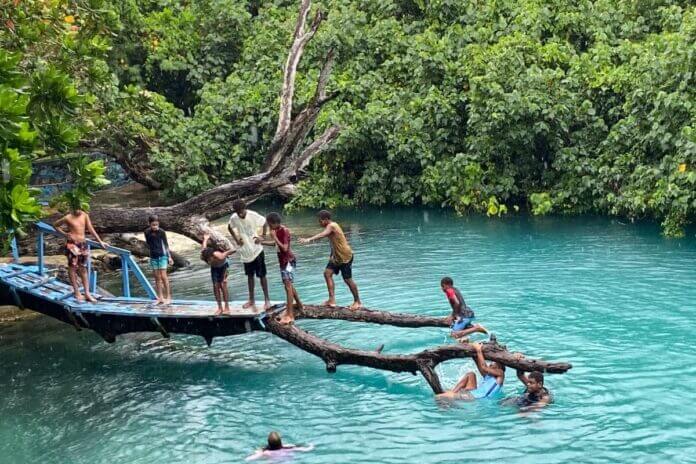
Not far from the heart of Port Vila, several natural attractions can be found, including Eton Beach and Etmat Bay, which are among the top sandy beaches on Efate Island, perfect for swimming, snorkeling, and diving. Additionally, the Mele Cascades, Rarru Rentapao Waterfall, and the Blue Lagoon offer ideal spots for refreshing freshwater swims, alongside a lush green rainforest that features multiple ziplines and a 120-metre sky bridge suspension walk. Island hopping near Port Vila is also a favoured activity, especially to Hideaway Island, which claims to host the world’s only underwater post office.
I arrived in Vanuatu with the intention of relaxing and doing nothing, aside from sitting on the private balcony of my room and gazing at the azure waters of the Pacific Ocean. However, the sightseeing and activities on offer turned out to be unexpectedly enjoyable. The highlight for me was riding a horse at the Club Hippique Adventure Park.
What made Vanuatu unique for me was its harmonious combination of tranquility and liveliness. Within just a few days, I was able to enjoy a sandy beach, trek through the verdant rainforest, ride a horse along the beach, swim under the waterfalls, learn about the island’s history and culture, converse with market vendors about their daily catch, and still have time to relax on my hotel balcony, aimlessly watching life on the turquoise blue water while sipping on some locally brewed Tusker beer.
As I departed from Port Vila, I took with me more than just photographs. I carried the true essence of the island – steady, generous, and quietly vibrant.
TRAVEL NOTEBOOK
Getting There: Jetstar (www.jetstar.com) flies three days a week from Sydney direct to Port Vila
Stay: Grand Hotel and Casino (www.grandvanuatu.com)
Tour Guide: Onak Tours Vanuatu (What’sApp +678 5138807)
Read Also: Unexpected life lessons in Botswana