Home Blog Page 961

Home is where the heart is

0
Stupa garden at Kakku, Shan state of Burma
Reading Time: 4 minutes

Migrant stories come alive through chance encounters with enterprising Sikhs in the heart of Myanmar

Stupa garden at Kakku, Shan state of Burma

One sunny afternoon a few weeks ago as we were travelling through the Shan state in eastern Burma (Myanmar), through the town of Taunggyi meaning ‘huge mountain’ to be precise, we were startled to come across a gurdwara! We stopped to have a look. Here we met Tara Singh, the caretaker, who identified himself as a Burmese Sikh. In all respects he looked a Sikh except that he wore the Burmese traditional attire, a longyi that is similar to the Indian lungi. Just a couple of hours before in a small village on the road to Kakku, we were intrigued when we spotted a turbaned Sikh, Avatar Singh, in his wayside convenience store. He too, like Tara Singh, had dual names – Sikh and Burmese, but he had lost all knowledge of the Punjabi language.

I was pleasantly surprised to see the presence of my Sikh brothers in this quiet part of the world. Tara Singh, ordained as ‘gyani’ by the other Punjabi locals, wasfluent in Punjabi and Hindi, and narrated to us his story of migration and survival. Tara Singh came to Burma in the 1930s but when the Japanese occupied Burma in the early 1940s, he fled and took refuge in Calcutta. As a consequence of the Japanese invasion, a large percentage of Indians fled Burma overland into Assam, largely on foot. Others returned after the war, but many never did.

Hearing his story, I recalled the vivid descriptions of this exodus in Amitav Ghosh’s novel The Glass Palace, of how the refugees suffered terribly and thousands died. Tara Singh stayed in Kolkata till the infamous riots broke out in Kolkata after India’s Independence in 1948, when he once again escaped to Burma and has been a resident of the Shan state since.

The Sikh migration to Burma started in the 19th century with the British Indian Army. Sikh soldiers took part in sizeable and growing numbers in the wars that the British waged against the Burmese kings. After the last (the Third War in 1885-86) war, Burma became a province of British India. Many Indians migrated to Burma at this time. Tara Singh mentioned that in the 1930s there were more than 10,000 Sikhs in Burma, and Taunggyi was home to a few thousand of them. Now there are only about 40 Sikh families.

Most of the Sikh families congregate on Sundays at the Taunggyi gurdwara for prayers and langar, the free communal meals. The British supported and encouraged Sikhs to build gurdwaras for which land was generously allotted. But all this ended in the era of the so called ‘Burmese way to Socialism’. The Taunggyi gurdwara received a Government notice that it was to be pulled down to widen the road. Tara Singh proudly states that with the support of patrons and many relatives overseas, it was not only re-built but done so on a much larger scale. Vahe guru ji ka Khalsa, Vahe guru ji ki Fateh – the victory belongs to God, reiterated.

It was just not the Sikh Army personnel who migrated to Burma. Many infrastructure projects were started by the British colonial government and it contributed to an unprecedented economic boom in Burma that drew many other Indians. Many migrated – as civil servants, engineers, river pilots, soldiers, indentured labourers and traders.

As we left the Shan state a few days later, at the Heho airport waiting for a delayed flight, we met yet another Sardar brother, jovial sexagenarian, Surinder Singh. He was a retired tailor. Unlike many of his relatives who returned to India after the socialists took over, he stayed in Burma through all the good and bad times, philosophising that life’s pleasures and turmoils are everywhere. Surinder Singh was indeed a philosopher and he quoted with ease from the works of Khalil Gibran, Bahadur Shah Zafar and Friedrich Nietzsche! He recounted the call of freedom fighter Netaji Subhas Bose at Taunggyi, to join his Indian National Army. Although Surinder Singh did not actively respond to the call, he remembered its intensity as if it was an event of yesterday. He was fighting his own battle of survival. Life wasn’t easy under the British or the Japanese; nor was it under the military Burmese governments since the 1960s. In fact, after Burma got its independence, the law treated most Indians as ‘resident aliens’. But Surinder Singh has survived to tell the tale.

Such has been many a story of migration – a story of struggles, hardships, and challenges. But as Surinder Singh summed it up in his philosophical way, ‘home is where the heart is’! This sentiment is also echoed in the words written by the Mughal King Bahadur Shah Zafar, who was exiled by the British to Burma and died there in 1862, pining for his motherland India. His poignant words “Kitna hai badnaseeb Zafar, dafan ke liye do gaz zamin bhi na mil saki kuye yaar mein!” (How unlucky is Zafar! For burial, even two yards of land were not to be had in the land of his beloved!) are inscribed on his tomb in quiet corner of Yangon.


The writer with Surinder Singh


Fat facts

0
Reading Time: 4 minutes

Although fats are generally considered as bad, small amounts are necessary for our overall wellbeing

Fats are considered to be a culprit in most of our diets as these may lead to obesity, heart disease and stroke. But fats do have their benefits and are necessary in our diet, playing a very important role in ensuring balanced, healthy eating.

All fats are not culprits, depending on the type and amount of fat you use. They are mainly grouped as follows:


Saturated fats

These are considered to be bad fats, linked to heart disease and increased cholesterol in the body. Saturated fats are those that are solid at room temperature. The main sources are:

  • Dairy foods such as butter, cream, regular-fat milk and cheese
  • Meat such as fatty cuts of beef, pork and lamb, processed meats like salami and chicken (especially chicken skin)
  • Plant fats such as coconut milk, coconut cream, coconut oil and palm oil.
  • Fats present in bakery foods, pastries and doughnuts.


Tran fats

Trans fatty acids are rare in nature. They are only created in the rumen of cows and sheep, and are naturally found in small amounts in milk, cheese, beef and lamb. Trans fats raise LDL (bad cholesterol) levels and increase the risk of heart disease. These also tend to lower HDL (good) cholesterol, so are potentially even more damaging. We should be more careful of trans fats produced during manufacturing rather than the ones naturally present. Trans fatty acids are also created during the manufacture of some foods such as some table margarines, pies, pastries, cakes and biscuits.

Fortunately, Australian manufacturers are able to remove most of these trans fats during the manufacturing process.


Unsaturated fats

Unsaturated fats are an important part of a healthy diet. These fats help reduce the risk of heart disease and lower cholesterol levels when they replace saturated fats in the diet. These can be further divided as:

  • Monounsaturated fats

Replacing saturated fats with monounsaturated fats has a cholesterol lowering effect. These can be found in foods like avocados, almonds, cashews, macadamias, hazelnuts and cooking oils or margarine spreads made from oils such as canola and olive oils.

  • Polyunsaturated fats

Polyunsaturated fats can be divided into two groups known as omega-3 fats and omega-6 fats. These two types of fats have slightly different health benefits.

Omega-3 fats have been shown to be protective against heart disease and they help decrease LDL (bad) cholesterol levels. Omega-3 fats are found in oily fish such as salmon, herring, mackerel, sardines and trout. Also eggs and meats such as lean beef and chicken and finally, plant sources including linseed/flaxseed, walnuts and soybeans. Fish and other animal sources contain different types of omega-3 fats than plant sources. The omega-3 fats that come from animal sources are more bioavailable, which means to get the same effect from plant-based sources, you would need to eat a lot more. Animal sources have also been shown to have more benefits for cardiovascular health than plant sources of omega-3.

The Heart Foundation recommends that adults should have 500mg of omega-3 (marine source) every day to reduce their risk of heart disease. This can be achieved by consuming 2-3 serves of 150g of oily fish a week.

Omega-6 fats have been shown to decrease the risk of heart disease when they are consumed in place of saturated and trans fats. Omega-6 fats sources include margarine spreads, sunflower, soybean, sesame oils, corn, nuts such as walnuts, pecans, Brazil and pine nuts, and sunflower seeds.


Health benefits of fats

  • Vitamins A, D, E and K are fat-soluble vitamins which rely on fat for storage and transportation throughout the body.
  • Like carbohydrates and proteins, fats also supply energy to your body. This not only supports physical activity but also keeps your body’s internal processes working at their optimal level.
  • Fat is an important part of our cell membranes and provide essential fatty acids.


Reduce unhealthy fats; add healthy fats

  • Choose lean cuts of meat with very little fat on the topside, round, rump, fillet, veal, pork or trim off all fat from the meat before mincing.
  • Cut the skin off chicken before cooking, and keep the portions small.
  • Replace whole fat dairy products with low fat varieties such as skim or light milk, low fat yoghurts, cottage cheese or light cheese.
  • Limit the use of saturated fat such as butter, lard, ghee and cream.
  • Use polyunsaturated spreads or margarine and mayonnaise in place of butter in recipes, and reduce the amount used.
  • Cut down on commercially prepared and baked goods such as cakes, biscuits, chocolates, ice-cream, doughnuts and cream filled biscuits.
  • Cut down on rissoles, sausages, bacon and processed meats such as salami, Devon and nuggets.
  • Add a handful of nuts to your cereal in the morning or as a snack.
  • Spread avocado instead of butter on your sandwich.


Always remember that all fats give you the same amount of calories, i.e. 9 calories per gram, even the good ones, so you do need fats, but in moderation.Consume less than 10 percent of your daily calories from saturated fats, and replace them with unsaturated fats whenever possible. Ensure that you eliminate trans fats from your diet for a healthy, happy, fat-moderated lifestyle.

The redesigning of India with smaller states continues

0
Reading Time: 4 minutes

An increasing number of states are looking at linguistic division, writes NOEL G DESOUZA

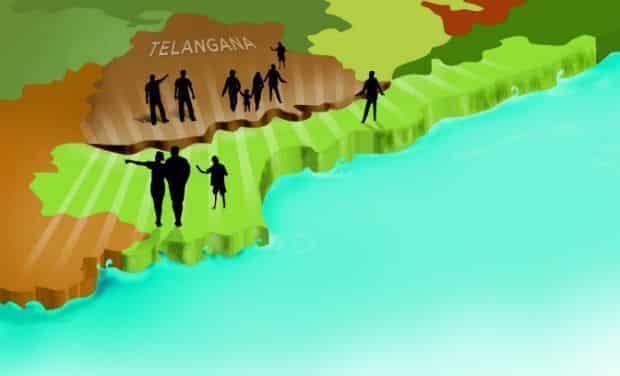
In 1952, a horrendous event took place in what is now Andhra Pradesh. Several people were undertaking a fast-unto-death campaign to force the government of India to create a state of Andhra from the Telegu-speaking parts of what was then the Madras province. The prevailing grudge amongst the Telegu people was that they were getting a raw deal from the majority Tamil population.

One of the agitators, Poti Sreeramulu actually died, and this provoked a large-scale agitation; people lay across railway lines and paralysed rail transport. The state and central governments had miscalculated the fury of the people. The state of Andhra came into being the following year. At the time there was no talk of creating a larger Andhra, with the addition of the Telegu parts of the erstwhile Hyderabad state and neighbouring Telegu-speaking areas in other states.

However, there was a flow-on effect from the government, caving in to the Andhra cause. Poti Sreeramulu has currently become the symbol for a United Andhra, for which he had never agitated.

Ever since the subcontinent was partitioned between India and Pakistan, both countries have been in the process of being internally redesigned. The concept of linguistic states was originally objected to by the then Prime Minister Pandit Nehru. He had dismissed the idea by calling it the ‘Plan Balkan’ because it resembled the break-up of the Balkans in Europe, into linguistic nations. But Nehru was a democrat and gave in when he saw that there was strong support for the concept at the grassroots level.

The States Reorganisation Commission (SRC) was set up in 1953 with Fazal Ali, Sardar KM Panikkar and HN Kunzru as members. The original redesigning in 1956 mostly followed the proposals of this SRC. Its three members had impeccable credentials; they had scholarly as well as administrative backgrounds of the highest order.

Fazal Ali had been a judge and later the Governor of Assam and of Odisha. He was knighted by the British Government well before India’s independence.

Sardar KM Panikkar, a native of Travancore State, was a well-known Oxford-educated scholar having several seminal works to his credit such as Malabar and the Portuguese (1929) and Malabar and the Dutch (1931), and later Asia and Western Dominance. He was the Foreign Minister of Patiala and of Bikaner where he later became the Dewan (Chief Minister). He had first-hand knowledge of China where he had been India’s ambassador. His scholarly observations are contained in his book In Two Chinas.

HN Kunzu, a Kashmiri Pandit (like Nehru) was scholarly as well as practiced in drawing up legislation in various capacities. Politically he was a centrist and had founded the National Liberal Federation with like-minded individuals. He presided over the amalgamation of India’s railways into one body. Kunzu seemed to have a special place for India’s youth. He was responsible for setting up the National Cadet Corps and became the first National Commissioner for Bharat Scouts and Guides, and the first President of the Children’s Film Society.

In 1956, as the time approached for the new states to be carved, there were conflicting views and thoughts about what the future would be. There was the extreme view that each state would become a watertight compartment in which the local inhabitants would consider migrants from other states as ‘outsiders’. Unfortunately, that has eventuated to some extent. Recently the Chief Minister of Karnataka advised that those who wish to make the state their home should learn to speak Kannada. Note that he has not said that they should learn to read and write the language.

Pandit Jawaharlal Nehru was in favour of having large states. He was responsible for persuading Telangana which had been conceded by the SRC to become a separate state, to merge with Andhra. He was also responsible for merging Vidharba with an enlarged State of Bombay.

The current trend is to create smaller states. Nehru’s successors, both in his Congress Party and including his own descendants, have favoured the creation of several new states. Ironically, the creation of Telangana is led by his grand-daughter-in-law Sonia Gandhi and his great-grandson Rahul Gandhi. Strong emotions have followed the creation of linguistic states. The impetus for the creation of these states came from the creation of Andhra, by separating the Telegu-speaking areas of the old Madras Province.

The SRC did what now appears to be the first phase of redesigning India. We are now entering a new phase wherein we are witnessing the creation of new states within the boundaries of existing states. These smaller states will remove the unfair advantage that people who lived closer to their state capital had, over those living far away. For example, the original Bombay State which comprised of Maharashtra (including Vidarbha) and Gujarat, left the majority of its people far away from the capital city of Bombay. Likewise, the large state of Andhra Pradesh was centred around the city of Hyderabad.

Though not as quickly as in 1956, the new states will take longer to be brought into being. It is time to build common bonds such as with science and scientific language.


Youth unemployment issues

0
Reading Time: 4 minutes

A whole generation of young people are entering the labour market with little prospect of success

In both the United States and Australia, there is a growing feeling that tertiary education is no longer worth investing in. The reason for scepticism on the part of parents and students is partly a matter of supply and demand; there are now far too many graduates as compared to the number of available jobs – and unemployed youth are lining up at Centrelink.

In 2013, the Australian Bureau of Statistics (ABS) found that 25% of Australians aged 15 to 64 years had a bachelor’s degree or higher qualification.[1] Yet only 68% of employed people aged 20 to 64 years were working in a field of relevance to their highest qualification, indicating the existence of a mismatch between tertiary qualifications and successful employment prospects in the field of one’s choice.[2]

The problem is not restricted to generalist degrees such as that of a Bachelor of Arts. Even graduates of professional degrees like Law have in recent years struggled to obtain work in their field, with one recruiter suggesting that ‘it is the worst time in living history to be a law graduate’.[3]According to media reports, 64% of recent Australian law graduates were not practicing law between 2010 and 2011.[4]

Although according to the ABS, only 3% of graduates overall were unemployed,[5] this doesn’t mean graduates are working in a field of their choice. The situation in the US is particularly bleak, with a report from the Center for College Affordability and Productivity claiming that half of America’s recent college graduates work in jobs that do not require a college degree.[6] As an illustration of their findings, the authors report that 15% of taxi drivers had at least a bachelor’s degree in 2010, a dramatic increase since 1970 when the figure was 1%.

The youth unemployment rate (that is, for those aged 15 to 24) in Australia for October 2013 was approximately 13%.[7] In the US, the corresponding rate is nearly 20%.[8] Nevertheless, politicians appear to have no hesitation in pushing more public funding for colleges and universities, and in encouraging education for its own sake, without contemplating whether there will be a job at the end of the line. The previous Australian government under Prime Minister Julia Gillard, for instance, set an ambitious goal of having 40% of young Australians holding a bachelor’s degree by 2025. And US President Barack Obama wants the highest proportion of college graduates in the world by 2020.

There are underlying structural and government-imposed barriers that prevent young people from transitioning from study into employment. One important contributing factor is the rate of taxation in a society; the higher the rate of taxation, the higher the financial burden on businesses, and the less likely they are to expand and create jobs.[9] In Australia and the US, the rate of corporate taxation is significant enough to act as a disincentive for those companies faced with the prospect of paying it. The rate in Australia is a flat 30% while the highest nominal rate in the US is 35%.

Excessive regulation can have a similar effect as taxation, because it forces businesses to bear additional costs in order to comply with government policy; they may need to hire a lawyer or accountant just to navigate their obligations, for example. Regulations that dictate the circumstances in which employers can fire their employees are an added disincentive to hiring, because employers are reluctant to take on board employees when the law makes it difficult to fire them at a later stage without being exposed to costly claims for unfair dismissal by the employee.

Finally, the education system itself can be faulted for ill-preparing young people for the real world of work. Government agencies often set a standardized curriculum that is then implemented and taught at schools. Yet this educational program could be criticized for not sufficiently preparing students for the ‘real world’, due to the lack of corporate and industry input into the curriculum. The concern is that students are not being taught the things that will really equip them to provide services that employers want, such as how to market themselves or how to run a business.

Youth unemployment is a scourge on any society, not just for its economic effects but also for the psychological impact it has on the young and their families. It is imperative that a new approach be formulated that takes into account the barriers placed in the way of young people by government institutions and policies. Each individual case of unemployment has a distinct personal cause that can often be helped by career counselling or training, but when dealing with aggregates the only way to convincingly help large numbers of young people aged between 15 and 24, is to change the system in which they operate. It is time to make the ‘rules of the game’ more fair for those just starting out and looking for a foothold in the labour market.


Footnotes

1 ‘6227.0 – Education and Work Australia May 2013’, Retrieved from <http://www.abs.gov.au/ausstats/abs@.nsf/Products/6227.0~May+2013~Main+Features~Attainment?OpenDocument>

2 ‘4102.0 – Australian Social Trends, September 2012’, Retrieved from <http://www.abs.gov.au/AUSSTATS/abs@.nsf/Lookup/4102.0Main+Features30Sep+2012>

3 Leanne Mezrani, ‘It is the worst time in living history to be a law graduate’, Lawyers Weekly, 27 August 2013; SaskiaStarck, ‘Australian law graduates unemployment crisis’, Retrieved from <http://saskiastarck.wordpress.com/2013/05/29/law-graduates-unemployment-crisis/>.

4 ‘Law and the new order’, Retrieved from <http://www.theage.com.au/national/education/blogs/third-degree/law-and-the-new-order-20120611-205o5.html>

5 Tony Featherstone, “Saving ‘generation jobless’: Is it too late?”, The Age, 9 May 2013.

6 Richard Vedder et al, Why are Recent College Graduates Underemployed?,Retrieved from <http://centerforcollegeaffordability.org/research/studies/underemployment-of-college-graduates>.

7 Retrieved from <http://www.tradingeconomics.com/australia/youth-unemployment-rate>.

8 Retrieved from <http://unstats.un.org/unsd/mdg/SeriesDetail.aspx?srid=597>; and <http://www.imf.org/external/pubs/ft/fandd/2012/03/morsy.htm>.

9 Bernhard Heitger, ‘The Impact of Taxation on Unemployment in OECD countries’, Cato Journal, Vol. 22, 2002.


WIN IFFM Awards Night tickets with Big B here!

0
Reading Time: < 1 minute

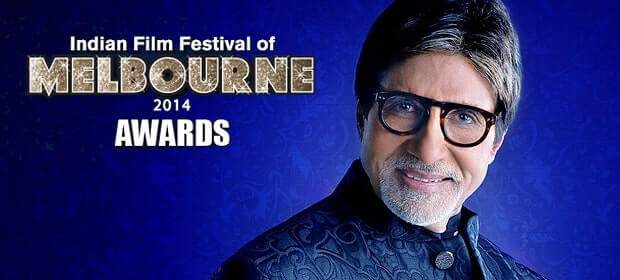
Thanks to Indian Link you can have a chance to win a double pass to The Inaugural 2014 IFFM Awards with special guest Amitabh Bachchan? Enter here!


WIN A DOUBLE PASS TO:

The Inaugural 2014 IFFM Awards with special guest Amitabh Bachchan

When: 7pm Friday 2 May


HOW TO ENTER?

Simply email win@indianlink.com.au

In the subject line put Inaugural 2014 IFFM Awards… and your name, contact number and postal address in the body of the email. You can enter as many times as you like, with multiple email addresses. Ok…. go!!

Note: Event is held in Melbourne. The competition prize does not cover accommodation or transportation.


Entries close midday Monday 28th April


Subscribe to stay up-to-date with all of our competitions

* indicates required

Email Format


An eventful election

0
Reading Time: 4 minutes

Steady and systematic voting continues in India, despite the staggering size of its electorate

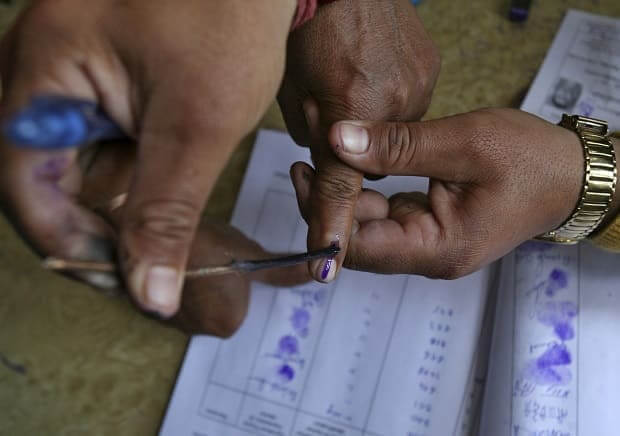
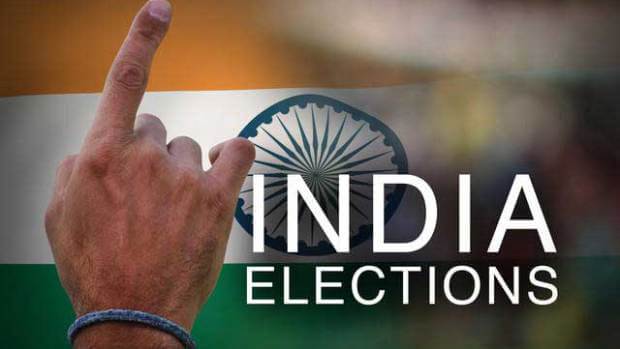
A polling officer applies ink on the finger of a voter at a polling station on the outskirts of Jammu

The world’s greatest democracy is in the midst of making history as citizens of the Republic of India go to the polls to elect a government in the General Elections 2014. The country’s over 25 million diaspora globally, are among those watching and waiting to see how the elections pan out and what the ultimate result may be. So what makes this election unique and historic?


Facts and figures

India is the second populous country of the world, with its 1.2 billion people, and counting! It is the seventh largest country in the world by area, and the most populous democracy in the world, which is why news about the ongoing elections is trending across the globe. Voting will take place in all 543 parliamentary constituencies of India to elect members of parliament in the Lok Sabha.


The voters

Yes, all 814 million of them! It’s a mind-boggling fact to even imagine that such a vast number are eligible to vote in the elections, and that, at the time of going to press, over 170 million, have already cast their vote in 111 constituencies, choosing from more than 1,500 candidates in the elections. The total number of voters at the 2014 elections is 100 million more than those eligible in the general elections of 2009. The voting is conducted in nine phases, and will conclude on May 12. Votes will be counted on May 16.

In a first, India’s transgender community is being recognised for the first time and can vote under ‘third sex’ or ‘others’, a category that didn’t exist in the last elections. 28,314 voters have registered as transgender.


The voice of youth

Of the total population, 168 million or about 20%, will vote for the first time. This means that the youth of India will be in the unique position to make a difference and have their votes cast for the party that best reflects their interests. The age of being entitled to vote is 18 years in India means that more than 23 million voters comprise of younger generation aged between 18 and 19.

The country has the largest population of youth in the entire world — 66 per cent of the total population in the country is below the age of 35.

Nearly 40 per cent of the Indian population is aged 13 to 35 years. It is clear that targeting the youth would be a sound strategy for the political parties, as their influence could tip the scales of power.


Showing their “Fingies”

Selfies showing voters inked fingers have been making the rounds on social media sites, including one of cricketer Suresh Raina who tweeted “I have done my vote, have you?” Accompanying other photos have been messages including, “my vote, my pride”.

There were many who posted only their inked finger, a “Fingie” or an “ungli”! Now that’s patriotism!


The NOTA option

For those disgruntled voters who didn’t find any of the political parties and their manifestos convincing, they had an option to exercise their vote for None Of The Above (NOTA). This button was sought after by a significant number of people and should make an interesting statistic when the election results are posted.


Technological marvel

Incredibly, 919,000 polling stations have been set up across the country, with approximately 3.6 million Electronic Voting Machines (EVM). The Election Commission of India (ECI) has endeavoured to ensure that no voter travels more than 2 kilometres to reach a polling station. Each polling station has to manage no more than 1,500 voters.

It is reported that more than 62,000 electors in the national capital checked their names on the voters lists through a mobile phone message facility. The ECI also had a message helpline number for voters who could check their names on the list before going to the polling station to cast their ballot.

The ECI also launched awareness campaigns and

the Systematic Voters Systematic Voters’ Education and Electoral Participation (SVEEP) – an initiative to motivate people to come out and vote. There is also a newly-introduced paper trail in EVMs, which was being used in selected polling stations of the national capital.

ECI rules!

The election is estimated to cost about $US5 billion (or 300 billion rupees), according to Centre for Media Studies via Bloomberg. And considering that the US general elections in 2012 cost a mere USD7 billion, would give you an idea of the scale of this exercise.

The ECI announced that it expects the voting percentage to touch 70 per cent or more; a 12% increase from the 2009 elections.

Over 10 million people have been employed to ensure that the election process is as smooth, effective and fair. Among these are elected officials, army soldiers and temporary workers.

Special “flying squads” have been set up to monitor campaigns and ensure that there isn’t any bribing of voters with cash, alcohol, and even prescription medication, reports the Times of India. These flying squads will be made up of administration officials from various districts and will also keep tabs on campaign vehicles.

Candidates standing for elections are being monitored and those inciting racial or inflammatory feelings are being banned from campaigning.


The players

India has a staggering 1,617 unrecognised political parties, while there are six national and 47 state recognised parties. The big guns are the Congress and the Bharatiya Janata Party (BJP), but the Aam Aadmi (Common Man’s) Party with its focus on anti-corruption, could disrupt the agendas of the main parties and bring forth a surprising result. Anything’s possible in the world of Indian politics!


So what can we expect from the 2014 elections? All will be revealed post May 16!


Spicy family drama

0
Reading Time: 2 minutes

A talented young group of actors bring alive family dilemmas in an intercultural community

 Malli pic 7

Sondha Bandham in Tamil literally translates as family bonds. Paradoxically however, these bonds are associated with family struggles of a diverse kind before harmony is attained.

Sydney Nadagapriya is a young bunch of drama enthusiasts who have come together to entertain as well as create social awareness within the audience. They have scripted a play that focuses on parental dilemmas involving youth in a multi-dimensional world.  Seeking partnerships in marriage are fraught with compatibility issues, more so in intercontinental relationships that have become commonplace in today’s world of internet and dating websites.

The chief architect of Sondha Bandham is NK Srinivasan who has given his audience a ‘reality check’ by portraying the conflict between the traditional approach and the attitudes of Gen Y.  Add a marriage broker and a couple of old world mums and dads to this plot and it becomes as spicy a tale as any other. The dialogues are crisp and laced with humour that enables the audience to relate well to the situations. The cast of actors have done credit to their director and have worked sincerely to spin a yarn that is interesting and keeps everyone glued to their seats.

Rashee Inc., who are co-sponsors for Sondha Bandham is a non-profit organization. Its objective is to develop fundraising activities for deserving charities and other entities that seek to serve underprivileged sections of society.  The proceeds of the evening, funds and donations would go towards supporting Unnati, a Bangalore based organisation that provides vocational training and guidance to underprivileged youth, and have been successful with 100 % job placements for their graduates. Unnati has already transformed many lives with their endeavours.  They make a significant contribution to the fabric of emerging India. Bharatiya Vidya Bhavan which has undertaken several multicultural projects has also supported this event to help meet the increasing demand of the community.


See all photos on Facebook here.

The Pan connection

0
Reading Time: 5 minutes

Religion, spirituality and reality combine to form a mesmerising documentary by a talented filmmaker

Faith Connections

A teeming mass of humanity. The confluence of India’s most sacred rivers. Religion, spirituality and reality. Faith Connections, Pan Nalin’s latest offering about the Kumbh Mela, weaves a stark landscape with rich stories, ancient tradition and grinding reality to produce a visually stunning documentary. It leaves one with a strangely soothing mix of awe and child-like wonder, and taps into the transcendental.

Pan Nalin, a culturally agnostic and chic version of the name Nalin Kumar Pandya, is an internationally renowned filmmaker. His first commercial success was TV series Wagle Ki Duniya, a comedy series he wrote with the legendary RK Laxman in the late eighties. His documentary Ayurveda: Art of Being won international acclaim, while the spiritual love story Samsara was a massive success and won thirty plus international awards. Valley of Flowers, a romantic epic, was pre-sold to 35 countries and has achieved critical and commercial success.

Pan’s dizzying success belies an impossibly humble beginning. “I was born in a remote village in Gujarat, on the edge of the Sasangir forest. My father had a tea stall at the railway station”, he reveals. About his education, he jokes, “My primary schooling was done illegally, by bribing teachers!” An artistic child, Pan saw his first movie when he was eight or nine, and was captivated. “I told my arts teacher, I’m not interested in all this (schooling). I want to make movies”, he states. His teacher gave him sound advice. Pan needed to graduate in order to study filmmaking. They did a few calculations, and taking all the education needed into account, it would be 15 years before Pan could make a movie! “The drive started that day”, reflects Pan, “and since then it has never changed”.

Pan Nalin
Pan Nalin

The decision made, there was two things he needed to do. “I was told to learn English and to leave the village”, he laughs. “And I started working on this immediately”. His parents were a huge support. “They couldn’t read or write, but they believed in me, and would go out of their way to help me, which was very encouraging”, he recalls. Pan’s talent for painting got him scholarships, and he went to Baroda to study. He attended the film club run by the Faculty of Fine Arts at the university. “I discovered world cinema”, he exclaims, “and I would watch everything!” Plans to join a filmmaking course in Ahmedabad went awry, but this did not discourage Pan. “I bought a 16mm camera from a local flea market and decided to become a self-taught filmmaker. Every now and then, I would make enough money to shoot two minutes of reel!” smiles Pan. He started filming weddings, and that gave him enough money to travel and pursue his dreams. And for a filmmaker in India, all roads lead to Mumbai.

Mumbai broke his heart. “All my dreams about filmmaking and story telling were shattered”, he says. “The atmosphere was inhumane. And everything was controlled by dynasty. When you are not a Khan or a Kapoor in Mumbai, it is really tough to get an opportunity. People with no talent would get the chance to make two or three movies, and this was heartbreaking for me”, he adds. Pan started as a production runner, and soon a producer of advertisements noticed his talent. She gave him the opportunity to make corporate films which kick-started his filmmaking career. Then she introduced him to RK Laxman, and Wagle ki Duniya happened. You would think that this was it for Pan, but he had other plans. “I decided I wanted to travel, unlearn, and make the films I really wanted to. The French had New Wave cinema, the Germans had Expressionism and the Italians had Realism. There had to be an Indian way of storytelling”, he avers.

And in search of the new way, Pan travelled across the world. His next film, documentary Ayurveda: Art of Being had a theatrical release and ran for a year in Spain, and for a record three years in France. After that Pan wanted to move to fiction and make Samsara, a love story set in Ladakh. He looked for funding in India and encountered huge bias and prejudice. “No one wanted to finance a spiritual love story set in Ladakh, in the Ladakhi language. They said it looks like Tibet, not India, even though it is an integral part of India. Or they (producers) would insist on casting film stars who were north Indian looking, which is very wrong, because none of the Ladakhis look like Shahrukh Khan or Hrithik Roshan!” he laughs. He realised that he would not get funding in India, and moved his search overseas. He found a producer in Germany who loved the script but asked, “How will you make a film at 15,000 feet above sea level, in the Himalayas, where there are no hotels?” Pan had done his groundwork and had everything worked out. As for the hotel, he convinced the producer to build one using local material and people! “The local people were an integral part of this enormous process”, says Pan. “They were very keen on cinema, but Mumbai did not give them an opportunity. These Ladakhi girls and boys who wanted to make movies….they were humiliated and called ‘chinky’ or ‘Chinese’”, he says with a twinge of sadness. “But the hotel is still there, in Leh. This is where they now hold the Ladakhi International Film Festival”. Samsara went on to become the highest grossing Indian independent film.

With Faith Connections, Pan shifts back to documentaries. Interestingly, he was not very keen on making the film because so many had already been made. “I didn’t want to make a film with a lot of voiceover, statistic after statistic, and exotic naked baba shows. It had to be a film made from the heart. If I didn’t find characters that would woo me, I wouldn’t make the film”, he says. And woo him, they did! Faith Connections features diverse characters: a ten year old impudent runaway with underworld ambitions, a mother searching for her lost child, an enlightened, renounced yogi re-connecting with the world in order to care for an abandoned young boy. It conveys grief, tenderness, spirituality, faith and reality in a mesmerising package. “There had to be another way to tell universally appealing stories”, says Pan of his filmmaking ambitions. He’s found that way. Like he wanted, the documentary has very little voiceover. There’s only one statistic. There are a few naked babas though, but I imagine that’s very hard to escape at the Kumbh Mela.

Faith Connections will screen at ACMI Melbourne till  April 24.

FP-LP-FaithConnections-03

Varied idioms, varied styles

0
Reading Time: 9 minutes

Each of the three main players representing their party have a unique method of addressing their audience, reports PRASHANT SOOD

india-elections

They are the lead campaigners of parties contesting over 400 Lok Sabha seats and are slugging it out in the heat and dust of elections. Narendra Modi, Rahul Gandhi and Arvind Kejriwal have campaign styles driven by their different persona and vision for the country and seek to connect in their own way with the masses.

Modi (63) and Gandhi (43) also represent a generational change in their parties. Kejriwal, 45, is the new and spirited challenger, keen to change the established political order.

Modi is the prime ministerial candidate of the Bharatiya Janata Party (BJP). Gandhi is leading the campaign of the Congress and Kejriwal is the main campaigner of the Aam Aadmi Party (AAP).

Modi has embarked on a planned and well-publicised campaign and is expected to some 185 “Bharat Vijay” rallies before campaigning for the Lok Sabha polls ends in May. Modi has garnered so much media attention, that BJP’s national campaign effectively centres around him.

Congress sources said Rahul Gandhi is expected to address about 80 more rallies over May and Congress president Sonia Gandhi is also slated to address rallies across states.

Kejriwal, who is pitted against Modi in Varanasi, has been reaching out to people through road shows and rallies in different states.

AAP sources said that Kejriwal will focus on Varnasi in the coming days.

Modi likes to engage with the audience during his speeches and laces his remarks with sarcasm. He poses questions and then seeks replies from the gathering. Modi raises local issues to build enthusiasm among people, some of whom resort to sloganeering in his favour.

Unsparing in his attacks, Modi almost ritualistically takes digs at the Nehru-Gandhi family. A natural speaker who appears at ease, Modi delivers his punches hard. He speaks at an easy pace and tries to use expressions that can create headlines.

In his rallies in Haryana and Rajasthan, Modi made jibes at Congress over the alleged land deals of Sonia Gandhi’s son-in-law Robert Vadra. He refers to Rahul Gandhi as ‘shehzada’ (prince) and to the Congress as the ‘sultanate’ (Mughal kingdom).

Modi uses Hindi adages to sharpen his attack and speaks on an array of issues including price rise, defence, women’s security and education. Modi has sought to identify himself with the expectations of aspiring classes and presents himself as a strong alternative to the perceived discontent among people with the Congress-led United Progressive Alliance government on issues of price rise, corruption and “policy paralysis”.

Rahul Gandhi’s speeches have been increasingly targeted towards Modi, portraying him as a know-all, dictatorial leader with a communal mindset.

Gandhi looks less grim than his BJP rival and delivers his speeches in a less serious and sarcastic tone. He talks about entitlements brought about by the Congress in the last 10 years and seeks to identify the party with the poor, the youth and the middle classes.

Gandhi presents himself as a leader who likes to work by consultation and consensus, who values the opinion of others and wants to sort out problems through the process of accommodation. Gandhi appears keen to look informal, accessible and approachable. In some of his rallies he has dressed in jeans and a kurta – a sartorial combination popular across college and university campuses.

Gandhi’s speeches can appear repetitive to those who follow him closely.

In his rallies, Gandhi has targeted Modi over the Gujarat model of development and snoopgate and the BJP over “divisive politics”. He has also sought to present Congress as a unifying force whose heart is with the poor and which is keen to expand opportunities for every Indian.

Kejriwal speaks and dresses in the manner of the common man. Normally clad in a shirt and trouser, Kejriwal’s delivery style is simple, direct and forthright. He seeks to avoid rhetorical flourishes and speaks like a man who does not want to indulge in the politics of compromise.

Kejriwal does not move with heavy security and associated paraphernalia. Kejriwal speaks with confidence and seeks to link success and failure of his party with that of common man. He gives the impression of a leader detached from the privileges and perks of high office with a keen desire to end the problems of the people.

Battling allegations of being a “quitter” after his AAP government resigned in less than two months of assuming power after the Delhi assembly elections, Kejriwal presents himself as a leader prepared to make any sacrifice for his principles.

His attacks on the Congress and BJP for their alleged cosiness with the corporates and his strong anti-corruption plank appears to have struck a chord with people.

AAP is perhaps the only party in the country which has put up candidates on over 400 Lok Sabha seats in less than two years of its formation and looks poised to achieve status of a national party.

Political analysts said that Modi, Gandhi and Kejriwal were trying to be strident in their own ways.

Senior journalist BG Verghese said that people coming for rallies do not necessarily vote for the same party.

“Each of them has his own style. Modi is asking votes for himself and is very strident in his stance and so is Rahul and Kejriwal. They also repeat themselves,” Verghese said.

He said the BJP has launched a concerted advertisement campaign and questions would be raised about the money involved.

Subrata Mukherjee, a political analyst who taught at Delhi University, said Modi was the most impressive of the three leaders as “he has the punch”. “He also answers charges levelled against him. He has developed the Gujarat model and has something to show which others do not. He carefully picks on the weak points of his opponents,” stated Mukherjee.
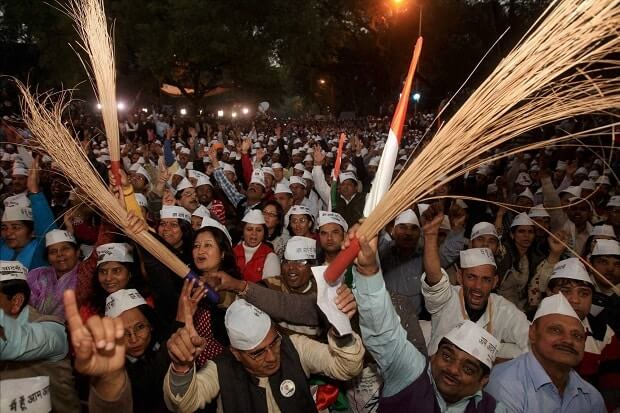
AAP's poll victory rally

Hundreds of thousands vote in India’s fifth phase of polls

At the time of going to press, hundreds of thousands cast their vote in four states in the fifth phase of elections, marking the halfway mark in India’s 10-phase staggered polling. Till now, over 170 million people have cast their vote across the country in 111 constituencies to choose from more than 1,500 candidates in the elections that began April 7 and will end May 12. Counting takes place May 16.

Balloting recently took place in three constituencies of Assam, two seats of Goa, Tripura’s second Lok Sabha constituency and Sikkim’s lone parliamentary constituency. The voter turnout was high in all the four states recording a 70-80 percent turnout, and polling was largely peaceful.
In Tripura, long queues of men and women voters, including tribals, were seen in most of the 1,490 polling stations. Six of them are all-women polling stations manned by women polling personnel only.

In picturesque, yet sparsely populated Sikkim, a good number of the 362,326-member electorate turned up to vote at most of 538 polling stations.
In Assam, brisk balloting was recorded in Silchar, Karimganj and Diphu (Autonomous District). Of the 2,926,762 eligible voters in the three constituencies, 1,400,594 are women.

April 10 was a critical day as millions voted across 14 states and union territories in the third round of parliamentary elections to pick 91 of the country’s 543 MPs. An estimated quarter of the 191 million electorate had voted by noon in five hours of balloting, with long queues of men and women seen right from the time the polling centres opened at 7am in the morning. Voter enthusiasm was high in both working class and middle class areas, and was mostly peaceful.
Chief Election Commissioner VS Sampath hoped that voting percentage would keep improving with every round of the Lok Sabha election.
There was a record voter turnout of 73.4 percent in Kerala, where balloting took place for all its 20 parliamentary constituencies.

A worker pulls out a roll of cloth to be made into flags for the TMC party, while it is kept out to dry at a flag manufacturing factory in Ahmedabad

A cross-section of voters

The ECI made arrangements to have wheelchairs at every polling station in Delhi, a blessing for senior citizens who turned up enthusiastically to vote. There are around 324 voters in Delhi aged above 100 years. Besides the century-plus voters, Delhi also has 10,104 senior voters between the age of 90 and 100.

Delhi’s disabled too, cast a smooth, hurdle-free vote with polling stations equipped with wheelchairs, Braille sheets and designated volunteers for assistance. The efforts made Delhi’s differently-abled community hail the provisions made by the Election Commission as pleasant ones. Calling the overall experience “wonderful,” Disability Rights Group convener Javed Abidi said that it was not only the facilities, the staff deployed at the booths were courteous too. Delhi has over 80,000 disabled voters, including visually challenged and hearing impaired.

Even sex workers living in Delhi’s infamous GB Road red-light area came out in good numbers to cast their vote and were extremely happy to have equal power and representation in the formation of the new government. Coming in groups of friends and families, these women headed towards a polling booth in Chandni Chowk’s Ajmeri Gate area. “I am very excited to exercise my vote for the first time in the Lok Sabha polls, and I can proudly say that I am an Indian citizen,” said Poornima, 23, a sex worker. “This is one day when people don’t discriminate us. We are in the same queue as others, waiting for our turn to push the button,” she added. According to Iqbal Ahmad, general secretary of NGO Bhartiya Patita Uddhar Sabha (BPUS) that works for the sex workers, over 1,800 sex workers had enrolled as voters.
In total, Delhi recorded its highest voter turnout in the last three decades with 64.77 percent polling.
In conclusion, it was largely a cleaner, more orderly and more efficient election. The Election Commission of India, learning from experiences of past elections, keeps improving and innovating so that each election becomes better than the previous one.
There were fewer complaints of missing voters or lack of facilities or unhelpfulness of poll staff and police. And with the city catering to an electorate of over 12 million, this was no ordinary feat.
However, not everyone voted for political parties. The None Of The Above (NOTA) button was sought after by a significant number of people. It should make an interesting statistic when the election results are posted.
Selfies with their inked finger have been making the rounds of social media sites, as people show proof of exercising their democratic right while asked others to vote too. Among these are cricketer Suresh Raina who posted his selfie with the inked finger in focus, and the message: “I have done my vote, have you?”, on Twitter. Pictures of inked finger, with accompanying messages like “my vote, my pride,” “best thing I have done as an Indian citizen” have been posted on social networking sites like Twitter and Facebook. Emoticons (animated expressions) were a substitute to reflect their various moods of happiness after casting the ballot. There were many who posted only their inked finger, and not the selfie!

india-election-1

Delegation from 19 countries witness Delhi polls

A 30-member delegation from 19 countries, including many from Africa visited some polling stations in the nation capital to observe the Indian democracy at work, said a senior poll panel official in New Delhi. The delegation included representatives from Bhutan, Sri Lanka, Congo, Ethiopia, Ghana and Lebanon.

“The representatives were also briefed about the elaborate arrangements made by the Election Commission to make the elections successful. They saw the voting process and the security arrangements made to ensure fair and safe elections,” the official said.

The official added that the delegation was also informed about the special arrangements that were undertaken this time for the disabled to ensure that they don’t face any problems when they vote.

The Election Commission of India (ECI) and UNDP have a memorandum to jointly promote exchange of visits and sharing of experiences and skills in the field of electoral management with developing countries.

And members of the delegation were highly impressed by the smooth conduct of polls and say India has become a learning centre for other developing countries. The sheer scale of the Indian general election has left them marvelling.

“We visited a model polling station in Delhi and witnessing the magnificent arrangements for voters. It also shows that polls of such magnitude can be conducted in such a smooth manner. This would help the other developing countries too,” said Abednego Akok, Chief Election Commissioner of South Sudan.

Said Akok, “India has become a learning center for developing countries of the world. Despite being the world’s largest democracy and being prone to hassles like population, problems due to a multi-party system and frequent violation of the model code of conduct by political parties, the Election Commission of India is able to conduct polls in a very smooth manner”.

Akok is part of the 30-member delegation from 19 countries that visited polling stations in other states as well as the national capital. Besides Akok, the delegation includes senior election officials from Ghana, Kyrgyzstan, Lebanon, Malaysia, Maldives, the Philippines, Sierra Leone, Sri Lanka and a few other developing countries.
Rigzen Lhundrup, a senior election official from Bhutan, said, “The best thing about the poll process in India is the systematic way it is conducted despite India being the second most populated country in the world”.
“India can be a role model for the developing nations and we can learn a lot about how to conduct the polls in a smooth and fair manner. India’s role has been magnificent in conducting the polls in Bhutan in a fair and smooth manner,” Lhundrup stated.

Complied from news reports on IANS

Election tamasha rolls into town

0
Reading Time: 8 minutes

Australia’s Indian community believes that India will opt for change in this year’s General Elections

Full-HD-Indian-Flags-HD-Wallpapers-Hand

The saffron wave sweeping across India has now well and truly spread to its communities in the diaspora. And with, perhaps, the same intensity.

In Australia’s Indian community, an online survey conducted by Indian Link has revealed overwhelming support for the Bharatiya Janata Party (BJP) as opposed to the Congress Party that has been in power for nearly ten years.

Indian Link’s online Indian election survey was held between Thursday 9 April and Monday 12 April. 672 responses were received in this time period.

A whopping 73% of the respondents said they backed the BJP. The fledgling Aam Aadmi Party (AAP) snared a surprising 16% of the Australian-Indian vote, while the Congress Party managed only a poor 6%.

5% of the respondents felt that there will be a hung parliament with a BJP-led Coalition forming the next government.

The mood here, just like it is in India, is clear, it’s time for a change.

Sifting through the comments made by the respondents, some of them quite verbose, the growing dissatisfaction with the current government is all too clear. There is, for starters, a lack of faith in the leadership, with the Congress not being able to put up an able or willing leader (The young Gandhi scion is probably the least impressive of his illustrious family; and as for the current ‘accidental’ prime minister, the recent release of a controversial book by a former media adviser, has not exactly helped the cause). There is frustration also that India has not been able to rise up to the mark economically on the world stage, despite much promise only five or so years ago. As well, there is a fair bit of displeasure and disappointment on affairs closer to the aam aadmi’s heart, such as women’s safety and basic services.

But it is the lament about widespread corruption in contemporary Indian society that comes up repeatedly, almost as if people are sick and tired of a system that does not work unless bribes are paid; where there are too many politicians with a criminal past, and, where talented, younger and perhaps more idealistic politicians are not getting a chance to get ahead.

And yet, what is interesting is that though the alternative is clearly preferable, there is some ambiguity about the leadership role.

Regarding the issue of whether BJP leader Narendra Modi will be a good prime minister for India, nearly a third of the survey respondents responded negatively, basically disagreeing with his tilt towards communal politics. (The recent emergence of a heretofore unmentioned wife, has probably done a bit of damage too).

Looking at the other side of politics, responding to the issue of whether the Congress Party’s dependence on the Gandhis has limited its growth potential, it is clear from the responses that it is time for the 129-year-old party to finally rid itself of its Gandhi hang-up. A whopping 80% felt that the Gandhis are indeed an encumbrance. One respondent noted, “How could Sonia Gandhi be given so much power that the Prime Minister of India cannot lead the country? Rahul Gandhi has shown no reason why he should be Prime Minister of India… the slavery of the Congress Party to Sonia and Rahul is shameful to watch”.

And although to some extent, Modi has been able to reach out to people like Congress leaders haven’t, the analysis regarding leaders is much the same as it is in Australia or the US or indeed any other country; there is a vacuum of sorts in terms of inspiring leadership.

There also seems to be a feeling that the Congress Party has run out of ideas, with over 62% stating that BJP will be better for India’s economic development. In fact, the AAP won the confidence of 24% of those surveyed, with the trust in Congress trailing a lowly 14%. “I do not think the Congress party is good for anything. It is a shame as this was the party which brought economic liberalisation to India under Manmohan Singh in the 1990s,” said one comment.

Similar figures were reflected in the issue of which party will be better for Non Resident Indians (NRIs), with 55% supporting the BJP and 14% in favour of Congress. The AAP again overtook the Congress here, by securing 22% of the votes, while 9% were undecided.

Based on the NRIs’ robust stance on corruption and their strong desire for a clean-up, the AAP seems to have emerged as a beacon in this state of darkness. Responding to the question of whether Arvind Kejriwal’s AAP is a serious player in national politics or a mere sideshow, 58% expressed their solidarity with the party. Rejecting both the Congress and BJP parties, one respondent wrote in, “There are (some) fully corrupt politicians…, we need someone like Kejriwal, an aam aadmi like us. We should at least give him a chance to see what he will do for India”. In a similar vein, there was this, “The current political system in India is much polluted. I believe the person with the broom, that is Mr Kejriwal, will be able to clean up the rubbish but the janata need to wake up”.

pie chart 1

Politics as a passion

A sizable number of respondents of the Indian Link survey (55%), were long-term residents of Australia. This shows that wherever they may go, Indians continue to be passionately involved in the political affairs of their home country. They do genuinely want to be able to have a say; an overwhelming 82% of the respondents claimed they would like a chance to be able to vote in the current elections.

What was also remarkable to note was that there is a growing desire to change the 5-year election cycle. Nearly 50% of those surveyed wanted the election cycle to be shortened from 5 years to 4 or 3, whereas 46% were ok with retaining the current system. 4% were in agreement to give the politicians more than 5 years.

A good number of comments also suggested that the system needs to change; perhaps move to an American-style presidential system, or take ideas from the Australian system. “The Australian constitution for instance states that it adheres to the Judeo-Christian system but it is still a secular country”. Or again, “Alliances between the parties should be declared before the elections, not after the results are announced” were some of these comments. NRIs continue to be political beings wherever they go, learning from the system of their adopted country, and trying to find ways to suggest adaptations to their own system. This tendency should be further encouraged: both counties that enjoy our allegiance can be the benefactors of such avid political behaviour.

Yet, a surprising section of respondents said the system is fine, just not implemented properly. It seems as though they do have faith in our founding fathers’ ideals, even though things may have gone off-track somewhat. Is this the trickle effect of Kejriwal – that if someone genuinely wants to make a real difference, it is indeed possible? Kudos to AAP for rekindling that sentiment, even if they faltered at the implementation stage.

The passion for politics, amongst Australia’s Indian community is clear from the comments and the keen observations. Corruption and poor leadership, in their opinion, are leading the country astray and their desire to see a change in government is clear from their strong endorsement of the Narendra Modi-led BJP. Whether this turns into reality, will become clear after 16 May. But whether they are voting in the BJP, or they are voting for change, will only become clear a little while later.

pie charts 2

What you said

“Corruption and increasing population are two major issues, and the general public needs to look at ways of controlling them. Peoples mindsets regarding women need to be changed. We need to give back more to society and make it sustainable and a healthier place to live”.


“Perhaps we should try the American style where people vote for a president rather than so many political parties. This would bring in much more stability and [a better chance of attaining] absolute majority”.


“Political leaders with a criminal record should be banned from politics and those who are alleged to be involved in scams should be suspended till the case is resolved. The central government should be formed by a strong national party with a clear mindset for economic, cultural, social and educational development and growth… a clear guiding plan for better governance and growth. Corruption and social crimes against women are huge social evils and the new government must enact strong laws to overcome these challenges. Problems of poverty and unemployment can be taken care of by promoting skill-based education and in turn promoting small businesses with proper support and funding. Once a party forms a government it should focus on the development of the country rather than focusing on the sustenance of the government itself. The ruling party must not submit to the pressure of its unfaithful allies when the future for the nation is at stake. I hope India finally gets a government which is truly ‘By the People, Of the People and For the People,’” Jai Hind.


“No [current] political party is worthy of being in power. Things will not change till the greed for money is not the focal point for the politicians themselves. They need to think of what India could be if governed well”.


“There is a need to bring in more youth, or leaders without a criminal history – even Australia was not spared by the Obeids”.


“With [the] introduction of AAP at the national level, they would be [a] catalyst for change. They have principles as well as courage”.


“Narendra Modi should win this election. I have lived in Ahmedabad and the growth and development there has been outstanding. India needs a strong PM now and no corrupt politicians”.


“It’s a very fluid situation. Regional parties are not reliable and national parties are not in a position to get even a simple majority. The UPA/NDA experience is not good for India’s stability. India needs a strong man like Sardar Patel and in this election, the electorate see such an ironman in Narendra Modi”.


“I think the entry of AAP in the Indian political scenario will have a very positive effect on the overall politics of India and will definitely force other political parties to change their traditional methods of operation”.


“Indians visiting abroad on tourist visas should also be allowed to vote through local consulates”.


“Reservations and communal classification for political gains is killing the country. There should be one country and one common rule for all”.


“I think for the first time in India we have a true, strong and assertive nationalist leader representing a major national party (BJP). I think the time has come for Indians to back the leader who can win back our pride in the world as one of the oldest and still relevant civilisations. Hopefully this will drive all parties to become nationalist in their approach and put the country first rather than their own party and dynasty. It is tragic to see an incompetent unworthy person become leader of the Congress Party. I sincerely hope this election will decimate Congress to the extent that they will reinvent themselves by letting go of the dynastic shackles and embrace an inclusive culture. It is sad to see good leaders like Sachin Pilot, but other youth leaders cannot even come close to becoming the leaders of their party. The best performance by the Congress in recent times was when they had P V Narasimha Rao as their leader and Prime Minister. This says a lot about what this party can achieve when they are freed from dynastic pressures”.


“Congress Party is very corrupt and this needs to change. Narendra Modi has led a non-corrupt government for last 6-7 years. He is a strong and passionate leader and will definitely work very hard for India and Indians”.


“India needs a strong leader who can take the country forward and also enthuse its citizens to live for the country. Under Congress rule, there has been a fracture of the society with every group thriving to create its own identity under the premise of language, religion, caste. I hope Narendra Modi’s leadership with the policies of BJP will take the country forward”.


“The system is dysfunctional – it needs an overhaul and a strong courageous honest leader. Not sure if that will happen in the near future but Indians in India seem to be awakening. Satyamev Jayate”.


“India should openly have Hindu Political Parties as that’s the heritage of India and that’s a fact. If a party is Hindu it doesn’t mean it’s communal. The Australian citizenship test also states that Australia has a Judaeo-Christian heritage, and many Australians describe themselves as Christians. Australia has public holidays on Christian days such as Good Friday, Easter Sunday and Christmas Day. However, the government in Australia is secular. This means that there is no official national religion. (Source). Australia talks about its heritage being Judaeo-Christian even when that was not the heritage of the natives, whereas India is the mother of Hinduism”.


Read more: Indian election facts

Read more: Indian election latest news