Home Blog Page 950

Bill Murray photographer, live with Kashif on Indian Link Radio

0
Photo: Fia Forever Wedding Photography
Reading Time: 3 minutes
Photo: Fia Forever Wedding Photography

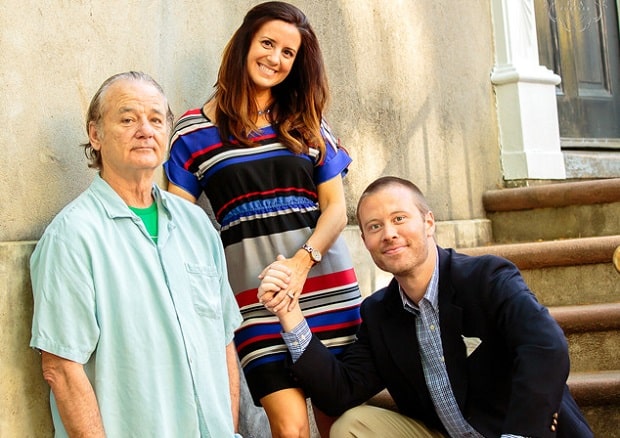
It’s a quirky photo, but it’s catapulted one little-known wedding photographer to instant stardom.

When Raheel Gauba spoke to Sydney’s Indian Link Radio on the morning of Friday 13 June, via phone from Charleston, South Carolina, USA, a team from Ellen DeGeneres’ show were waiting to interview him.

“The phone hasn’t stopped ringing,” an excited Raheel told Indian Link presenter Kashif Harrison. “I’ve already been on Buzzfeed, E!Online, Fox News, Good Morning America….”

Raheel Gauba
Indian Link Radio’s Kashif Harrison


The excitement began when Raheel released a simple photo he took of a young couple, which was photobombed by Hollywood celebrity Bill Murray. The photo went viral.

Raheel, a Karachi boy who now lives and works in the US, called a halt to the queue of media outlets waiting to speak to him, so he could talk live on air to old friend Kashif, also of Karachi.

Maine socha ek Pakisatni dost ke liye favour kar doon!” (Thought I’d do a favour for an old mate from Pakistan).

Raheel recounted, perhaps for the umpteenth time, the incident where he found his clients somewhat distracted as he tried to frame their shot. Turned out a middle-aged passer-by was trying to make the couple laugh, by pulling his shirt up and patting his tummy noisily. It was Bill Murray, who has gained a reputation for barging in unannounced at various places, much to people’s surprise, and no doubt, pleasure.

“Of course I asked him to join the couple in the shot,” Raheel revealed. “It was a spur-of-the-moment thing, and all finished in a matter of a minute!”

It’s not even an artistic kind of shot, he revealed later, and one that he had kept aside since the shoot nearly a month ago. But he had no idea of the kind of interest it would generate when released.

The young couple Ashley Donald and Erik Rogers are very happy, but a bit taken aback as the whole world has seen their engagement photo, or at least, one of them.

“Ashley said to me, I feel naked! Can you please make this stop?” Raheel said to Kashif. “I replied, the train’s left the station, there’s no stopping it now!”

After the interview, there was an influx of facebook messages from Karachi, from old friends of both Raheel and Kashif who had heard the interview live on air.

Raheel is no stranger to shooting celebs with his camera, having only just recent hobnobbed with Bollywood celebs at the IIFA awards in the US for which he was official photographer, along with Taha Ghaznavi (Dastaan Studio).

But he hasn’t yet had a celeb photobomb one of his shoots. Yet, it’s got him his fifteen minutes (and more!) of fame.

Keep up the good work, Raheel.

And to finish off the interview Raheel dedicated a beautiful song from Vicky Donor to his wife Maryum Ghaznavi (who is his partner in crime at Fia Forever Wedding Photography).


And the question that Kashif asked his listeners after the interview: Which Bollywood celebrity do you think would do a Bill?

Share your answer on  Facebook page and like it to stay up to date with his show!

Dance as a life force

0
Reading Time: 3 minutes

Hamsa Venkat’s Bharatanatyam troupe prove yet again that they live to dance, reports SYDNEY SRINIVAS

Hamsa Venkat has done it again. Having successfully infused the classical Indian dance scene in Sydney with new ventures, freshness and enthusiasm, her latest production Prana was another breath of fresh air.

A bouquet of dance items contributing to the theme of prana, or life force, three of Hamsa’s students Vidya Gokul, Priya Murali and Govind Pillai performed in this presentation.

The provision of live music formed another attractive feature, with Krishna Ramarathinam (vocal), Pallavan Nagendran (mridangam), Narayanan Ramakrishnana (violin) and Hamsa Venkat (nattuvanagam).

There was great drama in the item Ahalya Moksha, based on the well-known story of Ahalya who is turned into stone by her husband, the sage Gauthama, angry at her dalliance with Lord Indra. It is left for Rama to place a foot on the stone that is Ahalya, and bring her back to her form. Dancer Vidya Gokul’s interpretation of Ahalya was simply astounding, especially as it was performed to instrumental music only, provided by the hugely talented Mohan Ayyar on synthesiser. The absence of vocals did not seem to matter at all, with the music was actually heightening the moods in this tale. Vidya particularly excelled in the moments depicting the wrath of Gauthama and the joy of Ahalya as she regained her physical form.

The Krishna leela Jaganmohanane Krishna was a total treat to the audience. This celebrated kriti in Kannada speaks of the three great episodes, the Lord begging Bali to give him three “feet” of land and thus grant him moksha; Kalinga Mardhana by Krishna and the deceitful play of chess by Duryodhana with Dharamaraya, and Draupadi’s vastraharana and Krishna’s intervention to give her Akshaya Vasana. Each of these episodes is symbolic and holds deep significance. Lyrics presented in pleasing ragas by Krishna, nattuvanga by Hamsa, and the clever mix of nritya and abhinaya by all the three dancers elevated the experience. There was a quick show of Dashavatara as well. In the Bali episode, Ondu padava bhoomiya meloori, ondu padadi gaganavanaledu made for fantastic abhinaya.  Following this, Govind gave a pleasing portrayal of Kalinga Mardhana. In the deceitful chess episode, we saw a good interplay of light, bringing out the expression on the faces of dancers.

Confluence of the jeevathma and the paramathma became the theme for Joolathi Radha presented by Vidya and Govind.  Radha and Krishna are eternal lovers; there is no end to their playful activity. We saw some beautiful poses of Radha and Krishna in this item. The Abhinaya brought out the love theme effectively. The swing action enacted and light display with colour changes added to the beauty of the presentation.

Brochevarevarura by Vidya was wonderfully expressive, especially for the line Seetahapathe, napai neekabhimanamu leda? In the following item Shakti Swaroopam (Durge Durge), roudra was oozing out of every movement of Govind. Indeed, one felt, “Durge is really blood thirsty”.

Music is an essential part of dance. In this respect Krishna Ramarathinam proved that he is a mature singer for dance. His range and modulation were both very effective. One should be pleased to note that he is born and brought up in Sydney. The other musicians too did an admirable job.

What was important was that the performance took the audience away from the Sydney surroundings to some hyperspace, one of divinity, as art always should. The dances were so beautiful that the language of the lyrics seemed to be no barrier to the artistic experience.

The staging raised funds for Northwest Disability Services, and was supported by Viswa Hindu Parishad, Sewa International and Sydney Veda Patashala.


A tribute to Tagore

1
Reading Time: 2 minutes

A treasured icon is felicitated on his 153rd birth anniversary

The Bengali Association of NSW (BANSW) celebrated Rabindranath Tagore’s 153rd birth anniversary (9 May 1861) recently at the Pennant Hills Community Hall.

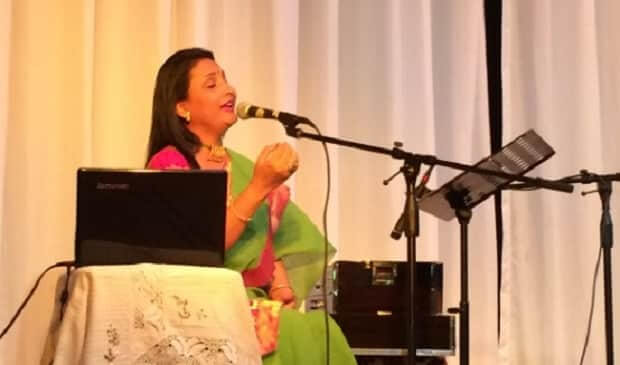
The renowned Aditi Gupta of Kolkata, the artist invited for the occasion, fulfilled the yearnings of those gathered to listen to some authentic Rabindra Sangeet in the traditional style.

Aditi has been exposed to Tagore’s works since childhood. Little did her mother, who sent her to Daksginee, a noted Rabindra Sangeet institute in Kolkata, know that Aditi would go such a long way in this particular field. She performs regularly on All India Radio and on various Bengali TV channels. She has received many awards like the Dakshinee Puroshkar and Sunil Kumar Roy Smriti Puroshkar.

The songs she chose for the evening were mostly popular ones such as O-aamar desher maati (O my native soil, I bow my head to you in deep obeisance); Bhalobashi, bhalobashi (I love, I love), Sokhi aandhra ekela ghare mon mane na from Shapmochan (I fail to content my mind, O darling, in this dark lonesome home) and the very well-known Purano sei diner katha bhulbi ki re hai (How can you forget the good old days, dear).

Aditi has a sound understanding of the chemistry of the lyrics and the tunes of Rabindra Sangeet, and has the seasoned singer’s uncanny ability to transmit feelings through her voice.

“I am truly indebted to my Guru, the renowned Shri Rano Guha Thakurata, who inspired me to immerse myself into the world of Tagore’s music,” Aditi said later.

Aditi’s word of advice to others interested in Rabindra Sangeet, was to engage with the art form extensively and learn the various facets of it in full detail, in order to bring out the best in themselves.

Earlier in the evening there was a fine display of talents from local artists, including very young singers and dancers who stole the hearts of the audience with their enthusiasm and performances. I was particularly impressed by Sandip Bhattacharya and Barnali’s rendition of Kunti and Karna’s exchange of dialogues in Mahabharata. Apparently Tagore re-worked on old stories from the Mahabharata and from Buddhist lore so that they resonate in modern times. The dialogues form a dramatic encounter between a fostered son, Karna and his long-lost birthmother Kunti, set against the backdrop of the preparations for the great war between the rivals, the Pandavas and the Kauravas.

For Bengalis worldwide, Rabindranath Tagore remains a treasured icon who will continue to inspire every aspect of their lives for generations. My own personal experience is that reading and rereading Tagore often opens up new vistas. A recent discovery for me has been the influence of Islam on the revered writer. Apparently his private library contained many writings by Rumi, Sadi, Zami and Hafiz. In fact, some allege that a few of his poems in the well-known Gitanjali contain traces of Islamic spiritualism and mysticism. Like it or not, even Tagore’s critics do not deny that Tagore was a figure larger than life, one that continues to influence millions even today.


A vision for Bhopal

0
Photo: Victoria Baldwin
Reading Time: 4 minutes

Architect William Chan utilises his passion for the built environment to develop global communities


Photo: Victoria Baldwin

Young architect William Chan demonstrates how the sharing of knowledge can result in the development of innovative solutions to global issues.

William, named one of Australia’s Top 100 Brightest Young Minds in 2010, recently received the 2014 Student Prize for the Advancement of Architecture from the Australian Institute of Architects.

His achievements are spectacular for one so young. Besides being a Future Green Leader for the Green Building Council of Australia, he is also a youth mentor for the Museum of Contemporary Art Australia.

His passion for socially and environmentally sustainable architecture has taken this young Australian, originally from Hong Kong, around the globe assisting communities in need.

William graduated from the University of Sydney with the Convocation Medal from the Faculty of Architecture, Design and Planning and received a faculty scholarship to participate in an inter-disciplinary design program called Global Studio.

Global Studio is an action research program with students, academics and professionals from all over the world that use a participatory design process to facilitate projects.

William’s first experience was at Diepsloot, a slum in Johannesburg. This project opened his eyes to how architecture could positively influence people and their livelihoods.

His continued involvement with Global Studio gave William the next opportunity to coordinate the program in Bhopal, India. Here William was part of a team developing an urban renewal master plan with a process of in-depth community consultation.

“Working in Bhopal and visiting other places in India was an incredible and eye-opening experience for me,” William said.

The inter-disciplinary project that William was part of had six different groups working in the Bhopal slums. Students and professionals from around the world – Europe, USA and Asia from the areas of architecture, business and law, worked in design-oriented projects or research-oriented projects, covering different aspects.

William’s group looked at the master plan of Bhopal. They studied the new and old parts of Bhopal city, examining how the distinctive Islamic side and Hindu sides worked together.

He found the history of Bhopal fascinating.

“It was amazing to see how the city recovered following the Union Carbide disaster and seeing how it has impacted the community,” he said.

As part of the process of developing a master plan for Bhopal, his group went around the public spaces of the city, talking with residents to find out how and why they enjoyed the space.

They partnered with the local university, Maulana Azad National Institute of Technology (MANIT) who helped the overseas guests with interpreting, as well as research.

The highlight of the whole process was its culmination in a festival called We are Bhopal, which encouraged people who live in Bhopal to share their ideas for the city.

“We held a community consultation, asking children and adults to draw on maps of Bhopal and put down their ideas,” said William, the memory of the interactions still fresh in his mind.

“We showcased different ideas to give the community an idea of how a public space could change. We did illustrations and computer renders to show the ‘before’ and ‘after’ of possibilities, so that they could start talking and discuss these ideas”.

So did the project get implemented after the overseas visitors returned home?

William regrets that this was unfortunately not the case.

“Attempting to change a city is a large scale project,” admitted William.

They presented the plan to the local government but he said implementing it would be a long, hard process.

“At least we were able to initiate some discussion around how to make the city better and we involved the community in this process. I feel it is so powerful if we actually speak to the people. They will tell you what they need, we just need to take the time to listen and find out the best solutions,” he said hopefully.

Volunteering with World Vision and having worked in aid and development, William met many people who had previously travelled to India.

“When I was leaving, they warned me about how incredible and crazy India is. While I was over there I could understand why!”

Besides Bhopal, he travelled to Mumbai, Delhi, Agra, Varanasi and Chandigarh.

“Chandigarh was a highlight for me as it was designed by the famous architect Le Corbusier and it was interesting to see how architecture and design changes the way people live.

“Here was a city which was completely planned and I noticed how different it was from the rest of India. People followed road rules and respected the environment,” he said.

This reiterated what William passionately believes – an architect can create an environment that influences the way people live and behave, through design.

In 2012 William also received a scholarship to participate in the International Exhibition at the Venice Architecture Biennale, the world’s most prestigious architecture festival.

Here he helped Anupama Kundoo, an Indian architect now based in Brisbane, build a low impact house based on her own home at Auroville in Pondicherry.

“I was captivated by Dr Kundoo’s passion in sustainability and genuine advocacy for social inclusion within architecture, particularly how she re-interprets traditional design, materials and skills,” said William.

His experiences in Bhopal and around the world, has given the young man direction for what he wants to achieve in the future.


Akshay Kumar’s action-packed holiday

0
Reading Time: 2 minutes

 Film: Holiday: A Soldier Is Never Off Duty

Starring: Akshay Kumar, Sonakshi Sinha, Freddy Daruwala and Govinda

Director: A.R. Murugadoss

Rating: ***

Now here is a film that has all the trappings of a superlative masala entertainer, plus a thought provoking message on the uneasy relationship between the army and civilians.

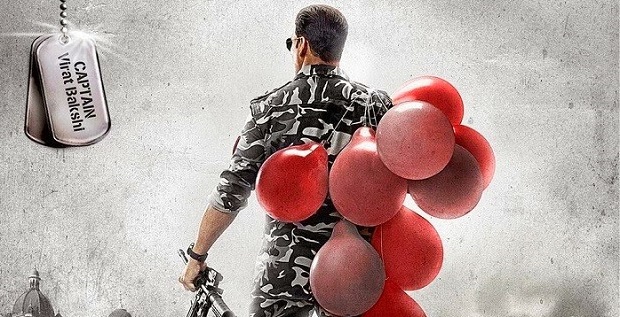
Army man Virat Bakshi (Akshay Kumar, in top form) who is home for a vacation uses the time to fall in love with an arranged match and also save Mumbai from a sleeper cell terrorist attack, which threatens to plunder the city.

He is a busy man. So is director A.R. Murugadoss. They are both on the same mission. While Akshay saves the city, his director rescues the masala film from the blemishes of blandness that it has acquired lately.

Just how Murugadoss manages to mix the dark theme of terrorism with a palatable mainstream cinematic platter served with dollops of pickles and papad is a marvel.

Having Akshay at the helm helps. He is a man of the streets and yet capable of looking completely convincing as a larger than life hero.

Murugadoss has some absolutely unflinching support from his writers and technicians, all out to create that increasingly elusive cinematic entity, the perfect entertainer.

Not that Holiday is not without its flaws. Sonakshi Sinha’s role and presence in the plot can at best be termed as comic relief. She is less diva, more Mehmood. It is interesting to see how the director weaves the romantic element into what is predominantly a rugged man-to-man confrontation between a soldier on leave and a super-intelligent terrorist, who is seen to work out not from a dingy warehouse, but a normal home teeming with the scents and images of domestic harmony.

The irony of terror in the climate of normalcy is chilling. And it’s a master stroke to cast the unknown Freddy Daruwala as the terrorist mastermind.

Freddy looks and behaves like a hi-tech executive in a multinational rather than a diabolic terrorist. It’s in the flashes of arrogant megalomania or his chilling cold-blooded laughter that we see the devilish man behind the white collar mask.

Freddy is quite the discovery of the year. As is the tradition in Good Versus Evil sagas, Akshay and Freddy don’t come face-to-face until the finale, in a climactic one-to-one fight.

Govinda, as Akshay’s dumb superior is completely out of place. You wish Govinda and Sonakshi’s annoying characters would be expelled from the storytelling by some computer-generated magic.

The ever dependable Sumeet Raghavan as Akshay’s pal and colleague in counter-terrorism is able to make a much better place for himself. But it’s the Akshay-Freddy conflict that keeps you riveted.

The anxious narrative is nourished by some spot-on background music which punctuates the heart-stopping action.

Akshay’s character’s basic argument that terrorism can only be countered when the counter-terrorists are as fearless about losing their lives as the terrorists, is put forward with such gusto and conviction, we really can’t argue with the plot premise. The last farewell song, an ode to the dedication and sacrifices of Indian soldiers, will leave you moist eyed.

The potent Akshay-Vipul Shah team is back with its most lethal entertainter to date.

Subhash K. Jha 


A heart-warming hug across the border

1
Reading Time: 3 minutes

Film: Filmistaan

Starring: Sharib Hashmi, Innamulhaq

Writer-Director: Nitin Kakkar

Rating: ****

There is an utterly moving sequence towards the end of this lovely parable on cross-border amity where Sunny (Sharib Hashmi), who has strayed into Pakistan, confesses to Aftaab (Innamulhaq) that he is obsessed with Bollywood and wants to be a hero, though he knows he doesn’t have it in him.
Mera asli hero toh tu hi hai,” Aftaab tells Sunny sincerely.
For me, that moment sums up the mood of this little-big film. Made at a shoestring budget by fringe talent, the film shows us that true heroes can be found in the most unexpected places.

Try this hamlet in the back of the beyond in Pakistan where our Bollywood struggler is locked up by militants who actually wanted to kidnap Americans for … errm … negotiations.

And look what they dragged in!

Filmistaan would have been an outrageously funny film were it not for the profoundly moving underbelly that it showcases with such fluency and spontaneity. The film could have become a gallery of cliches about Indo-Pak harmony. A sort of Veer-Zara turned into a Veru and Zara-uddin who become friends in Pakistani soil while guns boom all around them.
Sachindra Vats edits the scenes down to the minimum when required. But generally he lets the characters develop naturally even if the process takes some time. The film is shot in authentic locations by cinematographer Subhransu Das who brings to the table an enticing aura of believability.

The dialogues written by the film’s lead Sharib Hashmi never become top-heavy with message-mongering, nor does the going get excessively verbose as it did in the recent cross-border film Kya Dilli Kya Lahore.

It’s astonishing how director Nitin Kakkar averts all the corny cliches of brotherhood across the barbed wire. By simply using Bollywood as the binding factor between the two countries, Kakkar emerges with a plot that is high on emotions and low on tripe and homilies.

The two actors who play the Indian and Pakistani do the rest. So effortlessly do they express the oneness of a cultural kinship that we are left looking at two individuals who are united by a shared interest. Sharib Hashmi and Innamulhaq are striven by their sense of absolute abandon that comes only to artistes who have nothing to lose except their anonymity. They are phenomenally in character, not slipping up even once in their interactive zone.

Bollywood does the rest. There is a longish homage to Sooraj Barjatya’s Maine Pyar Kiya where we see the whole Pakistani village glued to a community television set watching the Salman Khan and Bhagyashree love story. Here, as in many similar scenes showing mutual Bollywood-inspired solidarity between the two warring nations, Kakkar constructs a case for cross-border friendship without tripping over in an emotional slush.

My favourite sequence shows the captured Indian protagonist sitting in solitude in a darkened room when the sound of Reshma’s song Ve main chori chori wafts in. Sunny joins in with Lata Mangeshkar’s Yaara sili sili which is the Indian avatar of the same tune.

An entire thesis can be written in the way the film utilizes Bollywood songs as the sounds of two cultures peering anxiously but affectionately at one another.

The storytelling never pounds out a pro-Pakistani message merely to try to tilt the socio-political balance between the two countries.

Filmistaan is neither for or against either country. It’s blissfully pro-Bollywood. So what happens when a struggling assistant director from India bonds with a CD pirate of Bollywood films in Pakistan? We find out with the same thrill of discovery that the director feels as he lets the two protagonists sort out their differences.

This quirky charmer from first-time director Kakkar is fresh in vision and enchanting in execution. The only happy outcome of the cross-border divide is a heart-warming film such as this. As we often say about the Wagah border, this you gotta see.

Subhash K. Jha


Let the games begin

1
Reading Time: 3 minutes

Hope you are getting ready for some late nights. Four weeks of riveting football in the sporting spectacle that is the 2014 FIFA World Cup are upon us, and the so-called global football crises (GFC) will surely be forgotten as some marvellous athletes bring the attention back to the sport.

32 teams will fight it out to be crowned world champions, as a few billion people watch. After contesting six games each in the lead up, the two top teams will contest the finals on July 13th.

Host country Brazil is just as football-mad as India is cricket crazy: no doubt it has huge expectations of its own team. But not if the 2010 winners Spain have anything to do with it. Meanwhile, though Argentina has some wonderful players, it is not the most popular team in the competition and most lovers of the game are hoping, anyone but Argentina! Of course, the English press will go feral if their lads do not bring home the cup, and Germany is always a dangerous opponent. Asian and African teams will be exciting but pose no serious threat. Australia is one of the 32 teams competing but the expectations from the Socceroos are low.

While the teams jostle for the positions on the winning podium, the mess which surrounds the popular sports of football and cricket will be temporarily forgotten.

Sports and corruption seem to have a dangerous nexus. It is tempting by the decision makers, either as players or administrators, to manipulate events to their advantage, as the quantum of monies in sport these days is staggering.

Countries which win the mandate to host these events need to set up infrastructure involving billions of dollars. Besides national prestige, it gives the local politicians an international platform to be recognised.

What needs to be managed is the bidding process, as the football world’s governing body FIFA is discovering after the allegations of corruption were levelled against the winning bid of Qatar for the 2022 FIFA World Cup. Qatar overcame competition from Australia, Japan, South Korea and the United States to be named as 2022 hosts. But the bidding process has been hit by a series of corruption claims. While on one hand British tabloids have led the charge on these allegations, FIFA President Sepp Blatter has accused them of racism and discrimination. It appears that a former FIFA Vice President, a Qatari, helped lobby and paid football officials around the world to secure the bid for his country. But while that might be uncomfortable for Qatar and for FIFA, it is not clear that he, or the bid, broke any of the governing body’s bidding rules.

FIFA executive committee members were not subject to the same restrictions placed on bid officials, while all bidding nations used heads of state and senior government figures to try to win votes. American lawyer Michael Garcia is currently involved in an independent investigation into the bidding process and is due to deliver his report to FIFA after the World cup concludes.

What is clear is that the rules have not been kept up to date with the changes in the management of these sports. With billions at stake, the possibility is there that a delegate’s vote could be influenced. While the global game tends to unite all, the disparity amongst the nations and voting delegates is such that temptations to favour a bid can certainly arise. Perhaps there needs to be a weighting given to delegates’ votes, then committees on technical, economic and social merits of the bid can minimise any bias. Diluting the power of a few can strengthen the future of the game.

Did that light your fire?

0
Reading Time: 6 minutes

Indian writings of pleasurable things between the pages win Bad Sex Awards for all the wrong reasons


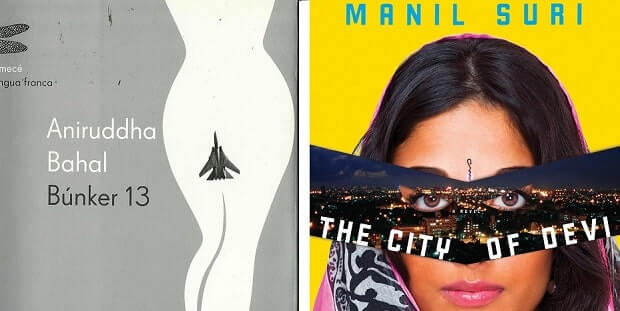
Although they come from the land of the Kama Sutra, Indians are now gaining a reputation at the dreaded Bad Sex in Fiction Award for passages of pleasure gone wrong. The award’s latest recipient, for the year 2013, is Manil Suri, who took the gong, or rather the climax, with his subatomic bisexual orgy The City of Devi (Bloomsbury). Aniruddha Bahal’s Bunker 13 came in at number one in 2003, and there have been many, many other nominees including bigwigs Salman Rushdie and Arundhati Roy.

For those not familiar with Literary Review’s annual anti-award, it was established in 1993 by Rhoda Koenig and Auberon Waugh and aims “to draw attention to the crude, badly written, often perfunctory use of redundant passages of sexual description in the modern novel, and to discourage it”. Lady Diana, Princess of Wales even presented the award one year.

Critically-acclaimed writer, professor of mathematics at a US university, Man Booker a nominee and even shortlisted for the Faulkner awards, Manil Suri is now also the winner of a Bad Sex Award. Suri’s taboo-busting book The City of Devi, his third, is an apocalyptic thriller set in Mumbai. The famous, or infamous, depending on how you look at it, sex scene comes from an unusual love triangle including the narrator Sarita, her husband and a young gay Muslim man. Suri managed to woo the judges with the passage:

Surely supernovas explode that instant, somewhere, in some galaxy. The hut vanishes, and with it the sea and the sands – only Karun’s body, locked with mine, remains. We streak like superheroes past suns and solar systems, we dive through shoals of quarks and atomic nuclei. In celebration of our breakthrough fourth star, statisticians the world over rejoice.

How could this sexual explosion through time, space and consciousness, involving all of the characters of the book, not win?

Suri was not present to accept the award for his super charged work. Instead, novelist Joan Collins presented it to his publisher Bloomsbury, who accepted it on his behalf in London. During the acceptance speech the sex scenes in the novel were described as “unfettered, quirky, beautiful, tragic and wildly experimental”.

Aniruddha Bahal’s 2003 espionage thriller Bunker 13 (Faber & Faber), also went on to win the Literary Review‘s Bad Sex Award for its take on sex, drugs and corruption in the Indian army. A part of the winning section of the novel is:

She picks up a Bugatti’s momentum. You want her more at a Volkswagen’s steady trot. Squeeze the maximum mileage out of your gallon of gas. But she’s eating up the road with all cylinders blazing.

Cars and sex seem to be a winning combination in Bahal’s novel, even if it does make one wonder what type of a Volkswagen he wanted? Perhaps a slow and steady kombi van?

Bahal even decided to publish a tongue-in-cheek piece on outlookinindia.com regarding his expectations on winning the prize:

My source also told me that he had it on good authority that the winner of the award some years back was trailed by five beautiful and luscious women to the hotel from the evening’s venue and taught many things by them during the course of the night. They might have taken pity on the writer’s sex writing and wanted to enrich his experience so that he could in future do full justice to the subject of sex in his works.

It was also suggested that singer Sting, who presented Bahal the award, would catch up with him later with “five tantric sex goddesses and a bucket of grease”. Surely such a night could not possibly be topped for a writer in need of improving their written sex scenes, for inspiration alone?

This comment raises an eyebrow at what the sex lives of these writers who win the Bad Sex Award are really like. Bahal comically answers this by saying in his piece:

Some duffers have also started walking up to me these days and asking whether my real life sex was as interesting as my writing. The women I have taken aside and jotted their phone numbers down to give them some detailed answers. The men have had their nuts reconfigured.

Although Bahal happily accepted the award as a “rebellious gesture” for his saucy writing, due to his belief that there is too much censorship of writing in India, he was also a tad peeved, as, “lots of other writers in India thought my book had great sex writing”.

Following on from Suri’s credentials, it seems that critical acclaim of the writer is no guarantee that the sex passages they write will be any good. Among noteworthy winners are John Updike, Hilary Mantel, John Mortimer and Kingsley Amis. And keeping up the Indian tradition, we have none other than Salman Rushdie in Shalimar the Clown (Jonathan Cape)nominated in 2005:

“Let’s, you know, caress each other in five places and kiss in seven ways and make out in nine positions, but let’s not get carried away”.

In reply, Boonyi pulled her phiran and shirt off over her head and stood before him naked except for the little pot of fire hanging low, below her belly, heating further what was already hot. “Don’t you treat me like a child,” she said in a throaty voice that proved she had been unsparing in her drug abuse.

Shalimar the Clown was nominated for the prize, despite winning the 2005 Vodafone Crossword Book Award and being a finalist at the 2005 Whitbread Book Awards.

Keeping Rushdie company in the 2005 shortlist was Tarun Tejpal, currently in jail for sexually harassing a young journalist who worked at his magazine Tehelka. Tejpal was nominated for his novel The Alchemy of Desire (Picador):

We began to climb peaks and fall off them. We did old things in new ways. And new things in old ways. Any body part could be joined to any body part. And it would result in a masterpiece.

A few years earlier, another of India’s Booker Prize winners Arundhati Roy found herself nominated for her highly celebrated work The God of Small Things, for ideas such as ”nut-brown breasts (that wouldn’t support a toothbrush),” along with ”haunches (that could support a whole array of toothbrushes)”. I remember blushing up a storm when I had to read these passages out to my English lit class at uni. Why oh why had I chosen those quotes for my speech?!

Other nominees have included Siddhant Dhanvant Shangvi (2004) for his book The Last Song of Dusk (Weidenfeld & Nicolson); the Pakistani writer Nadeem Aslam (also 2004) for Maps for Lost Lovers (Faber & Faber); Hari Kunzru (2002) for The Impressionist (Hamish Hamilton), and Neel Mukherjee (2010) for A Life Apart (Constable).

Certainly no one can say that writing a sex scene is an easy task, which is why so many authors, Indian or otherwise, shy away from writing one altogether, especially with the threat of winning this award. Indian or otherwise. Writing about sex in a non-crude, non-redundant way is one of the hardest things to do. How much information should the author give? Or not give?

As Sarah Crown in The Guardian writes, “Maybe it’s me, but I find… the concentration on physical sensation, a whole lot sexier than any amount of thrusting, grabbing or grinding”. She also notes that “as someone who works hard to get it right in my own novels, I’m very aware of just how difficult it is to depict well,” and wants to know where the good sex awards are? Perhaps writing from India, a country that is full of contradictions about attitudes towards sex has even more of a challenge.

A survey conducted by Men’s Health in 2013 found that Indian men are the least sexually active among their counterparts. Not only are Indian men having less sex, the education system refuses to even teach children about sex. Nirmalya Dutta on The Health Site asks, “Is our refusal to talk about sex or pretend it doesn’t exist breeding potential predators who never realise that sex is meant to be an enjoyable experience between two consenting adults?” He concludes, “We keep on having to remind people about this but the so-called Indian culture they keep on harping on about isn’t even Indian, it’s the remnant of 19th century Victorian morality and there’s nothing Indian about it”. Is it these attitudes that are resulting in bad sex writing? Or maybe it’s just a happy (ending) coincidence that many of the winners and nominees are Indian writers?

And if you are wondering why Fifty Shades of Grey has yet to win the dubious honour of winning, the award is not for pornographic or expressly erotic literature. So there goes any mentions of the narrator’s “inner goddess doing the lambada”. Such a shame.

From Roy’s toothbrushes, to Tejpal’s peaks, Rushdie’s awkward teenagers, Bahal’s steady VW’s and Suri’s supernovas, Indian writers sure know how to impress the Bad Sex Award judges. Here’s to the crude, to the badly written, and to the redundant passages that Indian authors have written, we salute you for giving it a red hot go in a tricky field of crumpled bed sheets and underwear on the floor.

Who will win the 2014 title? And which Indian writer will find themselves on the short-list?


Tweet @indian_link @Lit_Review #BadSex what book you think should win this year’s prize?

 

Class clown to comedian

0
Reading Time: 4 minutes

Sydney funny man Neel Kolhatkar entertains audiences across Oz

Walking along Broadway a few days ago, I chanced upon a poster on a lamp-post with an Indian face. Intrigued, I stopped to read and saw that it was an ad for stand-up comedian Neel Kolhatkar’s show at the Harold Park Hotel in Glebe. Now this is an old chestnut – Indians don’t have a sense of humour. We take ourselves too seriously and don’t appreciate jokes against ourselves. This is certainly changing, as the success of shows like The Great Indian Comedy Show and Comedy Nights with Kapil show. Indian stand-up comedians are however a rare breed. I felt I had to see Neel perform and soon one evening I was at the crowded pub with about a hundred others laughing at the ribald jokes and bold statements of this 20-year old. There were quite a few race gags and perpetuation of stereotypes, so atrocious that you couldn’t but laugh at the preposterousness which Neel pulled through with his charm.

It was a brave act and the some of the braver audience members were obviously enjoying themselves being the butt of the jokes. A young man from Mount Druitt took all the jibes at his suburb and the generalisations about being from ‘out west’ in good humour, as did the older gentleman in the front row. Neel had a way with all age groups and many of his fans were familiar with his style of humour from his immensely popular YouTube videos. His crowd interactions and confident stage presence was amazing for such a young man; some chinks of discomfort quickly covered up with yet another disarming statement or wisecrack.

Neel is described as a YouTube sensation ever since his clip, Australia in 2 Minutes, went viral. It collected over a million views within three days of release. Specialising in imitations of accents and cultural representations, Neel uses his observations of society and his surroundings very cleverly and delivers his performance with an amiable style. His comedic CV includes a run at the prestigious New York Comedy Festival last year, one-man show at the 2012 Sydney Fringe Festival, performance at the GENeration comedY in Melbourne and Sydney, 130 000+ YouTube subscribers and 200 000+ Facebook fans.

Neel spoke to Indian Link over phone. Summarising his Indian links in his very Australian accent, Neel says “In terms of my heritage, I am a third generation Indian; grand-dad came to Australia in 1962. He was a statistician. Mum was 2 when they moved. I was born here in 1994. The extent of my knowledge of Indian languages is limited to a few phrases of Hindi and Marathi”. He well understands the identity issues of young people from migrant families – being and feeling totally Australian but being slotted as an Indian based on looks. It does not bother him personally but he says, “It can be confusing and not entirely beneficial and that’s something I do try to explore a little bit in my performances. I don’t try to focus on that a lot though. I do a few Indian jokes now and then and my YouTube videos have a few character flogs like the typical Indian father”. Careful about not wanting to be boxed as an Indian comedian and limited to doing Indian jokes and accents, Neel says he is more versed in talking about his observations of Australian life and culture.

So how did he launch into comedy? He laughs when asked from whom he had inherited his funny bone. He discovered in his early teens that he had a knack for comedy. His performance at Class Clowns, an annual search for Australia’s funniest high school student, gave him the Winner of Class Clowns 2009 crown. Winning this competition made Neel realise that stand-up comedy was something he wanted to keep pursuing. He admits that he always wanted to be a performer, “It didn’t matter whether it was film, stage, theatre or comedy, I just wanted to be an entertainer”. He realises the power of the Internet and YouTube for people of his generation and reaches out to his audience primarily through this medium. He has had to defer his studies of Economics at Sydney University as live shows and making YouTube videos for his comedy channel takes up all of his time. After HSC, he took a gap year to travel to LA, New York, London and Montreal, trying out and learning more from the stand-up comedy circuits.

With his incisive observations – cultural groups, media, society, all providing the fodder – everyone cops it in his broad strokes of exaggerations and character portrayals. The style itself is energetic and in-your-face. But love it or hate it, either way, Neel puts together a memorable performance as he recreates a comedic life from societal observations. Struck by the extent of profanity, I ask him if some may find it offensive. Neel is frank to say, “I understand it can be shocking for some people. Young people do swear a lot but what I do is an exaggeration. Just depends on the characters I portray. It’s just what I do, not what I condone”. He admits that he doesn’t swear as much in his personal life. Considerate about the sensibilities of some of his Indian Uncles and Aunties, he bewarns readers that some of his videos could be “off-putting”!


Simply divine!

1
Photo: Binu Naikaraparambil
Reading Time: 3 minutes

Acclaimed Indian danseuse Chitra Visweswaran tours Australia with her latest production

Photo: Binu Naikaraparambil

When does an anubhava (experience) become an anubhuti (a unique realisation where one gains new understanding)?

When it meets with that divine handshake!

This is how Padmashree Chitra Visweswaran introduced her production Anubhuti, which was staged as part of the annual Soorya festival held in Sydney in early June. And in every sense of the word, it was truly a divine experience!

Initially commissioned for the Opera de Lille, France, in 2011, the Sydney tour of the show was eagerly awaited by fans of classical dance and music.

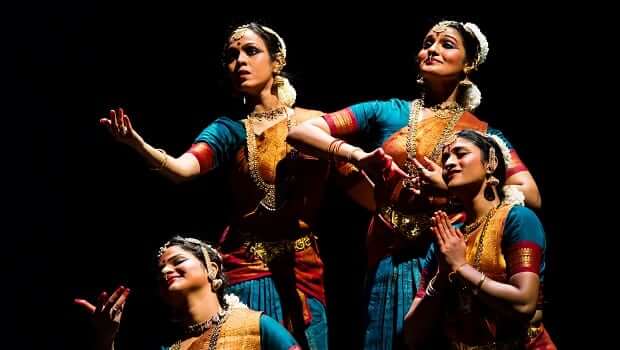
Beautifully crafted in the traditional Margam format of Bharatnatyam, the production wasan effortless blend of fluidity of motion, with the nuances of expression pushing the boundaries of the dance form. The concept of the divine experience was beautifully illustrated with excellent execution, co-ordination, mellifluous music and to top it all, power-packed performances from six talented dancers.

Appropriately introduced by the legendary dancer herself, each segment of the show carried a soul of its own. The first segment was an anjali (an offering) to the Hindu trinity, Brahma, Vishnu and Shiva – the Creator, the Preserver the Destroyer respectively. It constituted a combination of adavus (basic steps of Bharatnatyam) and rhythms. The music, a mixture of ragas, sounded vibrant with a percussive ‘jhum jhum’ throughout, as a perfect accompaniment to the celebratory dance.

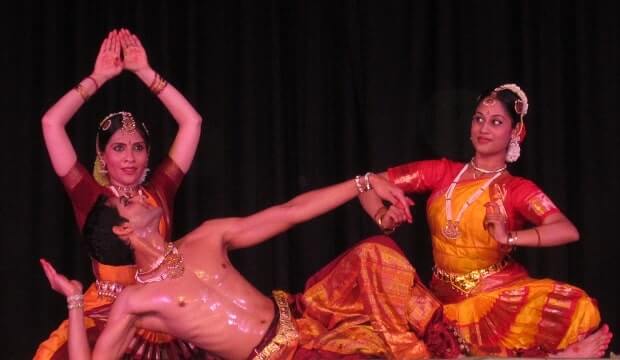
Exploring the concept of the cosmic whole in the androgynous form of Ardhanareeshwara / Ardhanaareeswari, the show was slowly but surely on the take-off to great heights. In the brilliant portrayal of the two halves Sakti and Siva that constitute the archetypal ‘whole’, the dancers were so synchronous that they perfectly complimented one another. The female partner stayed beautifully calm and collected, whereas her male counterpart portrayed the various moods of a ferocious Shiva. It is unusual to see a male and a female dancer portraying this androgynous form of the lord: yet their perfectly co-ordinated moves successfully conveyed the feel of unison, of one single entity.

The third and central piece of traditional Bharatnatyam performances, called the Pada-Varnam, incorporates the essential elements of nritta (rhythmic, abstract dance moves) and nrithya (hand gestures and facial expressions). And here, the legendary Chitra Visweswaran had crafted a segment that illustrated the nine moods of Indian aesthetics, the Navrasas, with reference to the Goddess Shakti. The music that accompanied was captivating, gorgeously composed by violin maestero Lalgudi Sri G Jayaraman, set in Ragamalika and Adi Talam.

The next segment was extracted from Purandaradasa’s kritis, and this particular portion addressed Vishnu in the form of Krishna, the flute playing avatar. The dancers as gopis (milkmaids) passionately enacted their individual association with the young Krishna. The ecstatic gopis were lost between the feelings of fondness towards a child and affection towards a lover. As they stood in a group jointly enacting their feelings for Krishna, they created one of the most memorable moments of the show, perfectly blending the sensibilities of stagecraft and lighting to create a dynamic pose!

The “lullaby” by the legendary dancer herself, at the very end, was just as evocative. As she sat at the centre of the stage cuddling an imaginary baby, there was an effortless efflux of emotions: she played with the little Krishna, demonstrated his leelas (games) and sang him a lullaby. Even as I struggled to take my eyes off her, I was distracted by a young mum wiping her tears of joy; a telling comment on the sheer power of the talent on stage. It was a defining moment indeed, when the show moved from being extraordinary to exorbitantly beautiful!

Flaw wise, asking to take a break for dinner before even the show started was not something many among the eager audience appreciated. And the speeches before the show seemed to have lost that beauty of crispness. These minor issues notwithstanding, it was truly an anubhuti: a unique experience indeed!


Pullquote:

In the brilliant portrayal of the two halves Sakti and Siva that constitute the archetypal ‘whole’, the dancers were so synchronous that they perfectly complimented one another.


Keywords: