Home Blog Page 949

Services to medicine, tertiary education and Indian community

0
Reading Time: 4 minutes

Dr Minoti Vivek Apte’s work in pancreatitis and pancreatic cancer earns her an OAM

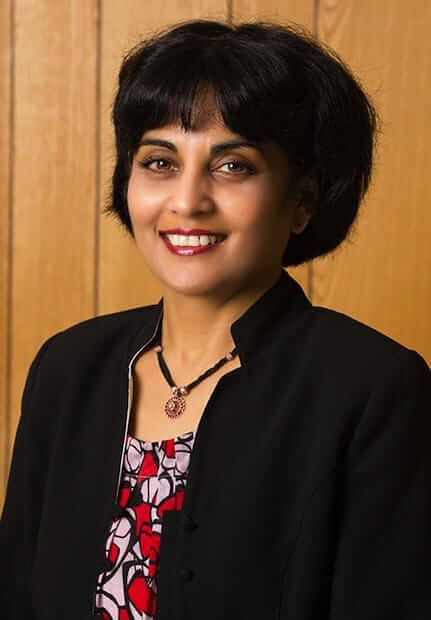
Alcohol-induced pancreatitis and pancreatic cancer, a highly aggressive form of cancer with high mortality-to-incidence ratio, have been the focus Dr Minoti Vivek Apte’s research for nearly three decades now. Hitherto, pancreatic cancer has defied traditional therapeutic approaches, spreading aggressively before visible symptoms appear.

A professor in the Faculty of Medicine at University of New South Wales and The Ingham Institute of Applied Medical Research and Director of the Pancreatic Research Group, Dr Apte was the first in the world to isolate and characterise the pancreatic stellate cell (PSC), the key cell responsible for producing scar tissue in the pancreas. An internationally acknowledged researcher in the field of alcohol-induced pancreatic injury, she is particularly recognised as a pioneer in the field of pancreatic fibrogenesis. More recently, her work has established that close cross-talk between stellate cells and cancer cells is responsible for rapid progression of pancreatic cancer. These pioneering studies, have helped put Australian pancreatic research on the world map.

Dr Apte has a very active service record at Faculty, University and Discipline levels. She is a founding member of the Australasian Pancreatic Club and Asian Oceanic Pancreatic Association. As past chair of the Faculty Higher Degree Committee and as post-graduate coordinator for the South Western Sydney Clinical School, Dr Apte has mentored numerous medical and science students.

“Nurturing talent is a very important responsibility to preserve the future of medicine and research in our country,” Dr Apte acknowledged. “Students need the right structure and guidance through their journey. As medicine becomes more evidence-based, we have to engender strong research skills and critical thinking,” she added.

She also regularly engages with the research community worldwide through Gastroenterological forums. In recognition of her significant contribution, she was recently made a Fellow of the American Gastroenterological Association (AGA).

For her services to medicine, tertiary education and Indian community, Dr Apte has been awarded a Medal of the Order of Australia (OAM).

“It is a recognition, of not just my work but my whole team, particularly my supervisors Professors Jeremy Wilson and Ron Pirola, who encouraged and allowed me the freedom to explore different areas,” speaking to Indian Link, Dr Apte said. “More importantly, it is also very humbling as I often wonder if I have done enough to deserve this”.

Dr Apte is particularly grateful to her husband Vivek for being her bedrock of support and to her son Tushar for coping with having such a busy mum. “Without your family behind you, it would be difficult to achieve your full potential,” she reiterated. “After all, research and academia are not 9 to 5 jobs. It is a job for life, which requires dedication and commitment”. She also credits her parents, her sister and brother-in-law and a very tight-knit group of friends for her successes.

Dr Apte strayed into pancreatic studies quite by accident. An alumnus of BJ Medical College in Poona with an interest in ENT, she first arrived in Australia on a dependent spouse visa in the eighties.

“My visa did not permit me to work, so I volunteered in the Histopathology department at Newcastle University, where my husband was pursuing his doctorate in Chemical Engineering,” she recalled.

She soon began researching alcoholism and liver disease, winning a Commonwealth scholarship for a Masters in Medical Science, and became one of the first graduates of the programme. She moved to Sydney and eventually found a job at the Prince of Wales Hospital.

In 1998, as part of her PhD thesis under mentors Dr Wilson and Dr Pirola, Dr Apte developed her world-first method for stellate cell isolation.

“We were the first in the world to show that a specific cell type in the pancreas helped pancreatic cancers grow,” explained Dr Apte. “Its unique feature is the huge amount of scar tissue. We proved that cancer cells recruited normal pancreatic stellate cells to help it grow and travel to distant parts of the body. Our ultimate aim is to develop new treatments that target the cross talk between the cells in pancreatic cancer so as to interrupt these growth-promoting pathways”.

The pancreas is a very significant organ in the body Dr Apte told Indian Link. Along with insulin secretion, it produces crucial digestive enzymes. Before her research, nobody knew what the mechanisms behind scarring were. “Scar tissue is found in pancreatitis and pancreatic cancer and plays an important role in the progression of both diseases,” she explained. Indeed, patients with chronic pancreatitis have a 15 fold higher risk of developing cancer than the normal population, according to Dr Apte.

Unfortunately, alcoholism is now a major problem worldwide. “Drinking is no longer a stigma in Asian countries,” she lamented. “Therefore, we have a responsibility to prevent alcohol-related disease through better education”.

Not one to rest on her academic laurels, Dr Apte is heavily engaged in promoting Marathi culture and arts through MASI. Her passion for classical dance and choreography has led to an active involvement in event coordination and management, the highpoint being Durga Zali Gauri, a musical (dance-drama) with 120 participants.

Dr Apte has found time in her busy schedule to fit in meditation and dance classes as well. “I really enjoy them,” she confessed. “Everyone needs a hobby, dance is mine”.

Read more Queen’s Birthday Honours List stories here:
RK RAM (OAM)

Dr Prem Phakey (AM)

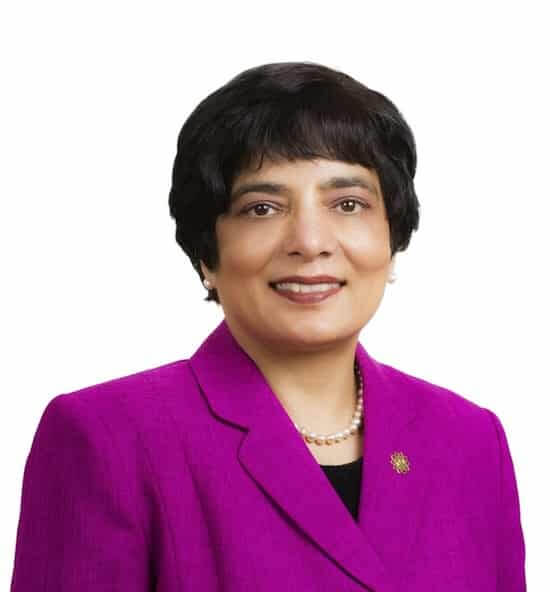
Dr Marlene Kanga (AM)


Engineering an innovative Australia

1
Reading Time: 3 minutes

Dr Marlene Kanga has fostered innovation, diversity and a unique style of leadership

Dr Marlene Kanga finds great inspiration in the late Steve Jobs’ prophetic words – “the only way to do great work is to love what you do”.

Embracing this philosophy, the chemical engineer, who specialises in risk management and safety engineering, has scaled great heights.

The lure of the land down under proved too hard to resist for the feisty Indian Institute of Technology graduate. It was Australia in the 1970s. The White Australia policy had finally been dismantled and the Anti-Discrimination Act had passed through Parliament. Armed with an engineering degree, hope and a never-say-never spirit, Pune-born Kanga migrated to Australia with her husband Rustom.

Despite a stellar academic career and dedication to her profession, breaking into the workforce was not easy. What proved even harder for Kanga was shattering well-entrenched stereotypes, particularly gender based ones.

Not one to give up, the outspoken Kanga eventually secured her first breakthrough, rising quickly up the corporate ladder, making many meaningful contributions along the way.

Inspired by her father’s achievements as one of India’s first engineers in Goa and Maharashtra, a young Marlene was determined to follow in his footsteps.

She enrolled at the Indian Institute of Technology in Mumbai, one of the pioneering women to do so in a male dominated industry. “My father had a great deal of integrity. He also had a great sense of purpose in serving the community,” she said.

It is this legacy that she has passionately carried forward. While her core expertise has been in oil, natural gas and chemical industries, Marlene Kanga has served on many boards, driving innovation and creative leadership. She has actively campaigned for diversity in engineering, and espoused the migrant cause.

“I always think of myself as an engineer and consider the task at hand in terms of the technical aspects,” Kanga said. “Others may see me as a woman and may challenge my ability to do the job on this basis. I usually easily challenge them back because I know I am good at my job and I always do it very well,” she added.

The co-founder of iOmniscient, a market leader in intelligent surveillance systems and video analytics, Kanga is also on the board of Sydney Water and has held many prestigious positions in her long and illustrious career.

She has featured in the Top 100 Engineers in Australia as well as the Top 100 Women of Influence in Australia. “If you are able to work in the area you love, it will never be just a job, you will discover that it will be endlessly satisfying and you will make a contribution that is beyond your greatest dreams,” Kanga told Indian Link.

“I never set out to change the world. I had some clear goals and just faced each problem as [it] came along. The cumulative impact, looking back, has been amazing,” she said.

A member of the Engineers Australia Council since 2007, in 2012 Kanga was Chair of the Innovation Taskforce charged with promoting further advances in engineering. She was also Chair of the National Committee for Women in Engineering in 2008 and 2009.

More than three decades after immigrating to Australia, in 2013 Marlene Kanga became National President of Engineers Australia, the peak advocacy body and professional membership forum for engineers. “Although I am goal oriented, becoming President of Engineers Australia was not one of my goals,” Kanga admitted. “My aim in contributing to the institution was to give back to the profession and to Australia. I was later encouraged by my peers in engineering to stand for election because they thought I would do a good job”.

Today Marlene Kanga is a board member of Innovation Australia as well as Chair of the R&D Incentives Committee, spearheading change and advising the government on new initiatives.

Due to her status as an exceptional role model and for her services to engineering, Kanga was appointed a Member of the Order of Australia (AM) in the 2014 Queen’s Birthday Honours List. “This award is a great example of the openness and generosity of Australian society,” she told Indian Link. “When I came to this country, knowing no one at all and starting from scratch, I never anticipated that I would receive such recognition. I am both honoured and humbled by this award. It shows that anyone can be a great engineer and make an effective contribution to Australia”.

Having excelled in her calling, Marlene Kanga hopes to inspire many new generations to take up the challenge. “The world needs more engineers”, she said. “It is such a dynamic and creative pathway. Young people need to understand the importance of science and technology in their lives from a very young age”.

Read more Queen’s Birthday Honours List stories here:

RK RAM (OAM)

Dr Prem Phakey (AM)

Dr Minoti Vivek Apte (OAM)

Civil Society representatives to influence G20 Agenda

0
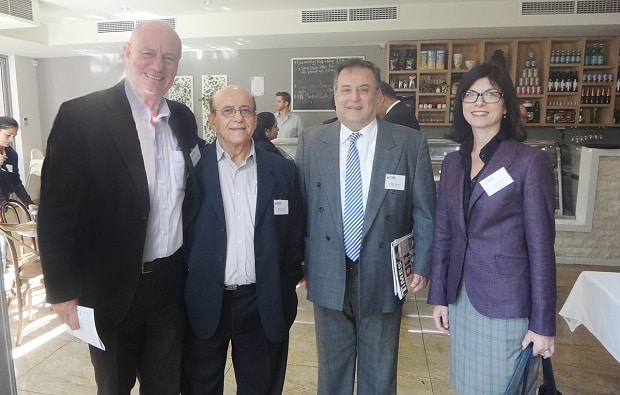
C20 Steering Committee Chair and World Vision Australia CEO Rev Tim Costello with members of C20 steering committee and media
Reading Time: 2 minutes
C20 Steering Committee Chair and World Vision Australia CEO Rev Tim Costello with members of C20 steering committee and media

Global civil society will come together at the University of Melbourne on 20-21 June this year for the C20 Summit to determine the specific policy issues and solutions civil society wants the G20 to consider when it meets in Brisbane in November.

The C20 (‘Civil Society’) Summit is the first of the lead-in G20 ‘satellite’ conferences and provides the platform for dialogue between civil society and the political leaders of the G20 countries.

Tim Costello, Chair of the C20 Steering Committee said, “In a world where we are seeing increasing inequality within and between countries, the C20’s primary aim is to ensure that people are put at the centre of G20 decision making and that the most vulnerable citizens do not get left behind.”


Joseph Assaf, Member of Australian C20 steering committee

Through a series of presentations and discussion panels, the two-day Summit program will develop policy recommendations around the broad theme of inclusive, sustainable economic growth, that helps alleviate poverty and income inequality.

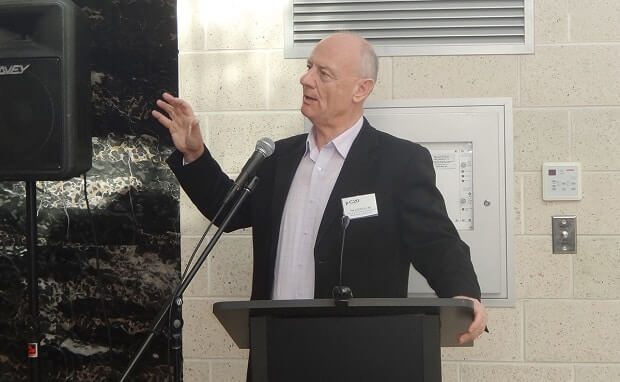
Rev Tim Costello addressing the media

Delegates chairing discussions or speaking at the event include senior representatives of the leading NGOs including World Vision, ACOSS, WWF, Oxfam, Transparency International and the National Employment Services Association, as well as national and international speakers across the four key policy issues:

  • Inclusive Growth and Employment;
  • Infrastructure;
  • Climate & Sustainability; and
  • Governance.
Rev Tim Costello answering media’s questions at C20 multicultural media launch

Speakers and panellists include:

  • Hon Julie Bishop MP: Australia’s Minister for Foreign Affairs
  • Hon Tanya Plibersek MP: Shadow Minister for Foreign Affairs and International Development
  • Hon Kevin Andrews MP: Minister for Social Services
  • Huguette Labelle: Chair, Transparency International
  • Tim Costello: Australia’s C20 Steering Committee Chair and World Vision Australia CEO
  • Cassandra Goldie: CEO, Australian Council of Social Service
  • Judge Rauf Soulio: Australian Multicultural Council
  • Joseph Assaf: Founder, Ethnic Business Awards
  • Jody Broun: Aboriginal Advocate
  • Gillian Triggs: President, Human Rights Commission


For more information on the C20 and the full list of Summit speakers go to: www.c20.org.au

On a scale of 1 to 10

0
Reading Time: < 1 minute

New website allows Indian citizens to rate their politicians

Although Indian citizens get only one opportunity every five years to vote for their leaders, a new website now allows people to rank their leaders based on their performance.

The Rank My Leader web site will give people the opportunity to show their opinion of their leaders through a ranking vote as well as provide news and information about the leaders concerned.

“The website will help give shape to public opinion by ranking leaders, based on votes from users on various relevant issues,” said Jasmeet Singh, founder and CEO of Rank My Leader.

“The public votes once in five years to take a decision on our political leaders, which is a long time. There is no metric to evaluate the political leaders when in power and this is where Rank My Leader makes a difference.”

The web site shows a list of Indian leaders, and streaming alongside is news and other related information about the specific leader such as speeches and interviews. It also enables social media integration, so users can rate and comment on leaders’ actions using their Facebook account.

IANS

7-Eleven and Indian IT company deal

0
Reading Time: < 1 minute


7-Eleven and Indian IT bellwether Wipro announced a transformational IT applications and infrastructure deal.

“The deal will enable the retailer take real-time decisions and provide enhanced experience to end-customers,” the global software major said in India.

The engagement will allow the retail chain to launch new merchandise categories, improve efficiency of present categories, and initiate real-time promotions and on-board new processes during mergers and acquisitions.

“The project will improve business functionality at the store chain with the deployment of a real-time transactional and reporting infrastructure,” Wipro’s chief sales and operations officer Manoj Nagpal said.

The integrated project includes upgrades, migration and consolidation of the retailer’s IT applications and infrastructure, which will help improve speed and agility of its go-to-market initiatives.

Powered by the SAP’s High Performance Analytic Appliance (HANA) platform, the solution will set foundation for predictive customer analytics, to forecast and manage the retailer’s future business requirements.

“By implementing the new infrastructure, we can flex our development environments on demand to support multiple business initiatives,” 7-Eleven chief information officer Michael Park said on the occasion.

Wipro has been present in Australia since 2001 and is servicing its clients in banking, insurance, utilities, government, retail, consumer packaged goods, manufacturing, oil & gas, natural resources and transportation sectors.

IANS

Minister visits Lynbrook Sikh temple

0
Reading Time: 2 minutes

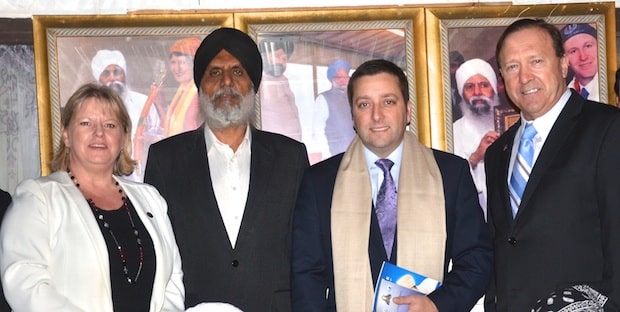
Minister visits Lynbrook Sikh temple


The Minister for Planning, Multicultural Affairs and Citizenship Matthew Guy, paid a visit to the Lynbrook Sikh temple recently.

He toured the temple premises at which the new building is currently under construction, escorted by Raj Singh, the Secretary of the temple.

The Minister discussed with the officials the future plans for the establishment of a community centre, nursing home, child care facility, primary and secondary school. The temple owes allegiance to the Nanaksar Thath Isher Darbar (NTID), a charitable organisation founded in New Delhi in 1972.

Cr Geoff Ablett, the Mayor of the City of Casey, and Cr Amanda Stapledon, the Deputy Mayor of the City of Casey, joined the Minister on this visit and reinforced their endorsement of the future plans for NTID, which would provide community access to the numerous essential services. The Minister expressed his full support for the future development plans, as he met with community members in the wider congregation.

Raj Singh also briefed the Minister about the worldwide activities of the NTID Trust which was formed in 1972 by His Holiness Sant Baba Amar Singh Ji. Babaji’s mission of ‘eradicating poverty through education’ is supported by a vast majority of people of different beliefs and faiths. Inspired by the teachings of Sri Guru Granth Sahib, Babaji’s life long mission is not just to help the poor through charity but also to secure their future by educating them so they can become self-sufficient and give back to society.

The movement has since spread worldwide, with a large presence in the US, UK, Canada, Australia and NZ. Its aims are religious as well as educational.

The Lynbrook Gurudwara has been under construction for quite some time now. A fire that broke out a few years ago slowed the process of construction. The fire caused considerable damage to the shrine, mainly the insulation on the walls and the foam panels that were being used in the building process. The structure of the building was however left sound. Arson was suspected and police had investigated.


Why I am not a fan of the Aam Aadmi Party

0
Reading Time: 3 minutes

The AAP could not become the alternative that India needs

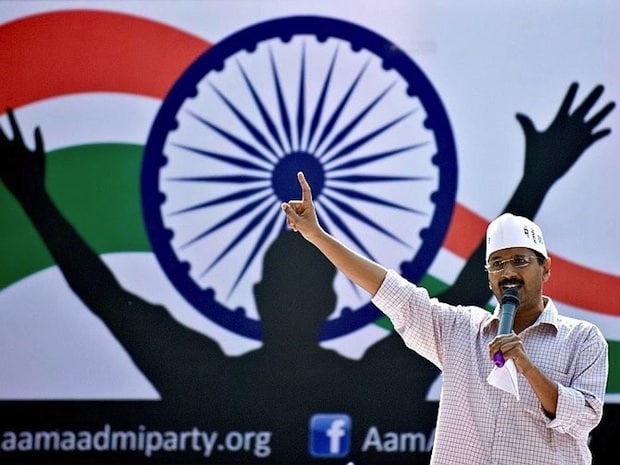
When the assembly elections for the state of Delhi were announced last year ahead of this year’s General Elections, it was a perfect opportunity to test the citizen sentiment about the major parties Congress and BJP. In all the turmoil and positioning by Congress and BJP, emerged a nascent political party, the Aam Aadmi Party (AAP). Headed by a maverick vigilante, it recruited the “common” people around it and started a political journey to get rid of “corrupt politicians” in India. A much-needed endeavour, no doubt.

The party and its leader (Arvind Kejriwal) spoke the language of a common man, quite literally. They moved around without a battalion of security personnel and were accessible. People took notice of this freshness and to everyone’s surprise, gave them a massive tick in the Delhi elections, ahead of the biggies Congress and BJP. They went on to form government in Delhi, albeit under some duress of expectations. And all of a sudden there seemed like an alternative in the making for India. A political party in its infancy was entrusted to run the capital of India for 5 years. The public saw a spark in this bunch of righteous activists who came together to offer Indian citizens a governance model free of corruption and absolute power.

AK and AAP lasted 49 days. The 49 days featured protests by the leader as well as his party, mud-slinging, lavish media statements and sloganeering, and political grandstanding. They struggled to let go of their vigilante past, it seemed, even while in government. And for me, they just plainly over did the whole “common man” thing. When you are the government of the day, you will face protocol and procedure, and the challenge is to stay within such norms and bring about a change. But they failed, and failed miserably in that 49 day stint.

Perhaps AK and AAP did not feel that way. Buoyed by the success in New Delhi, both set their sights on national parliament. They expected to severely dent the political prospects of the BJP and the Congress. Yet there was a sense of arrogance in the way they campaigned. The sole agenda and the slogan for the campaign was a “corruption free” India. No real focus on any other facets and pillars of governance. No real policy headlines for internal and foreign relations. No financial and economic modelling. Just a singular approach to inhibit the success of “corrupt” politicians.

And that was the extent of this entire “new” front, a half-baked political alternative riddled with internal political opportunism. An alternative that in my view demonstrated no structure or vision to leap frog India into the utopia they professed and promised.

Ever since their dismal performance in the national elections, the AAP has started to self-implode, further demonstrating its internal instability and chaos.

AK sits in a cell at Tihar jail as I write these lines. But he and his party equate his jail stint to the sacrifice made by Gandhi. For me, it is this vigilante streak in him which speaks volumes about his personal integrity to have a corruption-free nation. However, it adds little merit to governing credentials. The recent resignation of the party’s prime spokeswoman, sighting an autocratic governance style in AAP’s top leadership, does not further its cause either.

Hence I say, I am not an Arvind Kejriwal fan. I have never been one, not since he has emerged on the Indian political scene. Neither do I harbour any empathy for his Aam Aadmi Party. I do not consider it an adequate and credible alternative to the Congress or the BJP. I simply do not agree with the views, actions and modus operandi of AK or AAP.

I do agree, though, with the sentiment that both Congress and BJP in their times of governance over the last sixty-odd years have failed to deliver the level of social, financial and political stature that India needs and deserves. They leave a lot to be desired to be trusted for a step change in India. But obviously the AAP is not the antidote here. AK and AAP have been a flash in the pan. Sensationalism, rhetoric, opportunistic grandstanding and manipulating citizen goodwill are not the answer that India needs.

I am passionately seeking an adequate political alternative for India. A genuine, competent, capable third political front that will one day hopefully turn around the fortunes of this great nation.

Tech savvy new government in India

0
Reading Time: 3 minutes

Social media, especially Twitter, is becoming the vehicle of information dissemination of the new Indian government – beginning with Prime Minister Narendra Modi himself, who has two Twitter handles that are a constant source of information .

Modi, one of the most tech savvy of politicians, made the Bharatiya Janata Party tech savvy much before the party came to power. He is now doing the same with the government, pushing the use of social media for information dissemination.

When Modi formed government on March 26, nearly 90 percent of his ministry was already on social networking. The prime minister made it clear that social media was set to be the medium to take their word instantly to the people.

BJP ministers are now using their own twitter handles and Facebook pages as well as the official twitter handle of Press Information Bureau (PIB) to communicate with the people.

The connecting with people does not end there. The government is also studying the impact of the tweets and social media trends.

According to official sources, a report is to be compiled every day on the trends on Twitter and other social networking sites. The report is to be submitted to the Prime Minister’s Officer (PMO), home ministry and other ministries.

“Since social networking is being used in a big way, its impact assessment is also necessary. So far some ministries have been doing this at a small level for individual topics. We will soon have a proper mechanism for such kind of assessment,” a government official told IANS, requesting anonymity.

Among the ministries that have already undertaken impact assessment of social media are the information and broadcasting ministry and external affairs ministry.

Modi has two twitter accounts, a personal one – @narendramodi with 4.8 million followers so far – and the other one as prime minister – @PMOIndia which has logged 1.61 million followers in less than a month since he became prime minister.

Social networking played a major role in the election for the BJP, led by Modi himself. Modi, who was then Gujarat chief minister, had a blog, Facebook page and Twitter handle which relayed his speeches, programmes, and comments.

In fact, Modi is the first Indian leader to address public gatherings through virtual 3D rallies.

Prominent BJP leaders, including party president Rajnath Singh, Arun Jaitley, Sushma Swaraj, and nearly all spokespersons used Twitter and Facebook throughout the election, and got widespread positive reactions.

“This government is different from the previous one in which few ministers were on Twitter, and that too attracted controversy. This is not just the first time that social media is being used on a massive scale by the government, but it is set to create a precedence,” an official from the information and broadcasting ministry, who did not want to be named, told IANS.

“Most ministers already have Twitter handles and Facebook pages. Those who are not proactive use the official PIB handle to communicate,” the official added.

Women and Child Development Minister Maneka Gandhi is among those who recently joined Facebook. Nirmala Sitharaman has opened a new Twitter handle as commerce minister for official tweets.

Some other ministers have Twitter handles without an icon affirming it to be an official account.

Some of them include Agriculture Minister Radha Mohan Singh, Tribal Affairs Minister Jual Oram, and Railways Minister Sadanand Gowda.


ANJALI OJHA

IANS

Heating things up

0
Reading Time: 2 minutes

From hilarious skits to a marital drama, KIAA’S latest presentation wows audiences 

The first performance of Kalavishkar Innovative Art Academy (KIAA) for 2014, Greeshma (thepre-monsoon hot period in India), was performed in early May to a packed audience. With the event hosted by Amruta Nargundkar, the audience was treated to pieces that ranged from a joyful skit performed by children to an adults-only marital drama.

Reshma Parulekar directed the first show, an invocation of the almighty, to music from a Marathi movie, Vanshavel. Poulomi Deshpande was outstanding in her role of the Goddess as a destroyer of evil.

Next up was Gadget story, a piece conceptualised by Mandar, improvised by the Kalavishkar kids and co-written by Subah Arora and Saumya Vaidya (who are both teenagers). The Kalavishkar kids group are a group of performing children who do KIAA’s children workshops.

Gadget story was a hilarious piece where each actor depicted a household item, ranging from a fridge to a TV, which can at times feel neglected. The skit ended with each gadget realising their greater role, where nobody (or no gadget), is superior or inferior to another. The actors of this piece, all under the age of 10, included Ananya Pradhan, Anvi Ranade, Sonia Manduskar, Ria Mane, Animesh Bhakta, Om Charegaonkar and Ria Padval.

The audience was next treated to a Garba (a popular Gujarati form of dance) Nagada Sang Dhol Baje set to the tunes from Hindi film Ram Leela. The dance was performed by Rebecca D’Souza, Kasturi Jadhav, Priya Chhatre, Saumya Vaidya, Poulomi Deshpande, Rutika Manduskar, Apeksha and Ramya Das.

KIAA then presented a play in English, The bank robbery, written by Eitan Lowenstein and directed by Mandar Vaidya. Aaron Milroy performed the robber’s role perfectly, while Chelsea McCrae’s performance brought laughs to the audience, with her character who was more concerned with her appearance than the drama going on. Actors Anjali Sohani, Aniket Parulekar and Manasi Vaidya were also enjoyable to watch.

Mandar Vaidya directed the one-act Hindi play Maadi. This short play was originally written by acclaimed playwright Vijay Tendulkar and explores the dichotomy of love and material stability. The drama unfolded through a series of intense conversations between a clerk lacking in confidence, performed by Mandar Vaidya, and his ambitious, ex-love, performed by Reshma Parulekar.

Reshma displayed her struggle to choose between her soon-to-be husband and her ex-love with passion and intensity. Mandar’s performance of a shattered man was portrayed with much desperation.

KIAA was founded in August 2012 in order to promote the performing arts within the Indian community in Victoria. Since it was formed it has staged four shows, with skits in Hindi and English and dance performances.

Let’s wait and see what the next show brings.

Australia clinch third hockey World Cup

0
Reading Time: 2 minutes


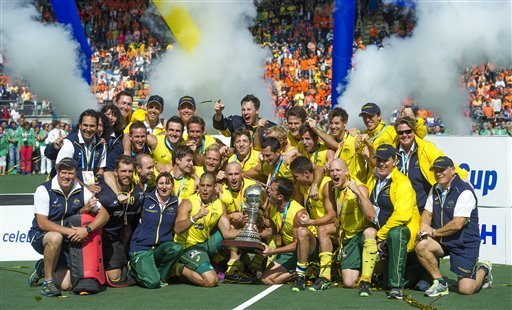
Australia clinched their third hockey World Cup by successfully defending the title they had won four years ago in New Delhi when they thrashed hosts Netherlands 6-1 in the final at the Kyocera Stadium here Sunday.

Earlier, Matias Paredes scored a brace to help Argentina earn their maiden medal at the event when they defeated England 2-0 in the bronze medal playoff.

Penalty corner expert Chris Ciriello was the architect for the Kookaburras after he hammered in a hat-trick while Kieran Govers, Glenn Turner and Jamie Dwyer put in three more field goals. Jeroen Hertzberger scored the only consolation goal for the hosts.

“The boys played really well. I was just lucky to be at the end of finishing it. It is not just a hat-trick for me; it’s for the rest of my team and Australia as well,” said Ciriello.

Dwyer, who became Australia’s joint highest caps holder alongside Jay Stacy with 321 international appearances, said, “We have played really great hockey throughout the tournament. It’s the best hockey we have ever played. The game is getting faster and more attractive and the Dutch played a really good game but thankfully we got the better of them”.

Australia had the Dutch up against the ropes in the first few minutes, relentlessly pushing in the search of the opening goal. However, lightning quick counter-attacks from Netherlands resulted in the penalty corners with Aussie keeper Andrew Charter being forced to make two near identical saves from Mink van der Weerden drag-flicks.

Van der Weerden’s efforts gave the partisan crowd hope but Hertzberger’s opener sent the stadium into delirium (14th minute).

However, the Kookaburras continued to press forward and were rewarded when Ciriello drag-flicked his team back into the game with a 20th minute penalty corner strike. Four minutes later, the Aussies were ahead thanks to Govers. The defending champions went into halftime leading 2-1.

Australia continued their dominance when Turner netted from close range following excellent work down the right from Simon Orchard, playing his 150th game.

Australia quickly moved from 3-1 to 5-1 with Ciriello getting two more goals with powerful penalty corner flicks to complete his hat-trick. The sixth goal came from five time FIH Player of the Year Dwyer.

Argentine Gonzalo Peillat took home the top goal scorer award with 10 while Australian captain Mark Knowles was named the player of the tournament. Dutch custodian Jaap Stockmann won the best goalkeeper award and Kookaburra Jeremy Hayward was named the young player of the tournament.

IANS