Home Blog Page 948

Solar system of the mind

0
Reading Time: 3 minutes

Removing your personal junk from its emotional orbit is easier than it sounds, writes SAROJA SRINIVASAN 

I have always been intrigued by the fact that as the various rockets, satellites and space centres fly around in space they shed many tons of junk that spin around until they burn out.

Almost ten years ago, it was estimated that there could be up to 13 nuclear reactor cores and 32 nuclear reactors in orbit around the earth. The oldest debris, reportedly from 1958, is perhaps still in orbit. A glove lost by one of the astronauts was in orbit for a month and dubbed as “the most dangerous garment in history,” despite its miniscule size.

According to a recent estimate, there are about 10 million pieces of debris orbiting the earth. While most of the debris would have been necessary for the launching, functioning and maintenance of the useful gadgets in space, in time they become redundant and so are shed in to space.

It occurs to me that there is a considerable parallel between what happens in outer space and in the inner space of human life on earth.

As human beings in our journey through life, we do accumulate considerable amounts of unwanted debris within our minds. This is usually in the form of negative memories, emotions and other inappropriate thoughts. Quite often, they have the power to take us off on trajectories that we did not plan for, very quickly descending into the realm of despair, dejection and unhappiness.

Just as in outer space, over time, our inner space junk continues to increase at a phenomenal rate. Just like the astronaut’s glove, even a trivial situation, word or thought that is misunderstood increases the quantity of debris, becoming quite ‘dangerous,’ acquiring the power to derail by re-surfacing at the wrong time and place.

How does this happen?

Unlike the automated shedding that takes place in outer space, we do not make the effort to shed unwanted debris within our inner space periodically. In fact, the ‘inner space junk’ propels us to accumulate ‘junk’ on the outside in the form of material possessions and attachment to material wealth. The possessiveness within makes these external possessions so much more valuable than what they are worth. Spurred on by social conditioning, peer pressure and a need for acceptance, one continues down this path of material accumulation. This in turn makes us dependent on it, in the false belief that somehow it will lead us to the happiness we seek.

There is no doubt that the junk we accumulate within is a heavier burden than the material junk we collect over the years. The mental weariness that the inner space junk brings, creates more hurdles than mere physical or financial hassles can create.

How can we reduce this burden?

Just as a good gardener weeds the garden, we should de-clutter our mind. We need to look for the unwanted and potentially destructive thoughts, attitudes and memories that need weeding. Carrying less inner space junk and lightening the load inside the mind is ultimately the responsibility of the individual. No one else can do it. This effort requires discipline, mental fortitude and perseverance. In the rush and bustle of our everyday life, we are less tuned in to the more important aspects of our life that need attention.

The discipline required is simple and effective. A few minutes of quietness everyday, a chance to reflect on the day’s happenings, to acknowledge the way one handled the situations, is the beginning. This requires an honest evaluation of both the rights and wrongs. Looking for constructive ways of handling everyday hassles and acknowledging one’s strengths will provide the impetus we need for success in our lives. Success is measured not only by big achievements but also in the satisfaction we derive from small, everyday ones.

The burden of unwanted inner space junk can only be reduced or wiped out if one accepts the problem that exists. A serious investment in time to do this has to be made. Time is the most precious commodity in our fast-paced world. If one seeks the joy and fulfilment that an honest self-evaluation can bring to obtain certain lightness of being, periodic investment in time is necessary.

“Time is needed for the timeless to be,” philosopher J. Krishnamurthy once said famously.
Shlokas for Aussie kids

0
Reading Time: 4 minutes

The annual Sanskrit recitation competition surprises yet again at John Colet School


Om Paramatmane Namaha – a typical day begins with this dedication to the Supreme Being. It is followed by a few minutes of silence and mindfulness meditation, before starting a structured learning programme. The day concludes similarly. Sanskrit grammar and shloka chanting feature prominently on the educational agenda, as do ethics, values education and lessons in philosophy. Strong emphasis is laid on cultivating respect for one another, taking ownership for actions as well as service to society. At lunchtime, following the principles of Ahimsa, all staff and students sit down to a wholesome vegetarian meal.

This is no gurukul in remote rural India but a thriving learning environment in Belrose on Sydney’s Northern Beaches. Ancient classics, modern languages, Shakespeare and studies of world religion and culture coexist with other key learning areas.

Embracing a multi-lingual, multi-faith model, John Colet School (JCS) has a wide footprint across the greater Sydney area, offering an alternative learning pathway to the forward thinking community for many decades now.

“Every parent wants his or her child to be a good person first and then get a great career as well,” principal Gilbert Mane, told Indian Link. “We try to achieve both by giving them a taste of self-awareness and encouraging a common sense approach. Our formula for success is an equal emphasis on spirit, character and academics. We empower students to be strong, confident, compassionate and courageous individuals”.

Mane explained the school’s aim to nourish both “minds and hearts just as the best physical food nourishes the body”.

“The diverse cultural experience of classical and modern languages opens them up to the rich variety of humanity and human experience,” Mane noted. “Sanskrit, in particular, is very beautiful and profound and this is good for the wellbeing of the child. It gives children the opportunity to experience and enjoy the purest sounds in language as well as gain a good foundation in linguistics, grammar and logic”.

All students from K-6 learn Sanskrit, starting with simple prayers, to learning to read and write Devanagari script before mastering vocabulary and grammar. A thorough understanding of its fully inflected grammatical system is gradually acquired through several lessons a week over their years at the school. Once the foundation is laid, students tackle translation, using simple stories from Ramayana and Mahabharatha.

“Catch up” lessons are offered to students who join the school. Advanced students also elect to sit the ‘11+ International Sanskrit Exam’ (set by St James School London through the Cambridge Examination Board).

Similarly Latin is offered as an enrichment programme from Year 1. All students also participate in a class Shakespeare play every year. Drawing from a range of cultural and religious traditions, readings from various scriptures is a daily ritual as is exposure to artistic influences, including Indigenous, Islamic and western art movements like Impressionism and the Renaissance.

Their multilingual approach is founded on core principle that language study opens neural pathways to unique life experiences.

“Proper language study demands discipline, attention and order,” explained Mane. “This in turn develops self-esteem in the child because they have studied something innately challenging and achieved success, even if it is only learning some simple prayers by heart”.

Mane believes that once students have“learnt how to learn a language like Sanskrit, they find the learning of other languages relatively straight forward”. He went on to joke that Latin is a modern language, due to Sanskrit being much older. “Sanskrit study combines certainty with creativity,” said Mane. “Understanding Vedic culture promotes both. On a practical level, they understand how language works and use this to extend their understanding of text types. They also gain a subtle sense of different realms of thought. What follows are wonderful discussions and acute awareness of diversity of human race”.

The JCS students are the school are naturally understanding and tolerant of differences. “There are, of course, always lessons to be learnt but generally the children are ‘colour blind,’” Mane proudly acknowledged.

For the teachers as well, it is a highly fulfilling process as it places high demands on them to make learning interesting, fun and achievable.

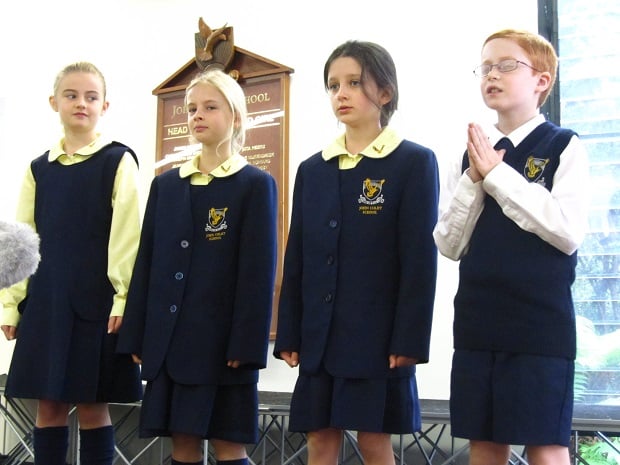
JCS students recently participated in the annual Sanskrit competition. Following the oral tradition, the entire school was involved in individual and group recitation.

“All classes learn a different group recitation piece, either a prayer or a series of slokas,” explained JCS’s Alex Coubrough.

“They learn them by heart and recite together in unison, focusing on intonation and correct pronunciation, a skill in itself,” she added. “This means everyone, regardless of ability, can join in”.

Finalists are selected from every grade, with scholars from the University of Sydney’s School of Philosophy, Ramakrishna or Chinmaya Mission, as well as retired teachers, judging the competition.

Both for the quality of sound and performance of groups and individuals, this year’s competition was the best yet, making judging a difficult task for respected virologist and Sanskrit scholar, Dr Gary Grohmann and languages teacher, Ineke Blakeman, Coubrough pointed out.

The Lower 1st class won the competition in the Infants division for their recitation of Happy Prayer, with gestures of animals representing all creatures, which was incorporated into the English translation.
The Primary award went to 3rd class for their perfect recital from Eesha Upanishad. Individual winners were Joshua J, Wilhelmina Van D and Iona from Infants and Luke B, Felicity V and Elliot M-K in primary division.
Elliot’s achievement was particularly special as he only joined the school this year. “He has taken to Sanskrit so naturally,” explained Coubrough. “He loves it! This has happened with other new students in the past, they have caught up to their class mates within a few months”.


Queen’s Birthday Honours List 2014

0
Reading Time: 2 minutes

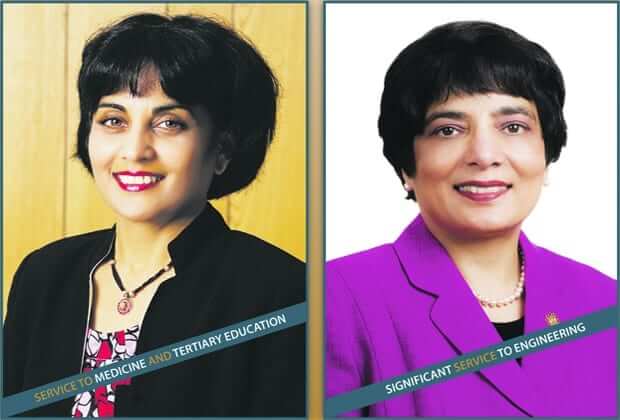
The inspiring stories of the 2014 Indian recipients of the Queen’s Birthday Honours List:

Dr Marlene Kanga (AM)

Chemical engineer who fosters innovation, diversity and a unique style of leadership.

Dr Minoti Vivek Apte (OAM) 

Awarded for her exceptional work in the cancer research field, with special attention to pancreatitis and pancreatic cancer.

Dr Prem Phakey (AM)

For significant service to the Indian community of Victoria, to aged welfare, and to education.

RK RAM (OAM)

For service to the Indian Community of NSW initially and to the wider South Asian communities of NSW over past eleven years.

Queen's Birthday Honours List 2014

0
Reading Time: 2 minutes

The inspiring stories of the 2014 Indian recipients of the Queen’s Birthday Honours List:

Dr Marlene Kanga (AM)
Chemical engineer who fosters innovation, diversity and a unique style of leadership.

Dr Minoti Vivek Apte (OAM) 
Awarded for her exceptional work in the cancer research field, with special attention to pancreatitis and pancreatic cancer.

Dr Prem Phakey (AM)
For significant service to the Indian community of Victoria, to aged welfare, and to education.

RK RAM (OAM)
For service to the Indian Community of NSW initially and to the wider South Asian communities of NSW over past eleven years.

Duniya haseenon ka mela

0
Reading Time: 2 minutes

Yummy mummies gather again at Sydney Sakhi Sangam, reports RAJNI ANAND LUTHRA

Haseenon ne bulaya, gale se yun lagaya… It’s the solva saal (sweet 16) for Sydney Sakhi Sangam.

If you’re part of Sydney’s Indian community and you don’t know what Sakhi Sangam is, then you need to get out from under your rock.

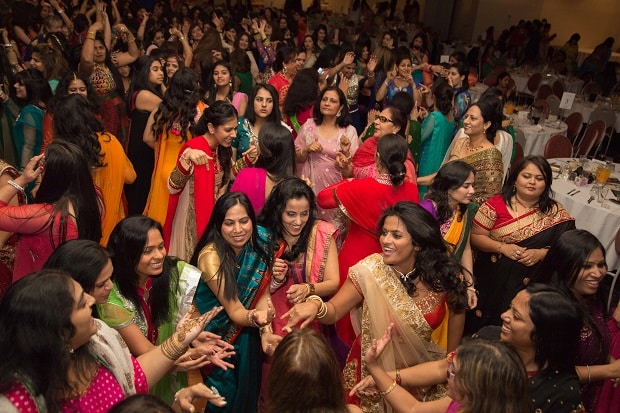
This is the event where the yummy mummies of the community congregate annually for a glam day out.

Sakhi Sangam (literally, “girlfriends gather”), celebrated its sixteenth anniversary this year, with some 600 women in attendance.

All out to have a good time, they had some lunch, got some mehndi, bought some jewellery, a sari maybe, and generally kicked up their (beautiful) heels.

Hosts Nandini Thadani and Sushma Ahluwalia delivered a great show just as we have come to expect of them. Nandini did look a teensy bit frail after a year of ill health, but you wouldn’t have guessed it if you didn’t know: not a hair out of place, dupatta immaculately pinned, and an aura of studied calm about her. We hope her partner-in-crime Sushma took some of the pressure off her: she was her usual Energiser Bunny self, flitting around tirelessly, urging the guests to clap or sing or dance along in her typical Sushma way.

The MCs of the day were a similar case of perfect partnership: the beautiful Preeti Thadani in glamorous black and the exquisite Natasha Gujral in stunning orange.

Among the sakhis, though, the couture overall was so varied that it was hard to pick a trend – no particular colour dominated, or a specific style, except that it was bling abundant! There were anarkalis galore but the short kurta was still around, and we saw the designer sari as well as the traditional silk. Of course the sexy stringy choli was out in full force, making the full blouse look so last century… Oh, and you couldn’t have missed the oversize earring, no doubt a take-off from Deepika Padukone in Ram Leela.

The entertainment was routine Bollywood fare, but it served the purpose of setting the mood for the heavy-duty dancing that was without doubt the mainstay of the day. The shiny shoes were kicked off as the pallus were tucked in, and some raucous fun was had as the girls let their hair down. The music may have been way too loud given the average age of the movers and shakers on the floor, but no one seemed to care!

Lunch was quintessential Manjit, or should we say Kanwar, given the occasion? We’ve learnt to expect a surprise item on the menu from this crew, kadhi chawal this time round!

‘Quiet time’ after lunch came in the form of tambola, with some great prizes donated by the sakhis themselves. But it was back to the dancing very shortly, with the music cranked up a few more decibels if that was possible, to keep this rambunctious bunch in the mood.

Kids, you should have seen your mums…

Then again, if your mums have never done Sakhi Sangam, send them next year. Mummies need to let their hair down too, you know. (We’ll show you the pics!).


More pics our Facebook page


Finding God near you

1
Reading Time: 4 minutes

A Melbourne-based engineer develops an app that lists Hindu temples in fifty different countries

For the devout Hindu, god is everywhere and in every being. He is omniscient, omnipotent and omnipresent. Most of us, nevertheless, also find strength and solace in a peaceful darshan at temples. Today, no matter which corner of the world the globetrotting Hindu finds him or herself in, there is bound to be a Hindu temple, offering the right spiritual direction.

Through the innumerable resources of the World Wide Web and the innovation of Indian Australia Hari Iyer, finding god is now easier than ever.

Leveraging on the very latest in mobile technology, Iyer has come up with a novel web and mobile phone application to service the needs of the Hindu community.

Mapping over 2000 temples in 50 major countries outside India, Iyer recently launched his free Hindu temples directory, www.allhindutemples.com, and app for iOS on www.HinduTemplesApp.com downloadable through App Store.

The temples app is a comprehensive directory and is particularly handy for getting directions, opening hours, contact details and services offered. The information can also be saved offline to their device.

The highly interactive app is particularly unique in its Wiki-style customer interface that allows users to network, collaborate, leave feedback and provide useful advice for other temple-goers. Users can also update information and include photos.

“Every other religion except Hinduism has apps and directories as well as lots of information online about their places of worship. While so many Hindus have carved a niche for themselves in information technology, we don’t have many resources online,” Iyer told Indian Link.

The idea for the app arose when Hari and his wife Samridha turned up at a local Sydney temple, only to find it closed.

“I subsequently tried to find their opening hours and realised there was not much information available,” Hari said.

“Their website was down as well and even when it was restored it lacked adequate content in a mobile friendly website. This is the case for most temple websites”.

It was the frustration of not having access to basic information that inspired Hari to create his app, with the intention of making temple visits easier for everyone.

“I decided to create a directory whose main purpose is instant access to basic logistical information. Wherever they are in the world, the tech-savvy devotee can use the app to locate a Hindu temple near them,” explained Hari.

As a typical “Tam-bram” (Tamil Brahmin) the Mumbai-born Iyer was a frequent visitor of local temples. His marriage to Samridha also strengthened his spiritual foundations as she not only brought a firm religious grounding back into his life but also actively encouraged him to create the directory.

The industrial engineer, whose expertise is sales and consulting, invested all his spare time into this unique project. A year in the making, it initially began as an Australian temples directory and blog, expanding steadily to include many more countries.

“It did take a lot of co-ordination, bringing together work from different locations with data analysts in Noida, app developer in Europe and graphic designers in Kolkata. I had a lot of support from family, since a lot of my personal time and money has gone into bringing it to current stage,” Hari explained.

Each of the temples had to be individually mapped on Google maps as well as data sourced and cleaned, to ensure accuracy for users. The App itself had been in development for over four months and was extensively tested to ensure compatibility with all iOS devices and screen sizes.

“In spite of the best of our efforts, this sort of information is dynamic,” he added.

“Opening hours change, temples often start small and then move on to bigger, permanent locations, phone numbers change and contact details also vary. So I’d call upon users to report any changes that they notice so it can be updated to benefit the whole community”.

Although the project itself was self-funded, in order to cover the cost of sustaining it on App Store, the app has been priced at $2.49 and has already received many five star reviews.

Consumer feedback has also been overwhelmingly positive. Peak Hindu organisations like VHP, Hindu Council of Australia and Overseas Friends of BJP Australia have offered their support, but Iyer hopes to expand the app’s reach even further.

“There is still work needed to spread the word especially in countries like UK, US and Canada,” he reiterated.

“Mapping temples all over the world is such a massive project that no one can possibly do it all by himself, but if everyone had to only look after 1 or 2 temples in their local area to keep them updated and correct that’s easily doable and will benefit the entire community”.

Iyer is also keen for temple managers to claim ownership of their listing and manage it themselves. The site also allows temples to upload any local events or festivals to help them get more visibility amongst devotees.

In the future, Iyer also hopes to connect with temples in India. “That will be a mammoth project and we are trying to find local organisations there that we can work with. Conservatively speaking there would be at least 10,000 large temples in India that we’d like to include in the directory,” he stated.

Spurred by the demand, he has already begun work on the Android version. To reach a wider audience, the app will be free.

“As I will soon be mapping Indian temples, I do not wish to put it behind pay wall,” Hari indicated. “I also don’t want to run ads as it will corrupt the spiritual experience. Instead I plan to hold a fundraiser through Indiegogo, where people can contribute whatever they wish towards app development cost”.

Find out more at: https://www.indiegogo.com/projects/global-hindu-temples-directory-help-create-an-awesome-free-android-app-no-ads

Kangaroos in Kashmir colours

0
Reading Time: 3 minutes

Vijay Koul’s pic bounces into first place at the Canberra Times Autumn Photography Comp

Do Canberra and Kashmir have anything in common? They do, according to CSIRO scientist, Vijay Koul who won the first prize in the Canberra Times Autumn Photography Competition, 2014. Probably the first Indian to win this coveted photography contest, Koul’s winning click was (picked out from more than 400 entries) a bunch of kangaroos grazing peacefully amidst the breathtaking orange and red hues of the spectacular Canberra autumn.

A native of Kashmir, Koul has been living in Australia with his family for the past 21 years. He is a scientist working with the Bush Fire Research Group of CSIRO. Koul said that the beauty and magnificence of the changing seasons of Canberra, especially the spring and autumn colours, were highly reminiscent of his homeland, Kashmir, which is often referred to as Paradise on Earth for its breathtaking beauty.

This is the second time Koul has entered this photography competition. Last year, he took part in the Canberra Times Winter Competition 2013; his picture was short-listed to be published but did not win the title.

Photography has always been Koul’s passion, but this interest took flight when he began work with CSIRO, as he regularly captures photographs of his experiments. Even this winning picture was shot as he was finishing work in a nearby CSIRO lab.

“I looked outside my window and saw the beautiful autumn sunset, trees, kangaroos; luckily I had my camera with me, so jumped over the fence and clicked the shot,” he said of his winning shot. And when he is not working, he also enjoys shooting for weddings, birthdays and community-related events for friends and family. At the moment, Koul said that he is not thinking of turning his passion into a profession, due to work and family commitments, but he is keeping the avenues open.

Koul shoots these captivating images using a Pentax with Sigma zoom lenses 18-200mm and 70-300mm. He told Indian Link that he prefers not to use any photo-editing software and if he must, he uses the software provided by Pentax. He does not believe in fancy camera equipment, but rather in the creative eye when it comes to capturing beautiful shots.

“It is always best to use auto-mode till one is confident before migrating to manual focus,” is Koul’s advice for photography enthusiasts and wannabe professionals. It is important to have an in-depth understanding of shutter speed and aperture when using manual mode. He also mentioned that a good way of learning and broadening knowledge is to refer to good journals, books and magazines dedicated to photography. Digital Photography for Dummies and Digital SLR Camera and Photographs for Dummies by David. D. Bush are the two books that Koul would suggest for novices with a passion for photography.

For those into travel photography, Koul’s advice would be to invest in a good camera, a couple of SD cards and spare batteries. “Go ahead and click as many pictures as you like; you can always delete the bad ones,” he explained. “And also remember the best time for capturing good photographs is during the magic or golden hour which is one hour after sunrise and one hour before sunset”. He also points out the benefit of using a wide angle for capturing landscapes.

When asked about the presence of Indian photographers in Australia, Koul said that, unfortunately, there are not too many Indian-origin photographers here. He said that the scope and potential for growth in the field of nature and travel photography is immense, as Australia has many scenic locations and breathtaking natural beauty. He also mentioned that the scope for event photographers is also huge owing to the large Indian population in this continent.

Koul is currently in the process of writing a phonographic book capturing the spectacular scenery of the spring and autumn seasons of Canberra. A project very close to his heart, he says this book will be his dedication to Canberra and to its breathtaking natural beauty during these seasons.

To interact with Koul and catch a glimpse of his amazing work, visit www.facebook.com/vkoul


SFF a success

0
Photo credit: Life Without Andy
Reading Time: 3 minutes

The festival had quality cinematic soul food, where were the desis?

Photo credit: Life Without Andy

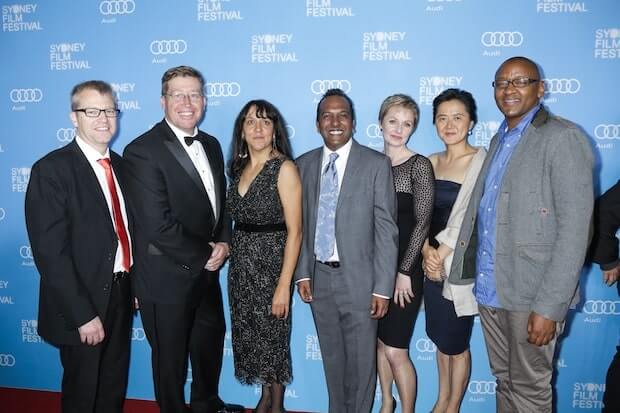
The Sydney Film Festival (SFF) which concluded recently seemed to be an outstanding success, again, if the crowds were any guide. 183 movies, 122 Australian premieres and record ticket sales over the 12 days attest to the fact that the programme was well received. Every passing year attracts important guests from the world of cinema who are proud to introduce their work and engage with the audience in Q&A’s.

One grouse with the SFF organisers, when will the daytime subscribers return full-time to the spiritual screening home of the historic, heritage-listed State Theatre?

Event 4 Cinema in George Street doesn’t quite cut it. In fact, four days to repair a broken escalator must be some sort of dubious world record, for a supposed first world city cinema?

Two Days, One Night won the Sydney Film Prize (jury prize). Featuring the incandescent French actress, Marion Cotillard, who also starred in previous crowd favourite La Vie en Rose, this is compulsive viewing when it gets a mainstream release in a few weeks.

There were a handful of Indian movies on offer, all of them good. The old masterpiece of Satyajit Ray, Pather Panchali was amongst these.

I loved Faith Connections, the documentary by Pan Nalin on the Maha Kumbh Mela, which is held every 12 years. The scale and logistics of the event are simply mind-boggling. Some poignant human interest stories were seamlessly woven in. Overall, this documentary was highly engrossing, informative and entertaining. Run, don’t walk, if it is released commercially or try and find a DVD.

Another Hindi movie which was screened at the SFF was The Lunchbox. Slated for forthcoming commercial release, this promises to be a huge crowd-pleaser. Sadly, I missed it. The word of mouth reviews from festival goers were overwhelmingly positive. With two highly accomplished actors, Irrfan Khan and Nawazuddin Siddiqui, and a unique story-line, it is highly anticipated.

The other Indian movie I really liked was Siddharth (not the old Simi Garewal-Shashi Kapoor starrer!) Directed by young Canadian-Indian, Richie Mehta, it is based on the immensely sad, but true story of the disappearance of the 12-year-old son of a Delhi auto-rickshaw driver.

The British movie Locke was gripping. A bold experiment, it is not a movie you will forget in a hurry. Expect this to get mainstream release, too. It is about a man whose life is literally unravelling around him while he is driving to his destination, on perhaps the most important day of his career.

I enjoyed Korean Director Bong Joon-ho’s over-the-top, action packed science fiction movie Snowpiercer of our earth in an ice age in the not too distant future and the brutal caste system enforced on some survivors by their fellow denizens, on a train that circles the globe, non-stop.

However, my personal favourite was the dark brooding Chinese movie, Black Coal, Thin Ice. Set in a small town in contemporary China’s north, this movie won the Golden Bear at the Berlinale. Great performances, slick direction and a twisted plot made for a gripping, memorable tale. It would be surprising if this too is not released commercially soon.

Regular readers will recall my usual annual lament at the lack of interest in the Sydney Film Festival by our desi community. For a country that churns out over 1,600 movies annually (latest figures), it is disappointing that Sydneysiders of Indian origin don’t seem interested in serious cinema. Forget patronising international movies, there were hardly any Indian faces (possibly around 3- 5%) at the screenings of even the Indian movies.

Are we really so busy making a living that we are forgetting to nourish our souls? Or, just plain indifferent to patronising cultural pursuits, even evocative stories from our motherland?

And this despite the organisers of the Sydney Film Festival leaving no stone unturned in their commendable and indefatigable marketing efforts.

Photo credit: Life Without Andy

Putting structures in place for social enterprise

0
Reading Time: 3 minutes

For service to the Indian Community of NSW initially and to the wider South Asian communities of NSW over past eleven years

Talk to RK Ram about his widespread community work, and he will tell you humbly that he is but carrying on a significant family legacy.

“My passion for service to migrant communities can be traced back to my grandfather, who moved from India to Burma in the late 19th century,” Ram tells Indian Link. “He was drawn towards helping other migrants, especially labourers from India, who he taught to read and write and learn basic maths. The informal classroom be stared became a well-known high school”.

Like his grandfather, Ram saw many needs and issues with the migrant communities in Australia that required addressing.

“I was fortunate to come in contact with like-minded people,” Ram says.

Together they undertook social welfare activities that have gone on to make a difference.

After years of work, Ram is now in a position where he helps directly by creating structures for social enterprise that provide service where a need is identified. This led to the creation of SEVA (Social Entrepreneurial Ventures of Australian South Asians), well-known in Sydney’s Indian community for its social work in different fields.

“In the area of aged care, for instance, we at SEVA are looking at training community workers who can provide culturally relevant homecare. For families with special needs children, we have come a long way with our carer support program Sahelis to meet the challenge of social isolation. Samarpan, an association that represents people with disability was registered as an association in 2012 after starting off informally in 2002. In the field of domestic violence, we want to set up a safehouse for victims, but are starting with drop-in centres where sympathetic elders in the community can lend an ear; we hope to ultimately have medical and legal counsellors. For these and similar programs, we are engaged in evidence-based research activities in collaboration with universities”.

Social inclusion is another particular passion with Ram, ignited after the Indian students’ crisis of 2009-10. Rhythms of Peace is a recent program of which Ram is particularly proud. “We came up with the program to enhance cross-cultural understanding at the earliest possible stages. In collaboration with the Islamic Council of NSW and Arab Council Australia, the government funded us to engage primary school children in cross-cultural activities. Middle Eastern and South Asian kids presented performances and organised food festivals to enlighten their peers about their culture. These took place in the Parramatta and Auburn districts and culminated in a grand performance at Riverside Theatres on Harmony Day”.

Another similar program that Ram is excited about which is in the pipeline, based on story-telling.

Ram came to this country in 1969 as a member of the first ever Indian trade delegation. He was back in 1970 to set up a regional office here to look after trade between India and Australia, NZ and Fiji, and has stayed on since then. While his professional life was dedicated to the growth and enhancement of the bilateral trade and other relationships between the two countries, his voluntarism has been an enduring aspect of his personality. It is now coming to the fore as the community grows large enough to be able to support the plans he has long envisioned, and is now seeing to fruition.

Read more Queen’s Birthday Honours List stories here:

Dr Prem Phakey (AM)

Dr Minoti Vivek Apte (OAM)

Dr Marlene Kanga (AM)


Community leader

0
Photo by Dr Prem Phakey AM
Reading Time: 3 minutes

For significant service to the Indian community of Victoria, to aged welfare, and to education

Photo: Dr Prem Phakey AM

From humble beginnings to being recognised with an AM in the Queens Birthday honours list this year, Dr Prem Phakey AM and his wife Usha have a lot to celebrate. This year was also a milestone for them as it marked 50 years of living in Australia. The recently announced prestigious honours list recognised Dr Phakey for significant service to the Indian community of Victoria, to aged welfare, and to education.

Life has been a gem for Dr Prem Phakey who arrived in Australia in 1964 to take up a three-year contract teaching assignment. He was appointed as lecturer in Physics at the Monash University in 1967 and promoted to senior lecturer in 1971 and later on to reader in Physics till he left the University in 1994.  He was also honorary lecturer for Gemmological Association of Australia, Victorian Division from 1968-1988. His scientific research included minerals, rocks of importance, shells, teeth, gemstones and diamonds. He expresses gratitude to Professor Rachinger, late Professor Street and Monash University for encouragement and support to carry out scientific research.

“I am passionate about Indian diamonds and have recently given a series of 10 talks on this subject,” said Dr Phakey who continues to be engaged in academics well past his retirement. With an expertise in crystallography, microscopy and optics, Dr Phakey has contributed various papers and articles on gemstones and Indian diamonds in community newspapers.

Renowned for his work in moon rocks and lunar dust (both American and Russian samples) Dr Phakey held many academic appointments and fellowships at institutes like University of California, Los Angeles (UCLA), University of California Berkeley, University of Washington and William Evans Fellowship at University of Otago, New Zealand. Locally he held a fellowship at Royal Children’s Hospital, Melbourne, senior fellowship at the School of Dental Science, University of Melbourne and after retirement, senior fellowship at Monash University.

Dr Phakey is well regarded in the Indian community for his dedication and involvement in the welfare of the community. He was the founding secretary and then vice president of the Punjabi Club of Victoria in 1987-1991, vice president and public officer for Australian Indian Innovations Inc. (AIII) from 2003-2005 and trustee of the Australia India Charitable Trust.

He is equally passionate about the welfare of senior citizens as the founding chairperson of the Indian Senior Citizen’s Association (ISCA) and current president since 2007.

“The need and composition of our society has changed and it is important to make efforts to avoid isolation and boredom for seniors, especially those who may rely financially and emotionally on their children,” said Dr Phakey as he explained ISCA’s objectives.

“At ISCA we offer an environment where seniors can socialise, display their talents, be entertained and educated,” claimed Dr Phakey. “We hold regular talks on issues relevant to the senior community, we hold classes that assist seniors to adapt to new technology like iPads, mobile phones, and we have dedicated seniors teaching yoga and chair exercises to others. In terms of entertainment we have a day centre that holds weekly sessions of various activities and we also celebrate multicultural festivals and events. Our membership is growing at a rapid rate we have a pool of knowledge, talent and expertise within our organisation”.

Dr Phakey went on to share his vision for the senior community. “We have given the organisation a strong footing and taken it to a sustainable, stable position, however, it’s now time for the next generation to get involved and take it further,” Dr Phakey explained. “My dream is that every senior should benefit from an organisation like ISCA and we should have more day centres, in more areas around Victoria that offer a structured, or open environment to facilitate senior care solutions and independence”.

Letters of congratulations are pouring in for Dr Phakey from all directions including commendation from the Governor of Victoria Alex Chernov, Premier Denis Napthine, local ministers and councillors. His family, comprising of wife Usha who is a retired teacher, son Vivek Phakey who is an ophthalmologist and daughter Nishi who is a dentist, are proud of his achievements. “It’s good to be recognised with this honour, however, as an academic I have had the opportunity to be rewarded in many other ways and all of them are equally significant for me,” answered Dr Phakey when asked about receiving the recognition. “This is the icing on the cake, and as far as I am concerned there’s still miles to go before I sleep”.

Read more Queen’s Birthday Honours List stories here:

RK RAM (OAM)

Dr Minoti Vivek Apte (OAM)

Dr Marlene Kanga (AM)