Home Blog Page 941

Over-baked vendetta pulp

0
Reading Time: 2 minutes

Film: Hate Story 2

Starring: Surveen Chawla and Jay Bhanushali

Director: Vishal Pandya

Rating: *

In how many ways can a wronged woman get even with a man? In Hate Story, three years ago Paoli Dam made a suntanned socialite, “Main sabse badi r**di banna chahti hoon”.

Okay then.

Fortunately, Surveen Chawla who takes over the vendetta franchise, has no such lofty career ambitions. She seems miserably ensconced as a politician’s plaything (aka mistress) until she falls in love with a boy-toy who seems to believe love means never having to say you can’t smooch.

Koyla, anyone?

In a series of disembodied scenes meant to show their growing passion, television star Bhanushali chews on Ms Chawla’s lips as though they were life-saving drugs. The pantomime of passion doesn’t pay off. Bhanushali can’t survive lip-chewing for too long. That’s because Baba, the ruthless politician, has Ms Chawla’s lover-boy killed.

That isn’t a spoiler. It’s plot perversion.

Ms Chawla is left to die buried underground. But she escapes to take revenge. It’s Khoon Bhari Maang… minus the crocodiles!

Just how Ms Vendetta Queen gets even with her benefactor-tormentor (Sushant Singh, powerful and menacing), forms the corny crux of this horny tale, told in shades so pale and stale you know it’s a losing battle to the finale. Ms Chawla, conveying all the smouldering intensity of a goldfish circling her bowl on a bored Saturday afternoon, takes on Babu and even beats him at his game of viciousness.

It’s a sad and sorry premise, more daring in letting the vengeful vixen romp in skimpy clothes than in actually showing the lady’s volume of venom.

No matter how we look at it, this is a film waiting to get us hooked. The promised explosion never happens.

The vendetta looks awfully unconvincing. Where and how did our desi Uma Thurman find the courage and strength to…err, ‘Kill Bill’? And pray, hasn’t producer Vikram Bhatt done this story as Lanka in 2011? Maybe Bhatt wanted to film the same story more convincingly. If that’s the case, Hate Story 2 doesn’t quite up the ante… Though apparently, the thrust of the male gaze suggests that the film is supposed to raise other things (pun intended).

Hate Story 2 is a story in pursuit of a constant state of arousal. The female protagonist gets wet, gets into a bikini, gets just so aggressive – she is like a sex bomb ready to explode… but all in vain. There is nothing in her personality to suggest she has taken the stereotypical character of the Vengeful Vixen anywhere it hasn’t been before.

Hate Story? Not quite hateful. But nothing to wrap our hands around either.

Humpty falls flat

0
Reading Time: 3 minutes


Humpty Sharma Ki Dulhania

Starring: Varun Dhawan and Alia Bhatt

Director: Shashank Shekhar

Rating: **
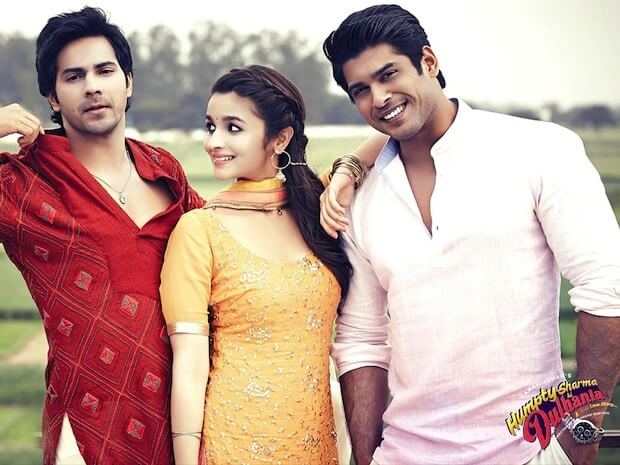
Thank god for Varun Dhawan and Alia Bhatt. The soul shivers in fear wondering which disaster zone this bland incarnation of Dilwale Dulhaniya Le Jayenge (DDLJ) would have headed to if these two actors hadn’t steered the rudderless revisionist saga to some semblance of sensitivity.

As you wait for the young lovers in Ambala to sort out the mess in the matters of the heart, you wonder how many rip-offs, homages, tributes and remakes of Aditya Chopra’s DDLJ we would have to bear before this… classic is put to rest.

It may be sacrilegious to say this, but DDLJ, in my humble opinion, is hardly the stuff classics are made of. It had its moments of glory…Oh yes! But a repeatedly recycled classic? Nah! That’s going too far.

Humpty Sharma Ki Dulhania (HSKD) takes the Raj and Simran characters, shakes and stirs them, and turns them on their heads. Varun Dhawan and Alia Bhatt, two of Bollywood’s most talented contemporary actors, don’t really try to fill Shah Rukh Khan and Kajol’s shoes. They have better things to do.

He, Humpty (yes, that’s what our hero is called) can’t keep it in his pants… his money, that is! He spends it buying a lehenga for the wedding of the girl of his dreams. She uses the money to buy him a car of his dreams.

You really wish the director had left these two annoying characters to their dreams and devices. These are the kind of 20-something over-reachers who need to be told that “to get a life” doesn’t mean to beg, borrow and steal material happiness.

When we first meet Humpty, he emerges from a loo behind a sheepish-looking girl. In her introduction scene, Kavya (Alia) is shown trying to bully her father into buying her a Manish Malhotra lehenga for her wedding to the ‘perfect’ NRI.

The ‘perfect’ NRI is played by television actor Siddharth Shukla, so exceptionally wooden that he seems to be carved out of a tree. And there he should have remained.

No one in HSKD seems to feel any real emotions. It is all a pantomime of being cool.

There are characters in Humpty’s saga equivalent to the ones in DLLJ, all subverted to the point of appearing farcically over-blown. Except Ashutosh Rana, who does a dignified take on Amrish Puri from the original, no one else gets it right.

Clearly, the debutant director is here doing a revisionist version of DDLJ, much in the same way that Sanjay Leela Bhansali did with Romeo and Juliet in Goliyon Ki Raasleela Ram-Leela. With one difference. Director Shashank Khaitan lacks the vision to take the earlier characters to another level from where they originally stood.

Standing credibly firm in this earthquake of dismantled storytelling are Varun Dhawan and Alia Bhatt. Endearing in their affection for DDLJ, they are like two well-armed soldiers waiting for the battle to begin. Alas, the ammunition provided to them is like water pistols masquerading as AK-47s.

More miniature and spoofy versions of Bonnie and Clyde than Raj and Simran from DDLJ, the couple in HSKD is eminently uninspiring and hopelessly self-seeking. At the mid-point, when the girl jumps in bed with the stranger who buys her the lehenga from her dreams, you know once and for all that this pair is beyond repair.

Simran would have never done that.

Subhash K. Jha 


Taming demons

0
Reading Time: 3 minutes

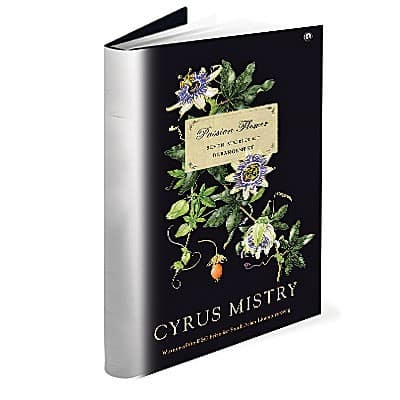
Passion Flower: Seven Stories of Derangement is a meeting with the darker side of human kind

There is a wicked demon in all of us. Lying dormant somewhere, only partially active, at times justifying our actions or lamenting and bemoaning about cruel life and not ready to be confronted. Traces of these dark shades are part of the human psyche. Unapologetically exposing these crude realities is Cyrus Mistry’s collection of short stories.

After winning the Dave, Shelly and Chainsaw (DSC) Prize for South Asian Literature in January, the reticent author had hoped his collection of short stories would see the light of day. Although two of the seven stories have not been published before, it is easy to relate to each of them.

Can someone celebrate the death of a near one because it has given him freedom? How many times do we judge people on the basis of prejudices we have in our mind? How does the mind play clever games when we cultivate dubious thoughts? How can dominating relationships be a curse in personal development and how does greed take over everything else?

These are the questions each story poses and solves gradually, leaving the reader bewildered at the craft of the Parsi author whose strong storytelling slowly reveals information about his characters. Like many layers of an onion, he peels them one by one, adding nuances, time travelling and with a bit of magic and myth.

Simple in narrative, with Parsi characters doing all the chatter, the 199-page novel is a meeting with the darker side of humankind. The first story, Percy, elaborates on the strong bond between the protagonist and his mother.

The local people often mock a shabbily dressed, unattractive man, who is scared of his mother. Secretly, he develops a passion for gramophones – and then after his mother’s death his life takes a different turn.

Unexpected Grace is about how a woman, alone at home with her newborn, is going hysteric. Suspecting her husband is having an affair, she is close to going mad. In describing what she is going through and how her mind is instrumental in planning some cruel actions, Unexpected Grace touches upon the delicate thread of complicated married relationships and the insanity people go through if the seed of suspicion is sown in a relationship.

The story of two friends in Two Angry Men has been published for the first time. It scrutinises the relationship of two school friends who are working together in a company. In this open-ended story, exploitation at the workplace and the naivety of men at work is narrated in a frank manner.

The novel got its name from another original story, Passion Flower. Again, the complexity of marriage, greed to achieve and be popular, and unjustified prejudices towards others is the main plot, where the protagonist is struggling to achieve what he had desired.

Amid these realistic cues from everyday life, these stories straddle between the thin line of fantasy and reality. The presence of ghosts, supernatural characters and eerie settings have been beautifully woven in these stories, where they come across as believable characters and not as forced entities.

What is beautiful is that each story has a moment that we all can identify with, but do not easily admit to agree with.

Mistry possesses an exceptional gift for story-telling that comes from minute observations of life and human follies. These seven stories highlight the fragility of relationships that shake at the altar of egos, misconceptions and derision.


IANS


Eye do!

0
Reading Time: 4 minutes

The skin under the eyes is the thinnest and the most delicate, so look after it well

If you run your fingers lightly all over your face, you can tell for yourself that the skin around the eyes feels thinnest. It is also the area that gets rubbed and pulled most often – especially if you are a contact lens wearer or a believer in heavy eye makeup. Also, we think nothing of rubbing our eyes with our fingers, pressing our palms against them, rubbing some more and squinting in harsh sunlight. All these factors, along with age, can wrinkle the skin under the eyes sooner. Dark circles and bags under the eyes do their bit to make this part of our face look uncared for.

I’ve listed here for you a few tips on how to look after the skin under the eyes, and how to deal with that perennial problem – dark circles.

*Always handle the skin around the eye gently with a very light touch.

* Avoid using astringents or toners on the under-eye area as these contain ingredients that dry the skin, this can make thin skin wrinkle faster.

* Never apply heavy moisturisers, night creams or face masks on the area under the eye. These products can cause puffiness because they may have a higher percentage of oil in them. Also, the wrong eye cream can cause puffiness and bags under the eyes if it is too rich for your skin type.

* While wearing or taking off lenses, be as gentle with the under-eye area as possible, as this area is under daily stress because of the lenses. The under-eye area has fewer oil glands which means this part of your face doesn’t recover from the wear and tear of all that daily pulling of the muscles around the eyes. This is why the lines and crow’s feet are the first to appear with age.

* Choose an eye cream that is light in texture. Do not massage the cream into the area. The right way to apply an under-eye cream or gel is to gently dot the area on the nose in line with your eyes. Then dab gently on the orbital bone and continue until you have reached the bone right under your eyebrows.

* Use a light tapping motion to apply, unlike the full fingered pressure we give to applying creams on the rest of our face. The tapping motion also improves circulation so it dissipates any puffiness and will help with reducing dark circles too as they are a result of poor circulation.

* To remove makeup, use a light touch and choose cleansers and creams that are suited to the skin around the eyes. A cleanser with a bit of a moisturising effect helps and, depending on your skin type, almond oil-based creams should help with the moisturising of the area.

* To cleanse the skin around the eyes, moist cotton wool and a moisturising cleansing gel can be used to remove makeup.

* If your eyes look tired, use cotton pads dipped in chilled cucumber juice, rose water or potato juice. Place them on the eyes and lie down for about 10-15 minutes. You can also place used tea bags dipped in chilled water on your eyes. If you don’t have time to extract the juice from the cucumber, just place slices on your eyes – that will help reduce the look of tiredness too.

* If you are cracking an egg for breakfast, after you have poured out the contents, run your hand along the inside of the egg shell. The remaining egg white that comes off on your fingers can also be applied to the skin around the eyes. This will help tighten the area. Wash off after it dries.

* Avoid prolonged exposure to sunlight. Wear sunglasses when you are outdoors and make sure they come with UV ray protection.

* Avoid smoking. Most smokers tend to squint and that leads to crow’s feet around the eyes.

Dark circles

The chief cause of dark circles is a lack of adequate sleep. Also, because the skin under the eyes is the thinnest, circulation can be affected and the blood vessels sometimes show through the delicate skin too – adding to the appearance of the under-eye circles.

How do you get rid of under-eye circles?

There are several creams that help to diminish under-eye circles. Ingredients such as Vitamin C, Alpha Hydroxy Acids, and Boswellia extracts in eye creams help to reduce dark circles.

While applying makeup, use a concealer under the foundation to minimise the dark circles. Make sure your concealer is a shade lighter than your foundation shade.

Avoid too many late nights and too much alcohol as these only serve to increase the dark circles under the eyes.

If you don’t wish to look like a raccoon or older than your years, look after this delicate area of your skin and you will be just fine.

Over the hill…?

0
Reading Time: 4 minutes

Over the hill…?


Dear Auntyji

I am a little upset and, let’s say, also confused and perplexed. I am sure you can make me feel right again. So, aunty lady, last month, I went to my gorgeous niece Rosie’s 7th birthday party and I was filming her on my iPhone. When I went home and looked at the footage my eyes nearly fell out of their sockets. In the background, while I was filming Rosie, Uncle Hari, who is ancient and like 55-years-old – was all over Aunty Roopali, who is like 45, divorced and ancient herself. I was all shook up and didn’t know what to think. Ok, Aunty Tina died 10 years ago and Uncle Hari is single too, but man, don’t these oldies have any shame? Of course they did not know that I have video evidence of them, but what to do, Auntyji, should I tell my mum? Should I put it up on YouTube to shame them or what? Please tell me what to do. Here I was thinking that when people get old, they develop perspective or something. But my own family has left me shocked and upset.


Auntyji says

Oh my dear, judging by your ignorance, I would say that you are a nadaan who is probably not much older than darling little Rosie. Man, what is your problem? These two are fully consenting adults who were minding each other’s business and doing no harm to anyone else and here you are, judging them as though you are the arbiter of everything right in this world. Tell me now, have you not taken a selfie in your birthday suit to send to that saucy little minx you met at a party five weeks ago? Have you not taken an image of your unmentionables to titillate your dosts? Why are you judging these people who are in their prime? And you must be a little bachcha straight out of your Huggies if you think that 45 and 55 is old. Have you not read all the latest news that 45 is the new 35 and 55 is the new 40? This also means that in your case, 24 is the new 14, which is probably your mental age judging by you getting all hot and bothered by something that is none of your concern. I say you should delete the footage, and be grateful that Uncle Hari still has it, because if you’re lucky, you will also have it at 55 – although I have concerns that you may never even get it if you continue to be so small minded and ignorant. So, delete and move on. What you saw is none of your business. And no, no need to run home and tell mummy. Grow up. Mard ban. Besharam.


Potty mouth

Dear Auntyji

I have an older relative who is 65 and recently has started using profanity after a lifetime of BBC English. Uncle Dusty was always prim and proper and most of us were always a little scared of him. We were always so respectful of him. Recently, whenever he comes around, he peppers his speech with profanity so startling that all of us are usually too gobsmacked to say a word – whether in protest or mild chastisement. Some weeks back, we were discussing Uncle Dusty, and all of us agreed that one of us should say something about his colourful language. Of course, none of us had the courage to do this. So at the next gathering, there was Uncle Dusty, telling us with no holds barred what he thought of Dhoni’s batting and his sub-standard captaincy. Anyway, in walks my 5-year-old daughter Zara-Amaris, and even though Uncle Dusty saw her, he didn’t hold back, he continued with his fishwife diatribe, in his queen’s English inflection. Zara-Amaris looks at him with barely concealed contempt and says with the most toffee-nosed accent, ‘You, sir, are a common man, the way you speak. Your language is much too colourful for my liking’. Auntyji, I literally started choking on my onion pakora, and my brother Raj and cousin Divij had to use the Heimlich manoeuvre to rescue me. Meanwhile, while I was turning blue in the face, I still had the sense to see my sister-in-law turn puce and my wife stand there with her mouth wide open just staring and staring. Of course, now, in hindsight, it occurs to me that Zara-Amaris is precocious and has been watching old English movies, so of course she would have picked that up from somewhere. But Auntyji, how do I sort all this out? What should I do? I nearly passed out that day so am not too sure what happened after Zara’s comment, but I suppose I need to make things right with Uncle Dusty, right? What do you think?


Auntyji says

Out of the mouths of babes, beta, out of the mouths of babes. Well, none of you had the courage to sort this out, so your precocious daughter took matters into her own hand. I say that you need to do nothing. Uncle Dusty has been put in his place good and proper, and he got what he deserved, carrying on like a common man like that. And as for you, well, that’s the kind of stuff you can expect from any daughter named Zara-Amaris. Really? I mean, really?


Divine incarnation

0
2014 Archibald Finalist Kate Beynon Sangeeta and Fuji acrylic on linen 185 x 145 cm © Kate Beynon
Reading Time: 3 minutes

For this year’s Archibald Prize, artist Kate Beynon painted Sangeeta Sandrasegar as a contemporary embodiment of the goddess Durga

Kate Beynon and Sangeeta Sandrasegar at the 2014 Archibald Prize

There’s Cate Blanchett, Nick Cave, Adam Goodes, Missy Higgins, Barry Humphries… and someone who could be a modern version of Mahadevi Durga.

Melbourne artist Kate Beynon’s portrait of fellow artist Sangeeta Sandrasegar, in an unusual avatar of the Indian goddessDurga, has made it to the shortlist of this year’s Archibald Prize.

In a candid conversation, the duo tell us about their nominated work, their diverse origins and their fascination with the powerful Hindu goddess.

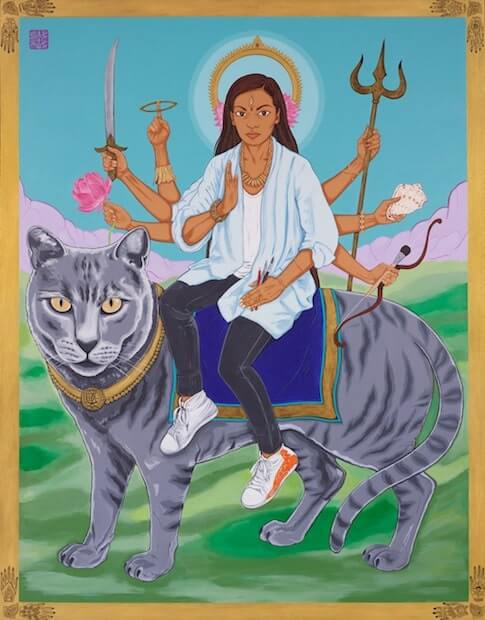
Kate’s painting, aptly titled Sangeeta and Fuji, is a hybrid characterisation of womanhood, with Sangeeta sitting on a giant cat, posing as the warrior goddess, Durga. She is holding contemporary objects and tools in her hand, like an artist’s scalpel, a pencil and paint brushes.

“I wanted to paint Sangeeta the artist, but inspired by the Hindu goddess Durga,” Kate told Indian Link. “The goddess represents a strong, feminine, creative energy with a protective force. I wanted to show Sangeeta’s cult gold jewellery and sneaker passion, combined with Durga’s traditional objects like the sword, the trident, with Sangeeta’s own artistry tools. Instead of the tiger I morphed Fujimoto, Sangeeta’s pet cat, to be her guardian creature”.

Kate’s fascination with the Hindu warrior goddess started in 2012 during her first trip to India with Sangeeta.

“I loved the portrayal of Durga that I saw there. I saw references of the goddess in Sangeeta’s work too. I researched about the goddess, her different forms, the objects she carried and their significance in the Hindu culture”.

Sangeeta and Fuji is a perfect example of a collaboration between two artists from multicultural backgrounds, illustrating a global, cross-cultural art form. Sangeeta’s own work consolidates post-colonial and hybrid cultures, exploring her context within Australia and its relationship to migrant communities. Her work interprets and represents shifts in overlapping cultural structures – sexuality, race and identity, in contemporary societies.

“Kate’s painting at this year’s Archibald is a mythical and alternative characterisation of myself,” Sangeeta revealed. “It draws out my Indian heritage combined with Chinese symbols. The contemporary jewellery I wear, and the way I hold in my hand upright in front of my chest symbolising the Chinese gesture of greeting, both portray a sharp contrast to the conventional images of the Hindu deity”.

In traditional iconography, Durga is depicted as standing on a lion in a fearless pose of Abhay Mudra, that is, freedom from fear. Here though, for ‘Goddess Sangeeta’, it is the powers of creative energy – and those of cultural assimilation – that are paramount.

The artist duo identify with everything multicultural and hybrid. Born in Hong Kong in 1970, Kate migrated from the UK with her family in 1974 and has Chinese-Welsh parents, while Sangeeta has Indian-Australian and Malaysian roots.

Both women embrace their mixed cultures and manifest the different aspects of it through their splendid works of art.

This is the sixth time Kate has been a finalist at the Archibald. The Archibald Prize is awarded annually to the best portrait of a person distinguished in art, letters, science or politics, painted by an artist resident in Australasia.

Named after JF Archibald, a journalist and founder of the Bulletin magazine, who also served as a trustee of the Art Gallery of NSW, the Archibald Prize was first awarded in 1921. An open competition judged by the trustees of the Art Gallery of NSW, the finalists exhibit their work at the Art Gallery and several pieces are now part of the Gallery’s collection.

Over the years some of Australia’s most prominent artists have entered the competition, and the subjects have been equally distinguished in their fields.

The 2014 Archibald Prize went to Fiona Lowry for her stark portrait of architect Penelope Seidler. This year’s exhibition featured 54 portraits, alongside 39 works selected for the Wynne Prize and 35 works for the Sulman Prize.


2014 Archibald Finalist Kate Beynon – Sangeeta and Fuji
acrylic on linen
© Kate Beynon

The Archibald, Wynne and Sulman prizes will be exhibited at the Art Gallery of NSW from July 19 to September 28.


Add Aussie technology to Indian milk, stir well

0
Reading Time: 3 minutes

New collaborations are set to open up between Indian and Australia in the dairy industry

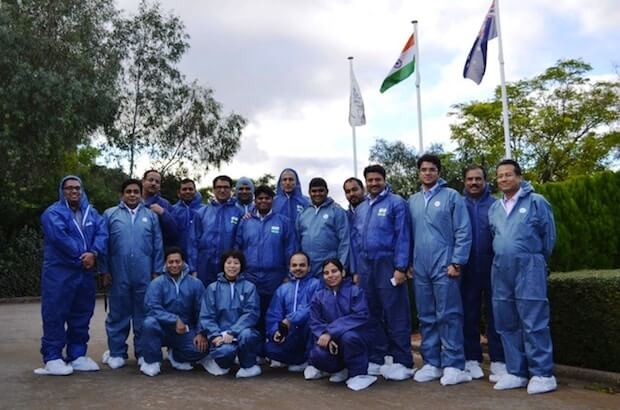
A high-level 16 member Indian dairy business delegation visited Australia this month to explore potential collaboration opportunities.

The delegation was led by Yes Bank, India’s fourth largest private sector bank, and was supported by Austrade.

Austrade has recently signed a Memorandum of Understanding with Yes Bank’s Food and Agribusiness Strategic Advisory & Research Group (FASAR) to offer Australian experience to improve the productivity and exports of India’s food and agricultural sector, including the dairy sector, as India addresses its food security concerns.

The delegation, representing some of the largest dairy companies in India, toured Australian research institutes, farms and dairy companies to understand technologies for possible use in India.

The Indian delegation was made up of chief operating officers of agri business concerns and NGOs, agri commodities experts, research scientists, veterinary scientists and entrepreneurs in the dairy industry from across the country. They belonged to cooperative and private dairy sector companies such as the International Food Policy Research Institute (IFPRI), ITC Ltd, Gopaljee Dairy Foods, Deshpande Fopndation, Lakshya Foods, Rajkot Dairy of the Amul union

Paras Dairy, Asad Farms and Kiaro Farms.

Traveling to Melbourne and Brisbane, delegates gained an insight into Australian dairy farming, processing technology, waste management, breeding, and research and practice in genetics.

“I’m excited about the possibilities in two particular aspects,” Nitin Puri, speaking on behalf of the delegation, told Indian Link at the end of it all. “These are farming procedures and genetics. There’s a lot of scope for us to learn from Australia here, and there are significant possibilities for business collaborations as well”.

Puri is the head of FASAR, a division of Yes Bank which focuses on consulting, advisory, policy and research in food and agriculture, working in the multinational, Indian corporate, government and multilateral space.

“India is the largest producer and consumer of milk in the world at 140 million tonnes per day,” Puri said. “This means that while we are self-sufficient in dairy, we are not really exporting. Australia on the other hand, produces one-tenth of what we produce, but exports half of it, thanks to its expertise in processing and livestock development”.

Another stark difference in the Indian and the Australian industry is in farm size. “In India, there would be about two to three cows per farmer,” Puri observed. “Here, it is hundred times that number. A natural advantage is pasture areas filled with open grass. We don’t have that, sadly; and because we have to make it up with consolidated feed, cost structures become involved. The yield size, currently at 6-7 litres per farmer per day, is stagnating. We are not following good practices to see a substantial increase. In Australia, even though the number of farms have gone down in recent times, the herd size per farm has gone up, tripled in many cases, so the farms have scaled up their operations”.

Unlike Australia which is very strong on value-added longer shelf-life products such as cheese and specialised milk powders (it is the world’s fourth largest exporter of processed dairy products), the Indian consumption is in liquid milk only. But with increase in health consciousness and lifestyle in the expanding Indian middle class, this need for value-add is growing, and so the domestic market will start seeing a shortage too.

India’s National Dairy Development Board has forecast milk demand to touch 180-200 million tonnes by the end of 2020. Yet a National Dairy Plan (NDP) drawn up in 2010 proposes to nearly double India’s milk production by that time.

Fortunately, stakeholders are eager to bring in momentum to see this through.

“Unlike other areas of food production, dairy is far more evolved in India,” Puri noted. “No doubt this is because of the influences of co-operatives such as Amul in the 1960s, and more recently, the involvement of the private sector. Storage, for example, is at par with global practices, as opposed to grains which is under government control”.

Changes have also been induced by factors like easy credit facilities and dairy friendly policies by the government, so that dairy farming is less agrarian and more a professionally managed industry.

“We are currently on the lookout for initiatives to have a marketable surplus in the next five to seven years”.

And this, he is sure, will come from herd genetics.

“Genetics will be a game changer. What we’ve learnt in Australia this trip has been a revelation for us. I’m foreseeing that with Australian technology helping us in farming methods and in genetics, we will be able to increase our production substantially”.

Australia showed off its dairy expertise and technology to India at the Dairy Show in Hyderabad earlier this year. It provided an engagement model to connect with the Indian industry using the global PRETSS approach (offering expertise in policy, research, equipment, technology, services and skills).

Here’s to another white revolution in India, with a bit of help from Australia.

 

Air India becomes 27th member of Star Alliance

0
Reading Time: 2 minutes

Air India recently became the 27th member of Star Alliance. The move will provide AI customers’ access to lounges of member airlines the world over and single-ticket travel across airlines and other such facilities.

“From today, we open up a completely different world for our passengers, who can now travel to over 1,300 destinations right across the network and enjoy world-class service, better connectivity and seamless travel wherever they go,” said Air India chairman and managing director Rohit Nandan.

Air India now offers all Star Alliance customer benefits to the more than 600 million passengers who travel on the network every year and Air India’s customers enjoy the same benefits when they travel on any of the other 26 member airlines across the network.

“This is an important day for us. We have said for many years that we needed a strong home carrier in the Indian market and by welcoming Air India to our Star Alliance family, we have achieved this goal,” Star Alliance chief executive Mark Schwab said in a statement.

Air India adds a total of 400 daily flights and over 40 new destinations in India to the Alliance network. The biggest growth will come from its home market, which has up to now been served by 13 Star Alliance members flying to 10 destinations and holding a 13 percent market share.

As a result of the addition of Air India, the Alliance’s market share in India has risen to 30 percent. ??Globally, passengers further benefit from a wider choice on routes connecting North America, Europe, Asia and Australia via the Indian Subcontinent.

In total the Star Alliance network counts 27 member airlines, offering more than 18,500 daily flights serving 1,316 destinations in 192 countries.

This is a timely progression as the amount of Indian travellers is continually advancing. This is exemplified by the 19 per cent increase of Indian visitors to Australia in the last year.

IANS

A global scholarship like no other

0
Reading Time: 2 minutes

One of the world’s leading providers of global business education, SP Jain is now offering full tuition scholarships to Australian students

The new SP Jain scholarship will be available to talented students enrolled in the Bachelor of Business Administration (BBA) Program, and will cover the tuition fees for the duration of the four-year course.

The full-time BBA program, which takes students to three different cities across the world, aims to give students broad global exposure on top of a comprehensive academic experience.

The course begins in Singapore, the gateway to Asia, where students spend one year, before moving to the cosmopolitan city of Dubai in their second year.

The last two years of the degree are conducted in Sydney, but more adventurous students can opt for an exchange program with business schools across Europe, South America, Canada and different areas in Asia.

This tri-city BBA program provides students with an invaluable opportunity to experience different business environments before they complete their degree.

“Scholarships are part of SP Jain’s commitment to rewarding academic excellence and enabling students from any background to reach their full potential,” said Trent Pohlmann, Head of Campus.

As the Australian business environment is continually adapting according to demands of globalisation, international exposure is becoming a well-esteemed asset for job-seeking graduates.

A recent Indonesian BBA graduate and scholarship recipient, Wan Wisani, recalled how her life had changed after being awarded the scholarship.

“I had chances to unleash my potential,” she said. “It was a good balance between studies, fun and personal growth”.

According to Wan, the highlights of the BBA were the “quality of the education, the diverse student body and the practical side of the program”.

Eligible scholarship applicants are required to have successfully completed their HSC with an ATAR of 80 or greater. The admissions team also considers outstanding extracurricular achievements.

SP Jain is ranked by Forbes as the number one Best International Business School in Australia, and the nineteenth best in the world.

For more information visit: http://www.spjain.org/bba


The soul-mate wish list

1
Reading Time: 3 minutes

Amit Sahni Ki List

Starring: Vir Das, Vega Tamotia, Anindita Nayar and Kavi Shastri

Director: Ajay Bhuyan

Rating: ***1/2

Surprises, they say, come in small packages. I went into this odd-sounding film, Amit Sahni Ki List, honestly, with zero expectations.

I came out pleasantly surprised.

The rom-com as genre is perpetually misunderstood and misinterpreted in Bollywood. Not this time.

Okay, so what’s the list about? It’s a to-do thingy prepared by our everyman-hero, a regular high-income guy, on Facebook, played by the very engaging Vir Das. Amit has put together a list (yes, an actual handwritten list) of the qualities that he wants in his soul-mate.

Life of course has other plans. Before he meets his Dream Woman (or DW, as Amit’s acronym-obsessed mum would say), he runs into the adventurous, bohemian, dog-loving, bungee-jumping Mala (Vega Tamotia, one-time Sydneysider and UNSW student, today a star in southern films).

Vega Tamotia

Their courtship is conducted with a colourful candour that is not blindingly romantic. The couple sing, dance, run across fields… but with a warning signal somewhere saying, “Babe, bumps ahead”.

It would be unfair to give away the goings-on in the second movement of this very engaging rom-com. Suffice to say that the dips and curves in the narrative all add up to an experience that leaves us smiling and sometimes chuckling.

Amit Sahni Ki List is not a great piece of cinema. It doesn’t aspire to the lofty heights of tragic romanticism (a la Ek Villain). Nor does it, thankfully, converge on a neo-classic film of the past to derive its romantic imagery (a la Humpty Sharma Ki Dulhania).

It is what it is. An uncluttered, elegantly narrated rom-com about an inherently flawed hero. He is so confused about his aspirations as a romantic entity that he ends up wallowing in the kind of giddy romanticism that he probably abhors in the movies that he sees.

As directed by Ajay Bhuyan (some significant talent here), the life and loves of Amit Sahni is both a celebration and mockery of romantic idealism. While the intelligent, witty script takes satirical swipes at Amit Sahni, it also makes room for his heart to grow into something less flighty and frivolous than what flirty films about desi casanovas tend to signify.

While Vir lords over the lush rom-com landscape (a territory surprisingly liberated from vulgarity), he gets some solid backing from the supporting cast, especially Kavi Shastri, who is terrific as Vir’s jockey-buddy (langotiya yaar). It’s amazing how talented the hero’s friends always turn out to be in our movies.

There’s also Anu Menon (remember the veejay Lola Kutty) as a break-up specialist helping Amit ease out of a ‘perfect’ relationship. Priceless.

Amit Sahni Ki List is an endearing ‘roam’ com about a restless Romeo looking for… love. And I use this abused term with a giggle since there is an astonishingly short supply of sex in Amit Sahni’s epic love life. For all his back-handed brashness, is our hero shy of making love?

Never mind the sub-texts, of which there are many, in this surprisingly entertaining nugget of a film. Just enjoy Amit Sahni’s journey from a romantic heretic to a helpless believer in true love paragliding into Chattisgarh to win over his lost sweetheart (a bit of Mani Ratnam’s Saathiya here).

The journey is peppered with funny exchanges and smart swipes at contemporary sexual mores. And yes, it’s very eye-catchingly shot by cinematographer Maneesh Chandra Bhatt whose camera makes routine cafes and streets in the metropolis appear rejuvenated.

A word about Vir Das, who grows with every performance. Here he is vibrant and woeful, frivolous and deep all at once. Watch him in that sequence where he runs into his former girlfriend, now pregnant. As she tells him why she dumped him, Vir’s face registers a deep embarrassment.

Luckily the film never needs to run into any mortifying roadblocks. It’s a smooth ride all the way. From Amit Sahni’s Ms Perfect (Anindita Nayar, tres chic) to his Miss Imperfect’s pet dog, every character here has a mind of its own.

Ditto the film. It has a heart and brains. Go for it.

To read our interview with a young Vega Tamotia click here