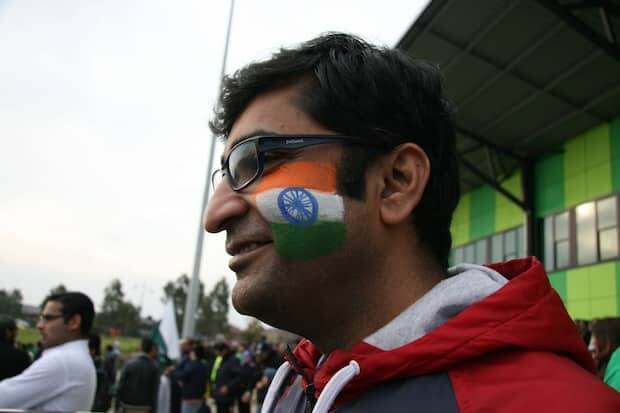
How fun was that. It wasn’t the Grand Final, but definitely it was the match of the event at the International Australian Rules Football Cup. No sign of pies, hot chips and beer to keep us fed and warm on that icy Melbourne day, but I did see jalebi, samosa, coffees and chai, thank you.
The support for both teams, the Indian Tigers and the Pakistani Shaheens (peregrine falcons), from all the Melbourne fans was overwhelming.
It was a decent turn out which shows that the locals are behind the idea of the Dosti (Friendship) Cup. It’s almost as if every opportunity Melbourne has to celebrate multiculturalism and the wisdom, creativity, and boldness of any culture, the people and their ideas, it is taken and immersed. And those who have roots in those cultures in Melbourne get an opportunity to feel home away from home, to reminisce, or to take the reins and share a part of themselves with their beloved fellow friends.
The Dosti Cup, India v Pakistan, yes, there was elation. And yes there were tears. The final score, 14.17.101 Pakistan to 1.1.7 India. Given that Pakistan played for the first time in the IARF Cup, only forming as a team as recent as in 2013, their men did exceptionally well. Well placed and controlled kicks and strong marks throughout the entire match.
Until of course India flicked a switch and turned on their spirit in the final quarter. India played too much like gentlemen throughout most of the match, amongst each other, and with the opposition; fine for cricket maybe, but just not converting at all for them.
Suddenly, to the crowd’s pleasure, there was a switch. Finally there was synergy in the hearts of the Indian players. This was what footy is all about, heart and soul, die hard determination for that ball, and a fight never to go lightly.
The players started to get to the front, lead for the ball, jumping higher to take that specky, keeping the ball moving in the direction of their goal, following up disposals, shepherding, and supporting their fellow players, talking, shouting and encouraging.
It was a hard thing to face and keep your head held high, being so far behind in the score. The Indian Tigers final spurt made the crowd see that there is much more in there. One supporter in the crowd wanted to congratulate the Tigers for finding that boldness and fight while facing that foreseeable loss, and still put on a show for them, and for India, Pakistan and Melbourne. And I’ll put in there as well a thank you myself for blessing Melbourne/Australia with a new fantastic tradition, the Dosti Cup, the next of which we will wait for with anticipation.
Talking with Indian Link after the match, the coach and captain of the Tigers, Sudip Chakraborty said he was already thinking to the future, and to next year. He agreed the players do eventually warm up and get into a synergy, as was seen in the match against Pakistan, but he admitted it can be a difficult task to take a group of men from all backgrounds and all parts of India and in such a short length of time and expect team synergy right off the cuff. “The players do warm up and start getting the swing of it as a team but it takes time, so next time we come, we might consider arriving and training together for a month in advance”.
His counterpart Ovais Rehman of the Pakistan Shaheens was gracious in his comments after the match. He told Indian Link, “For me, the game was more about the integration of two societies. We played the game for the game, rather than what is behind us. In the end, one team had to win; but I am proud of the collective efforts of both our teams”.
It’s been an incredible beginning for the Dosti Cup. All these men can proudly put their names down as having participated in the first Dosti Cup. And one day their grandkids may say to their friends, “Did you know my grandpa was an IARF player, did you know he played in the first Dosti Cup”.
Through the whole two-hour match the players were spurred on by four dhol drummers, their beat travelling each ends of the ground. It was great to have a new way to experience Australian Rules Football.
Bring it on; let’s add dhol drumming to the Australian Rules Football barracking repertoire!
Check out more from Leanne Woodward’s AFL International Cup 2014 overview:
The top contenders this year in the AFL International Cup are believed to include the Irish, the masters of Gaelic football, a game that seems to be one of the easier football codes to transition from, and then to, Australian Rules Football. Of course it is also a country where there is already a healthy rivalry, where Ireland and Australia already play what is termed International Rules Football, a combined AFL/Gaelic code.
There is much interest also in the Papua New Guineans. These guys are distinctively fast on their legs, seem somehow to always get in front to take the mark and somehow out of a scrum of players be able to make a clean and precise boot on the ball.
And the New Zealanders. Yes they are in with a good chance to take the title this year as well. Close geographically but claiming to be distinct, and who may not like to admit they love AFL, but surely they would love to admit they’d like to beat Australia at our game if ever they got the chance. Nothing like a bit of rivalry to spur you on!
However it was always going to be the Pakastan v India game that would be the grand final ‘do or die’ match of the Cup much like a Collingwood v Essendon match – that is just the nature of AFL.
And how are India faring so far; two matches, two losses.
The Indian team, from an outsider’s view, may seem a bit like Jamaica in bobsled, an AFL version of the film Cool Runnings. Yes the players are in a sense like ‘fish out of water’, many of the players having never dreamed of travel overseas, let alone out of their city or state. However talk to any of the players and you will know that each player takes the game 100% seriously, and with one aim on their mind, to kick goals out of the park for India and the game and their team.
Having this experience in Australia, these young Indian men now know what they need to do. They have ‘jumped in the deep end’ with all the courage in the world and isn’t this only going to make the game and players grow that much faster. Watching the Indian team play, men from all over the country, different languages, different backgrounds, customs and beliefs; one thing was the same, smiles all round. Enthusiasm never waned throughout any of their matches.
The AFL International Cup is an annual event with both women’s and a men’s competition. Australia does not contend in this event at present but in future as the level of play becomes more competitive in this Cup, it is always and option.
The Indian players are taking in all the experience, training and advice they can about AFL while they are here on the game’s home soil. And the team will go home proud and motivated and knowing what it takes, and what they need to do. Seeing the determination in these men’s eyes as they play, I have a feeling next year a stronger team will return, and possibly at some stage we will have a sequel of Lagaan, this time India sticking it to Australia in their own game. Now wouldn’t that be a mighty match.
And as there are talks currently of Melbourne putting in a bid for the 2028 Olympic Games and Premier Denis Napthine saying he would support a bid for the Games. Wouldn’t this be a perfect opportunity for AFL to join the Olympics as a demonstration sport, to get AFL more on the world stage, and yes for India and the rest of the world to get the chance to put it to Australia at their own game.
Leanne Woodward’s guide to AFL lingo
I couldn’t help noticing there wasn’t a lot of those usual calls from the crowd to the umpire of ‘Ball’, ‘In the back’ or ‘Holding the ball’ so here are a collection of the basics in football slang.
The most common calls from the crowd to the umpire:
Ball or Baallll, short for ‘holding the ball’: To plead with the umpire to pay a free kick for holding the ball.
Man, short for ‘holding the man’: To plead for the umpire to pay a free kick for holding the man; often screamed concurrently as the opposing fan calls Ball.
Throwing the Ball: Screamed in utter disgust when the fan believes the umpire has missed awarding a free kick for an illegal pass (Throwing the ball is a handball conducted by throwing, instead of by punching the ball)
Kicking in Danger: You will hear an outcry from the crowd when a player swings his boot at the ball, while at that very moment the opposition player’s head/hands are in the action of picking up the ball, and are in danger of being kicked.
Fifty: Called out when you believe you the opposing team should be awarded a 50m penalty
Ump: Called in desperation or disgust when you believe the umpire has missed pulling up a penalty or awarding a free kick
Some additional basic terminology
Shepherd: When you block the path of an opposing player so that one of your team members is challenge free, and has a clean path to play on. This is a legal tactic if it is done within 5 metres of the ball.
Torpedo, Barrel, Banana and Drop Punt: All are methods of kicking the ball
Specky, short for spectacular mark: a high mark taken over the top of one or more players
Sausage roll: Is rhyming slang for a scored goal
Rushed behind: Kicking, handballing or fist punching the ball through the points post in order to concede a minimal score to the opposition in defence and in doing so regain possession of the ball.
A hospital pass: A player passes the ball to a team-mate who is in immediate danger of a tackle or bump of severe force, and who has no alternative option.
A hail Mary: When a player kicks or hand passes the ball to no one in particular, or into empty space, with the hope it will end up in the hands of a team mate somehow.
Check out more from Leanne Woodward’s AFL International Cup 2014 overview:
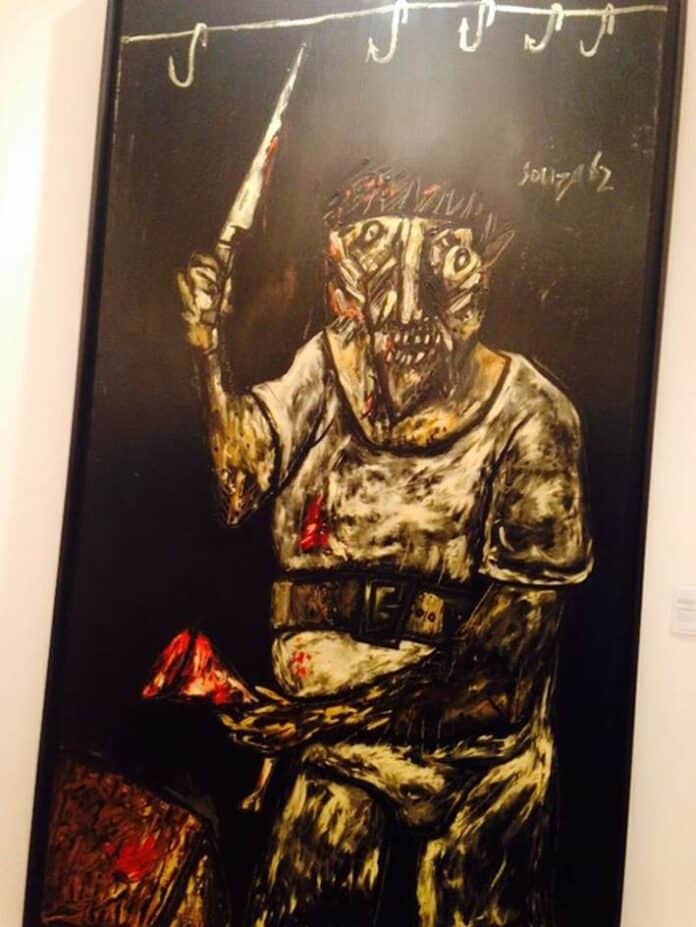
A butcher with a disfigured face against a black background doesn’t qualify for pleasant viewing. But if this artwork is F.N. Souza’s masterpiece, then one would surely look at it again to try to fathom the depth and expressions hidden behind that scary facade.
This 1962 oil-on-satin painting, titled “The Butcher”, is among the 26 selected pieces by prominent Indian artists which will be auctioned at the upcoming Christie’s South Asian Modern and Contemporary sale September 17 in New York.
The painting is expected to fetch an estimated $ 1,500,000 – 2,000,000 ( Rs. 9.3 crore – Rs. 12.4 crore).
The selected pieces have been brought to the Indian capital, New Delhi, and are open for public viewing till Thursday.
Most of these artworks come from the personal collection of Shumita and Arani Bose who run gallery Bose Pacia in New York.
Along with Souza’s painting, artworks by modern masters like Vasudeo S. Gaitonde, one of whose paintings was sold for a whopping Rs. 23.7 crore at Christie’s debut auction in Mumbai last year and Bhupen Khakhar among others are exhibited at the Taj Mahal hotel in Delhi.
In total 96 artworks, including 70 by international artists, are part of this auction. These artworks were carefully handpicked from private collections around the globe.
Souza’s representation of a butcher is believed to be very different from those by other artists who mainly used carcasses to depict butchers, but Souza’s message through it was straight – “what humanity had come to”.
Hence the black background and the distressed human figure reflects that ironic and grim representation of life.
Then there is Khakhar’s festive “Waiting for Darshan” (2000) that is estimated between $400,000 – $600,000 (Rs. 2.64 crore – Rs. 3.72 crore) whereas Gaitonde’s “Untitled” (1971) showcases his mastery as an artist who added much depth and many layers to flat surfaces using monochromatic tones.
The painting is estimated between $750,000 – $900,000 (Rs.4.65 crore – Rs. 5.58 crore).
Apart from these, Nalini Malani’s “Ecstasy of Radha 2” estimated between $60,000- $80,000 (Rs. 37 lakh – Rs. 49 lakh) is also mounted at the exclusive preview.
A butcher with a disfigured face against a black background doesn’t qualify for pleasant viewing. But if this artwork is F.N. Souza’s masterpiece, then one would surely look at it again to try to fathom the depth and expressions hidden behind that scary facade.
This 1962 oil-on-satin painting, titled “The Butcher”, is among the 26 selected pieces by prominent Indian artists which will be auctioned at the upcoming Christie’s South Asian Modern and Contemporary sale September 17 in New York.
The painting is expected to fetch an estimated $ 1,500,000 – 2,000,000 ( Rs. 9.3 crore – Rs. 12.4 crore).
The selected pieces have been brought to the Indian capital, New Delhi, and are open for public viewing till Thursday.
Most of these artworks come from the personal collection of Shumita and Arani Bose who run gallery Bose Pacia in New York.
Along with Souza’s painting, artworks by modern masters like Vasudeo S. Gaitonde, one of whose paintings was sold for a whopping Rs. 23.7 crore at Christie’s debut auction in Mumbai last year and Bhupen Khakhar among others are exhibited at the Taj Mahal hotel in Delhi.
In total 96 artworks, including 70 by international artists, are part of this auction. These artworks were carefully handpicked from private collections around the globe.
Souza’s representation of a butcher is believed to be very different from those by other artists who mainly used carcasses to depict butchers, but Souza’s message through it was straight – “what humanity had come to”.
Hence the black background and the distressed human figure reflects that ironic and grim representation of life.
Then there is Khakhar’s festive “Waiting for Darshan” (2000) that is estimated between $400,000 – $600,000 (Rs. 2.64 crore – Rs. 3.72 crore) whereas Gaitonde’s “Untitled” (1971) showcases his mastery as an artist who added much depth and many layers to flat surfaces using monochromatic tones.
The painting is estimated between $750,000 – $900,000 (Rs.4.65 crore – Rs. 5.58 crore).
Apart from these, Nalini Malani’s “Ecstasy of Radha 2” estimated between $60,000- $80,000 (Rs. 37 lakh – Rs. 49 lakh) is also mounted at the exclusive preview.
IANS
It is not only what you say that’s important, but when and how you say it
Recently in a seminar on freedom of speech at the St James Ethics Centre, in Sydney, there was an interesting discussion about when we should take action with regard to personal values.
This is something that surfaces from time to time when racial vilification, anti-discrimination and prejudice in the context of democratic principles are reported in the media. What should one do in a situation in which we see or hear words or action that go against our own strongly held beliefs and values? What does this mean when it comes to democratic principles? Should this not be important in everyday behaviours even among friends and relatives?
Most of us have fairly strongly held beliefs about what is fair, what should be done to help, being generous or helping those in need. How do we develop these beliefs? Our family, friends and experiences contribute to this very significantly. Yet, we do not always communicate or act solely on our beliefs and values. There are many times when in the name of being practical, we do not take the time to ‘right’ a ‘wrong’.
On a knowledge level, the world’s philosophies and theologies tell us how our lives should be lived. Somewhere along the way, we seem to have stopped thinking about ways of translating this into action. At a practical level, it is what we do and sometimes, what we do not, that gives us a sense of satisfaction with ourselves. It is important to acknowledge when someone has been thoughtful, while it is just as important not to be sarcastic or abrupt when someone has not been as thoughtful as you had expected.
It is one thing to ‘believe’ that we ‘should’, yet, totally another actually doing it. In our everyday exchanges, our beliefs and values are constantly informing us of what we say, what we do and the how our words and actions should be. It is important that we do not act out of habit but make a conscious effort to convey what we really mean based on our values and beliefs.
In everyday life, beliefs, attitudes and action are equally important. Quite often we equate beliefs with religious beliefs, but everyday there are many social and cultural beliefs that are expressed in our attitudes. Even without adequate knowledge of something or complete misunderstanding of an issue or situation, we can make statements that may be prejudiced or based on stereotypes. Before long, this translates into action in terms of ignoring the person or issue, or even going so far as being insulting.
Acting on one’s beliefs and values is often misinterpreted as being moralistic or self-righteous. Acting ethically means acting on the beliefs and values that we accept as universal, not peculiar or special to any one group of people. On the other hand, moral principles are informed by religious or social and cultural groups and hence the large diversity.
Every action has its beginnings in our thoughts, in our beliefs, in the attitudes we express in words, gestures, tone of voice and general demeanour.
Ridiculing something or making a joke of something that may be quite important to someone else, are all ways we express our attitude. This happens within families as well as with strangers. We see the result of such thoughtless expressions even many years later, as the devastating effect of being bullied as children, or knowingly or unknowingly being discriminated against within a family. Quite often a view is expressed without much thought as to what it may mean to the other person and is dismissed quickly as ‘a joke’. Even when we think we know someone well, there are times when we can be completely mistaken.
Given the possibility that our intention and our actions do not match every time, it becomes apparent, that we really need to be mindful of when, what and how we speak or express our opinion. Too often a callous remark is brushed aside by the speaker with ‘I didn’t mean it that way’. I guess if it wasn’t meant that way it shouldn’t have been said that way!
Herein lies the problem of good communication. The words that are said do not match the tone of voice used and hence open this misunderstanding. The intent of the speaker is not conveyed through the words and so has a totally different impact on the listener.
If we hold strong beliefs and value our ‘values’, we need to be mindful of the words we speak and the actions we take.
I am a 26-year-old male with a degree and certifications and am an actuary. Because I have been busy studying for pretty much all my life, I haven’t really focused on a serious relationship. Anyway, I have now found a girl I really like, but she called me a mummy’s boy because I still live at home and my mum does the washing, cooking and ironing for me. I think my gf was upset because when she stayed over, my mum walked into the room while we were inside and the door was closed. Also, my mum does not like me to cook, so I don’t do that. I actually have never cooked. She irons my clothes too – but I don’t see how that makes me a mummy’s boy. Is my gf right? Am I a mummy’s boy and if so, what can I do about this, Auntyji?
Auntyji says
Well, let’s talk in a language you would understand. From birth till about 5, the human child is normally dependent on someone else to provide for it. From then till about 15, you can take care of yourself, but could use guidance. From about 18 onwards, the young adult is fully capable of looking after himself or herself, and in most societies, is expected to do just that. Ok, I understand that it’s been convenient for you to live at home while you were studying and there is nothing wrong with that. But now you are a man and in all honesty, it seems as though you don’t know how to cook or clean or look after yourself. In other words, yes, you are a mummy’s boy by any measure of the standard, but this can be easily rectified.
Now, while you are living at home, chances are your mum does not want you to cook because you will probably mess up the kitchen and do it all wrong… she probably can’t stand an amateur standing at her stove stirring the pot with awkward flicks of the wrist. So, you can ask Mummyji to teach you to cook. That’s a great starting point. This will probably bring you closer together as well. If she totally disagrees and can’t stand the thought of her little laadla, her chikna sweating in the kitchen, then you have to make some tough decisions. You can either move out, or go travelling for a month or so without your mother. On your return from your travels after you have become the mard you need to be, you can insist on cooking. If this fails and your loving mum insists on treating you like a nadaan bachcha, then it’s time to move out in the real world. Your mum probably will hate it; but she will hate it more if you get divorced within a year of marriage because you expect your wife to cook and clean for you. No modern wife wants a husband like that, especially if she has a full-time job outside the home. So, all this is easily rectified, my dear young man. Go out into the world, learn to fend for yourself and by the way, don’t forget to thank your gf for pointing out the truth to you. Harsh words are always little gifts offered to us to learn more about yourself.
The boss expects too much from me
Dear Auntyji
I have moved into a new area of the bank I work in, and while my new manager is friendly, reasonable, very bright and has high standards, I find him overly critical. Now, the truth is, I have very high standards myself and work very hard, but for the first time in my career, I feel as though I am not meeting my manager’s expectations. I have been quite successful and have been given promotions and more projects to work on, but now, I am getting nervous, and instead of focusing on the job at hand, I now find myself worrying about how to meet my manager’s expectations – and if I will do something that displeases him. I am not sure if he is like this with everyone because everyone calls him a very good manager and he is very well liked. Can you offer advice for me please?
Auntyji says
Hmm. If you say you are a high achiever yourself, and that others don’t find him critical or difficult to work for, then perhaps he is holding you to the same standards he holds for himself. Perhaps he sees in you something he saw in himself. If he is not a tyrant or a bully, and is friendly and well-liked by everyone, then I suggest you need to have a chat with him and explain that you don’t want to disappoint him, and when he is critical, instead of you focusing on the task he is discussing, you think that you are not meeting his expectations. Perhaps you can ask him to give you better direction or communicate his expectations of you with more clarity, as clearly, you have previously been good at what you have achieved. If you are lucky to have a manager who is reasonable and has high standards, then you will only gain from this – being a hard worker yourself. So do set up some time with him, and tell him that you want to do well in the role and exceed his expectations. Then tell him that you feel that his being critical makes you focus on what you’re doing wrong, which is counterproductive to what you’re both trying to achieve. You will need to have this conversation soon; otherwise you will get quite stressed about this, and you don’t want that. Let me know how this turns out.
This in-season vegetable is a nutritious accompaniment to your winter favourites
Did you know the sweet potato is not really a potato at all? It is a tuberous root vegetable like the taro and yam, and as such, is full of energy and warmth. Very nutritious, it is a good source of folate and vitamins A, C and E. It is also full of fibre, which is essential for healthy digestion. There are significant antioxidant capacities found in this root vegetable, as well as blood sugar regulatory properties. Additionally, it has a low glycemic loading.
Although the sweet potato is available all-year round in Australia, its best-value months are May to August, so make the most of this vegetable now. (Pick from orange, white or purple coloured varieties).
Full of taste that lends itself easily to both sweet and savoury dishes, the sweet potato is highly versatile indeed. Below are sweet potato preparations for entrée, main course, accompaniment and dessert.
Sweet Potato Parcels
450 gms sweet potatoes, chopped
2 cloves garlic, crushed
1 tsp grated ginger
2 tsp curry powder (or equivalent masalas of choice)
1 tsp cumin seeds
½ tsp garam masala
½ tsp ground cardamom
½ small onion, finely chopped
1 tbsp plain flour
½ cup milk
1 tbsp oil
75 gms butter
1 tbsp sunflower kernels (optional)
6 sheets filo pastry
Melted butter
2 tbsp sesame seeds
Heat oil in a pan and add half the butter. Add cumin seeds, ginger and garlic, curry powder, garam masala and ground cardamom. Stir briefly, then add sweet potatoes. Cook, stirring, till sweet potatoes are well-coated with the masalas. Then transfer to a hot oven, and cook, uncovered, at 180 degrees for about 15 minutes or till sweet potato is soft.
Heat remaining butter in a pan and cook onions till soft. Add flour, then milk gradually, and stir till it all boils and thickens.
Mix together the sweet potato, onion mixture and sunflower kernels in a bowl. The filling is ready.
Lay out pastry sheets and cut each in half. Brush with butter, place filling on one end and roll up firmly.
Brush tops with more butter and sprinkle with sesame seeds. Place on greased oven tray and cook in a 180-degree oven for about 25 minutes.
Sweet Potato Curry
250 gms sweet potatoes
1 medium onion, finely chopped
Green chillies to taste, finely chopped
2 numbers dried red chillies
2 medium tomatoes, chopped
½ tsp turmeric powder
½ coconut, grated
2 cloves garlic, crushed
1 tsp cumin seeds
1 tbsp coriander seeds
1 sprig curry leaves
Salt to taste
Fresh coriander leaves for garnish.
Grind to a fine paste coconut, red chillies, garlic, cumin and coriander seeds.
Heat oil, add curry leaves and cook onions and green chillies till soft. Add tomatoes, turmeric and salt; cook till paste-like. Introduce peeled and sliced sweet potatoes and ground paste, and cook for a further five minutes. Add two cups (or enough) water and cook till sweet potato is soft.
Serve hot, garnished with fresh coriander, with rice or chappatis.
Sweet Potato Chutney
250 gms sweet potatoes, peeled and cubed
1 green mango, grated
2 or 3 red chillies, dry roasted
1 red chilli extra
1 tsp urad dal
¼ tsp cumin seeds
¼ tsp mustard seeds
Salt to taste
1 tsp oil
1 sprig curry leaves
Parboil sweet potatoes until tender.
Process together sweet potato, mangoes and roasted red chillies.
Heat oil in a pan and add curry leaves, dry red chilli, cumin and mustard seeds. When seeds begin to pop, pour over sweet potato-mango mixture.
Serve cold, as an accompaniment in an Indian meal.
Sweet Potato Pie
(This recipe comes from The Popular Potato by Valwyn McMonigal, 1992)
For pastry
2 cups plain flour
1 tbsp custard powder
1 tbsp icing sugar
175 gms butter
1-2 tbsp water
1 tsp lemon juice
For filling
500 gms sweet potato, cooked and mashed
1 cup milk
2 eggs beaten
½ cup brown sugar
1 tsp cinnamon
½ tsp nutmeg
1 tbsp melted butter
To make pastry, sift flour, custard powder and icing sugar in a bowl. Mix in butter till mixture resembles breadcrumbs. Use water and lemon juice to make a firm dough. Turn out onto a floured surface and knead lightly. Roll out to the shape of the pie dish to be used. Grease pie dish, carefully lift the pastry into it and refrigerate until required.
To make filling, combine all ingredients and beat until smooth. Spoon into pie shell. Bake at 180 degrees for 30 minutes or until set.
Serve with ice cream.
(Add cooked apples to sweet potato for a tasty variation).
Rain didn’t stop the fun at the India Australia Friendship Fair
It was a sea of umbrellas and raincoats at the United Indian Association’s flagship event, the India Australia Friendship Fair at Blacktown International Sportspark, as the clouds blanketed the skies for most of the day.
As Sydney’s Indian community soaked (literally) in the spirit of Independence Day, the rain certainly didn’t dampen the fervour of the UIA organising committee as they continued to find hope despite the bickering between the clouds and the sun.
As the green fields sparkled with tiny droplets of rain, for once it was not mesmerising, as the rain had caused a delayed start and everyone waited for the formal ceremony. Luckily enough, after a quick downpour, the skies started to clear.
Present on the dais were Premier Mike Baird, Minister Victor Dominello, Leader of the NSW Opposition John Robertson, Greenway MP Michelle Rowland, Federal MP for Parramatta Julie Owens, State MP for Parramatta Dr Geoffrey Lee, MP for Hornsby Matt Kean, MP for Fairfield Guy Zangari, Regional General Manager Western Sydney Westpac, Ross Watts and NSW State General Manager Westpac Retail, Jason Stephens.
Prime Minister Tony Abbott could not attend in person, but his message to the community was suitably uplifting: “There are around 400,000 Australians of Indian origin and I pay tribute to the significant contributions they make to our country. Australians of Indian heritage have found success in a country that rewards dedication, hard work and a willingness to serve the community”.
As the presentation began, each guest in their speech reflected on India’s rich culture. These inspiring talks took everyone back to the ramparts of the 17th century Red Fort in Delhi, reminding us of the Independence Day celebrations back home.
Reminiscing about the good old days, in his speech, Jason Stephens from Westpac made a very interesting remark about how Indian and Australian ties go quite far back in time. In 1817, the Bank of NSW was established by Lachlan Macquarie, who supposedly had acquired a taste for banking during the time he spent in India, before he became the Governor of NSW. A very old Indian link indeed!
The India Australia Friendship Fair has also helped foster such connections by offering a wonderful insight into the life of India and its people through things such as culture, food, music and dance. The stalls mirrored each of these elements and attracted revelers with promotions and brochures as they made the rounds to explore and learn more. Of course for the foodies, there was nowhere else to be as the food stalls did brisk business.
Sadly attendance came in waves and the numbers were certainly low. Unfortunately the rains played spoilsport, but the change of venue from Olympic Park to Blacktown could have been a factor too.
There were other questions as well. Did last year’s poor numbers cause this change of plan? Why did the established community stay away again this year? Why is more not being done to attract larger numbers?
However, for those present, merriments were aplenty, as expected. A day-long program of Bollywood and traditional Indian dances and musical performances kept the entertainment going while the Marathi Association stole the thunder with their breath taking dhol (drum) performance. Chimes, drums and flags stirred the crowd to step up and shake a leg.
Premier Mike Baird told Indian Link, “Events such as these give members of Sydney’s Indian community a chance to come together while also giving others, like myself, an opportunity to learn more about your fantastic culture and traditions”.
He added, “It was a pleasure to be with members of our Indian community at the Australia India Friendship Fair. I believe there is no better way to bring people together than through food, dress, dance and music”.
“I’d like to wish the Australian-Indian community of NSW a happy Indian Independence Day”.
Celebrating Independence Day here in Sydney was nostalgia for most as it brought back memories of home.
Vande mataram!
For more photos from the India Australia Friendship Fair click here
The Indian community across Australia marks Independence Day 2014
SYDNEY
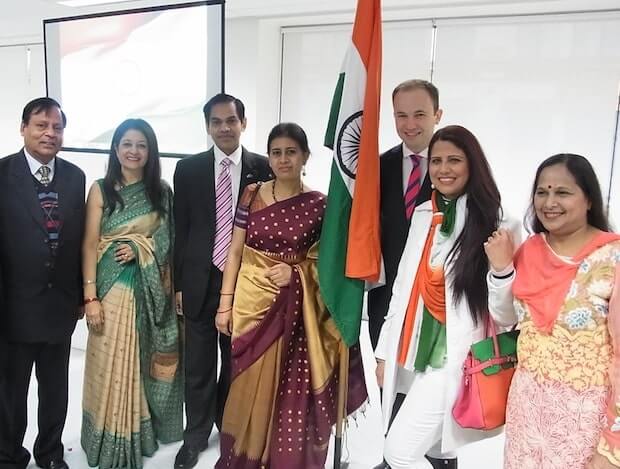
Over 300 people gathered at the new as-yet-unfurnished premises of the Indian Consulate in Sydney’s CBD to mark India’s Independence Day.
Consul General Sunjay Sudhir unfurled the Tricolour, led the gathering in a rendition of the national anthem, and read out the message of the President of India on the occasion.
The President’s missive began with a congratulatory note on having reaffirmed the power of our democracy, by changing governments this year through a peaceful electoral process. The economy was growing slowly but surely, he noted also, sensing “signs of revival”. However, he warned against intolerance and violence as a betrayal of the letter and spirit of democracy, slamming those who believe in the “poison drip of inflammatory provocation”.
The President then went on to deliver a proverbial ‘slap on the wrist’ by pointing out our shortcomings in a list of areas: our lack of cleanliness and care for the physical environment; the failure of our educational institutions “to provide quality education and inculcate the core civilizational values of love for motherland, compassion for all, tolerance for pluralism, respect for women, performance of duty, honesty in life, self-restraint in conduct, responsibility in action and discipline in young minds”, and for our democracy becoming “vulnerable to rash excess… Should not Parliament again become the great hall of sombre thought and well-debated legislation?”
To end, he sent out a call to action: Sidhir bhavati karmaja, he observed, “Success is born of action”.
The CG’s own personal message added to the festivities of the morning when he quoted poet and lyricist Sahir Ludhianvi and spoke about the deep bond which Indians will always have for their motherland. He observed that in his various interactions with the local community, their desire to participate in Indian activities in Australia was refreshing.
Helping the Indian community mark their national day, were many mainstream figures. Liberal Party MPs such as Geoff Lee and Matt Kean, and Labor Party leaders such as Michelle Rowland, friends of India who are regulars at community events, were present this time round too.
Interestingly, the festivities this year were not held at the CG’s official residence as in previous years, but in the city, early on a working day. However it did not deter attendees; rather it gave an opportunity for many to attend, as access to the city is easier.
Pawan Luthra
MELBOURNE
For Consul General Manika Jain, it was the start of a busy day no doubt.
Melbourne’s Indian community bursts into a spate of activity around mid-August, with a number of high-profile events to mark Independence Day. The first of these, quite fittingly, is the flag hoisting at the Indian consulate at 344 St Kilda Rd.
Looking fresh and chirpy in her long warm trench coat, Ms Jain greeted guests as they weathered the early morning cold.
A crowd of about fifty had gathered. The CG unfurled the Indian national flag as the members of the Indian community collectively sang the national anthem. She then read out the message of the Indian President to his countrymen.
Special attendees this time around were the members of India’s AFL team, who were due to play their important match against Pakistan the next day in the Dosti Cup.
Indeed, over chai and snacks, the discussion was all about the AFL International, which took over the imagination of the community this year as it welcomed the subcontinent teams.
Photo by AP Guruswamy
Ashish Chawla
BRISBANE
Despite being a gloomy Friday morning with a few spells of rain, the 68th Indian Independence Day witnessed people from all walks of life – students, senior citizens, office-goers, even officers of the Queensland Police Service – gather at the Indian Consulate in Brisbane.
The Indian flag was hoisted at 9am on the dot by Archana Singh, Honorary Consul of India for Queensland, along with Prof Sarva-Daman Singh, her predecessor, followed by the Indian National anthem that left a few teary eyed.
Speaking on the occasion, Archana Singh said, “Our greatest achievement post-Independence has been building on our foundations, to achieve an open society, an open economy and a multicultural secular democracy, home to all the great religions of the world. We feel proud of India’s history and her commitment to these core values and unity despite her many diversities”.
She added, “There have been great leaps made in the bio tech, solar power, green building areas as well as numerous and countless other field but whilst these figures are very encouraging, a lot still needs to be done. We aspire to an India where all women are treated with respect and are given the same opportunities as men; an India in which the weak and downtrodden are empowered, the disabled find support, and every individual is touched by the hand of progress and development, an India where every citizen can lead a life of dignity, self-respect, decency and hope”.
Wishing each other Happy Independence Day, familiar faces caught up with each other, and people new to Brisbane got an opportunity to exchange contact details. Delicious samosas with warm chai and soft sweet gulab jamuns were a perfect treat on this morning.
Tasneem Zavery
ADELAIDE
Adelaide has got to be different. Usually, the Indian Independence Day is celebrated on the weekend closest to August 15 unlike in eastern capital cities where it is observed on the actual day. In spite of having its own building, the Indian Australian Association of SA holds the event indoors at a bigger hired hall, as its own premises cannot hold the large number of attendees. As such there is no formal flag hoisting ceremony, perhaps due to the fact that there is no official representative like a Consul. But that does not take away the enthusiasm of the local Indian community in attending and presenting cultural programs from different regions. Local politicians too are enthusiastic in making their presence felt, considering the growing size of the community.
For the past several years the State Premier has made himself available to be the chief guest, as was the case this time around. Besides the Premier Jay Weatherill, Minister Susan Close, Federal MP Tony Zappia, all from the Labor side, were present. David Ridgway and Jing Lee both Liberal MLCs represented the Opposition.
The planned indoor flag raising ceremony was abandoned because of a mechanical fault and the event started with the national anthems of Australia and India.
Welcoming the guests, the Association’s President, Rakesh Mohindra, said India’s freedom did not come easily and it took considerable time and struggle, albeit peaceful. Celebrating the day was to recognise the sacrifice made by many thousands and a kind of paying tribute to those freedom fighters. With Indian professionals and skilled migrants now working world over, “there is no country where Indian presence is not felt,” he noted. After briefly pointing out many of the advancements India had made since Independence, he said there was every possibility a large contingent of Indian business people and tourists would come to Adelaide for the Cricket World Cup match India would play at the modernised Adelaide Oval next February. This could help to strengthen the ties between India and the state which has now an Indian population of 24,000.
Chief Guest Jay Weatherill revealed in his speech that he was leaving for Delhi the next morning for trade talks. Standing under an arc light with tiny beads of sweat shining on his forehead, he said “I am now being well prepared for Delhi’s 33 degree heat and humidity”. Acknowledging the contribution of the local Indian community to the State’s economy, he said, “I challenge you to make even greater contribution. I am visiting Delhi and Mumbai to explore specific trade opportunities for SA industries that will benefit both India and our state”.
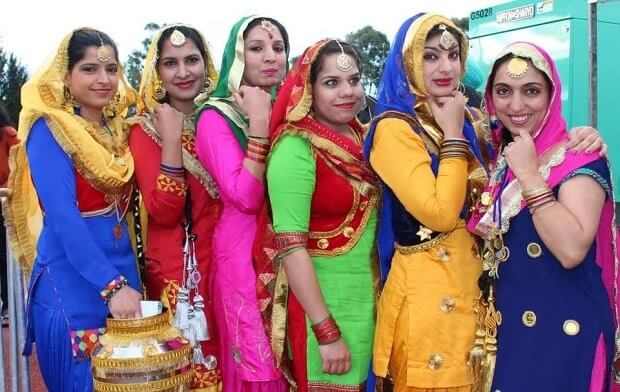
With the speaking segment over, the cultural canvass of India was unfolded with dance items from various parts of the country: South Indian Bharatanatyam, Gujarat’s garba and Punjab’s bhangra. Of course there were the ubiquitous Bollywood numbers presented by young children aged four to seven, on freedom-themed songs like Sare jahaan se and I love my India, evergreen items for this occasion. The Keralites had the last word, with a ‘lungi’ dance of a different kind, playing the traditional Chandai, large drums hung from the shoulders. Talk about ending with a bang!
On a return visit, memories are stirred of an idyllic childhood in India
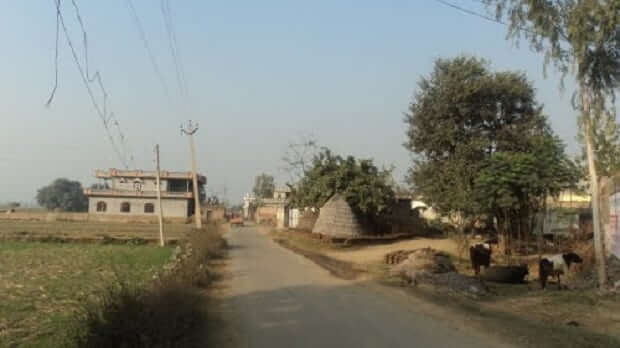
Tucked away between the two relatively small Indian cities of Amritsar and Batala is a peaceful little village called Pakharpura. That’s where I grew up. In a humble little home erected with bricks and mud. And a lot of sweat and hard work. Each time I go to India, I try and get to my village. I visit my home there, greet the people who were part of my growing up and are always so proud and excited to see me.
Earlier this year I visited Pakharpura after a few years away. A 30 minute drive from Amritsar and I was standing outside the street leading to my ancestral home. I got out of the car and walked along the dusty little village lane. It seemed quite narrow. And tired. Nothing like the vibrant, busy lane it was during my youth. Back then, that street was always abuzz with life. All day, every day. Each step that I took through that street brought back memories. Abundant memories of a childhood spent playing in that street. In that village.
Half way down the street, on the left, stood the crumbling frame of a weary, old house. The house where I grew up. The house where I took my first steps. Where I spent the first 13 years of my life. For a moment I paused and looked at my house from a distance. And it seemed as if the house was squinting back at me as well. As if trying to spot the kid in me that once used to play in its yard. I moved closer as if to say, “Yes, it is me. I have come back. To see you”.
In a street full of homes inhabited and decorated by the people living in them, this house of mine looked deserted and desolate. The brick walls, now half deprived of the mud that once held them together, had started to sag away. Weeds sprouted out from little cracks.
I inched closer to the tall, wooden front door. It suddenly did not appear that ‘tall’ to my grown up self. I pushed at it gently. It welcomed me in with a tired, elderly squeak, as it opened.
As I stood in the front yard, I looked around at the entire house. It was silent, and barren. An empty old house with worn down rooms and crumbling walls. But somehow, as I glanced across, I could feel life flash back at me in every inch of that house. Right in the centre of the yard used to be the kitchen. Made of sun-dried clay. It had perished now but I could still see my granny trying to start the fire in that open kitchen, to cook supper.
I went inside and explored some of the rooms. In between the cob webs and dust being kicked around by the piercing sun rays, I could hear the laughter of two little kids running in and out. Me and my little sister.
I went around the whole place. Gently touching bits and pieces. And all those bits and pieces, I felt, talked back to me.
In a little while it was time for me to leave. So I stepped out to the front door once again. This time I sat down for a moment and glanced across to the far corner of the street. Just like I used to do every evening as a kid, to watch my dad come home after a day’s work in the city.
Before I left, I looked back at my house one last time. And I gently whispered to it that I still felt connected to it. That I loved coming back to it. That it may be lean and frail now, but it still sounds, and smells, like my childhood.