Home Blog Page 925

Australia helps provide relief to flood victims

0
Reading Time: < 1 minute

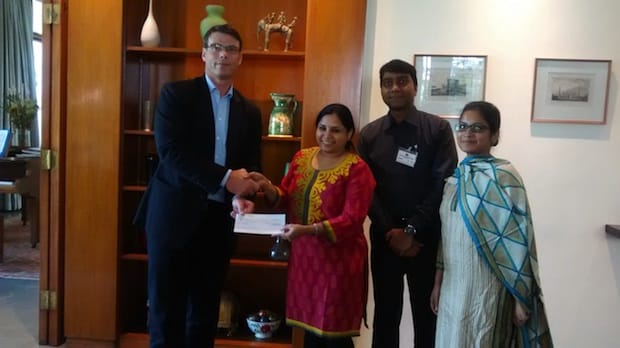
Australian High Commissioner Patrick Suckling offered his sympathies to the people of flood-hit Jammu and Kashmir as he presented a cheque for 15 Lakh rupees to ActionAid India to provide immediate relief to flood victims.

The funds, provided under the Australian Government’s Direct Aid Program, will be used to buy and distribute food, medicine, toiletries, woollens, blankets, clothes and other non-food items to 3,200 people.

Mr Suckling said the Australian Government was deeply saddened by the devastation in Jammu and Kashmir, which had affected hundreds of thousands of people.

“Jammu & Kashmir is battling one of the worst floods in 50 years. Our deepest sympathies are with the victims of this terrible natural disaster,” he said.

“We are glad to be able to partner with ActionAid to provide immediate relief to 3,200 people in the most severely-affected areas.”

The Direct Aid Program (DAP) is administered by the Australian High Commission in New Delhi and provides small grants for activities that support development and strengthen communities in India and Bhutan.

ActionAid began operations in India in 1972 and works to help the community in areas such as land justice, livelihood development, alleviating urban poverty, the empowerment of women and girls, emergency relief and disaster response.

It has helped provide relief and rehabilitation to victims of numerous natural disasters over the last two decades including the Uttarakhand floods and Cyclone Phailin.

PM Modi on the big screen, live at Times Square

0
Reading Time: 2 minutes

Modi’s speech to be beamed live at iconic Times Square

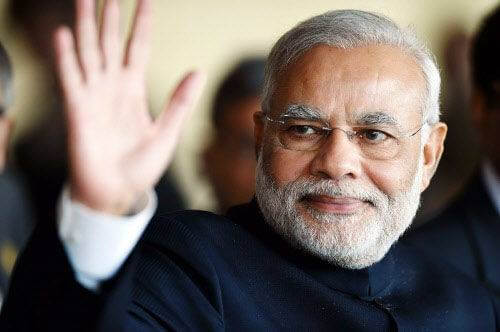
Prime Minister Narendra Modi’s address to the Indian community at a grand public reception at Madison Square Garden on Sunday 28 September will be beamed live on giant screens at New York’s iconic Times Square.

With no more tickets available for the event at the huge multi-purpose indoor arena in Midtown Manhattan with a capacity of over 20,000, New Yorkers will be able to watch it in the heart of the city at Times Square.

The Indian American Community Foundation (IACF), organisers of the mega event, signed a memorandum of understanding for the live telecast with Times Square Alliance for this purpose.

Modi’s speech in Hindi will carry English subtitles. For the audio, people can either dial a toll free number to listen the speech live or download an app on their smart phones.

To be emceed by the first Indian-American Miss America, Nina Davuluri, and PBS Weekend Newshour’s Indian-American anchor, Hari Sreenivasan, the event will also be broadcast live on a number of TV channels as well as streamed online on pmvisit.org website.

Given “an overwhelming response for this historic event” and “the tremendous interest from the Indian American community”, general admission tickets have been distributed through a lottery.

Meanwhile ICAF, “a not-for-profit promoting cooperation between the United States and India and advancing the shared values of democracy, inclusive economic development, and mutual respect”, is reported to have raised $1.5 million for the mega event.

The costs of this event are to be covered by contributions from the general public, and the foundation is in the process of applying for tax exemption, ICAF said.

Money raised in excess would be donated to charitable and non-profit organisations.

IACF is also bringing out a glossy souvenir for the occasion celebrating the Indian diaspora and sponsors of the pages are being offered complimentary seats. Cost of advertisements in the souvenir range from $2,500 to $35,000.


Delicious news for Indian chocolate lovers

0
Reading Time: < 1 minute

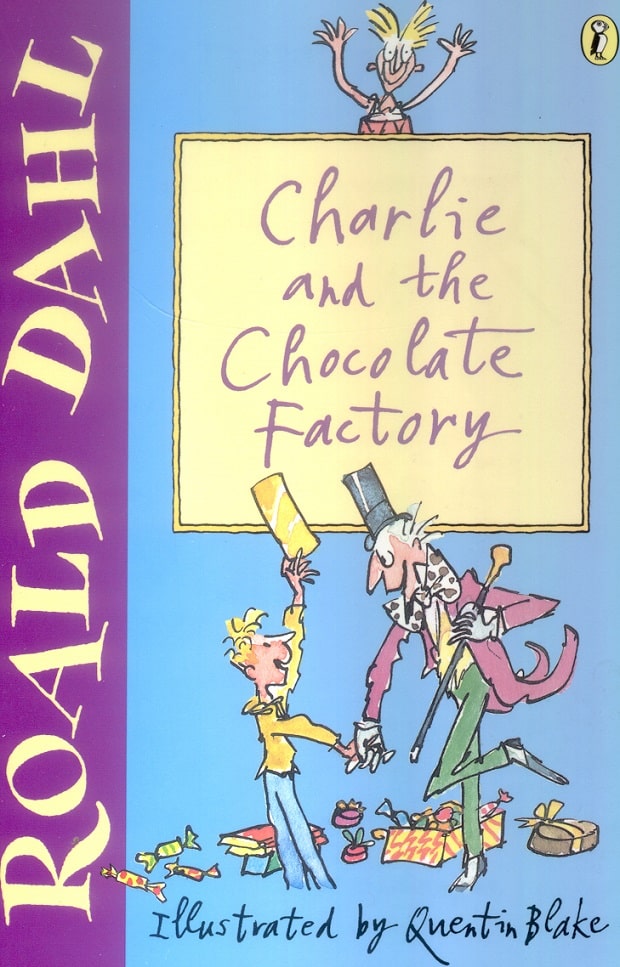
A new contest in India celebrates the golden jubilee of Roald Dahl’s classic

How much does Charlie pay for his winning “Wonkas Whipplescrumptious Fudgemallow Delight” bar? Where do Oompa-Loompas come from? Answers to these questions from popular children’s book “Charlie and the Chocolate Factory” can win you a holiday to London.

Puffin India in association with amazon.in have organised “Whipple-scrumptious Roald Dahl Inspired London Holiday Contest” to celebrate the 50th anniversary of British author Roald Dahl’s celebrated children’s book.

The contest ends on Tuesday 30 September, and five winners will get to do many activities revolving around the author and this magical tale.

“The winners will get to watch the spectacular Charlie and the Chocolate Factory musical in London’s West End, visit The Roald Dahl Museum and Story Centre and take a trip around the London offices of Roald Dahl’s British publisher Puffin,” said an official statement on Wednesday 17 September.

“This story is all about imagination, travel and making your dreams come true and we are delighted to celebrate the 50th anniversary of this beloved classic in this very special way,” said Hemali Sodhi, publisher, Penguin Random House India, in a statement.

India makes its way to Mars

0
Reading Time: < 1 minute

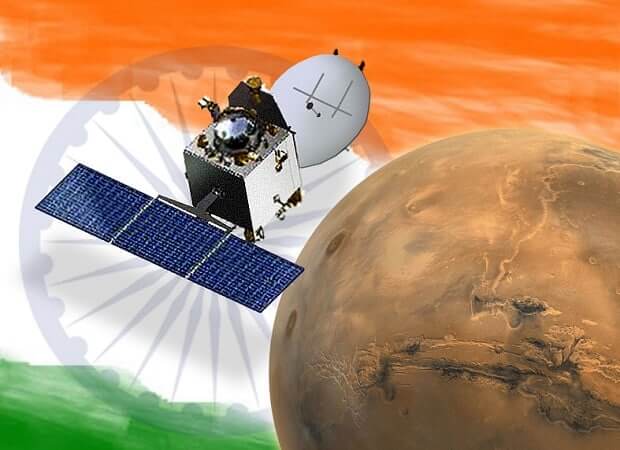
An Indian spacecraft will enter Mars today for scientific exploration of the red planet, after a 300-day voyage through inter-planetary space, a space agency official has stated.

“After cruising through 666-million km across the solar orbit, for over nine months, our spacecraft will be inserted into the Martian orbit on 24 Sept at 7:30am,” said Indian Space Research Organisation (ISRO) scientific secretary V. Koteswara Rao, at a preview of the mission’s tryst with the celestial object.

The orbit insertion will take place when the spacecraft will be 423 km from the Martian surface and 215 million km away (radio distance) from Earth.

The ambitious Rs.450-crore ($70 million) Mars Orbiter Mission (MOM) was launched 5 November, 2013 on board a polar rocket from the spaceport Sriharikota off the Bay of Bengal, about 80 km north-east of Chennai.

“India will be the first country in the world to insert a spacecraft into the Martian orbit in its maiden attempt if the operation succeeds and also the first Asian country to reach the red planet’s sphere,” Rao claimed.

The story untold

1
Reading Time: 3 minutes

Multicultural broadcaster Kumud Merani has been recognised for her recent radio documentary

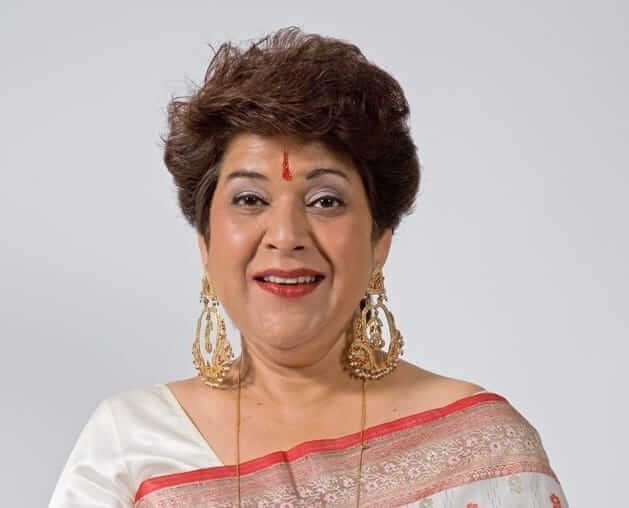
Kumud Merani is a remarkable woman. With a career in media spanning more than 40 years, including 30 years at SBS, this month she was named Journalist of the Year at the Multicultural and Indigenous Media Awards for her impressive body of work, including the recent radio feature documentary The Story Untold.

“I was very surprised!” Merani told Indian Link. “I worked very hard on this documentary and it was nice to be recognised, and I am very grateful to Shaoquett Moselmane [the chairman] and his team, but the best award is the love and appreciation of the listeners”.

The Story Untold is a unique radio feature detailing the surprising connections between Indigenous Australians and India’s first tribal inhabitants.

Last year the Max Planck Institute in Germany released a research paper outlining DNA analysis that proved Indian tribes had migrated to Australia at least 4,300 years ago. Inspired by this concrete analysis and her passion for ancient history and culture, Merani decided to embark on a project of her own.

The first composite work of its kind on this subject, The Story Untold is based on Merani’s three months of research into history, geography, anthropology, science, DNA and spirituality.

Merani interviewed scholars from across the spectrum including geneticists, archaeologists, Indigenous community leaders and anthropologists. “I had never thought about the links between Indigenous Australian and Indian culture before,” she said. “Deep down, we are all one”.

“With the soundtrack, I was conscious of blending sounds of the didgeridoo and tabla to underscore the cultural connection between Indigenous Australians and Indians”.

The work was made accessible to a Hindi audience through the SBS Radio Hindi Language Program, as well as to Indigenous Australians through the Living Black program on NITV, and the wider Australian audience through the World News program on SBS Television.

“It is an imaginative production,” Merani said. ““I have always been interested in history and people, so this combined my two loves and I wanted share that”.

It is unsurprising that Merani has been rewarded for a work with its roots in history and cultural migration. After being one of the youngest lecturers at the University of Mumbai while she was studying for a Masters in ancient Indian history and culture, Kumud Merani later became the first television news reader and anchor at Doordarshan, as television was implemented in Mumbai.

After arriving in Australia with her husband, Merani followed her passion for media and became a television newsreader at SBS World News. After a short time in the role, she found her niche in radio becoming an Executive Producer at SBS Radio Hindi.

“As a multicultural broadcaster you’re reaching out to the community and giving them exactly what they need,” Merani said. “You’re reaching the heart and soul of the community”.

“With new migrants, they have settlement issues, immigration issues, visa issues, you can help them. You’re speaking to them in their voice and have that shared experienced they can connect with. Multicultural broadcasters fulfil a very special role”.

An accomplished journalist, Kumud Merani was awarded the Asia Pacific Union Broadcasting Award 2004 for her documentary Sweet Sorrow, about the lives of Fijian Indians. In 2008 she was awarded the International Asian Radio Award for her documentary Jumping The Fence, which told the story of the Anglo-Indian community.

“Each story has been embedded in my heart,” Merani said. “They’re like children; each is dear, each has different qualities that make it special”.

A speaker of eight different languages, Merani believes “luck and hard work” have been the foundation of her success in the world of media.

“When I’m planning a topic, I become obsessed. I think about it day and night; I walk it and talk it”.

Merani says she hopes her achievements provide inspiration for the younger members of the Indian community. “It shows that if you work hard, you can succeed”.


Enriching NSW with cultural diversity

0
Reading Time: 5 minutes

The recently appointed Chair of the Community Relations Commission hopes to better engage with the youth and build a harmonious society

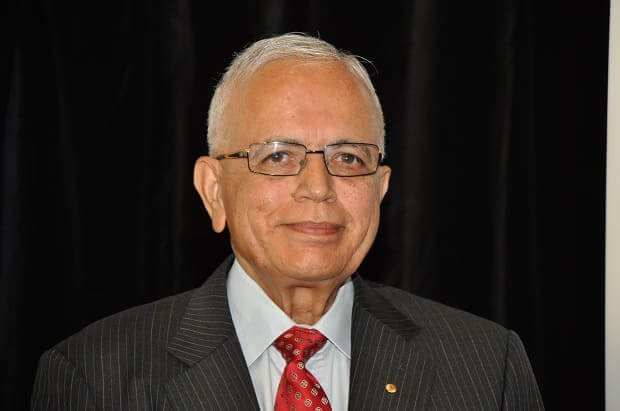
Dr GK (Hari) Harinath OAM has one goal as the new Chair of the NSW Community Relations Commission, to make the state of New South Wales the most harmonious, culturally diverse, and tolerant place for everyone to live.

“There are more than 200 migrant groups, and more than 250 languages spoken in New South Wales,” Dr Harinath says.

“Where else can you find such a rich, culturally diverse population? Cultural harmony is what we’ve got to maintain. It’s not about what the government can do, it’s about what each one of us can do”.

He should know. As a Tamilian who was born and brought up in Hyderabad, he’s married to a Bangalorean, raised his kids in Australia, and has warmly welcomed an Aussie son-in-law and an Aussie daughter-in-law into his family. Ask him about cultural harmony!

Dr Harinath believes it is important to lead by example, and community leaders should “spread the word of harmony, peace and love within multicultural and interfaith communities”.

The new Advisory Board of the Community Relations Commission (CRC), soon to be known as Multicultural NSW, has recently welcomed new representatives from almost all the major cultural backgrounds active in the State. This includes people from Indigenous Australian and Anglo-Celtic backgrounds.

“The CRC is there for everyone,” Dr Harinath says. “I was very keen to include people from a variety of cultural backgrounds to ensure new ways of bringing together all Australians”.

The Advisory Board will also have two Youth Members who will act as representatives for the younger generation. Dr Harinath hopes they will assist him in harnessing the power of social media to engage with a different demographic.

“I strongly believe in dialogue with the youth,” Dr Harinath says. “Youth are the best investment of today for the future of tomorrow”.

With regard to the jihadist elements among youth in the Australian community, with some members going overseas to fight, Dr Harinath believes inclusivity and education are the key.

“It is a huge task to prevent them from feeling isolated or disenfranchised. We need to ensure we put in place education programs and engage with youth of all cultural backgrounds”.

The role of the mainstream media in ensuring a harmonious society for all Australians is also on the agenda for Dr Harinath.

“The good thing about a democratic society,” Dr Harinath says, “is that people can engage in discussions with each other and this brings a great deal of vibrancy to our society. We are lucky to have a multicultural society which bring lots of positive elements. Look at the talent it brings in from various cultures; look at the work forces it brings; look at the economy it generates. Multiculturalism brings lots of positives to Australia, but of course we need everyone to promote it and the best people to promote this are the media”.

Dr Harinath believes the Commission needs to work more closely with the media to make mainstream sections more aware of the benefits of multiculturalism, rather than allowing shock jocks to control the message. He also hopes to see more culturally diverse content on television reflecting the diversity of Australian society.

“I am a strong believer in consultation and negotiation,” Dr Harinath says. “There is nothing that can’t be resolved through these processes”.

On the idea of finding the balance between the values held relevant by people in their country of birth, as compared to the practices in their adopted homeland of Australia, Dr Harinath believes it is more than possible to create synthesis between the two.

“Being a migrant of 43 years myself – I come originally from India – I strongly believe in integration. I believe if you call Australia home you should integrate into society, but there is nothing wrong with holding on to and practising the values and beliefs from your homeland”.

With regard to the federal government’s recently scrapped plans to repeal section 18C of the Racial Discrimination Act, Dr Harinath commends his predecessor.

“I think the Commission made the right representations to the Minister, and the Premier wrote a very strong letter expressing the views of the people of New South Wales. I think at the end of the day we got a good result”.

“The fabric and ethos of the Community Relations Commission will be pulled down if we allow racism in society,” Dr Harinath says. “If we see racism in the world, we have to make sure we act against it”.

Dr Harinath believes there are several outstanding multicultural role models and ambassadors in Australia today.

“Marie Bashir, who is only now stepping down, is a people’s person. She came from a different background and served two terms as Governor. The people of New South Wales love her. She is a role model for multiculturalism”.

“I would also give credit to Stepan Kerkyasharian, who did a great job as a former chair of the CRC for more than 25 years. He has done a fantastic job to get Multicultural NSW to where it is today”.

Dr Harinath is also a fan of former CRC Board Member, and his former colleague at Cricket Australia, Sam Almaliki as well as other sporting greats from multicultural background such as former Canterbury Bulldog player Hazem El Masri.

Another passion of Dr Harinath’s is sport. He was Chairman of Cricket NSW from 2007 to 2012 and was also a member of the Cricket Australia Board. Dr Harinath sees sport as “a great leveller in life” that opens the door to promote multiculturalism among different members of the Australian community. He points out that various sporting bodies have taken up multiculturalism as an issue such as AFL, cricket and soccer.

“For me the best thing is watching little kids playing sport. They just play the game, they don’t see anything else. The biggest asset with sport is that it creates harmony, and has the principles of multiculturalism, everything in a capsule. I strongly believe sports have a great role to play in promoting harmony in society”.

Dr Harinath believes the Indian community, which is still up and coming in this country, can learn from the more established migrant communities in Australia.

“All the different migrant communities have aspects the Indian community can draw upon,” he says. “The Indian community has got to see what unity brings. Unity is strength, division is destruction”.

A grandfather of two, Dr Harinath believes the crucial thing to teach children is tolerance and respect of human values. He hopes his grandchildren, aged two and four, can grow up in a “harmonious, safe and diverse New South Wales which accepts all cultures and religions”.

With their grandfather at the helm of the CRC, this dream for his grandchildren can be achieved.


 Photos courtesy Warren Duncun – Multicultural NSW

Tickle it with some… pickle!

0
Reading Time: 3 minutes

Add some oomph to your veggies and introduce them to achari spices 

Pickles are, perhaps, the most revered condiment in Indian cuisine. An age-old technique which began as a means to preserve excess produce, today pickles are a very important part of Indian food.

There is a ginormous variety of pickles, or achars as we like to call them, in Indian cuisine today, and every household seems to have a favourite one too. Unlike other regions of the world, Indian pickles are slightly different in that a large variety of spices are used to maximise the flavour. All kinds of ingredients are used to prepare the pickles – vegetables, fruits, seafood, meat, the list is endless.

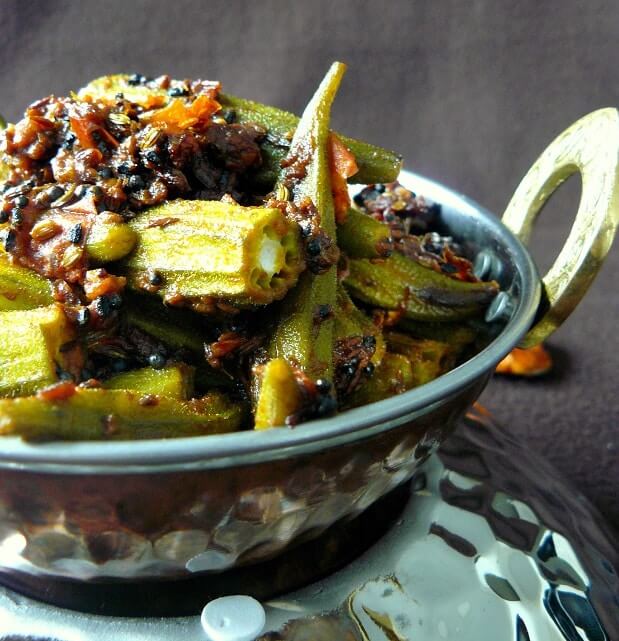
This recipe is not that of a traditional pickle, but uses the delicious spicy, tangy, chatpata (for lack of a better word!) masala incorporated in the pickle. Using the pickle masala as a base for the dish is a genius idea, as the flavours incorporated are not just tasty but extremely well-balanced as well. Saves a whole lot of time; it is as if you are using a pre-packaged masala where you throw all the ingredients into a pan and the dish is done.

You can use any type of pickle masala for this dish. If you like the spicy, tangy ones, use the masala from a North Indian style mixed vegetable pickle. Or just open your favourite jar of pickle, no matter what type and spoon a bit of the masala from it.

A highly versatile preparation, you can use this recipe for a variety of other vegetables like potatoes, taro (arbi), sweet potato, paneer or even prepare a mixed vegetable dish. And again, this recipe does not have to be restricted to just vegetables; this achari recipe works beautifully with meats especially chicken.

Okra or bhindi is especially recommended for this dish because of its health and nutritional goodness. With high fibre content, okra also has high levels of folate, vitamin C and antioxidants. It is also a great source of calcium and potassium.

Most Indians tend to pick up frozen bhindi at the supermarkets but the baby okra available in most farmers’ markets in Australia are delicious and fresh, lending additional flavour to your dish.

With Diwali fast approaching, this bhindi preparation is perfect to add to your thali. An out-of-the-box recipe, yet one that incorporates the familiar Indian flavours, this dish can turn out to be a conversation starter at your Diwali parties.

Mustard oil lends a nutty flavour to the dish while the other spices help to reinforce the flavours from the pickle masala. A generous squeeze of lemon juice completes the dish.

The medley of aromatics and spices and the nuttiness of the mustard oil, coat the shallow fried okra beautifully. A winner of a dish!

Achari Bhindi

500 gms baby okra (bhindi)

3 tbsp mustard oil

1 ripe red tomato, chopped

2 green chilli, slit

½ tsp mustard seeds

¼ tsp fenugreek seeds

¼ tsp cumin seeds

½ tsp fennel seeds

¼ tsp nigella seeds (kalonji)

1 ½ tbsp pickle masala (or suit to taste)

½ tsp turmeric powder

Salt to season

1 tsp lemon juice

Cut off the top ends of okra, wash and pat dry. (Since I used baby okra, I chose to leave them whole).

Heat mustard oil in a pan, crackle the mustard seeds and then add fenugreek, cumin, fennel and nigella seeds.

Add the chopped tomatoes and green chillies.

Add the turmeric powder, okra and season with salt. Mix well.

Cook on low heat and turn only occasionally so that the okra remains dry and not gooey and slimy.

When almost done, add the pickle masala and mix through.

Remove from heat and add lemon juice.

Serve hot.

Hindi lingo poets Eppingo

0
Reading Time: 4 minutes


The profound, the spiritual, the humorous. There was poetry of all kinds at the fourth annual Hindi Kavi Sammelan (poets’ conference) held in Epping in mid-September.

Organised by the Indian Literary and Art Society of Australia (ILASA), the event was held to celebrate Hindi, the fourth most-spoken language in the world, on Hindi Day.

Presenters at the conference, all from Sydney’s Indian community, greeted each other warmly on the occasion before presenting their creative works. They help keep the language alive and thriving in a country where, according to the last census, it is one of the top ten spoken languages.

The kaviyon ki goshti began appropriately with chai and samosa as the audience, mostly poets, settled in.

The works presented centred on relationships, assimilation, life as migrants in a foreign land, and comments on the human condition; even politics and nationalism got a mention.

Poets Anu Shivram and Sumathi Krishnan touched on the spiritual as their theme. While Ritu Bhamra, Swati Tiwari and Gaurav Kapoor added pleasant moments from life going past.

Ajay Bajaj wrote on friendships, Vimla Luthra on childhood memories, Suresh Makkar on the word of elders and Mrinal Sharma an ode to his mother. All examined the significant role of relationships in our lives.

The profound came from the works of Rekha Rajvanshi (Zindagi dhundh hai…), Ashraf Shaad, Sonu Sarda, Sukhpreet Dhamun, Jasbir Singh Ahluwalia and Dilip Chopra.

The socialist poetry of Harnam Singh Sandhu, a poet and social activist visiting from Haryana, was particularly imposing; his passionate delivery made it one of the stand-out presentations of the evening.

Swati Mishra was strong and impressive with her Bharat ki beti, a lament on the increasing sexual violence against women in India and a call out to our betis to fight against this scourge.

The humour came from Prabhat Sinha’s take on contemporary Indian politics, Dave Passi’s account of a newly arrived migrant, and Harmohan Walia’s report of being punk’d by his wife on April Fool’s Day.

As for the melodic, we had Vijay Kumar’s geet in perfect chhand aur matra, and Ashraf Shaad’s ghazal in poetic tarannum.

And there was the theatrical as well. Nukkad Natak, a joint presentation by Abha Kumar and Punam Wahan, was high on entertainment value. With their poetry set to Bollywood tunes, they spoofed the Indian community here on their many foibles. Absolute gold!

In similar performance mode, Rajpal Sandhu impressed with his exuberance and energy in Heer, a Punjabi presentation.

Garima Trivedi and Sukhpreet Dhamun helped coordinate the proceedings from the executive’s desk alongside ILASA Chair Rekha Rajvanshi. Both poets themselves, they were eminently suited to the role of MCs: Garima presented a picture of graceful dignity, and Sukhpreet looked the quintessential Hindi kavi, complete with long hair specked with grey tied in a knot at the back, kurta and jeans, and yes, jootis too (he probably arrived with a khadi jhola dangling from one shoulder)!

Rekha Rajvanshi told Indian Link later, “The annual Kavi Sammelan is a labour of love. It is still baby steps for us, but I am very pleased with the way in which it is growing each year”.

Rekha revealed she had to hunt out the poetically inclined from within the community, for the inaugural version of Kavi Sammelan. And yet today, they are beginning to flock to her, as she provides a valuable platform for those with talent. Indeed Consul-General Sunjay Sudhir could not resist reciting a few lines himself at this year’s event, choosing Faiz Ahmed Faiz. (Earlier in the evening, he had lit the ceremonial lamp to officially inaugurate the event). Similarly, Gurdip Singh, Deputy Mayor of Hornsby, was keen to present as well this time round, and picked Harivanshrai Bachchan’s Madhushala, a suitable choice especially as it refers to “the wine that is poetry”. (Did not Virginia Woolf also say similarly, “Language is wine upon the lips”?) Pouring himself a nip from the very same carafe, was Paul McKenzie, for whom it was a maiden attempt at Hindi poetry.

Rekha must no doubt be pleased with these efforts to participate, especially as she has plans to go much larger next year.

In a welcome move this year, other languages from India were included as well, notably Santokh Ambalvi, Dave Passi and Harmohan Walia who wrote in Punjabi, while Tamil poet Beema Jaan Youssaf presented a Tamil poem with Hindi translation, as well as a tribute to Tamil great Subramaniam Bharati whose death anniversary had just passed.

True to their purported aim to encourage the arts, ILASA this year also honoured community artist Ramesh Chandra Alandkar who at 84 continues to produce creative works, despite battling ill health. He was presented with ILASA’s Life Time Achievement Award “for serving the community through art” and a cash prize of $251.

As well, artist Gauri Torgalkar Nadkarni was offered an opportunity to present her works on canvas: even as the gathered community were introduced to her work, they played their part in helping make the mehfil ever so colourful.

A few good men (and women)

0
Reading Time: 2 minutes

The Indian community in New South Wales is beginning to make its presence felt

The Indian community in New South Wales is touching 150,000, and though in its adolescence compared to the Jewish, Arabic and Chinese communities, is slowly starting to make its mark in the multicultural and mainstream spaces. While there are a few who have been public about their achievements, there are many others who are working quietly and confidently behind the scenes and are making a difference in the corporate and public spheres.

Three of the many who have burst into the public scene recently are Dr Hari Harinath (our cover story) as the gentle, guiding force behind all things multicultural in New South Wales, the corporate leadership of Peeyush Gupta, and the political forays of Raman Bhalla.

While the vision of Dr Hari Harianth is detailed in this issue, many became aware of his achievements through cricket as he worked and managed his way up from the local cricket club at Drummoyne to Cricket NSW, and then Cricket Australia. He brought his expertise to the affairs of the local Indian-Australian community with his involvement in Parramasala, and though the leap from sporting administration to cultural advising was long, he has done well to keep the festival alive even with dwindling funding from the NSW government.

Now, as new chair of the Community Relations Commission, Dr Harinath faces challenges in dealing with the sometimes fractious nature of the state’s multicultural fabric. Contentious issues such as jihadi youth and media shock jocks will no doubt keep him occupied in coming months.

Peeyush Gupta is a corporate dynamo, well-respected in the finance world for his strategic vision and thinking. After building and selling his own financial services company, he’s about to join the Board of the National Australia Bank and also take over as Chairman of MLC from November 2014. Peeyush is the first Indian-Australian to have reached this pinnacle of success on a corporate board; still in his early 50s, it will be interesting to map his journey over the next decade or so.

Raman Bhalla is yet another emerging Indian-Australian who we will be hearing more from shortly. He has just been nominated by the State Liberal Party to contest the seat of Blacktown against Labor bigwig John Robertson in the March 2015 elections. Bhalla is the face of the younger generation of Indian-Australians who want to make a difference through local politics. Taking on the Opposition leader in a safe Labor seat is indeed a big task, but in a constituency which has more Singhs in the local directory than Smiths, perhaps it’s a good place to start. Community support will be important, but equally so, this will also be a test as to how the Liberal Party supports Bhalla.

There are other quiet achievers in our community working to place the lot of Indian-origin Australians in a better light – Neville Roach, Mala Mehta, Darshak Mehta, Sheba Nandkeolyar, and others in equity and private firms behind the scenes. Their work is indeed inspirational and should be applauded.

What’s up, doc?

0
Reading Time: 4 minutes

Indian-origin doctors gather for an international meet in Sydney

Doctors must surely be one of India’s largest exports, Dr Sol Qurashi, an orthopaedic and trauma surgeon, said at an international event of Indian-origin physicians in Sydney recently.

“No city is complete without a Chinatown and Indian doctors,” he joked. “Medicine must be in our DNA”.

He was speaking at the first international conference organised by the Australian Indian Medical Graduates Association (AIMGA) held in late August.

Attending the two-day event were medical practitioners from the US, India and from around Australia.

Conference convener Dr Shailja Chaturvedi said at the opening of the event, “This conference aims to acknowledge the accomplishments of Indian doctors both nationally and internationally, and highlight the challenges we face in reaching our potential. It will provide a continuing forum for exchanging ideas, knowledge, innovations and aspirations and empower individual physicians to achieve professional excellence”.

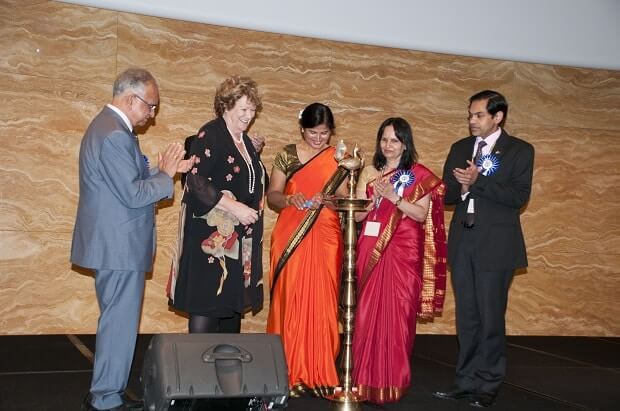
As Chief Guest, the NSW Minister for Health Ms Jillian Skinner thanked Indian-origin doctors for their contribution to Australian society and observed that they are noted “for their talent, endless energy and sense of humour”.

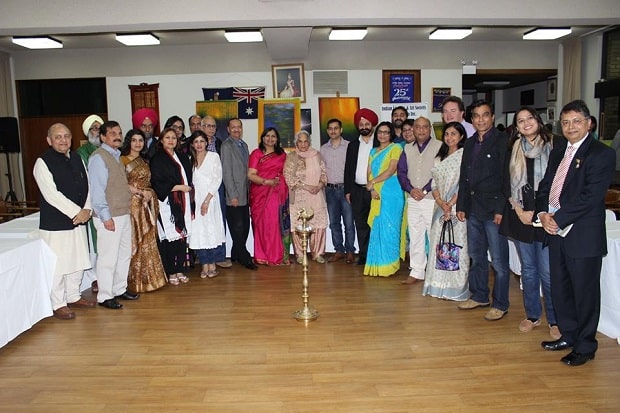
Earlier in the evening, she helped light the ceremonial lamp to inaugurate the event.

The inaugural session was also addressed by Dr Mukesh Haikerwal, the poster-boy for Indian doctors in Australia, who served as president of the Australian Medical Association and is the current Chair of the World Medical Association Council. In his speech, Dr Haikerwal said there are some 1.2 – 1.5 million expat Indian doctors in the world, and listed a large number of medical associations around the world that are headed by Indians.

He urged doctors to move beyond service delivery and get involved with policy and lobbying.

He also touched upon his efforts in organising the H-20, a medical forum on the sidelines of the upcoming G-20 summit.

President of AIMGA Dr Prabha Chandra presented a brief history of the association which was set up 30 years ago as a lobby group for doctors of Indian origin. Indian doctors form the second largest ethnic group in this country. Yet, the organisation has a fair way to go before it matches the influence of its American ‘cousin’ AAPI, the American Association of Physicians of Indian origin, despite the sincere efforts of Dr Shailja Chaturvedi to gather momentum for an Australia-wide body.

AAPI is one of the largest ethnic organisations in the US representing over 100,000 Indian-origin physicians. As a non-profit service organisation, its objective is to promote professional solidarity in the pursuit of excellence in patient care, teaching and research. It also actively lobbies legislators on matters of healthcare delivery and allied challenges, as it shares the goal of providing universal high quality healthcare at reasonable cost to the citizens of both USA and India.

At the Sydney conference, one of the main talking points, understandably, was the issue of taking healthcare to India as a basic human right.

Leading this discussion was GAPIO, the Global Association of Physicians of Indian Origin, which sent a delegation from the US to the conference, led by its President Dr Sanku Ram.

GAPIO was founded in 2011, Dr Ram said, to bring Indian doctors around the world on to one platform and to harness their collective power and talent for improving healthcare around the world and in India in particular. Its membership is currently at 85,000.

Speaking to Indian Link later, Dr Ram described GAPIO’s work in India at the grassroots level.

“There are 700 million people in India with minimal or no access to healthcare, to who we have been reaching out. In Andhra Pradesh for example, we work at the taluk level, each of which is made up of an average of 70,000 people. One of our most successful projects there has been in collaboration with the Eye Foundation of America. We’ve also conducted plastic surgery on deformed faces. Our current project is treating chronic kidney issues, a massive problem there. We are looking at introducing peritoneal dialysis, a cheap alternative to hemodialysis”.

As well, Dr Ram revealed, education of the local populace is an on-going program. Free GAPIO clinics are now operating across the slums of Secunderabad.

“We are constantly assessing what India needs, and what we can do”.

In recent months Dr Ram has travelled to the UK, Canada, South Africa, Jamaica, the Middle East and across India to shore up support for GAPIO’s programs.

“I’m sending a call out to Indian doctors in Australia to come on board as well, and help give back to our home country”.

Other presentations at the conference were based on innovations in medical research and in surgical practice, NGOs in medical care, and strategies for engaging with the subcontinent.

“We had an interesting array of speakers,” Dr Smita Shah of Sydney told Indian Link. “The Indian doctors were particularly impressive, with their presentations on robotic surgery, renal transplants and liver transplants”.

Given that her own research interests are in the field of community-based health promotion, she was also taken with the public health presentation. With her characteristic enthusiasm, she has since been bubbling over with ideas to send to Prime Minister Narendra Modi, in his campaign to “clean India up”.

Dr Shailja Chaturvedi revealed she has been planning the event for the last eighteen months, taking the responsibility of organising the event on her own shoulders. Some 180 doctors attended, even though she had been hoping for larger numbers.

Dr Chaturvedi is particularly pleased with the lines of communication opened with the government of India. Messages of support came from, amongst others, Prime Minister Narendra Modi and Health Minister Dr Harsh Vardhan.

“We were able to reach out to the Indian government as expat doctors who are passionate and resourceful, and ready and able to help. I think we made a mark there”.

Yet she admits there is much work to be done.

Diya to hum jala rahe hain, lekin diya tale andhera hai,” she said, the poet inside her surfacing. “I want especially to reach out to our younger colleagues to come and join us”.

Dr Qurashi was one of the few youthful faces at the event. (He qualified as a doctor in 2000 and hit the news headlines in 2013 for developing the SuperPATH technique of hip replacement which sees patients walk in two days’ time).