
KAANCHI
Starring: Mishti, Kartik Aaryan, Chandan Roy Sanyal, Mithun Chakraborty, Rishi Kapoor
Director: Subhash Ghai
Rating: ****

Subhash Ghai’s Kaanchi delivers a walloping punch in this tale of a girl from the hills contesting the city marauders’ rights to usurp her of land and love. In a frenzied saga of revenge in the big bad city where the innocent girl assumes the role of a desi Lara Croft, Ghai tackles the craft and the emotions with a devilish deftness.
The script is intricately woven, and Ghai threads together a jam-packed jigsaw. Something or other is always happening in some corner of the script.
Kaanchi is a puzzle of a film. It bustles and brims over with reformatory ideas, anti-corruption zeal, and lunges into an overweeningly ambitious format of storytelling, employing every cliché in the book of formulistic storytelling. But Ghai succeeds in telling a spectacular story filled with muted sound and flamboyant fury.
Kaanchi is the story of a girl’s journey from the innocent unspoilt mountains of Uttarakhand to the corrupt and corrupting sinful city of Mumbai. But the approach road from the back of beyond to the mainland mayhem is far more upfront and aggressive. The music conveys the split personality of a society that is caught in a migratory transition.
The film packs in the punches with undiminished enthusiasm from the first frame to last. The scenes are conceived with cohesive care, while the dialogues are quick-witted. Ghai turns on the tempestuous tap full blast. Though the pace does tend to flag at times, there is an element of underlined expectancy in nearly every episode.
The episodes write themselves out with a pungent precision. This is not a film that tries to impress with subtlety. The charm of the protagonist Kaanchi’s journey is not in its quotient of adventurousness, but in delivering an exuberance of the expected.
Mishti, Ghai’s latest discovery lives up to the high standards of the filmmaker’s past heroines. Despite her inability to touch some of the peaks required in the dramatic scenes, Mishti with her very Bengali personality and serene simplicity, creates a very favourable impact. She breezes through most of the film with charm and confidence.
Mishti gets very strong support from her two leading men. Kartik Aaryan’s very athletic ramp-friendly personality plays off the heroine’s rustic artlessness. And the ever-dependable Chandan Roy Sanyal who takes over as the man in Kaanchi’s life, is a roguish cop whose morals are as questionable as the lyrics of the item song to which he dances.
Interestingly Mishti’s character is shown to be a user-friendly go-getter with pluck and gumption.
Ironically in this film about youth power, it’s the veteran actors who let the script down. Mithun Chakraborty and Rishi Kapoor as a pair of trouble-makers are deliberately lampoonish. Newcomer Rishab Sinha as Mithun’s son has a very important role which he squanders away in serious apathy and a ludicrous wig.
In spite of its jagged edges and its tendency to take itself a tad too serious, Kaanchi manages to simulate a supple empathy for its disarmingly uni-dimensional characters. This is Ghai’s dream of a nation where one girl with the help of some rock-singing youngsters, can free us of corruption.
The film is a warm-hearted free-spirited ode to new-age womanhood. The female protagonist’s dharm-yuddh with evil forces may lack in subtlety. But then the time to tackle terror with tact is over.
It’s time to take on corruption headlong. Kaanchi does just that. With feeling and drama.
SUBHASH K JHA
A magical north-south love story
2 STATES
Starring: Arjun Kapoor, Alia Bhatt, Ronit Roy, Amrita Singh, Revathi, Shiv Subramaniam
Director: Abhishek Varman
Rating: ****
Magically, 2 States ends with a beautifully staged wedding where the film’s culture-crossed couple finally get their wish.
Sigh of relief? Not quite. You don’t want this film to end. It’s a story, but doesn’t seem like one. You know exactly where our twosome, the gorgeous Ananya and the diffident Krish are going, but you get so sucked into their journey, their courtship, conflicts, tiffs and buts, that you feel after a point, that you aren’t watching them in a film. They are people we know. And love.
These are people to carry home and keep in some corner of your heart. Not just Ananya played by the very gorgeous Alia Bhatt and her other-half Krish, but also their parents, specially Krish’s father a man so misunderstood all his life, he fears being recognized for some deeply-concealed goodness in his heart.
Indian marriages, they say, are the marriage of two families. So when the shy, repressed Punjabi Krish meets the spunky spirited beer-guzzling, chicken-chewing Ananya, there is hell to pay from both sides.
The thing about cultural stereotyping is that it very often does exist in exactly the forms that we see them exist in films and books. Chetan Bhagat’s lively novel from which this film is adapted, harps on stereotypes to the extent where the characters are not seen as ‘types’, but as individuals who conform to a type. This is best illustrated by Krish’s loud-brassy Punjabi mom, played by Amrita Singh in a compelling performance. Revathi as Ananya’s graceful Tamil mother is also outstanding.
Ronit Roy is no stranger to playing the abusive father, and his dignified damned Dad’s act makes 2 States as much a father-son story, as a girl-boy thing.
Not every sequence works, though. Revathi’s singing performance (arranged by Krish) was a little too syrupy and Alia’s anti-dowry speech at a brassy Punjabi wedding a little too contrived, but these were minor slip-ups.
Most of the time, cultural differences are articulately pinned down in the film. Debutant director Abhishek Varman knows how to tell a story embedding individual scenes with a distinctive personality, without straining for effect.
This film never forgets to surprise, even when going about the task of telling a story that can only end one way. Arjun Kapoor and Alia Bhatt ensure that their mutual participation in the rites of courtship, copulation, conflict and reconciliation yields a harvest of hefty scenes. Their performances display a natural flair for understatement underlined by a deep understanding of the language of commercial cinema. And yes, they look so made for each other, their compatibility is almost karmic.
Two world, two cultures, two families, one love story, 2 States re-defines and rejuvenates the love-marriage space. Simple and yet striking, gorgeous and graceful, one hankers to know what happens to the couple after the film is over.
The stress is on lightness of tone. From the clothes that Ananya and Krish wear to the spaces they inhabit… they aren’t fuelling a filmy flamboyance into the narrative.
Alia dressed as a bride looks like a doll, and the expression of honesty in her face never ceases, symbolizing what this film strives to do. 2 States creates a world where characters don’t shout to be heard. They belong to a world where being proper, politically or otherwise, is not always a pre-condition.
SUBHASH K JHA
Epic tale of women's empowerment

May 1 is White Shirt Day


Don a white shirt on May 1 to raise money for ovarian cancer research
To help you out with your white shirt options, we’ve complied a few different ways to rock the look. You could try a cheeky take like Ganelia Gsouza with a crisp white long sleeved version, or try the school girl look like Deepal Shaw.


Or you could try a daring, oh-so-vey saucy look like Sherlyn Chopra. (Although we think that look might be best saved for just at home…)

Or try a fierce take on the white shirt like Kulraj Randhawa!
How will you be wearing your iconic shirt this White Shirt Day?
Kangna in powerhouse performance
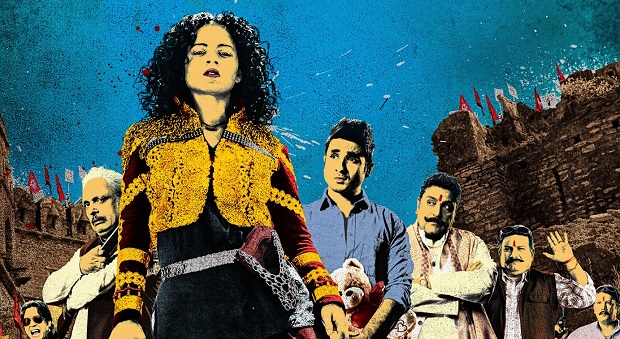
REVOLVER RANI
Starring: Kagna Ranaut, Vir Das, Piyush Mishra
Director: Sai Kabir
Rating: 3 and a half stars

Hail the female! Kangna Ranaut plays the quirky queen of all she surveys. She lords over her doomed anarchic and wretched kingdom like a doped and excitable Pan Singh Tomar.
It is a dangerous world out there in the Indian heartland. Specially for women who have to fight prejudices and betrayals on so many levels.
In a scene straight out of a street play, Kangna, playing what seems like a cross between Uma Thurman in Kill Bill and Seema Biswas in Bandit Queen, Kangna tells the mother of a young girl, “Teach her how to shoot a gun. It’s the only way she can survive”.
Revolver Rani is a deeply satisfying tribute to many things at the same time. Director Sai Kabir (who has previously made an unreleased film) pays a hefty homage to many filmmakers like Anurag Kashyap, Quentin Tarantino, Mehboob Khan and Shekhar Kapoor. And yet for its derivative aspirations, Revolver Rani is a fiercely original piece of cinema, crafted with compelling concentration and impassioned intuition. The mayhem is meticulously executed. It serves as the evocative backdrop for the life of an outlawed bandit-politician.
Kangna plays a woman of substance who, going by her high-octane energy level, seems to be guilty of substance abuse. And that’s the least of her crimes. Alka Singh, as played by Kangna in her second powerhouse performance this year, is the female goon who speaks most eloquently with the nozzle of her gun. There is an awkwardness to her ‘Chambal ki boli‘ that dissolves when she has to converse with a ‘bandook ki goli‘.
Kangna’s askew personality and her lisping halting dialogue delivery give her character a cutting edge which distinguishes a remarkable and powerful performance, taking it into the realm of the truly inspired.
I wonder what Alka Singh would have been if Kangna had not played this feisty women! Alka’s epic saga is partly cartoonish, partly a documentary on bandit-politics spliced together to make the woman an outrageously endearing outlaw.
At heart, Revolver Rani is a heartbreaking love story of a crass, powerful female politician who falls for a sleazy selfish Bollywood aspirant. We can see what a jerk he is. She can’t. As she goes through a sham marriage and a very real pregnancy with the certifiable asshole, Kangna’s character’s blind love turns into frustration and fury in front of our eyes.
Vir Das plays the wannabe star who ends up as a trapped fluttering toy boy to the lusty politician, with an intimacy and incredulity that make the character appear both cheesy and pathetic, and yet comic.
In the lust-relationship, Sai Kabir reverses the traditional gender equation making the female hero the sex-hungry predator and the male companion an object of her lust. In the second-half when Alka Singh wants to turn her infernal kingdom into a nursery school of paradisical normalcy, the director indulges and pampers her womanly instincts without mocking the trigger-happy woman’s sudden swerve into softness and femininity.
It is a dangerously balanced-out world field with outrageous deceit. Sai Kabir pulls out all stops to let his protagonist swim in the tides of blood and anarchy. Wading through the muck, Alka endeavours to find herself an utopian balance in her unbalanced world. The end is a shocker, as it knocks off the bottom from Alka’s world and lets her slide into the abyss without prejudice.
Revolver Rani is a film of baffling contradictions and anomalies. It starts with 10 minutes of dreadfully self-conscious political humour and then steers adroitly into Alka’s love life with a cocky contempt for conventional signposts of female empowerment. The feminist hoardings are bypassed in favour of creating untried rules of unorthodox womanhood.
More than the political intrigue, I was enthralled by Kangna’s growing love for the thoroughly undeserving ‘Cham-cham’ (yup, that’s the cheesy nickname for her toy boy). The desperate passion she feels for this cad is so palpable as to make love appear as the greatest crime in Alka Singh’s world of pervasive outlawry.
Director Sai Kabir’s film is wacky goofy and ultimately acutely tragic. The proceedings in the plot are as unpredictable as its kinky capricious female hero’s untameable curls. All steel guns and iron bras, Revolver Rani is raunchy, sexy, quirky and fey. Giving a feverish vigour and velocity to Kangna’s Phoolan-on-steroids act are Aarti Bajaj’s unsparing editing and Suhas Gujarathi’s state-of-art cinematography.
Like Kangna’s Alka Singh, there is no artifice in the technique applied to the proceedings. Revolver Rani is as real as comic book heroines can get.
And if that seems like an irreconcilable merger of two separate worlds, then so be it. Commercial Hindi cinema has come of age.
SUBHASH K JHA
$16 million for Friends of The Children

Foundation’s Good Friday walk raises a staggering figure due to the generosity of the Victorian public

The heavens opened up in Melbourne this Good Friday, however the showers did nothing to dampen the spirits of the eclectic group of walkers who joined this year’s Good Friday appeal. The Friends of the Children Society have been participating in this annual event for 16 years and the number of volunteers has grown from 50 to 250 over the years. Participants of this annual event come from all walks of life and this year the volunteers ranged from the age of six to 70, including a large number of youngsters.
As planned earlier, the walkers left Clayton Railway Station at 9am with 34 registered participants in the group, and headed for Melbourne Exhibition and Entertainment Centre, South Wharf.
The rain started when they stopped for their first break at Monash University in Caulfield. After a delay of 10-15 extra minutes, a decision was made to continue with the walk. Fortunately the rain eased off and then stopped completely around 1.30pm. After a long, albeit enjoyable stretch the walkers reached their destination around 3pm.
Collections were made at various intersections on that day adding to the ongoing fundraising efforts made by The Friends Of The Children Foundation.
A cheque of $19,980 was presented to the Good Friday Appeal and the presentation was telecast live on channel 7 around 4.30pm.
According to Shashi Kocchar from The Friends Of The Children Foundation all the participants were unanimous in their opinion that this was a great initiative where the community walks together in solidarity towards a common goal.
“We would love to hear from more volunteers and sponsors in the future and we encourage participation without any discrimination,” said Kocchar. “This is a wonderful experience and I urge the community to actively participate in such events. It’s for a good cause and it is a great feeling”.
The organisers from Friends of The Children Foundation are hoping that their final donation figure will reach close to $25,000. Overall, the 2014 Royal Children Hospital Friday Appeal raised well above $16 million dollars on the day due to the generosity of Victorian public.



Top Ten: World celebrities born in India

Some of the most renowned global literary, musical and dramatic talent have Indian links

‘Made in India’ is a label that makes all Indians swell up with pride. Whether it is Tata, Mahindra, Godrej, Bajaj, Vivien Leigh, Rudyard Kipling… whoa! Have we lost it? Well, no. It is a fact that some of the world’s greatest celebrities really are Indian-born. If you don’t believe it, you’ll be pleasantly surprised to meet these people.
10. Milton Reid
Perhaps best known for playing the bad guy in James Bond movies Dr No and The Spy Who Loved Me, Milton Rutherford Reid was also an accomplished wrestler who went by the name of ‘The Mighty Chang’. Milton was born in Mumbai on April 29, 1917. His Scottish father Edgar William Reid worked as a customs and excise inspector at the time, and his mother was of Indian origin. He starred in 53 movies and television shows. Milton returned to India to be with his mother and sister, where he passed away in 1987.
9. Vivien Leigh
She stamped her place in history with Oscar winning performances as Scarlett O’Hara in Gone with the Wind and as Blanche DuBois in A Streetcar named Desire. Vivien Leigh, the actress who went on to become the darling of tinsel town, was born in Darjeeling in West Bengal on November 5, 1913 at the campus of St. Paul’s School. Vivian Mary Hartley was the only child of Ernest Hartley, an English officer in the Indian Cavalry, and Gertrude Mary Frances who was probably of Irish and Parsi Indian ancestry.
8. Julie Christie
Staying Far From the Madding Crowd these days, Julie Christie has enjoyed decades in the limelight as a movie legend from the 60s, with the Academy, Golden Globe, BAFTA and Screen Guild Awards under her belt. Born in Chabua, Assam on April 14, 1941, she is the daughter of Rosemary and Francis St. John Christie. Her father managed the Singlijan Tea Estate where Julie was raised along with her brother and an older half-sister.
7. Engelbert Humperdinck
To sum up Engelbert Humperdinck’s artistic achievements, it is suffice to say that he boasts a star on the Hollywood Walk of Fame and received a Golden Globe Award as ‘Entertainer of the Year’ in 1989. The highlights of his career have been his number one hits ‘Release Me’ and ‘The Last Waltz’. He was born Arnold George Dorsey in Madras, India on May 2, 1936, one of ten children to British Army NCO Mervyn Dorsey and Olive Dorsey.
6. William Makepeace Thackeray
William Makepeace Thackeray was a noted novelist of the 19th century, famous for satirical works like Vanity Fair and Pendennis. During the Victorian era he was ranked second only to Charles Dickens. Thackeray was born on July 18, 1811 in Calcutta, which was the capital of British India at that time. The old Freeschool Street where he was born is now called Mirza Ghalib Street. He was the only child of Richmond Thackeray, secretary to the board of revenue in the British East India Company, and Anne Becher.
5. Erick Avari
A well-known face on the silver screen with performances in hit movies like Home Alone 4, Mr Deeds and Planet of the Apes,Erick Avari’s love for cinema is inherited. His father ran two movie theatres and his grandfather was one of the pioneers of Indian cinema. He was born Nariman Eruch Avari in a Parsi household on April 13, 1952 in Darjeeling, West Bengal, and hails from the Avari-Madan family.
4. Rudyard Kipling
Almost eighty years after his death, children are still growing up reading his novels Rikki-Tikki-Tavi, The Jungle Book and Just So Stories. Rudyard Kipling was a short-story writer, poet and novelist remembered for his writings about British soldiers in India. He was born in Mumbai (then Bombay) on December 30, 1865. His father, John Lockwood Kipling was the Principal and Professor of Architectural Sculpture at Sir Jamsetjee Jeejebhoy School of Art in Bombay. The house where Kipling was born still exists in the school’s campus.
3. Joanna Lumley
Remember Sapphire of the late 70’s hit Sapphire and Steel, that’s our girl Joanna Lumley. Actress, model, author and human rights activist are some of the hats worn by this 70s pin up girl who recently appeared in The Wolf of Wall Street with Leonardo DiCaprio. Joanna Lamond Lumley was born in India on May 1, 1946 in Srinagar, Kashmir. Her father James Rutherford-Lumley served as a Major in the 6th Gurkha Rifles. Because of her support for the Gurkha Justice Campaign, Joanna is now considered a ‘national treasure’ of Nepal. The family moved to England in 1947.
2. Cliff Richard
One of the greatest musicians of our times, Cliff Richard is Britain’s Elvis Presley, the Peter Pan of Pop, an OBE (Officer of the British Empire), knighted for his charity work and holder of numerous titles and records. He was born Harry Rodger Webb in India on October 14, 1940 at King George’s Hospital on Victoria Street in Lucknow. His father Rodger Oscar Webb was a manager for a catering contractor for the Indian Railways. The Webb family lived in Maqbara, near the main shopping centre of Hazratganj.
1. George Orwell
We owe the terms ‘cold war’, ‘Big Brother’, ‘thought police’ and others to this literary genius. George Orwell was one of the most influential English writers of the 20th century and best known for his novel Nineteen Eighty-Four. Born Eric Arthur Blair on June 25, 1903 in Mothihari, Bihar in British India, he adopted the pen-name George Orwell in 1935. His father Richard Walmesley Blair was an Opium Agent for the Indian Civil Service in Bengal, while his mother Ida Mabel Blair was raised in Burma.
Students pick Sydney as most popular city
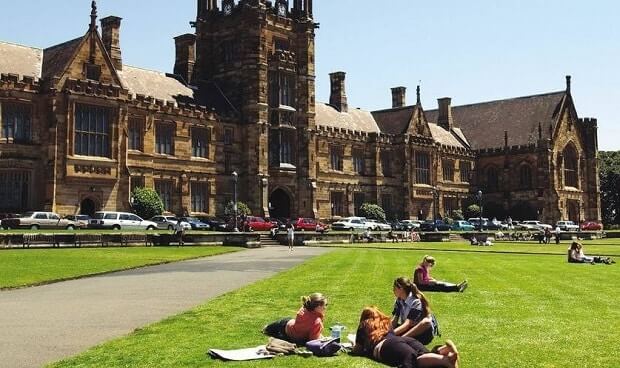
Sydney wins global acclaim for its multiculturalism and first class education options

In what is heartening news for the city, Sydney has been acclaimed as the most popular city in the world for international university students, striding ahead of popular destinations like London, Paris and New York.
Sydney’s new global ranking was revealed following results by global consultancy firm A.T. Kearney that studied the size of international student populations for its 2014 Global Cities Index.
Sydney beat more than 83 cities, and figures from the federal government show that the city is home to an estimated 50,000 international students studying at the city’s universities, with another 50,000 studying vocational and English courses. That’s a whopping figure, by any standards. Across Australia, more than 300,000 international students are studying here, with students from the top five countries hailing from China, India, South Korea, Malaysia and Vietnam. Enrolment data also reveals an increase in the number of students from Pakistan, Colombia and the Philippines.
Recent data published by the Department of Immigration and Citizenship indicated that July – December 2012 saw 27% growth in higher education student visas granted to offshore applicants. The council’s figures showed that about 35,000 international students studied on campuses in the City of Sydney and more than 10,000 lived in the local government area. In total, the international student community has contributed more than $1.6 billion to the city’s economy and generated demand for 10,000 full-time jobs.
In addition, Sydney’s cultural diversity and regional and global connections are strengthened through the influx of students living here. The city’s friendly multicultural environment, opportunities for first-class education, professional experiences, cutting-edge research opportunities, a strong economy and unmatched lifestyle are all incentives that are highly attractive to international students.
The City of Sydney council has several programs to support international students, including a dedicated international student resource guide and an international student leadership and ambassador program designed to provide work experience, skill development, mentoring and leadership training. The program has participants from 18 countries.
In fact, graduates from universities in Sydney include some of Australia and the world’s most successful academics, specialists and business figures, not counting five Nobel laureates, six prime ministers and two governors-general.
The City of Sydney has certainly moved up since last year, where it won the 4th spot for most popular city for international students in the QS Best Student Cities ranking, compiled by the higher education specialist that publishes the annual QS World University Rankings. Paris won the top spot for its world leading universities and low tuition fees.
The city is enthusiastic about continuing to retain its position as most popular city for international students across the world.
A golden anniversary
MIRA SAMRA’s summary of her grandparents’ 50th wedding anniversary

A crowd of about 120 people gathered at the Northbridge Golf Club in Sydney on the evening of Saturday February 22 to celebrate the golden wedding anniversary of my grandparents Harjeet and Mandhir Randhawa. It was as if the God’s were also showering their blessings from the Heavens above as it turned out to be a beautiful evening with a soft breeze blowing creating the perfect atmosphere for a great celebration.
A more befitting venue could not have been chosen to mark 50 years of married bliss for the couple. Days leading to this celebration, relatives and friends had been flying in from as far as New York, Canada, Singapore and Malaysia.
The evening began with pre-dinner drinks in the beautiful garden overlooking the Middle Harbour and the city beyond. It all looked so tranquil in the setting sun and as the guests walked over the red carpet that has been specially laid out for the evening, they were in awe of the beautiful surroundings that had been chosen for this celebration.
The theme for the evening was ‘The romantic 60’s’, and the couple had gone to great lengths to select special music from that era to be played during the evening. As the songs from that by-gone era, sifted through the air, the guests reminisced and some hummed along. After about an hour all the guests began to slowly make their way inside where a fairy tale atmosphere awaited them. Everything from the table settings, the golden chair backs to the candles had been carefully selected to make for a magical setting. The couple walked in to a special rendering of an old Hindi number, Janam Janam Ka Saath Hai.
The couple’s 17-year-old grandson Ajai who had accepted their request to be the MC for the night did a great job. Then there was a video presentation of some family photos which had been painstakingly put together by my grandparents. They had sifted through many old albums for this presentation and there were many ‘oohs’ and ‘ahs’ and laughter rang out as those present recognised some in the photographs and commented on the hairdo’s and clothing of the past decades. There were some short speeches by members of the family which recalled what they could remember of the couple’s wedding 50 years earlier. The couple then took turns to speak and thank everyone present for attending and making it a memorable evening for them. They especially thanked their three children Hareen, Brijinder and Param and their spouses who were present, for the time they had input in planning of the celebration. This was followed by the couple cutting the cake cutting and another performance. Speeches over, everyone took to the floor and danced the night away.
It was truly a night to remember and one that was a celebration of 50 golden years of a very special couple’s marriage, my grandparents, the mood for which was created by their many friends and relatives.
RAIN receives $77,000
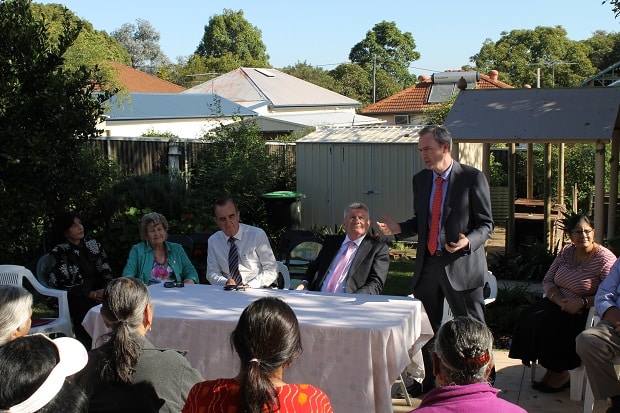
HACC funds will help provide home care for subcontinent origin seniors

In what is a piece of incredibly good news, the Resourceful Australian Indian Network (RAIN) has been advised that the organisation will receive $77,000 under the Australian Government’s Home and Community Care (HACC) programme, to support older people in the St George and Sutherland areas.
Assistant Minister for Social Services Mitch Fifield visited RAIN at its Penshurst Centre on April 24, after being invited by Federal Member for Banks, David Coleman. “RAIN is an outstanding local community organisation”, Mr Coleman said. “It is an innovative group that is delivering much-needed and high-quality services to the local Australian-Indian community”, he added.
The HACC funding will allow RAIN to expand its services and provide support to older Australians, enabling them to live at home for longer. “With this funding, RAIN will deliver important activities to build social interactions and enable older members of the Indian community to remain active and connected with their peers and community”.
Senator Fifield said the funding provided to RAIN was part of an additional $240 million provided to 331 organisations across Australia as part of a competitive tender.
The news has been welcomed with delight by RAIN members and the Indian community, who take pleasure in participating in the organisation’s many events and in keeping busy, active and happy.
Home is where the heart is

Migrant stories come alive through chance encounters with enterprising Sikhs in the heart of Myanmar

One sunny afternoon a few weeks ago as we were travelling through the Shan state in eastern Burma (Myanmar), through the town of Taunggyi meaning ‘huge mountain’ to be precise, we were startled to come across a gurdwara! We stopped to have a look. Here we met Tara Singh, the caretaker, who identified himself as a Burmese Sikh. In all respects he looked a Sikh except that he wore the Burmese traditional attire, a longyi that is similar to the Indian lungi. Just a couple of hours before in a small village on the road to Kakku, we were intrigued when we spotted a turbaned Sikh, Avatar Singh, in his wayside convenience store. He too, like Tara Singh, had dual names – Sikh and Burmese, but he had lost all knowledge of the Punjabi language.
I was pleasantly surprised to see the presence of my Sikh brothers in this quiet part of the world. Tara Singh, ordained as ‘gyani’ by the other Punjabi locals, wasfluent in Punjabi and Hindi, and narrated to us his story of migration and survival. Tara Singh came to Burma in the 1930s but when the Japanese occupied Burma in the early 1940s, he fled and took refuge in Calcutta. As a consequence of the Japanese invasion, a large percentage of Indians fled Burma overland into Assam, largely on foot. Others returned after the war, but many never did.
Hearing his story, I recalled the vivid descriptions of this exodus in Amitav Ghosh’s novel The Glass Palace, of how the refugees suffered terribly and thousands died. Tara Singh stayed in Kolkata till the infamous riots broke out in Kolkata after India’s Independence in 1948, when he once again escaped to Burma and has been a resident of the Shan state since.
The Sikh migration to Burma started in the 19th century with the British Indian Army. Sikh soldiers took part in sizeable and growing numbers in the wars that the British waged against the Burmese kings. After the last (the Third War in 1885-86) war, Burma became a province of British India. Many Indians migrated to Burma at this time. Tara Singh mentioned that in the 1930s there were more than 10,000 Sikhs in Burma, and Taunggyi was home to a few thousand of them. Now there are only about 40 Sikh families.
Most of the Sikh families congregate on Sundays at the Taunggyi gurdwara for prayers and langar, the free communal meals. The British supported and encouraged Sikhs to build gurdwaras for which land was generously allotted. But all this ended in the era of the so called ‘Burmese way to Socialism’. The Taunggyi gurdwara received a Government notice that it was to be pulled down to widen the road. Tara Singh proudly states that with the support of patrons and many relatives overseas, it was not only re-built but done so on a much larger scale. Vahe guru ji ka Khalsa, Vahe guru ji ki Fateh – the victory belongs to God, reiterated.
It was just not the Sikh Army personnel who migrated to Burma. Many infrastructure projects were started by the British colonial government and it contributed to an unprecedented economic boom in Burma that drew many other Indians. Many migrated – as civil servants, engineers, river pilots, soldiers, indentured labourers and traders.
As we left the Shan state a few days later, at the Heho airport waiting for a delayed flight, we met yet another Sardar brother, jovial sexagenarian, Surinder Singh. He was a retired tailor. Unlike many of his relatives who returned to India after the socialists took over, he stayed in Burma through all the good and bad times, philosophising that life’s pleasures and turmoils are everywhere. Surinder Singh was indeed a philosopher and he quoted with ease from the works of Khalil Gibran, Bahadur Shah Zafar and Friedrich Nietzsche! He recounted the call of freedom fighter Netaji Subhas Bose at Taunggyi, to join his Indian National Army. Although Surinder Singh did not actively respond to the call, he remembered its intensity as if it was an event of yesterday. He was fighting his own battle of survival. Life wasn’t easy under the British or the Japanese; nor was it under the military Burmese governments since the 1960s. In fact, after Burma got its independence, the law treated most Indians as ‘resident aliens’. But Surinder Singh has survived to tell the tale.
Such has been many a story of migration – a story of struggles, hardships, and challenges. But as Surinder Singh summed it up in his philosophical way, ‘home is where the heart is’! This sentiment is also echoed in the words written by the Mughal King Bahadur Shah Zafar, who was exiled by the British to Burma and died there in 1862, pining for his motherland India. His poignant words “Kitna hai badnaseeb Zafar, dafan ke liye do gaz zamin bhi na mil saki kuye yaar mein!” (How unlucky is Zafar! For burial, even two yards of land were not to be had in the land of his beloved!) are inscribed on his tomb in quiet corner of Yangon.
