
Go here to like our Facebook page


A look back at India’s first general elections in 1951

Did you know that in the first general election in India, held over a four-month period in 1951-52, voters were given differently coloured ballot boxes for each candidate in which to cast their vote?
India’s first Election Commission had very thoughtfully kept in mind the large population of illiterate voters – literacy level was just 16 percent then as compared to 73 percent now – while deciding on the balloting system.
At polling booths, each candidate was allotted a separate ballot box, differently coloured, on which each candidate’s name and election symbol was labelled.
“A voter had to simply insert the ballot paper given to him in the ballot box of the candidate of his choice in the voting compartment,” writes former chief election commissioner S.Y. Quraishi in his book An Undocumented Wonder: The Making of the Great Indian Election (Rainlight, Rupa).
Even as the country is in the midst of its 16th general election spread over 36 days and 10 phases, what is not known are the challenges the fledgling democracy faced in conducting the country’s first general election in 1952, that was spread over four months and 68 polling days, or phases, says Quraishi.
The elections were held from Oct 15, 1951, to Feb 21, 1952, for an electorate of over 173 million (173,212,343). The first phase was held in the assembly constituencies of Chini and Pangi in Himachal Pradesh, before the onset of winter, while the final 68th phase was held in Uttar Pradesh.
The ballot papers were printed by the Election Commission at the Government of India Security Press at Nashik, where the Indian currency notes were also printed.
The first general election had a total number of 1,874 candidates, including 533 independents, compared to 8,070 candidates in the 2009 election. The number of political parties participating were 53, including 14 national parties. The 2009 election saw 363 political parties participating, which included seven national parties and 34 state parties, with the rest comprising unrecognised parties.
“As many as 196,084 polling stations were set up throughout the length and breadth of the country, of which 27,527 were exclusively reserved for women,” he says in the book. Of the 173 million electorate, 105,950,083 voted.
After the votes were counted and results declared, the first House of the People was constituted by the Election Commission on April 2, 1952.
More than 60 years later, India’s electorate now stands at over 814 million. The country is holding 10-phased elections, from April 7-May 12, 2014, for the 16th Lok Sabha. India’s literacy level stands at over 73 percent.
To help out in the election process, a provision was made under Section 159 of the Representation of the People Act, 1951, to allow the employees of local authorities and government servants to be deployed on election duty.
Employees from the private sector were deliberately kept out, writes Quraishi.
But as the size of the electorate and elections grew, the poll panel found the number of government servants inadequate. In 1997, Section 159 was amended to include the services of employees of state-run universities and other government institutions as well as public sector companies to add to the human force needed.
IANS
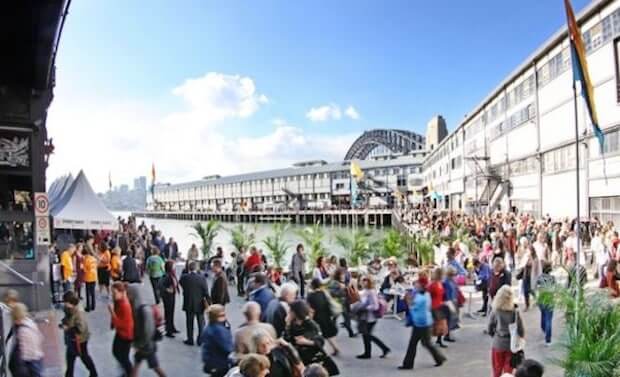
Harbourside food and fun with a week of insightful and entertaining readings, workshops, panels and performances on the side – what could be better than the 2014 Sydney Writers’ Festival?
Here are Indian Link’s top five must-see events for the festival:

Snuggle up and enjoy some late night laughs with bedtime stories by top comedic writers. Then make sure to stay awake for some riveting discussions at the Chaser’s Empty Vessel with some of the festival’s biggest names including Reza Aslan and Jeremy Scahill.
Thursday, May 22 2014, 7:00 PM – 11:30 PM at Pier 2/3 Club Stage, Pier 2/3, Hickson Road, Walsh Bay. Tickets $15 at the door, no pre-bookings
Family Day: Comedy Storytelling Hour

If you’re getting tired of the heavy stuff and are looking for some lunchtime entertainment make sure to attend the Comedy Storytelling Hour. Come witness the hilarity of Tristan Bancks, Oliver Phommavanh and James O’Loghlin as they re-create and make fun of the extent people will go (including themselves) to make others laugh!
Sunday, May 25 2014, 1:45 PM – 2:45 PM at Pier 2/3 The Big Top For Little People, Pier 2/3, Walsh Bay. Free, no bookings.
Curiosity Lecture Series: On What Gandhi Would Do

Former High Court Justice Michael Kirby gives an insightful talk on how we can apply the inspiring views of Mahatma Gandhi to contemporary world issues including women’s rights, climate change and sexuality. Kirby will discuss how useful Gandhi’s frameworks of wisdom and compassion are in confronting global problems, emphasizing how one man became the Father of a Nation.
Saturday, May 24 2014, 3:30 PM – 4:10 PM at Pier 2/3 Bloomberg Stage, Pier 2/3, Hickson Road, Walsh Bay. Free, no bookings.

Zoe Daniel, ABC South East Asia Correspondent, is one of only a handful of women to combine one of the most dangerous jobs in the world with one of the most demanding – motherhood. She discusses, Storyteller, her memoir that covers political unrest in Bangkok and the bittersweet story of conjoined twins in India, to a tragic plane crash in Laos and the destruction of Typhoon Haiyan in the Philippines to her personal story of the universal juggle of work, ambition and family amid the unpredictability of life and the predictability of the 24/7 media cycle.
Saturday, May 24 2014, 2:00 PM – 3:00 PM at Casula Powerhouse Arts Centre, 1 Casula Road, Casula, Free, bookings essential 9824 1121.

Giramondo publisher Ivor Indyk shares the stage with four of Australia’s most versatile and wide-ranging poets: Judith Beveridge, Ali Alizadeh, Kate Middleton and John Mateer. They read and discuss poems that travel across the world and through time, to India, medieval Spain, the Middle East and the US, and over thousands of years, to probe the limits of human ambition, emotion and language.
Sunday, May 25 2014, 10:00 AM – 11:00 AM at Philharmonia Studio, Pier 4/5, Hickson Road, Walsh Bay. Free, no bookings.
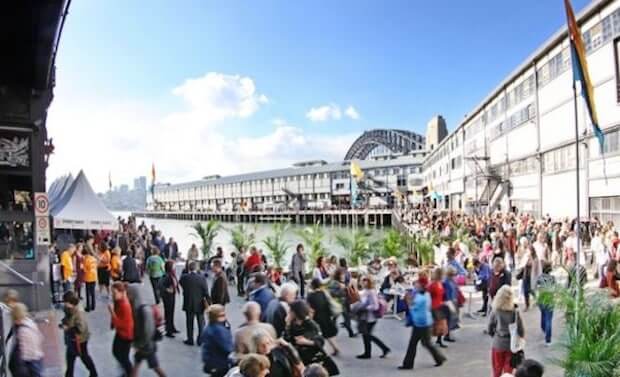

Harbourside food and fun with a week of insightful and entertaining readings, workshops, panels and performances on the side – what could be better than the 2014 Sydney Writers’ Festival?
Here are Indian Link’s top five must-see events for the festival:
Festival Club
Snuggle up and enjoy some late night laughs with bedtime stories by top comedic writers. Then make sure to stay awake for some riveting discussions at the Chaser’s Empty Vessel with some of the festival’s biggest names including Reza Aslan and Jeremy Scahill.
Thursday, May 22 2014, 7:00 PM – 11:30 PM at Pier 2/3 Club Stage, Pier 2/3, Hickson Road, Walsh Bay. Tickets $15 at the door, no pre-bookings
Family Day: Comedy Storytelling Hour
If you’re getting tired of the heavy stuff and are looking for some lunchtime entertainment make sure to attend the Comedy Storytelling Hour. Come witness the hilarity of Tristan Bancks, Oliver Phommavanh and James O’Loghlin as they re-create and make fun of the extent people will go (including themselves) to make others laugh!
Sunday, May 25 2014, 1:45 PM – 2:45 PM at Pier 2/3 The Big Top For Little People, Pier 2/3, Walsh Bay. Free, no bookings.
Curiosity Lecture Series: On What Gandhi Would Do
Former High Court Justice Michael Kirby gives an insightful talk on how we can apply the inspiring views of Mahatma Gandhi to contemporary world issues including women’s rights, climate change and sexuality. Kirby will discuss how useful Gandhi’s frameworks of wisdom and compassion are in confronting global problems, emphasizing how one man became the Father of a Nation.
Saturday, May 24 2014, 3:30 PM – 4:10 PM at Pier 2/3 Bloomberg Stage, Pier 2/3, Hickson Road, Walsh Bay. Free, no bookings.
Zoe Daniel: Storyteller
Zoe Daniel, ABC South East Asia Correspondent, is one of only a handful of women to combine one of the most dangerous jobs in the world with one of the most demanding – motherhood. She discusses, Storyteller, her memoir that covers political unrest in Bangkok and the bittersweet story of conjoined twins in India, to a tragic plane crash in Laos and the destruction of Typhoon Haiyan in the Philippines to her personal story of the universal juggle of work, ambition and family amid the unpredictability of life and the predictability of the 24/7 media cycle.
Saturday, May 24 2014, 2:00 PM – 3:00 PM at Casula Powerhouse Arts Centre, 1 Casula Road, Casula, Free, bookings essential 9824 1121.
Real Worlds / Imagined Worlds
Giramondo publisher Ivor Indyk shares the stage with four of Australia’s most versatile and wide-ranging poets: Judith Beveridge, Ali Alizadeh, Kate Middleton and John Mateer. They read and discuss poems that travel across the world and through time, to India, medieval Spain, the Middle East and the US, and over thousands of years, to probe the limits of human ambition, emotion and language.
Sunday, May 25 2014, 10:00 AM – 11:00 AM at Philharmonia Studio, Pier 4/5, Hickson Road, Walsh Bay. Free, no bookings.
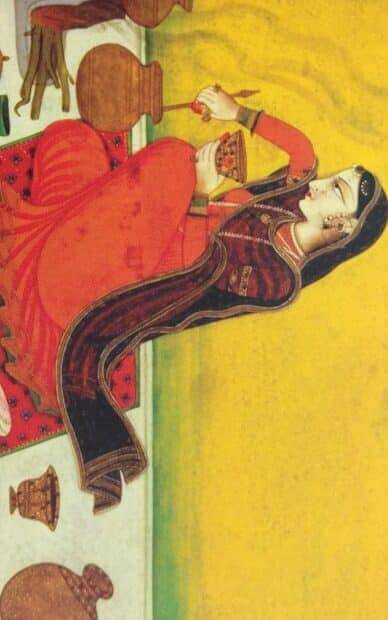
This British mem could teach you a thing or two about Indian cooking

“I like to think of myself as a daughter of India”.
The unmistakable Indian lilt in Joyce Westrip’s speech gives away her deep passion for India. As does the fact that she can talk uninterrupted, for hours if allowed, about the land where she was born.
84-year-old Joyce is the quintessential Indophile. She may have left India in 1947 like the others of the British Raj, but continues to carry her love for the country in her heart to this day.
Now a Perth resident, this British mem has become a veritable storehouse of information on India and Indian society. An avid collector of artifacts from India, her private library of books on India is so large that she is currently preparing a bibliography.
Joyce’s particular passion however is reserved for Indian cooking, especially Mughal cuisine. The author of a book entitled Moghul Cooking: India’s Courtly Cuisine, Joyce has been touring extensively in recent years, doing lectures and demonstrations. She was even awarded the Medal of the Order of Australia in 2000 for her work promoting cultural links between India and Australia.
The luscious foods of central Asia and Persia, married with the richness of Indian spices, in a technique that fearlessly uses butter, ghee, milk, yogurt and cream, and other exotic ingredients such as saffron and rosewater, have a strange hold on this amazing woman of the British Raj.
Joyce was seventeen when her family left India in 1947 for England. She remembers being unimpressed by her homeland.
“When I first saw Buckingham Palace, it was so gray and drab I was shocked. I thought, poor old England, the Royal Family seems to have fallen on hard times! You see, I was used to palaces that were opulent and jewel-encrusted and rich with colour! I missed the colours and aromas of India, the flowers, the saris, the hustle and bustle, the tamasha”.
Walking past an apothecary one day, the young Joyce saw some spice jars through the window that brought a flush of nostalgia. The cinnamon and the cloves and the cardamom beckoned, and she bought some, determined to cook her first curry.
“It turned out awful! It was then my mother introduced me to curry powder, and I learnt to cook vegetables, fish and meat in it. My curries then became a great event”.
But the use of curry powder made all her curries taste the same, and that was not the way she remembered Indian food!
Moving to Australia with her husband, Joyce found plenty of other ingredients she could incorporate into her curries, like herbs and garlic and ginger, thanks to the Italian and Greek influence in this country. She began experimenting more regularly with recipes her mother’s friends had sent her, and became adept enough to host what she calls “curry parties”.
Joyce went to university to do her BA, and opted for Indian history as one of her subjects. Reading of the Mughal times, she found herself intrigued by the opulent lifestyle of the times, fascinated by the clothes, jewelry and food of the royals.
“Reading Abul Fazl, the biographer of Emperor Akbar, I was captivated by his meticulous records of the kitchen department in Akbar’s palaces. He provides details of not only how the food was cooked and served, but also of how it was stored and how the kitchen was run. I was hooked! Then began my extensive research into the evolution of Mughal cuisine”.
Besides reading every book she could lay her hands on, Joyce actually travelled the Khyber Pass from Istanbul through Iran, Afghanistan, Pakistan and north-western India to New Delhi, following the path of the Mughals and talking to people on the way about their cuisine. She gathered recipes and techniques, not only from commoners but also descendants of royalty that she could meet up with.
“In Rajasthan for instance I stayed at the palace hotels, where the cooks/retainers who worked for the erstwhile royal families had stayed on. I learnt from them, straight from the horse’s mouth, as it were. When Maharani Gayatri Devi heard of my research, she arranged for maharanis from around the area to talk to me”.
She picked up invaluable information, not to mention plenty of anecdotes, from these sources. The result was her book Moghul Cooking. The book contains some truly exotic recipes such as akhni, yakhni, badami shorba, pomegranate soup, apricot-flavoured meat, chicken stuffed with minced lamb, khargosh korma, gobi kaju, dahi makkai and many more.
The rest is history. Soon she was on every major cooking show on Australian TV, and was busy organising gourmet tours to India.
Today Joyce claims to have less energy for her to do as many things as she would like to, but she certainly shows no signs of slowing down! Moghul Cooking is now in its second edition, and Joyce has also released Fire and Spice: Parsi Cookery and An ABC of Indian Food. And of course her love for India is as strong as ever.
“India keeps drawing me back. When I said once to Indira Gandhi that I am a daughter of India, she looked at me said, ‘But you ran away!’ I replied that I had no choice at the time, but I keep coming back!”

Compatibility between individuals rather than an arrangement between families is now trending in matrimony

As a junior doctor, I have a clear memory of one of the first patients I assessed, that related to domestic violence. I was working a night shift in a hospital in Sydney’s western suburbs. The patient was a thin, young Indian woman who was presented to the hospital with bruises to her face, back and shoulder. There was a question of whether she had a broken nose, for it was swollen and tender.
After ruling out a fracture, a more complete history revealed that she had been married for just over a year. The marriage was arranged and the man was a clerical worker from South India. Strikingly, it was the first act of violence and it occurred two days after the man had received permanent residency. He was no longer dependent on his wife in order to remain in Australia. This example illustrates how domestic violence has great overlap with power relations among the sexes, and can encompass different features in different cultures and socio-economic groups. Alcohol is often a factor, and a growing trend is the emasculation some men are feeling from more equal sexual roles and a decline in traditional male jobs, such as factory work.
But the power spouses and families might wield over visa and migration privileges is unique to migrant groups, and more common in South Asian families where arranged marriage remains relatively common.
Australia has a little known and interesting regulation whereby a recent arrival who comes here on a spousal visa but then loses that visa due to an abusive marriage, has the right to continue with their path to permanent residency. It is referred to as a family violence regulation and was brought in by the previous government in 2012.
When enacted, the Federal Minister for Women, Julie Collins said: “Domestic and family violence is unacceptable. It’s important that women do not face obstacles in leaving violent relationships and receive appropriate support and assistance.
It seems just, for such people are often victims, arriving to Australia with the hope of a happy marriage and new life in Australia, only to find that their spouses and their extended families see them as leverage to wield power and extract compensation for allowing them a path to migration”.
In fact, seeing such cases offers a great illustration of changes in age old notions of class and status. For example, it is only through arranged marriage that a taxi driver or security guard, with little or no tertiary education, could hope to marry a high caste, university educated woman from India. Yet, this is commonplace when there is the leverage of migration to one of the world’s wealthiest countries. There is also the promise that more relatives might migrate in the future.
The modern world overturns many of these age old hierarchies, best illustrated by the American journalist Katherine Boo’s account of Mumbai slums in Behind the Beautiful Forevers. The book outlines how centuries of tradition, caste and status are overturned in barely a generation through the ravages of the market economy and globalisation.
But back to arranged marriage. A key aspect of this is how little responsibility local communities take for such outcomes. In many of the examples of family violence I have seen arising from newly arrived spouses, there had been little attempt to assess the likely compatibility of the two individuals getting married. A not uncommon scenario was that the male or female based in Australia already had a lover, and agreed to the marriage merely to appease the parents. The Indian based spouse arrives only to find that their partner wishes to continue their prior relationship.
At the heart of this folly is the age old belief that marriage remains the union of two families. I have heard this repeated throughout my entire life as emblematic of the cultural differences between Indians and Westerners. This may have held true in the days we all lived in villages and closely maintained clans and traditions, but this is not even the case in the more traditional parts of India anymore. The upheaval caused by mass industrialisation and migration means marriage is very much a union between two people, usually beginning in a small flat in an outer metropolitan area. This can cause an enormous strain in relationships where the individuals are highly compatible, let alone when they are a complete mismatch, and further complicated by overbearing, entitled relatives.
There is a real risk that as more and more cases associated with the family violence regulation become apparent, that the broader community will view the problem as another example of importing backward cultural practices into Australia. This would be excessive, but perhaps not a surprise.
Community solicitor and President of the Pakistani-Australian Association, Ejaz Khan said that domestic violence remained a major problem within South Asian communities, but felt interventions were not always culturally sensitive. “The intrusion of police and apprehended violence orders straight away often worsen the situation, rather than help appease the basis for conflict”, says Khan. He advocated more culturally sensitive measures such as a one stop shop for domestic violence sufferers of ethnic backgrounds, and worries that the Community Services Minister Pru Goward was not taking ethnic communities into account in her recent taskforce into domestic violence.
You only have to see the debates surrounding gay marriage to see that the institution of marriage is in flux. There are sections of the local Indian community that remain wedded to age old beliefs surrounding marriage and view it only as a transaction to progress the status of their family. They risk tarring the reputations of the entire community.


The forthcoming budget will have a number of changes which will affect the financial lives of Australians, according to statements from senior government figures. One change which has received plenty of airplay is the prospect of restricting age pension benefits to older Australians.
Currently, those born before 1 January 1947 can access age pension at age six. However, Treasurer Joe Hockey has triggered early speculations that this may be lifted to age 70. The previous Labor government had announced an increase in the retirement age from 65 to 67 by 2023-24. This was intended to bring Australia more in line with other nations that are raising the retirement age as people’s life expectancy rises. These countries include Canada which will finish lifting its pension age to 67 by 2029, Germany which will have the age increase in place by 2029, and the US where the pension age of 67 will be in place by 2036.
It is however becoming clear that with an aging population, governments will find it increasingly hard to find the money to fund pensions. Currently of an estimated 22 million Australians, there are 2.07 million on age pension with 1.427 million on full age pension and 943,000 on a partial pension. Full pension for a couple is approximately $31,700 per annum.
In the 2013-14 financial year it is estimated that up to 35% of all government revenue is being spent on social security as compared to 7% on education and 16% on health. With an aging population and increased life expectancies (according to the Australian Life Tables, the average life expectancy for Australian males is 84 and 87 for females), this will only increase. To meet its obligations, the government either needs to find more revenue (read as additional taxes) or cut certain services. With the biggest part of the expenditure pie being social security, it seems to be the obvious place to take the axe. So expect tough announcements in the May budget to superannuation, though they may not come in play for a while.
For Indian Australians, the advice is, start preparing for your own retirement well in advance. Back in India, pension is available to government and other employees, and so, most Indians migrants have a limited sense of entitlement and no such expectations from the government. However, over a period of time these expectations change. But with the expected changes to policy, it may be advisable for the Indian migrant community to start planning for their own long-term financial freedom at retirement, rather than depend on government handouts.
Typically well educated, Indians settle well in their country of migration. In Australia for example, Indian migrants are one of the top wage-earning migrant groups. A number of them migrate in their 30s and after the settling-in period, both husband and wife find suitable employment. Anecdotally, the family income is circa $120,000 on average. Using this as a starting point and with about 25 years of working time in Australia, an average couple would be expected to earn over $3,000,000 in their working life time.
Planning to save at least 15% of their income and investing it wisely; using the benefits of compounding returns, will go a long way to take care of their long-term retirement needs. While a number do take up the option of investing through property, perhaps they need to look for a wider spread of investment assets in order to better lock in their retirement aspirations.
Time to start planning for self-funded retirement starts now. While the politics of changing rules on pension and superannuation will always be hotly debated, the chance of a 30-year-old Indian migrant to Australia of receiving any pension in 35-40 years time are similar to India winning the football world cup in 2014.
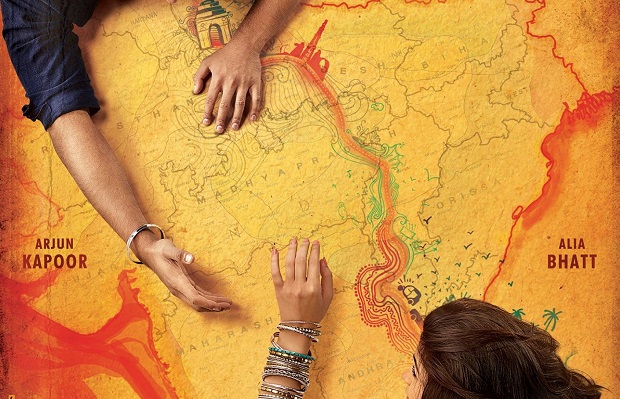
2 STATES
Starring: Arjun Kapoor, Alia Bhatt, Ronit Roy, Amrita Singh, Revathi, Shiv Subramaniam
Director: Abhishek Varman
Rating: ****
Magically, 2 States ends with a beautifully staged wedding where the film’s culture-crossed couple finally get their wish.
Sigh of relief? Not quite. You don’t want this film to end. It’s a story, but doesn’t seem like one. You know exactly where our twosome, the gorgeous Ananya and the diffident Krish are going, but you get so sucked into their journey, their courtship, conflicts, tiffs and buts, that you feel after a point, that you aren’t watching them in a film. They are people we know. And love.
These are people to carry home and keep in some corner of your heart. Not just Ananya played by the very gorgeous Alia Bhatt and her other-half Krish, but also their parents, specially Krish’s father a man so misunderstood all his life, he fears being recognized for some deeply-concealed goodness in his heart.
Indian marriages, they say, are the marriage of two families. So when the shy, repressed Punjabi Krish meets the spunky spirited beer-guzzling, chicken-chewing Ananya, there is hell to pay from both sides.
The thing about cultural stereotyping is that it very often does exist in exactly the forms that we see them exist in films and books. Chetan Bhagat’s lively novel from which this film is adapted, harps on stereotypes to the extent where the characters are not seen as ‘types’, but as individuals who conform to a type. This is best illustrated by Krish’s loud-brassy Punjabi mom, played by Amrita Singh in a compelling performance. Revathi as Ananya’s graceful Tamil mother is also outstanding.
Ronit Roy is no stranger to playing the abusive father, and his dignified damned Dad’s act makes 2 States as much a father-son story, as a girl-boy thing.
Not every sequence works, though. Revathi’s singing performance (arranged by Krish) was a little too syrupy and Alia’s anti-dowry speech at a brassy Punjabi wedding a little too contrived, but these were minor slip-ups.
Most of the time, cultural differences are articulately pinned down in the film. Debutant director Abhishek Varman knows how to tell a story embedding individual scenes with a distinctive personality, without straining for effect.
This film never forgets to surprise, even when going about the task of telling a story that can only end one way. Arjun Kapoor and Alia Bhatt ensure that their mutual participation in the rites of courtship, copulation, conflict and reconciliation yields a harvest of hefty scenes. Their performances display a natural flair for understatement underlined by a deep understanding of the language of commercial cinema. And yes, they look so made for each other, their compatibility is almost karmic.
Two world, two cultures, two families, one love story, 2 States re-defines and rejuvenates the love-marriage space. Simple and yet striking, gorgeous and graceful, one hankers to know what happens to the couple after the film is over.
The stress is on lightness of tone. From the clothes that Ananya and Krish wear to the spaces they inhabit… they aren’t fuelling a filmy flamboyance into the narrative.
Alia dressed as a bride looks like a doll, and the expression of honesty in her face never ceases, symbolizing what this film strives to do. 2 States creates a world where characters don’t shout to be heard. They belong to a world where being proper, politically or otherwise, is not always a pre-condition.
SUBHASH K JHA
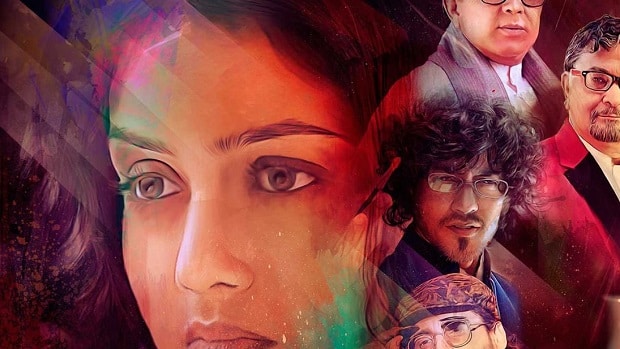
KAANCHI
Starring: Mishti, Kartik Aaryan, Chandan Roy Sanyal, Mithun Chakraborty, Rishi Kapoor
Director: Subhash Ghai
Rating: ****

Subhash Ghai’s Kaanchi delivers a walloping punch in this tale of a girl from the hills contesting the city marauders’ rights to usurp her of land and love. In a frenzied saga of revenge in the big bad city where the innocent girl assumes the role of a desi Lara Croft, Ghai tackles the craft and the emotions with a devilish deftness.
The script is intricately woven, and Ghai threads together a jam-packed jigsaw. Something or other is always happening in some corner of the script.
Kaanchi is a puzzle of a film. It bustles and brims over with reformatory ideas, anti-corruption zeal, and lunges into an overweeningly ambitious format of storytelling, employing every cliché in the book of formulistic storytelling. But Ghai succeeds in telling a spectacular story filled with muted sound and flamboyant fury.
Kaanchi is the story of a girl’s journey from the innocent unspoilt mountains of Uttarakhand to the corrupt and corrupting sinful city of Mumbai. But the approach road from the back of beyond to the mainland mayhem is far more upfront and aggressive. The music conveys the split personality of a society that is caught in a migratory transition.
The film packs in the punches with undiminished enthusiasm from the first frame to last. The scenes are conceived with cohesive care, while the dialogues are quick-witted. Ghai turns on the tempestuous tap full blast. Though the pace does tend to flag at times, there is an element of underlined expectancy in nearly every episode.
The episodes write themselves out with a pungent precision. This is not a film that tries to impress with subtlety. The charm of the protagonist Kaanchi’s journey is not in its quotient of adventurousness, but in delivering an exuberance of the expected.
Mishti, Ghai’s latest discovery lives up to the high standards of the filmmaker’s past heroines. Despite her inability to touch some of the peaks required in the dramatic scenes, Mishti with her very Bengali personality and serene simplicity, creates a very favourable impact. She breezes through most of the film with charm and confidence.
Mishti gets very strong support from her two leading men. Kartik Aaryan’s very athletic ramp-friendly personality plays off the heroine’s rustic artlessness. And the ever-dependable Chandan Roy Sanyal who takes over as the man in Kaanchi’s life, is a roguish cop whose morals are as questionable as the lyrics of the item song to which he dances.
Interestingly Mishti’s character is shown to be a user-friendly go-getter with pluck and gumption.
Ironically in this film about youth power, it’s the veteran actors who let the script down. Mithun Chakraborty and Rishi Kapoor as a pair of trouble-makers are deliberately lampoonish. Newcomer Rishab Sinha as Mithun’s son has a very important role which he squanders away in serious apathy and a ludicrous wig.
In spite of its jagged edges and its tendency to take itself a tad too serious, Kaanchi manages to simulate a supple empathy for its disarmingly uni-dimensional characters. This is Ghai’s dream of a nation where one girl with the help of some rock-singing youngsters, can free us of corruption.
The film is a warm-hearted free-spirited ode to new-age womanhood. The female protagonist’s dharm-yuddh with evil forces may lack in subtlety. But then the time to tackle terror with tact is over.
It’s time to take on corruption headlong. Kaanchi does just that. With feeling and drama.
SUBHASH K JHA
A magical north-south love story
2 STATES
Starring: Arjun Kapoor, Alia Bhatt, Ronit Roy, Amrita Singh, Revathi, Shiv Subramaniam
Director: Abhishek Varman
Rating: ****
Magically, 2 States ends with a beautifully staged wedding where the film’s culture-crossed couple finally get their wish.
Sigh of relief? Not quite. You don’t want this film to end. It’s a story, but doesn’t seem like one. You know exactly where our twosome, the gorgeous Ananya and the diffident Krish are going, but you get so sucked into their journey, their courtship, conflicts, tiffs and buts, that you feel after a point, that you aren’t watching them in a film. They are people we know. And love.
These are people to carry home and keep in some corner of your heart. Not just Ananya played by the very gorgeous Alia Bhatt and her other-half Krish, but also their parents, specially Krish’s father a man so misunderstood all his life, he fears being recognized for some deeply-concealed goodness in his heart.
Indian marriages, they say, are the marriage of two families. So when the shy, repressed Punjabi Krish meets the spunky spirited beer-guzzling, chicken-chewing Ananya, there is hell to pay from both sides.
The thing about cultural stereotyping is that it very often does exist in exactly the forms that we see them exist in films and books. Chetan Bhagat’s lively novel from which this film is adapted, harps on stereotypes to the extent where the characters are not seen as ‘types’, but as individuals who conform to a type. This is best illustrated by Krish’s loud-brassy Punjabi mom, played by Amrita Singh in a compelling performance. Revathi as Ananya’s graceful Tamil mother is also outstanding.
Ronit Roy is no stranger to playing the abusive father, and his dignified damned Dad’s act makes 2 States as much a father-son story, as a girl-boy thing.
Not every sequence works, though. Revathi’s singing performance (arranged by Krish) was a little too syrupy and Alia’s anti-dowry speech at a brassy Punjabi wedding a little too contrived, but these were minor slip-ups.
Most of the time, cultural differences are articulately pinned down in the film. Debutant director Abhishek Varman knows how to tell a story embedding individual scenes with a distinctive personality, without straining for effect.
This film never forgets to surprise, even when going about the task of telling a story that can only end one way. Arjun Kapoor and Alia Bhatt ensure that their mutual participation in the rites of courtship, copulation, conflict and reconciliation yields a harvest of hefty scenes. Their performances display a natural flair for understatement underlined by a deep understanding of the language of commercial cinema. And yes, they look so made for each other, their compatibility is almost karmic.
Two world, two cultures, two families, one love story, 2 States re-defines and rejuvenates the love-marriage space. Simple and yet striking, gorgeous and graceful, one hankers to know what happens to the couple after the film is over.
The stress is on lightness of tone. From the clothes that Ananya and Krish wear to the spaces they inhabit… they aren’t fuelling a filmy flamboyance into the narrative.
Alia dressed as a bride looks like a doll, and the expression of honesty in her face never ceases, symbolizing what this film strives to do. 2 States creates a world where characters don’t shout to be heard. They belong to a world where being proper, politically or otherwise, is not always a pre-condition.
SUBHASH K JHA
KAANCHI
Starring: Mishti, Kartik Aaryan, Chandan Roy Sanyal, Mithun Chakraborty, Rishi Kapoor
Director: Subhash Ghai
Rating: ****
Subhash Ghai’s Kaanchi delivers a walloping punch in this tale of a girl from the hills contesting the city marauders’ rights to usurp her of land and love. In a frenzied saga of revenge in the big bad city where the innocent girl assumes the role of a desi Lara Croft, Ghai tackles the craft and the emotions with a devilish deftness.
The script is intricately woven, and Ghai threads together a jam-packed jigsaw. Something or other is always happening in some corner of the script.
Kaanchi is a puzzle of a film. It bustles and brims over with reformatory ideas, anti-corruption zeal, and lunges into an overweeningly ambitious format of storytelling, employing every cliché in the book of formulistic storytelling. But Ghai succeeds in telling a spectacular story filled with muted sound and flamboyant fury.
Kaanchi is the story of a girl’s journey from the innocent unspoilt mountains of Uttarakhand to the corrupt and corrupting sinful city of Mumbai. But the approach road from the back of beyond to the mainland mayhem is far more upfront and aggressive. The music conveys the split personality of a society that is caught in a migratory transition.
The film packs in the punches with undiminished enthusiasm from the first frame to last. The scenes are conceived with cohesive care, while the dialogues are quick-witted. Ghai turns on the tempestuous tap full blast. Though the pace does tend to flag at times, there is an element of underlined expectancy in nearly every episode.
The episodes write themselves out with a pungent precision. This is not a film that tries to impress with subtlety. The charm of the protagonist Kaanchi’s journey is not in its quotient of adventurousness, but in delivering an exuberance of the expected.
Mishti, Ghai’s latest discovery lives up to the high standards of the filmmaker’s past heroines. Despite her inability to touch some of the peaks required in the dramatic scenes, Mishti with her very Bengali personality and serene simplicity, creates a very favourable impact. She breezes through most of the film with charm and confidence.
Mishti gets very strong support from her two leading men. Kartik Aaryan’s very athletic ramp-friendly personality plays off the heroine’s rustic artlessness. And the ever-dependable Chandan Roy Sanyal who takes over as the man in Kaanchi’s life, is a roguish cop whose morals are as questionable as the lyrics of the item song to which he dances.
Interestingly Mishti’s character is shown to be a user-friendly go-getter with pluck and gumption.
Ironically in this film about youth power, it’s the veteran actors who let the script down. Mithun Chakraborty and Rishi Kapoor as a pair of trouble-makers are deliberately lampoonish. Newcomer Rishab Sinha as Mithun’s son has a very important role which he squanders away in serious apathy and a ludicrous wig.
In spite of its jagged edges and its tendency to take itself a tad too serious, Kaanchi manages to simulate a supple empathy for its disarmingly uni-dimensional characters. This is Ghai’s dream of a nation where one girl with the help of some rock-singing youngsters, can free us of corruption.
The film is a warm-hearted free-spirited ode to new-age womanhood. The female protagonist’s dharm-yuddh with evil forces may lack in subtlety. But then the time to tackle terror with tact is over.
It’s time to take on corruption headlong. Kaanchi does just that. With feeling and drama.
SUBHASH K JHA
A magical north-south love story
2 STATES
Starring: Arjun Kapoor, Alia Bhatt, Ronit Roy, Amrita Singh, Revathi, Shiv Subramaniam
Director: Abhishek Varman
Rating: ****
Magically, 2 States ends with a beautifully staged wedding where the film’s culture-crossed couple finally get their wish.
Sigh of relief? Not quite. You don’t want this film to end. It’s a story, but doesn’t seem like one. You know exactly where our twosome, the gorgeous Ananya and the diffident Krish are going, but you get so sucked into their journey, their courtship, conflicts, tiffs and buts, that you feel after a point, that you aren’t watching them in a film. They are people we know. And love.
These are people to carry home and keep in some corner of your heart. Not just Ananya played by the very gorgeous Alia Bhatt and her other-half Krish, but also their parents, specially Krish’s father a man so misunderstood all his life, he fears being recognized for some deeply-concealed goodness in his heart.
Indian marriages, they say, are the marriage of two families. So when the shy, repressed Punjabi Krish meets the spunky spirited beer-guzzling, chicken-chewing Ananya, there is hell to pay from both sides.
The thing about cultural stereotyping is that it very often does exist in exactly the forms that we see them exist in films and books. Chetan Bhagat’s lively novel from which this film is adapted, harps on stereotypes to the extent where the characters are not seen as ‘types’, but as individuals who conform to a type. This is best illustrated by Krish’s loud-brassy Punjabi mom, played by Amrita Singh in a compelling performance. Revathi as Ananya’s graceful Tamil mother is also outstanding.
Ronit Roy is no stranger to playing the abusive father, and his dignified damned Dad’s act makes 2 States as much a father-son story, as a girl-boy thing.
Not every sequence works, though. Revathi’s singing performance (arranged by Krish) was a little too syrupy and Alia’s anti-dowry speech at a brassy Punjabi wedding a little too contrived, but these were minor slip-ups.
Most of the time, cultural differences are articulately pinned down in the film. Debutant director Abhishek Varman knows how to tell a story embedding individual scenes with a distinctive personality, without straining for effect.
This film never forgets to surprise, even when going about the task of telling a story that can only end one way. Arjun Kapoor and Alia Bhatt ensure that their mutual participation in the rites of courtship, copulation, conflict and reconciliation yields a harvest of hefty scenes. Their performances display a natural flair for understatement underlined by a deep understanding of the language of commercial cinema. And yes, they look so made for each other, their compatibility is almost karmic.
Two world, two cultures, two families, one love story, 2 States re-defines and rejuvenates the love-marriage space. Simple and yet striking, gorgeous and graceful, one hankers to know what happens to the couple after the film is over.
The stress is on lightness of tone. From the clothes that Ananya and Krish wear to the spaces they inhabit… they aren’t fuelling a filmy flamboyance into the narrative.
Alia dressed as a bride looks like a doll, and the expression of honesty in her face never ceases, symbolizing what this film strives to do. 2 States creates a world where characters don’t shout to be heard. They belong to a world where being proper, politically or otherwise, is not always a pre-condition.
SUBHASH K JHA

Indian Link empowers and elevates the South Asian community in Australia, by telling their stories and unpacking their experiences in a nuanced and unbiased manner.
© Indian Link Media Group. All rights reserved. Level 25/259 George St, Sydney