
Home Blog Page 957

FB fiends

0
Reading Time: 5 minutes

Of all the neurotics on social media sites, some distinct ones can’t help but be annoying

For weeks now, a folder sits on the screen of my laptop, reminding me that I have a bunch of photographs ready to be uploaded onto Facebook. But I keep stopping myself. I just can’t do it!

I am not a Facebook person. I don’t want to update my profile every day to enlighten people about when I have, to put it politely, passed wind, when my kids pass wind and the strength, sound and aroma that those creations produce. I tell myself that I don’t want to encourage subtle voyeurism within my circle of friends, and that my family is not in competition with others about who is the most content in their lives.

But people do it all the time. They fall into distinct categories, all of which irritate me, but I do have some favourites, as below.


The enlightened ones

These are the ‘holier-than-thou’ people who believe in reminding their friends on FB about how wonderful life is, how we should be grateful for what we have, how we should live each day to the fullest. These and other trite philosophies smatter their news feeds, accompanied by photoshopped visuals of doves cooing, exotic flowers and unreal sunsets. They just don’t get that we all know these things anyway and take pains not to practice them. We are, after all, human. ‘Forgiveness sets you free’ says one post. A pistol with a silencer can have the same effect, thinks the cynic in me.


Coz I’m happy!

Yeah, we know. Because all your pics on FB are well posed shots of you having a good time with family, friends, partner or pet. These are invariably accompanied by lots of ‘likes’ and brilliant comments like ‘lookin’ gud guys!’ or ‘lovely family pic’, ‘God bless your beautiful family’, mostly made by your obviously sycophantic friends. The couple ooze happiness and cheer. The children look only mildly irritated. The impression is that of a perfect family, the kind that you see in ads for home mortgage solutions or breakfast cereals. Do people really have such wonderful lives, bubbling over with joyousness and happiness all the time? Does the wife really not care that her husband is a fledging alcoholic and does the husband not worry that his wife is a confirmed shopaholic? Do they think nobody knows? Seriously? Well good luck to them in the attempt to make the rest of the world simmer with envy, but if they do think that people care enough to view their 60-odd ‘happy’ pics, they’re probably a mite delusional.


Smarty n smarmy

Oooh, these are my favourite kind of pseudo-intellectuals. They delve deeply into the recesses of their incomprehensible minds and come up with the most indecipherable comments on FB, which are ‘totally’ understood and liked by a very small circle of their cronies who inhabit their mind space. Everyone else goes ‘Whaaa?’. These people are invariably cerebral because they think they are, and although they try hard to make the comment seem casual, a seasoned FB-er can tell that they’ve spent at least a week polishing up the comment in their minds or notebooks. Then they carefully put it on FB at a time when they think it will get the maximum views. Next, they will ‘like’ every comment that comes through, and add their own self-explanatory comments to make the post even more tedious. Yawn, chillax, guys!


Shameless selfies 

Now I have a problem with selfies because I don’t take good pics of myself. The amusing thing about selfies is that no matter what the shot or surroundings, the person in them always has the same kind of look – a huge, happy smile, or a pouty, best profile forward kind of look. In a group pic, you can always recognise the selfie – they’re the ones posing with the shoulder-forward stance, their lips are just slightly pursed, their profile is what an expensive fashion photographer has told them is their ‘best’ side, and their hair is impeccable. They’re the ones subtly jostling to get to the best advantage in a frame, and if posing with their partner or children, will have them in a vice-like grip, that is expected to denote affection. Really!


Cryptic curiosities

A couple I am acquainted with were having marital problems. How did I know, being in Australia and with them in India? We aren’t particular friends either, but the wife’s posts were sentimental to the point of insanity, with comments like, ‘Love is like a red rose, but its thorns can make you bleed!’ To which the husband would respond, ‘True, true, but I will cut off all the thorns for you’. This went on in the same vein for months, and if anyone cared enough to see how the next instalment in the saga was continuing, they only needed to view these posts. Most of their friends and acquaintances heaved a huge sigh of relief when they finally solved their marital problems and started posting ‘Coz I’m happys’. A few cynics dared to wonder which was worse, the cryptic comments or lovey-dovey disasters that followed.


Devoted dunces

These are the odd couples who carry out conversations between themselves for the edification of FB. So on a wife’s birthday, the husband will gush: ‘So happy to be married to my wonderful wife, the most beautiful, caring woman in the whole world’. To which the wife will reply: ‘My darling hubby, life would be empty without you’. They then carry on in this nauseous stream until even die-hard sycophants find themselves OD’ing on the love and affection. I don’t get it. You live in the same house. You sleep in the same bed, presumably. Why don’t you just talk to each other, whisper this drivel into each other’s ears and leave the rest of the world to survive without your paroxysms of love?


Anything for sale

These people are among the most annoying I have known, and the ones to get ‘unfriended’ the most. And the strange thing is that they’re really quite nice people with no clue about marketing. They don’t quite get that friends and family can get a bit tired of tedious self-promotion semi-ads about their business ventures. Why would I constantly look forward to posts that include something about the latest cake or candle design they have created, or about their franchise’s hottest selling mascara? From chappatis to cutlets, from massage therapy to mortgages, they shamelessly sell whatever they have to, ad infinitum, ad nauseam.

So those are just some of the namoonas that currently infest FB. Not that I am an exception. If you’re looking for a cynical, sceptical, opinionated snob, look no further. No surprise that you’ll find my posts sarcastic and pseudo-humorous. With no ‘likes’. So just slot me into the category that says ‘Mad ‘n’ mean’ and you can be my friend for life!

 

The fusion chef

0
Spanish omelette
Reading Time: 4 minutes

Chef Desmond Carneiro shares his insights on multiculturalism in cuisine with Indian Link

Desmond Carneiro

Executive Chef Desmond Carneiro’s fascination for flavour has not only led to a successful career but is also a continuation of a family legacy.

Carneiro’s family journey with food began with his great-great grandfather, who sailed the spice routes of Macau and Goa, as a chef in the Indian Merchant Navy. His legacy inspired four generations of chefs and hoteliers.

Carneiro names his grandfather, Chef Simon Fernandes, as his mentor. His father Tony Carneiro is general manager at The Holiday Inn, Darling Harbour and Desmond is now the youngest Executive Chef at the Four Points by Sheraton hotel in Brisbane’s CBD.

“I learned that to be a good chef, you have to be an artist, a scientist and an entrepreneur,” says Carneiro.

He believes that the demand for “fusion food” really began when merchants and cooks in Goa traded spices and recipes that melded West African, Arabic, Portuguese and Indian influences.

Carneiro’s passion for food stems from his Goan culture as well as his Australian upbringing.

Carneiro was born in India but grew up in Australia. He developed an interest in cooking at an early age. His culinary career began at the age of seventeen as an apprentice at the Intercontinental Hotel School in Sydney.

“I was the last generation to be trained in the kitchen by chefs I call the Rolls Royce’s of the industry,” he avers.

“They were classically trained French chefs who followed the French food bible, Escoffier: Le Guide Culinaire. It was hard work and everything I learned was hands on [such as] deboning 90 chickens…I wasn’t allowed near a stove for 2 years”.

During his 4-year apprenticeship, Carneiro was selected to travel to Thailand where he experienced a very different food culture.

“I ate street food and curries in incredibly humid conditions and discovered flavours that were actually refreshing despite the heat,” he reminisces.

Before landing his current position, Carneiro underwent training at Four Points by Sheraton, Darling Harbour. He was then moved to Sheraton on the Park, Sydney where he progressed to become Executive Sous Chef in 2012.

“My style originates from traditional French provincial cooking and adopting those rustic flavours and cooking techniques to the wonderful and abundant Australian produce,” he says.

His restaurant, The Eatery, and café, Wrapped, both showcase Carneiro’s approach to food. His signature dish, twice cooked pork belly with Jervis Bay seared scallops, cauliflower puree and white truffle essence, exemplifies Carneiro’s desire to use local produce while developing new tastes.

As Australian cuisine is a melting pot of tastes, Carneiro prefers to tailor traditional food according to changing demographics.

“There’s a real change in Brisbane,” he says, “it’s an emerging market and its residents are adventurous and bohemian- they like to try new things.

“In 1991 Australia was very anglicized, my friends were still having “tea”. As a chef new to Brisbane I can see it will have a totally different landscape in communities, schools and food in the next few years”.

According to Carneiro, South American, Mexican and African influences will be the next wave in culinary trends. He says he uses Chimichurri, a traditionally South-American chutney relish, on lamb to lift the palette.

However, Carneiro is not just about being new and experimental. He credits his Australian upbringing for his ability to take traditional recipes and modify them.

For the international clients of the hotel, Carneiro cooks up variations on the typical Aussie hamburger and lamingtons.

“The beetroot in the hamburgers always surprises them as does the delicious Wagyu Spaghetti Bolognese,” he says.

“As a commercial cook I want to create great food that’s made with care and love. I’m aware that lots of our business clients want comfort food that’s flavoursome and healthy. This includes Pad Si U,a Thai street food dish, with rice noodles, egg and chicken”.

In relation to his opinion on Indian food in Australia, Carneiro says, “Indian food in Australia is now being cooked for Indian palettes, it’s no longer anglicised and diluted and Australians love it. You can buy the same ingredients here as you can in India”.

His favourite dish is an Indian curry called Prawn Caldine, which is his mother’s recipe.

“My mum’s prawn curry is a Goan recipe that uses coconut, garlic, coriander and tamarind”.

Carneiro offered me a tasting of his Aviyal vegetarian curry. Carneiro adapted the traditionally South Indian blend to create a delicious paste of ginger, garlic, coriander root and leaves, mustard seeds and red and green chilli with coarsely ground coconut. The result is a refreshing “tropical” curry which can be consumed alongside a seafood dish of Moreton Bay Bugs, reef fish or even yabbies.

“Combine it with cucumber, coriander and fresh lime salad and you have a recipe that goes perfectly with a cold beer and a warm climate,” Carneiro says.

Spanish omelette

Biryani bouquet

0
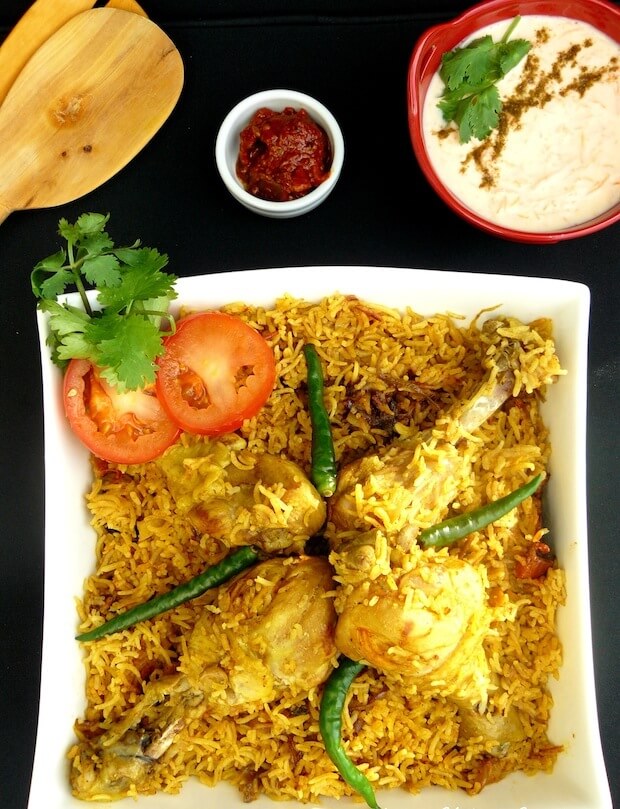
Bombay Biryani
Reading Time: 3 minutes

A dish that has evolved through the ages still retains its richness of flavour and regional variety

Bombay Biryani

Perhaps the most famous rice dish in the world today, biryani (also known as biriyani, buriyani, beriyani) has a rich, varied and interesting culinary history.

Biryani has received its cult status today as an Indian dish, but this rice preparation originated in Persia (there is a village named Beryani in Iran). The term ‘biryani’ is derived from the Farsi word ‘beryan,’ which means fried or roasted. It is quite the debate as to how this dish could have arrived in India. Some say it was introduced by Persians through Afghanistan to the northern regions of India, while others claim the dish was first introduced in the Malabar region of Kerala by Arab traders who came via the Arabian Sea in search of black pepper and other spices. There are other colourful stories too, but these two are the most promising ones.

Over the centuries, cultural and regional differences gave rise to different types of biryani in India. Some of the famous preparations are Awadhi (Lucknow style) biryani, Hyderabadi biryani, Arcot biryani, Thalassery/Malabar biryani, Calcutta biryani, Dindigul biryani, Bombay biryani, Sindhi biryani to name a few; but the list is endless… The different styles of this dish is not limited to India; there are many variations that can be found across the globe and some of the famous, must-try ones include Iranian biryani, Idiyappam biryani (Srilanka), Indonesian biryani, Burmese biryani, Malaysian biryani, Mauritian biryani and Kashmiri Yakhni biryani.

So what is a biryani?

Not an easy one to answer but in a nutshell, a biryani is a rice preparation in which the rice is lightly fried or roasted in ghee and cooked using fragrant spices, and then mixed with the meat (marinated and cooked separately as a thick gravy with spices). The two are then bought together by layering and slow heat is applied to completely cook the dish. Traditionally only lamb was used to make biryani, but today all types of meat, seafood and even vegetables are used in preparing the dish.

Indian biryanis can be broadly classified into two types; kutchi (raw) biryani and pukki (cooked) biryani. In kutchi biryani, raw rice is added (not fried or roasted in ghee) to raw or half-cooked meat which has been marinated in a spice paste and the combination is cooked together. In the pukki style, the rice is first roasted in ghee and cooked with spices, layered with cooked meat and then finished off by applying slow heat. These are the two competing styles of preparations, the most famous examples of kutchi being the Hyderabadi and Arcot style biryanis, while Awadhi and Malabar biryani are of the pukki variety.

Bombay biryani

This recipe is one of the lesser-known styles but a simple, delicious and flavoursome preparation.

4 cups Basmati/long grained rice, washed, soaked and drained

8-10 chicken legs/drumsticks

Vegetable oil

6 large red onions, sliced

2 large potatoes, sliced

2 tsp garlic paste

3 tomatoes, chopped

3 tsp roasted cumin powder

3 tsp red chilli powder

1 tsp turmeric powder

1 inch piece ginger, cut into thin strips

1 cup yoghurt/curd

Salt for seasoning

A few drops of Kewra essence

1 tbsp garam masala

Heat enough oil in a pan to deep fry half of the onion slices till golden-brown, drain on absorbent paper and keep aside. Deep-fry the potatoes in the same oil till light brown, drain and keep aside.

Heat 4-5 tbsp oil in another deep pan, add the remaining onions and garlic paste. Saute on medium heat till the onions have turned translucent and light brown. Add the tomatoes and sauté again till the oil clears, and then add the cumin powder, chilli powder and turmeric powder. Add the chicken pieces and mix well. Cook on medium heat for 2 minutes.

Add 8 cups of water (2 cups of water for 1 cup of rice), season with salt and bring to boil. Then add the potatoes, ginger strips, curd and cook for another 5 minutes. Add the drained rice and cook on high flame for 5 minutes. Lower the heat and cook for another 10 minutes or till most of the water has been absorbed.

Layer the top of the rice with the fried onions, kewra water and garam masala. Cook covered on low heat till the rice is completely cooked. Mix well just before serving.

Best accompanied with raita/yoghurt dip, pickles and roasted papad.

Politics, promises and principles

0
Reading Time: 3 minutes

The week starting 12 May will be an interesting one for those in our community.

On the one hand, the results from India’s general elections will start to come in. It will be fascinating to see the direction towards which the people take the country, as it finds itself beset with a host of societal and developmental problems.

On the other hand, closer home, the Australian government will announce their budget, which by all accounts, will extend way beyond being merely an economic document, as it looks set to have a profound influence on the nation’s social fabric.

India’s ongoing General Elections seem to have been held fairly so far, respecting process in execution. Yet questions have been raised about the candidates themselves. In the Parliament just dissolved, 76 out of 543 members had criminal cases in court against them. A number of these and new candidates have criminal cases pending against them.

Indian Link’s election survey revealed that the issue of widespread corruption is the deepest malaise in contemporary Indian society. It seems that politicians do well in their job: assets declared by sitting members to the Election Commission reveals thattheir net worth has increased two to three times during their tenure in office. Non-resident Indians may have experienced corruption at more grassroots levels when on visits back to India they have had to deal with public service officials: their willingness to co-operate is in direct correlation to other benefits provided. Corruption has been difficult to weed out, and for the new government, perhaps this could be an important – no doubt, herculean – task if they wish to undertake it. A change in government, if there is one as suggested by our poll, as well as others, does create an urgency to make a mark, and it will be interesting to see the milestones achieved after say, 180 days. Such a change will also give the defeated party an opportunity to take a hard look at themselves and hopefully rebuild to something bigger and better.

The Australian budget will need to repair the damage of the spending undertaken by the previous government. For those sceptical about this statement, do note that in the last year of the Labor government, after the May budget, we saw a mid-year review, only to be followed a few weeks later, with further updates by an ashen-faced Treasurer Wayne Swan and Finance Minister Penny Wong. The situation had spiralled out of control. To the layman, a budget has two aspects to it; money in (via taxes) and money out (via services). To balance our books, both aspects need to be looked at. PM Abbott’s promise of no new taxes will be severely challenged if the desire is to bring in economic stability. Rather than end up like other nations, such as Greece, Spain or Portugal, a little bit of economic pain now can be preventative of long-term problems. Whatever happens, expect it to be a controversial budget as economic entitlements are scaled back and taxes increased.

In our home state of NSW recently, it’s been a question of principles. The nature of our politics certainly can make for a good drama series. Labor or Liberal, both sides have had a horrid time with the Independent Commission Against Corruption (ICAC). Monies in one form or another have exchanged hands and with no clear rules, the smell test in all this has been ignored. Nonetheless, it is good to have an authoritative body like ICAC in place: it is despised by the wrongdoers but it shines the spotlight in the grubby places of politics.

In India, the Electoral Commission sets strict limits of around $122,000 per candidate per constituency. It is believed that in the last general election of 2009, parties exceeded these limits many times over. Most assessments for that election report a total expenditure of $3.3 million per constituency. Last month, CMS-India estimated that total expenditure in this election would be over $3 billion or about $6.5 million per constituency. Doubtless, those that back the winning candidate expect some favours in return. Perhaps India needs to borrow the ICAC concept.


Indian Link’s top 5 Sydney Film Fest picks

0
Reading Time: 2 minutes

 We know that we’re pretty excited about the upcoming Sydney Film Festival 2014 and you should be too! Our top 5 picks will show you why

Faith Connections


This is Pan Nalin’s (of Samsara fame) latest offering. It looks at India’s Kumbh Mela; the ultimate pilgrimage for 100 million Hindus.

Read our exclusive interview with the director here


Friday On My Mind: Pan Nalin

Hear Pan Nalin chat about Faith Connections and his craft.

Charulata

If you haven’t heard of the 1964 classic yet, it’s  Satyajit Ray’s adaptation of Rabindranath Tagore’s novel. Why go see it? It’s a love triangle centered around a lonely housewife in Victorian Calcutta, and was the start of Ray’s success as a master of world cinema.

Siddharth

This is a film about an Indian father desperately searching for his 12-year-old son who goes missing after being sent to work at a factory. And it was also a hit in Venice and Toronto.


Gourmet Cinema: The Lunchbox

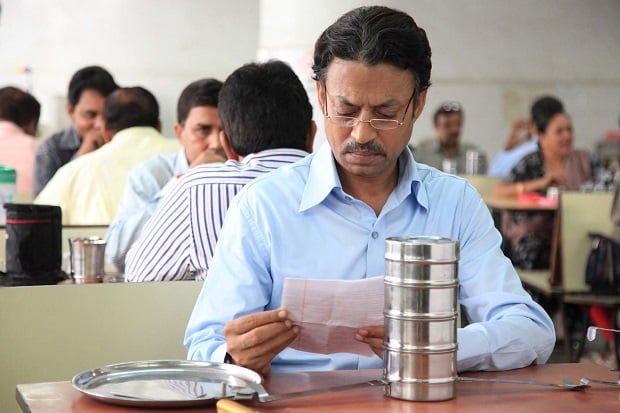
This one has us drooling all over our keyboards at the very thought of top Australian celebrity chef Luke Mangan whipping up an Indian feast to go with this flick. Irrfan Khan stars in this hit indie food and romance filled movie, which perfectly suits a multi-course spread of  glass brasserie, with bubbles, Little Creatures beer and Eden Road wine.

Read more about the film here

Indian Link's top 5 Sydney Film Fest picks

0
Reading Time: 2 minutes


 We know that we’re pretty excited about the upcoming Sydney Film Festival 2014 and you should be too! Our top 5 picks will show you why

Faith Connections


This is Pan Nalin’s (of Samsara fame) latest offering. It looks at India’s Kumbh Mela; the ultimate pilgrimage for 100 million Hindus.
Read our exclusive interview with the director here
 

Friday On My Mind: Pan Nalin


Hear Pan Nalin chat about Faith Connections and his craft.

Charulata


If you haven’t heard of the 1964 classic yet, it’s  Satyajit Ray’s adaptation of Rabindranath Tagore’s novel. Why go see it? It’s a love triangle centered around a lonely housewife in Victorian Calcutta, and was the start of Ray’s success as a master of world cinema.

Siddharth


This is a film about an Indian father desperately searching for his 12-year-old son who goes missing after being sent to work at a factory. And it was also a hit in Venice and Toronto.
 

Gourmet Cinema: The Lunchbox


This one has us drooling all over our keyboards at the very thought of top Australian celebrity chef Luke Mangan whipping up an Indian feast to go with this flick. Irrfan Khan stars in this hit indie food and romance filled movie, which perfectly suits a multi-course spread of  glass brasserie, with bubbles, Little Creatures beer and Eden Road wine.
Read more about the film here

Dabba dreams

0
Reading Time: < 1 minute

Written and directed by the talented Ritesh Batra, Dabba (The Lunchbox) is set in Mumbai and revolves around a mistaken delivery in the dabbawala (lunchbox service) popular in Mumbai. This leads to a relationship between Saajan, a lonely widower who is about to retire, and Ila, an unhappy housewife. They start exchanging notes thorough the daily lunchbox that inspire them to create a fantasy world together. The film was screened on May 19 as a part of the International Critics’ Week at the 2013 Cannes Film Festival, where it received a standing ovation of over 15 minutes and very positive reviews. Dabba also won the Critics Week Viewers Choice Award, also known as Grand Rail d’Or.

Batra is a graduate from New York University’s Tisch School of the Arts film programme, and his talent has been lauded at Sundance, the Indian Film Festival of Los Angeles (IFFLA) and by French-German TV channel ARTE. The Dabba screenplay has also been applauded and awarded an honourable Jury Mention at the Rotterdam International Film Festival and was promoted at the Goa NFDC Film Bazaar, the Berlinale Talent Project Market and at the Torino festival screenwriter’s lab.

Creating a resilient rice

0
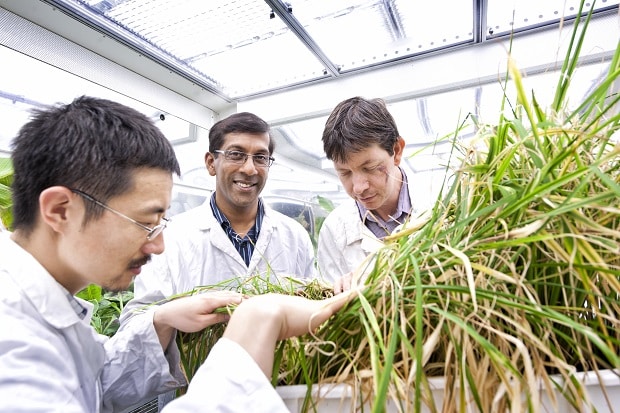
Professor Mundree (centre) with two colleagues
Reading Time: 2 minutes

Researchers from Australia and India are combining efforts to create a sustainable crop, despite draught and salinity conditions

Professor Mundree (centre) with two colleagues


Path-breaking research might just be the answer to a futuristic rice crop benefitting both farmers and consumers. Scientists at Queensland University of Technology (QUT) partnered with the International Centre for Genetic Engineering and Biotechnology (ICGEB) in New Delhi and Tamil Nadu Agriculture University (TNAU) in Coimbatore, to work toward a rice crop that will withstand drought and salinity conditions.

In its first year of research, Professor Sagadevan Mundree, Deputy Director of QUT’s Centre for Tropical Crops and Biocommodities spoke to Indian Link about the $600,000 project, funded jointly by the Australian government and the Department of Biotechnology, India under the Australia-India Strategic Research Fund.

“Our focus is to obtain molecular insights from a native Australian resurrection grass and use these insights to develop rice that is more resilient to drought and salinity stresses using biotechnology and molecular breeding approaches,” states Prof Mundree.

He goes on to say that the basis of this research comes from a native Australian resurrection grass collected near Charleville in Queensland. “This Australian grass can tolerate extreme environmental conditions, when dried for weeks can ‘resurrect’ (revived) within a time frame of 24-72 hours upon exposure to sunlight and water. We have used a number of strategies to isolate genes that confer drought and salinity tolerance from this grass, and one of our objectives is to transfer such genes into rice. Rice is a grass and is closely related to the resurrection grass,” explains Prof Mundree.

A fourth generation South African, Prof Mundree has worked on resurrection plants for over fifteen years in South Africa, and is currently leading a team of ten at QUT, ranging from post-doctoral scientists and research assistants to students from diverse multicultural backgrounds of Australian, Indian, Vietnamese, Iranian, Kenyan, Singaporean and Chinese origin. “Rice is an important crop to our region and particularly to the Indian sub-continent,” adds Prof Mundree.

So what is the current status of the research? “Here at QUT we have already isolated genes from the Australian resurrection grass that would be used to enhance stress tolerance in rice,” he explains. “From here on we get a better understanding on the workings of the drought and salinity tolerance genes, and are preparing for these to be transferred to rice by our Indian partners”.

What are the different strategies that will be utilised in this collaborative project? “This project will utilise both biotech and molecular breeding approaches to enhance drought and salinity tolerance in rice,” states Prof Mundree. “The gold nugget of this project is the opportunity to bring together scientists from QUT, ICGEB and TNAU with their collective expertise to achieve a satisfactory result”.

To the question of whether this research has garnered enough interest among rice growers, Professor Mundree quips, “This three year project has already attracted interest from farmers and companies who are keen to see a demonstration of stress-tolerant rice”.


A Silk Road spine-tingler

0
In Search of Shipki La
Reading Time: 3 minutes

John Pollard’s In Search of Shipki La is a thrilling mystery that looks into the disappearance of a man on the hippie trail of the 60s

In Search of Shipki La

In Search of Shipki La, 2013, is a novel by John Pollard, a Sydney academic. Shipki La is a pass which was once an offshoot of the Silk Road that served as a trade route between Tibet and India in days gone by, used by travellers and merchants for millennia. However, since the 1960s, or even earlier, only residents of the pass have been allowed access. Shipki La itself makes only a cameo appearance in this novel, but is a catchy title nevertheless.

Author John Pollard has actually set this mystery novel in a series of interesting places along what one may call the “Hippie trail” of the 1960s, which he and his wife, like many young people of that generation, took from Europe to the subcontinent and on to South East Asia. To him and his cohorts, these were quite strange and ‘mysterious’ places in the 1960s, and into these he throws an imagined mystery; the disappearance of a young man, and the attempt to find clues 40 years later, and to write a novel that would tell readers about these places then and now.

Pollard writes in his blog that one of the reasons he wrote this thriller was that he often wondered what it would be like for a Western traveller to ‘disappear’ in one of these places in the 1960s, and what an attempt to unravel it 40 years on would be like.

The novel begins with the disappearance of a young American draft dodger Dan, around 1968. His parents in Buffalo, New York, engage the services of investigators to try and find out what happened to their son. The last coded postcard they had received from him suggested that he was in Afghanistan. However, the investigator is unable to unearth any leads.

Almost 40 years later, Dan’s widowed mother re-engages the investigation company to find out what fate befell her son when she chances upon the names of an Australian couple that was camped in Kabul at the same time as her son was. Hoping they might be able to provide information regarding her son’s disappearance. The search is renewed, and a young private detective and his Australian friends find themselves travelling to Peshawar, Delhi, Simla, Rampur, Shipki La, Bangkok and Laos to find the clues to Dan’s mysterious disappearance.

The book works well more as a mystery novel than a travelogue, as the focus of the novel is the Australian couple and the private investigator and what they do, rather than the sights, sounds and people of the places they visit in the course of their search for clues to Dan’s disappearance. There are some really cliff-hanging moments in the novel, and the attempt by the private investigator to piece together some clues surrounding Dan’s disappearance from a few titbits are full of suspense. There is also the trios brush with the Thai police, their kidnapping by a bar owner in Bangkok, which ends in a nail-biting finish.

There is an old-world quality about the novel which may appeal to a certain age cohort, however, some may say that it is perhaps too quaint and dated in the way many characters in the novel are portrayed. Most of the people in India and Thailand (where the bulk of the action takes place) are only marginal players and serve more as props to the protagonists; the Scotchman Andy and his two Australians friends. They do the thrilling stuff and are subjects who have agency; the locals do not. From that point of view, it is not in the same league as Colin Cotterell’s books on the fearless Laotian Doctor Siri Paiboun or Alexander McCall-Smith’s Precious Ramotswe of the No 1 Detective Agency series, where the local sleuths are very much in charge of their investigations, despite all the hardships they face. It is nevertheless a fast-paced, racy read for a lazy afternoon.

John Pollard is a Sydney-born academic who is now a Professor and Dean of the Faculty of Economics and Financial Studies at Macquarie University.

ANZAC Sikhs

0
Reading Time: 7 minutes

Sikh ex-Servicemen pay an ANZAC tribute to their forebears


They shall grow not old, as we that are left grow old
Age shall not weary them, nor the years condemn
At the going down of the sun and in the morning
Lest We Forget

Ode of Remembrance, Laurence Binyon

2014 marks the centenary of what Ernst Haeckel appropriately dubbed the “First World War” – a war where nations collaborated to battle against one another. In the aftermath, millions became canon fodder, countless more were left physically scarred or mentally broken, economies collapsed and political boundaries redrawn.

Amidst the unimaginable horrors of the great war, like a phoenix rising from the ashes, emerged the unquestioning spirit of self-sacrifice, loyalty, mateship, courage, honour and above all else, duty – all noble qualities, much diluted and often forgotten in today’s self-serving society.

It is this indomitable spirit that we pause to commemorate, and if possible emulate, a century on, as we honour the sacrifice of not just the fallen but also those who lived on to tell the tale to the future generations.

Although geographically isolated, Australia and New Zealand nevertheless made significant contributions to the allied cause, forging a proud nation in the process. Ninety-nine years ago on March 25, precisely at the crack of dawn, the Australia and New Zealand Armed Corps landed at what has since become known as ANZAC Cove in Turkey, to take part in the ill-fated Gallipoli campaign against the Ottoman Empire. Outmanoeuvred, the ANZACs nevertheless bravely held fort till their evacuation much later.

What is still relatively unknown is the contribution of the Indian and Nepali battalions, specifically the Sikhs who formed majority of the sub-continental troops fighting in the region on behalf of Allied Forces. Of the 47,000 Indians killed in the four-year battle, 1,400 were lost at Gallipoli alone. Particularly noteworthy is the contribution of the 14th Sikh regiment. 371 Sikhs fought valiantly to death on June 3 and 4 1915. Their bravery is exemplified by the fact that Sikhs won 14 of the 22 Victoria Crosses awarded to Indian soldiers.

At the ANZAC Day dawn service and subsequent march this year, thousands gathered in Sydney to salute this spirit of self-sacrifice. The heavens too opened up in acknowledgement as veterans marched proudly through Sydney CBD in what has become an iconic Aussie tradition.

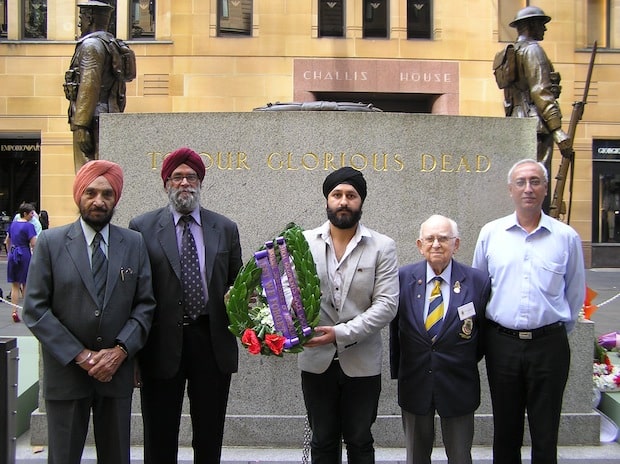
Rubbing shoulders yet again with mainstream veterans were their Sikh counterparts, better known these days as ANZAC Sikhs. Dressed in dark blue turbans, impeccable suits, with medals flashing proudly on their chest, the Sikh regiment led by Colonel Mahinder Singh celebrated Aussie spirit of mateship and larrikinism. This year twenty-five Sikh ex-servicemen and women under the banner of Sikh Regiments WWI and WWII took part in the march. They also took part in the wreath laying ceremony at the Martin Place Cenotaph.

Among the marchers this year were retired ex servicemen Col Charanjit Singh Cheema, Sgt Major Kuldip Singh, Havildar Harbant Singh Bathal, Captain Sarjinder Singh Sandhu, Corporal Jagjit Singh Toor, Sgt Sarabjit Singh, Subedar Dalbir Singh, Corporal Nirmal Singh Sandher, Havildar Mehar Singh, Subedar Malkar Singh, Subedar Balbir Singh Banwait. Honouring their ancestors were Ajmer Singh Gill, Bawa Singh Jagdev, Vikramjit Singh Grewal, Manjinder Singh, Suhinder Singh Kalsi, Jasbir Singh Randhawa, Jarnail Singh Gill, Amarinder Singh Bajwa, Ashvinder Singh Randhav and Kuldip Singh. Carrying the Sikh banner were Sandip Singh and Manpreet Singh.

Organised each year by the National Sikh Council of Australia (NSCA), planning for this much-awaited event starts well ahead. The core organising team comprises NSCA President Ajmer Singh Gill, Media Liaison Officer Vickram Singh Grewal, Lt Col Mahinder Singh, Fauji Kuldip Singh and Secretary Bawa Singh Jagdev OAM. Amarinder Bajwa, MP Singh, Angad Singh, Amarjit Khela and Narinderpal prepared promotional materials.

The Sikh contingent first marched in ANZAC Day parade back in 2007. To educate the wider community on the contributions of Sikhs during the various military campaigns, the NSCA actively lobbied with peak defence bodies in the country as well as RSL. Their efforts were rewarded in 2007, when Sikhs veterans were officially granted permission to take part in the ANZAC Day march.

Spurred by the enthusiastic reception at their debut, the contingent also organised an all-Sikh bagpipe group, the Dasmesh Band to be flown in from Malaysia at a whopping cost, to accompany them the next year.

Since then the ANZAC Sikhs have only gone from strength to strength, prompting the Nepali and Indian contingents to also follow suit.

“A solemn ceremony of remembrance and commemoration, ANZAC Day is integral part of Australian history and a fitting tribute to the sacrifices made by those soldiers for the freedom we now enjoy in Australia,” Ajmer Singh Gill told Indian Link.

“Anzac Day is a reminder of the debt of gratitude that we owe as a nation, to those who are currently serving and to those who have served in the past. As we marched past the Cenotaph with our heads down in reverence”, he poignantly remembered, “we could imagine, the pain and suffering of  those who laid their lives  so that we could live free, and the sounds of the bullets from the guns in their hands and the noise of the battle in the distance”.

“While marching we could only imagine their resolve and force that drove them up to the battlefield into assault and their tenacity that held them all those days and nights for many months on the battle field. A long vigil gazing into death defending their post, ceding nothing but sacrifice everything they had, to defend their post. We Sikhs salute them”, he continued.

“Sikh veterans are very honoured to march on the same day proudly displaying their campaign medals and look forward to it all year, be it rain or shine. They feel even prouder when so many Australians clap as they march on”, he added.

Seven years on, the sight of the resplendent pagdi (turban) clad veterans marching, still gets looks of curiosity and wonderment at their presence in a traditional “white” march.

“Over the past seven years, we’ve been able to make the wider Australian community more aware of Sikh participation in the World Wars (and other related battles). Year after year, we see more and more people cheering for the Sikh regiments – as they march in the CBD. Their applause is a huge thank you for us.

There is a sense of comradeship with other participants as well, who reminisce their old experiences (some come up to us and talk about their experiences or stories they were told about Sikhs and their courage in the World Wars,” Vickram Singh Grewal of Australian Defence Forces and media liaison officer for ANZAC Sikhs told Indian Link.

“There is a special relationship with the British and Gurkha Regiments (who also participate in the march regularly under Commonwealth and Allied Forces).  We’ve also evolved ourselves to be a more mature group of participants,” he added.

“While we’ve had some success in educating the wider community, we would like to do more within the Australian Indian/Sikh community because many are completely unaware of ANZAC tradition/significance, let alone being aware of Sikh participation”, he pointed out.

As the centenary kicks off soon, Grewal is determined to carry the message of ANZAC Sikhs to younger Australians.

Ajmer Singh Gill has also repeatedly addressed this issue of social inclusion.

“As peacekeepers, we Sikhs are proud to march on this solemn occasion. After all, we are not foreigners or strangers but very much Australians, only of a different heritage and background. Since migrating to this beautiful country, we have gladly embraced the values of our adopted homeland, while retaining our inherent identity. We have focussed on positives and are contributing to the bigger Australian picture and are very much part of the community,” he reiterated.

Herein lies his frustration that some people still do not comprehend the true meaning of the ANZAC legacy.

“Numerous Sikhs were killed in action and many more injured during the two World Wars and thousands of Sikhs fought alongside the ANZAC troops and became good friends,” he explained.“Sikhs served all over the world and were awarded 14 Victoria Crosses – the highest award for bravery. Identified by their trademark blue turbans, Sikhs have since served as United Nations peacekeepers in many countries such as Congo, Lebanon, Ethiopia, Eritrea”.

Gill has also been in talks with the Indian consulate to provide a marching band to accompany the regiment.

While the Sikh regiments are now represented in marches at Adelaide, Perth and Woolgoolga as well, NSCA, through its national membership hopes to see the participation in all Australian capital cities.

“Such events are essential to revive the memory of every man, woman and child who in those crucial years died, so that the light of freedom and humanity continue to shine,” Retd Lt Col Mahinder Singh, the leader of ANZAC Sikh contingent this year pointed out.

“The ceremony is a unique way of showing our gratitude for the peace we enjoy today and the responsibility of ensuring that the freedom and liberty won at such grave cost does not fade away. Personally, as an ex-serviceman, the ANZAC service also brings back memories from my time in active years in Singapore”.

For Amarinder Bajwa, the participation is a fitting tribute to all the Sikh soldiers who have been part of armed forces since the days of British Raj.

“Sikhs have a strong history of defending India from the external invasions and occupations in India. Therefore, it was also special for me to commemorate and support the local communities as well as remember my father who served in the Indian Army in the 2nd Sikh Regiment that also fought at Gallipoli along with other British regiments”, he recounted.

Capt (Retd) Sarjinder Singh Sandhu has been involved in organising the Sydney ANZAC Day March and Wreath Laying Ceremony since its inception in 2007.

“I must thank the great team of veterans and descendants of veterans who work together to make each march a success.”

The sight of their resplendent uniforms and burnished medals always brings a tear to his eyes.

“Their comradeship astounds me and I feel honoured to march alongside them,” he noted. “If my father, my uncle and my elder brother could see me at the march I am sure as ex-servicemen they would be proud of me. I am confident next year, being the Centenary of Gallipoli, our contingent will be much larger”.

Meanwhile Sandhu has already begun preparations for the centenary edition and hopes the Indian community will participate in large numbers to show their solidarity towards ANZAC spirit.

The first meeting is scheduled for June and will be followed up with many more to organise logistics and muster support. The committee meets at Parklea Gurudwara as well as Blacktown RSL. Additionally, the Sydney team will also help with the centenary preparations at Canberra, Adelaide, Brisbane and Perth.

NSCA’s efforts have also gained new impetus recently with renowned historian Peter Stanley of Australian Defence Force and researcher Burcu Cervik Compiegne of University Technology Sydney conducting extensive studies into the role of Sikhs at Gallipoli. Both researchers have also met up with the Sikhs to further their research effort.

This year, Prof Stanley also created a PowerPoint presentation showing some of the images he has unearthed of Sikh troops on Gallipoli. With over 25 publications to his credit, Professor Stanley will release his book on role of Indian soldiers at Gallipoli in September this year.

Meanwhile, UTS is also planning an event entitled “Gallipoli Alternatives”, to focus on alternative stories on the White-Australian version.