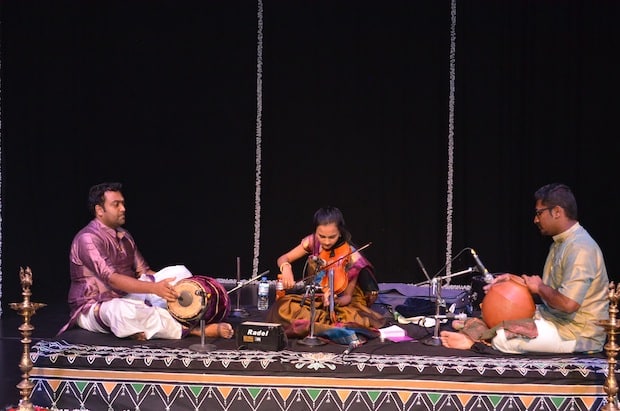
As I listened to Nirupama Raman singing Chesinidella Marechidivo in raga Thodi, I couldn’t help thinking, “What a fantastic Rama Navami indeed”. Such neat diction. Such a well-knit Neruval and Swara Prasthara. Very reminiscent of the great MLV, she gave us a typical concert feel of Chennai, or perhaps Bangalore, where Rama Navami is particularly significant; plenty of Carnatik music concerts are organised around this time.
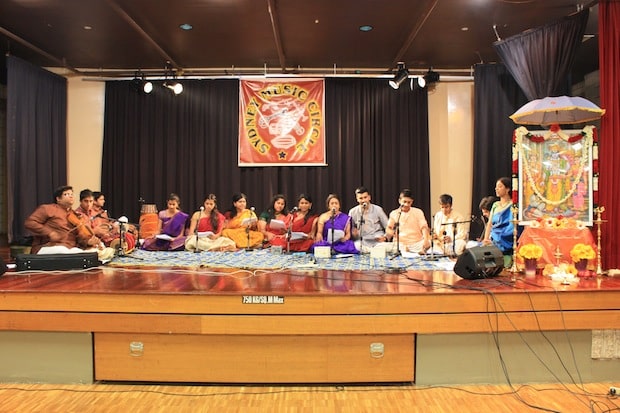
Nirupama was performing at the monthly concert organised by the Sydney Music Circle (SMC).
The afternoon at the Dundas Community Hall started with Ankitha Ananda who, gifted with a sweet voice, presented an impressive varna in Kambodhi, Gananathena in Arabhi, Vande Vasudevam in Shree, an elaborate Shankara Bharana (a Devi krithi by Swathi Thirunal), Ramanamame in Desh and a thillana in a rare raga Shudda Salavi. Dilip Ramaswamy accompanied Ankitha on Violin.
Nirupama started with varna in Kethara Gaula and continued with Chesinidella, Anupama Gunambudhi in Atana, Kapali in Mohana and a Thillana in Sindhu Bhairavi. A first time performer at the Sydney Music Circle, she established that she has good control over the artform, showing confidence and skill. Kapali was indeed a treat to the audience. Sanjay Ramawamy gave a very pleasing violin accompaniment and was in command of his craft throughout.
The third item Sri Rama Jayam was next to follow and was conceptualised and presented by Hamsa Venkat, the well-known Bharatha Natyam exponent in Sydney. It was a magnificent musical garland of compositions on Rama by sages Valmiki, Thulasidas, Mira Bai and composers such as Thyagaraja, Muthu Swamy Dikshita, Arunachala Kavi, Annamacharya, Purandara Dasa, Kalidasa, swathi Thirunal and others. Included were as many as seventeen composers. These were presented in attractive ragas such as Natta, Hindola, Yadhukula kambodhi, Ananda Bhairavi and others. It was a feast of all time compositions such as Yaro Ivararo, Mamava Pattabhi Rama, Yetiruhananau, Jagadanandakaraka, Pavanaja stuthi patra and others. 14 vocalists and instrumentalists delivered the items. These included Abhinav Rajkumar, Devika Krishna Murthy, Lakshmi iyer, Namrata Pulapaka, Siddhath Murali, Sindhu Sharma, Srit Balaji, Sudarsha Ravi, Vasudha Narayan, Kranthi Kiran Mudigonda, Nagaraj iyer, Nirmal Ayyar and Ramesh Haricharan. Many of the items came out with packed feelings. It was a delight to watch the youngsters, most of who are born and brought up in Australia, perform in such a pleasing manner. Mahan Ayyar provided the powerpoint presentation that went with the item.
It was particularly impressive to note that young Nirmal Ayyar provided mridanga support for all the three items of the afternoon. Kudos to the SMC for arranging such an event.
Aboriginal art takes on new forms with some Kashmiri influence, writes MAMATA SALAKAPURAPU
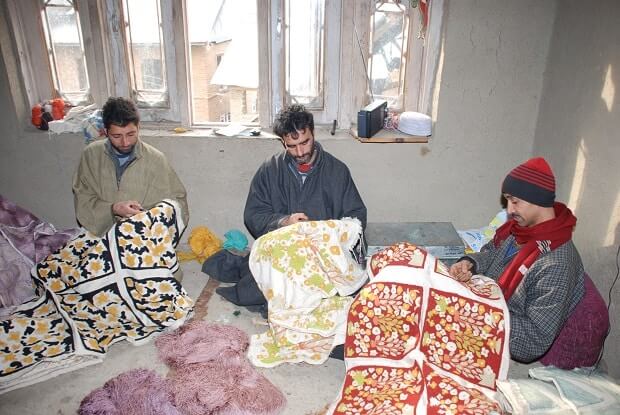
Craftsmen working in India
An Aboriginal pattern in vibrant colours beckons to me from a loaded table. A long-time lover of the simple but deeply alluring Aboriginal designs, I am instantly drawn into the swanky gift shop.
It turns out to be a cushion cover with an embroidered Aboriginal design, something I’ve never seen before. There are also pillow covers, throw rugs and carry bags, in the most captivating desert patterns which I’ve seen before only on large wall paintings, usually with extravagant prices. But these are simply stunning.
The embroidery on them is distinctly Indian, I tell myself. I look closely, and sure enough, it’s Kashmiri chain stitch, hand embroidered.
On the next table I see more Kashmiri-ware – papier mache jewellery boxes. But the painting on them is not Kashmiri – it is Aboriginal!
Is this Kashmiri stuff on sale, or is it usable Aboriginal art?
Suddenly I realise why I am transfixed: this is a wonderful fusion of Kashmiri crafts and Aboriginal art.
And the result is breath-taking.
Rama Sampson
The cross-cultural collaboration
The undulating patterns of the desert art of the first Australians, lend themselves beautifully to the elegant Kashmiri chain stitch. Just as the Aboriginal art must cover the entire canvas, the Kashmiri chain stitch technique is traditionally worked across the entire canvas, so that the base fabric is not visible at all.
It made perfect sense to South Australian artist Carolyn Wilson when she first encountered Kashmir’s beautiful stitch craft heritage, and she was quick to identify the potential for combining the two art forms.
While both forms are so distinctly different, they are also similar in many ways, not least that they have survived centuries, handed down to artists and artisans from generation to generation. The techniques used are unique to both their regions, and both are legacies of their culture.
It is this commonality that Wilson seeks out in her work with the arts and when she interacts with people from different cultures – believing passionately that the arts can be used to create a better world. In fact, she even calls her organisation Better World Arts (BWA).
And thus at BWA, a collaboration was born using the cultural craft heritage of the Kashmir region, and the traditional art of the Anangu Pitjantjatjara Yankunytjatjara (APY) Lands of Central Australia.
“In effect, it is Australian Aboriginal art expressed via Indian Kashmiri handicraft,” says Carolyn, who first came up with the idea in 1996.
The Anangu art forms are sent to India, where they take shape into handmade rugs and cushions.
“Much of the work over the past 15 years has been carried out by Sidiq & Sons, who inherited the family business from their grandfather, a Kashmiri woodcrafter of high renown in his times,” Carolyn reveals. “I send them meticulous information through images, about size, finishing, colour-dye accuracy, wool… but Better World Arts would not have come so far if not for the skilled and dedicated craftsmen on the other side. The finesse and subtlety of every stitch that goes into the rugs and cushions, amply reflects their fine skills. The fact that they have lived on the Silk Route for centuries is so very evident from their work!”
And Carolyn’s own fondness for everything Kashmiri is just as evident from her descriptions of the “serene and beautiful” landscapes and people she has met there.
The work is produced in limited editions and every product comes with a certificate of authenticity, which ensures that consumers draw pride in the uniqueness of the artwork and enjoy their possession.
The products are then sold wholesale to celebrated Australian art galleries, and profits are shared between Better World Arts, the Australian art centres and the Indian artisan groups.
Aboriginal artists with their work
Empowering communities
BWA is not just about arts: it’s also about creating a better world for disadvantaged communities, and as such, it has evolved into a social enterprise over the years.
For the Anangu people, BWA provides an opportunity to move away from predictable commercialised Aboriginal images with these new products. Equally, for the Kashmiri artisans, BWA has opened up an entirely new market.
“Australian Aboriginals do not have a manufacturing culture; and intellectual property is not a known concept in Indian handicrafts,” explains Carolyn.
The motive is to provide culturally appropriate and sustainable employment for everyone involved in the projects, while still ensuring that culture and skills are retained from where they originated.
Some 50 Aboriginal artists are part of the enterprise,and more than 60 Kashmiri artisans involved in producing the rugs and 25 working with the papier mache. Thanks to BWA, they are involved in sustainable, culturally enhancing work, and helping preserve centuries’ old tradition.
The Anangu artists are given royalties from the products. And the role of BWA does not end by simply sharing out the monies. The challenging task is to engage artists within the modern community and ensure that their social needs are met. A share of the profits is put towards community projects as well.
For people who come from Central Australian lands where there is no specific word for art apart from ‘walka‘, which loosely translates as “meaningful marks,” the rest of the country often emerges as foreign territory. They need help in every aspect of life like housekeeping, formal education, banking, health, communication etc., and access to these basic services often needs a translator. Though the government provides a lot of support to Aboriginals, many need assistance in effectively utilising services from indigenous community centres. This is where BWA steps in and fills the gap. The staff of BWA go beyond the call of duty to assist the artists in every way to the best of their ability.
Ngura Wiru Winkiku Indigenous Corporation that translates approximately as ‘Better World’ (literally ‘lovely country altogether’) is the result of persistent work by BWA in setting up a location in Adelaide to serve as an exclusive space for Anangu and other aboriginal artists. It is financed from the combined profits of BWA and the Australian artist communities without any aid from the government. Located in the same premises as the retail outlet of BWA on the Commercial Road, Port Adelaide, this is one place Anangu can call and identify as their own.
Abdul Guli at work in Srinagar
Recognition
BWA has crafted many product lines from abstract art, and its art pieces are showcased across the country. The business has expanded to retails outlets in Adelaide, Alice Springs, Canberra, Darwin, Fremantle, Hobart, Perth and Sydney. In 2008 BWA was a finalist at the Telstra Business Awards in the Social Responsibility Category. Vogue Living magazine also did a major feature and BWA often finds its products listed in many “desirable gifts” lists.
The cross-cultural collaboration model has now been extended to Nepal, Tibet and Peru, and the products have diversified into lacquerware boxes, jewellery and handbags.
And how do the Aboriginal artists think of their collaboration with Kashmiri artisans?
“They reciprocate with song and dance when they see their abstract art take shape as tangible products!” says Carolyn. “To them, song, dance and art are all integrated in a oneness, reflecting an aspect of their life that cannot be separated. So there’s a story associated with each and every product”.
As the Indian armed forces have been marred with mishaps lately, investigation and prevention is now key
In recent months there have been multiple fatal accidents within the Indian defence forces. Especially the Indian Navy and Air Force has been on receiving end, with several tragedies. These series of setbacks raises serious doubts and questions about procedures, training and quality of gear used by the defence forces. On record, the Navy has experienced 11 mishaps in a quick succession since August 2013. Of these, three were deadly, where precious lives of defence personnel were lost and several crore in damages.
To cite a few examples:
1) When: 14th August 2013
On board: INS Sindhurakshak (Kilo class submarine)
Incident: Blast in torpedo compartment caused submarine to sank while it was in Mumbai harbour
Number of deaths: 18 crew members killed
2) When: 26th February 2014
On board: INS Sindhuratna (Kilo class submarine)
Incident: Fire in cables led to smoke in 3rd compartment leading to deaths by suffocation while underwater in training mission
Number of deaths: 2 crew members killed and 7 injured
3) When: 7th March 2014
On board: INS Kolkata (Kolkata class guided missile destroyer)
Incident: A valve on a CO2 bottle malfunctioned during a sea trial of the vessel’s carbon dioxide fire-fighting unit at the Mazagaon dockyard
Number of deaths: 1crew member killed and several injured
4) When: 28th March 2014
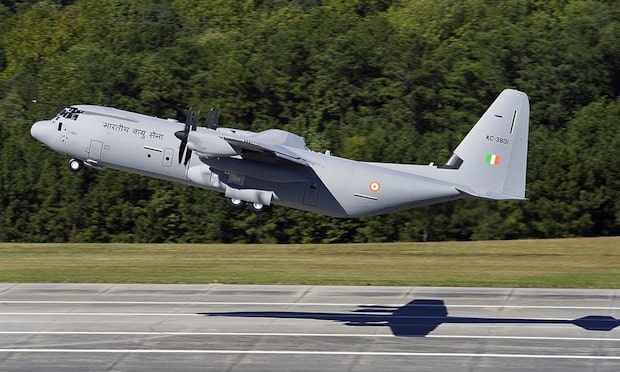
On board: C-130Jtransport aircraft
Incident: Newly acquired aircraft with best safety records crashed near Gwalior after take-off from Agra air base. Six of these aircrafts have been inducted at
of 6,000 crore Rs. from US.
Number of deaths: 2 Wing Commanders, 2 Squadron leaders and 1 crew member
A total of 26 souls have been claimed since August 2013.
It is essential to understand and realise that any arm of the defence force in the world is not completely free from accidents. Fatalities do occur occasionally even at peace time, and this happens even among the world’s biggest and most sophisticated defence forces. To put things into perspective, the US Navy experienced several incidents in FY 2013 which caused occupational injury, resulting in fatality and/or property damage worth more than US$2 million. The United States Air Force experiences multiple fatal mishaps every year involving aircrafts, helicopters, among others. In January 2014, a US Air Force helicopter crashed on the coast of England, killing four onboard. There have also been several lethal incidents where USAF F-16 fighter jets have been involved. This goes to show such accidents are part of the game and can be minimised, but not entirely evaded.
Rightly, what matters most is lessons learned from mistakes and how such accidents are best minimised. This would, first of all, involve a thorough, independent and transparent court of inquiry to get to the bottom of the reason of each incident that caused loss of life and/or significant damage. Once the root cause(s) have been established, careful corrective changes must be brought into crew training, operating procedures, policies, among others. Maintenance methods and quality of workmanship need to be closely scrutinized to keep a tab on quality. This needs lot of will and courage from the government and its respective top brass. As an example, if recent media reports are to be believed, a recently crashed C-130J possibly had fake Chinese parts. In 2011-12, a US Senate armed services committee traced these counterfeit electronic parts used in US military systems to a company in Shenzhen, China.
The unfortunate and sad situation is to then unearth whether the defence equipment was being maintained, built or purchased with compromised quality due to kickbacks or lack of quality control. Consequently, then Admiral DK Joshi resigned as Navy chief, owning moral responsibility for accidents aboard submarines. This is also a first time in the Indian Navy’s history that any Admiral has resigned before completing his tenure. While his resignation shows him as a man of highest integrity and standards as reported in the media, what needs to be seen is whether any friction and hindrance with babudom played its role too. But as it appears, current defence minister AK Antony is known for his incorrupt and simple image, and also holds an equally unblemished record since he has been in the office. While he has expressed concern for the series of mishaps, he has conveyed that the Navy itself is keen to take corrective measures by undertaking a study of each incident. Though military assets have substantially increased under Mr Antony’s leadership since 2006, such accidents must be minimised. Such tragedies not only present the armed forces in a bad light, but can also have a drastic affect on confidence levels of servicemen.
Since Admiral Joshi’s resignation, the Navy has been headless and the appointment of a new chief is likely to happen soon. Whoever takes control of one of the largest navies in the world faces a challenging task of setting things straight from beginning. The main challenge is to keep accidents to a bare minimum, while not losing the thrust for modernization and without compromising on quality. It is crucial for the defence minister and the chief of defence forces to work cohesively to raise the confidence of the general public and defence personnel in India’s preparedness to thwart any unwarranted aggression from any hostile country. Any loopholes in operating procedures, maintenance, workmanship or procurement need to be addressed with utmost priority and transparency.
The Bharatiya Janata Party (BJP) set for a comfortable majority in the Lok Sabha, its candidates taking early leads in 265 of the 498 seats in two hours of vote count across the country.
The Congress, India’s oldest political party which has ruled India for a decade since 2004 at the head of the United Progressive Alliance, appeared set for an unprecedented rout.
The first result declared, in Bhagpat constituency in Uttar Pradesh state, went to the BJP. Satyapal Singh, a former Mumbai police commissioner, defeated RLD leader and Civil Aviation Minister Ajit Singh.
Information from the Election Commission indicated a BJP sweep in northern, western and central India, and the party was also making gains in states where it has been traditionally weak.
In a spectacular performance, the BJP was on the victory march in 25 out of 26 seats in Gujarat, 24 out of 25 seats in Rajasthan, all four seats in Himachal Pradesh, all seven seats in Delhi and four of five in Uttarakhand.
Officials said counting trends were now available in 498 of the 543 seats.
The stock market shot up on news of the imminent BJP victory.
Congress candidates led only in 47 of the 498 constituencies, that too mainly in the south, amid signs that the party might end up with a two digit figure for the first time in the Lok Sabha.
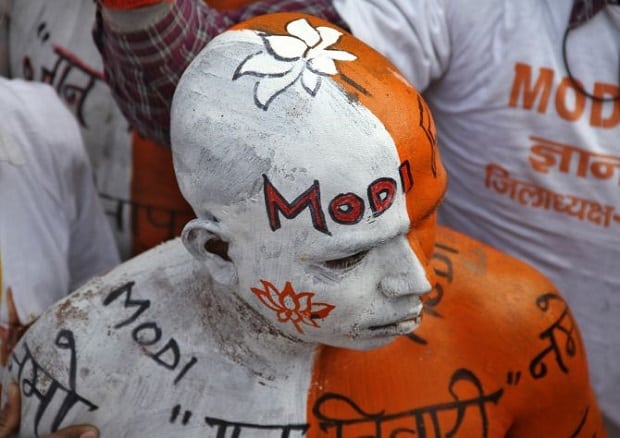
There has been no immediate word from Modi, now in Gandhinagar. But BJP activists broke into wild celebrations across the country, dancing to drum beat, bursting firecrackers and distributing sweets to all and sundry.
Congress leaders meanwhile have begun to admit defeat to the media.
Congress president Sonia Gandhi appeared headed for victory in her Rae Bareli seats but her son and party vice president Rahul Gandhi led by a slender 1,000 votes after initially being in the second spot.
An army of officials began counting on May 16, the 550 million votes polled in the staggered Lok Sabha election that began April 7 and ended May 12.
Exit polls had predicted a victory for the BJP and its allies.
A myriad of thoughts and emotions surface as one spectator follows the ANZAC Parade from the sidelines
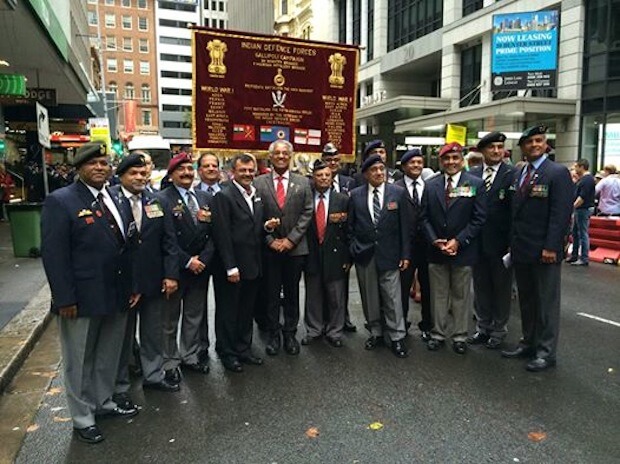
It was yet another eventful Anzac Parade for the retired veterans of the Indian Armed Forces in Sydney. The representation has grown since last year and they hope that this trend will continue with the size of the Indian contingent getting bigger every year. What was even more heartening was the cheers and the applause the marching contingent received from the enthusiastic spectators lining the streets braving the wet and cold weather. The Indian banner stood high and proud, ably and graciously carried by a scout. Joined by their families and friends, the retired officers from Army, Air Force and Navy marched in unison, their suits adorned with their service medals. While they matched step with step, ‘stomachs-in, chest-out’ as instilled during their training days, the different berets symbolised the Corps or the Arm they represented.
The untold sense of excitement was not dampened by the downpour. To be in the midst of it all, to participate in such a sacred and emotional ritual was indeed mind-blowing. There was an air of celebration and nostalgia, there were both tears of joy and grief – joy at what the ‘fallen’ had achieved and grief for the absence of the ‘fallen’.
As I briskly wove my way through the crowd trying to keep up with the moving parade and capture as many moments as possible through the lens of my camera, there were a myriad of thoughts and emotions racing through me. Why were we all there – the serving troops, the retired troops, the families and relatives? Was it all about patriotism and if so what is patriotism? Does enrolling in the armed forces mean you are patriotic? How do the civilians (as the ‘faujis’ call the others) exhibit their patriotism if it exists today?
When an individual enlists in the armed forces, he does so to protect his nation, the freedom of its tenets, interests and beliefs. He enlists because he believes in a cause, he believes in the values his nation was founded on and he is ready to lay down his life to uphold these beliefs. The problem is when the people governing the nation deviate from these founding principles. So then is it legitimate to call upon the individual to fight for and protect a cause that is now far removed from his own? Going against the government – would that make him a traitor and unpatriotic?
The loss of a soldier in the throes of war has emotional implications not only to his immediate family but the society on a whole. Who is a soldier? It will be interesting to gauge society’s take on this. Casting our eyes on what is happening around the world, the current scenario in Syria, the 2011 uprising in Egypt and Tunisia, raises many questions: are the soldiers in these cases fighting for a cause or a regime?
In the quagmire we call the global village today, often ideals, ideologies and beliefs are in constant battle with each other. People cross boundaries for various reasons, but the battles waged in their countries, be it social or political continue to hound them. They are often ready to risk their lives and return to support a cause they believe in, this may even be against the ruling government. Is it patriotism that motivates them? My concept of patriotism or ‘desh-bakthi’ while growing up in India was, protecting our borders from foreign invasion. And so as a young student of Indian history, the acts of the Indian soldiers in the British army always perplexed me – how could be they be so cruel to their Indian comrades who were fighting the war of independence? Does that belittle their loss of life because they were fighting for a regime and not a cause?
As we honour the fallen heroes of yester years, it is indeed time to look around the world we live in where nationalism and patriotism have assumed quite confusing connotations. In the words of Theodore Roosevelt, “It is unpatriotic not to tell the truth”. ANZAC Day remembers our fallen heroes who fought in the service of their nation, against oppression and the cause they believed in – to protect and ensure the safety of their family back home. Lest we forget.
(P.S. All veterans of the Indian Defence Forces who would like to take part in the ANZAC Parade, please send your service and contact details to veyunni@hotmail.com)
Left to right: Mr Rajagopal (Food Corporation of India), Prof Mohankumar (TNAU), Gimme Walter (UQ), Pat Collins (QDAFF) and Mr Chadda (Central Warehousing Corporation) at the GrainCorp export terminal, Port of Brisbane
Reading Time: 3minutes
A team effort between India and Oz is solving the problem of infestations in Indian grain
Left to right: Mr Rajagopal (Food Corporation of India), Prof Mohankumar (TNAU), Gimme Walter (UQ), Pat Collins (QDAFF) and Mr Chadda (Central Warehousing Corporation) at the GrainCorp export terminal, Port of Brisbane
The development of a new project by Indian and Australian scientists will hopefully save harvested grains from pest infestations, and improve the infrastructure of grain production in India.
Mr Rajagopal Aikkara, general manager of Food Corporation India, stated that India was the biggest exporter of rice and the third largest exporter of wheat in the world in 2013.
“In India, every year about 60 million tonnes of these grains go into bag storage,” said Aikkara. “Maintaining these stocks poses a big challenge”.
In India and Australia grains are harvested before summer and are stored in bags during the warm weather. This invites pests and eventually leads to spoilage of these valuable resources.
The issue motivated the development of a strategic research alliance between Australian and Indian scientists, aimed at solving this problem.
In 2012, they successfully bid for a competitive grant from the Australia-India Strategic Research Fund and received $3 million. The grant will fund a project led by Associate Professor Gimme Walter of The University of Queensland and Professor Chandrasekaran Subramaniam of Tamil Nadu Agricultural University (TNAU).
A team from India who are working on the project recently visited the University of Queensland’s Brisbane campus, where Indian Link spoke to them and their Australian colleagues about the project and their partnership.
“This project primarily focuses on the post harvest protection of grains by efficient handling and managing of phosphine, a fumigant chemical used to treat pest infestations in grain,” said Associate Professor Walter.
According to Professor Subbarayalu Mohankumar of TNAU, in recent years insects have become resistant to phosphine, which is a fumigant that is too valuable to lose, as it leaves no residue, has no adverse effects on the environment, and is cheap.
“We are trying to understand the best method to deploy this fumigant, which is accepted by markets worldwide, to maintain its efficacy,” remarked Mohankumar. “Specifically, what methods should we use to destroy the insects without increasing their resistance levels”.
“Grain handling in India also requires a boost in improving infrastructure from bag to bulk,” added Mr IC Chadda, general manager at the Central Warehousing Corporation. “All measures are being taken to ensure that the grains retain their quality as per global standards”.
As to the progress of the project so far, Dr Pat Collins, deputy project manager, Australia, told Indian Link, “We have been looking at the insects’ biology and ecology, studying their resistance to phosphine and conducted practical trials at regular intervals. We have also been setting up relationships between industry and science, which explains the presence of Mr Chadda and Mr Rajagopal at our meeting in Brisbane. One major output from the project is the first meeting this year of an Indian National Grain Protection Alliance”.
The Indian team is hopeful that collaboration between India and Australia will help improve the infrastructure of India’s grain production.
In turn, Australia receives the benefit of India’s experience in the area of phosphine resistance, as India has used phosphine as a fumigant for much longer than Australia.
“The alliance between all our institutions and the corporations also means that we have a larger team with broader experience who are able to work together to combat grain storage pests,” said Associate Professor Walter.
The project is jointly funded by the Indian Department of Science and Technology and the Australian Department of Industry. It also brings together researchers from the Queensland Department of Agriculture, Fisheries and Forestry, the Indian Agricultural Research Institute, the Indian Institute of Crop Processing Technology and the Central Food Technological Research Institute.
Green leafy vegetables are good for you (whichever way you eat them!)
Mamta Lalwani
This happened quite a while ago, back in India, during my college days. I was in my final year and very close to graduating so I decided to invite some college friends over for lunch to celebrate my birthday. My sister-in-law offered to cook palak paneer and I thought I would whip up my famous pani puri to serve as an appetizer.
I felt quite good having opted for the easier of the two dishes to make. The “puris” were ready made, I only needed to prepare the pani so I came back earlier than usual from college and set about doing my stuff. I took out all the ingredients, whizzed them through the blender and put them in a bowl. I got interrupted by the door bell and ran to let my friends in.
Everyone wished me “Happy Birthday” and had brought presents! I got really flustered and excited. All thoughts of the pani puri got shoved to the background, as I started ripping open my presents.
I realised I had promised them my famous pani puri so I went to the kitchen to get it. All I had to do was add the icy cold water to the ground mixture in the bowl which I quickly did, decorated it with boondi; and very confident of my speciality, served it without tasting it. One by one all my friends tasted it and each one of them put their plates down with a very weird expression on their faces. The expression was an amalgam of confusion and pure disgust! What on earth was going on? Why in the world were my friends acting like I had fed them rat poison?
I quickly tasted it myself and wished I were dead!
My sister-in-law who was making palak paneer had ground the palak and some masalas in a similar bowl to mine. I had accidentally served that with the gol gappas and she in the mean time had come into the kitchen and put my pani puri mixture in the palak paneer! The outcome was two really bizarre dishes! “Palak Puri” and “Pani Paneer”! Basically there was nothing to eat on my birthday!
There were presents for sure… but was I going to give anything back to my friends? No sir! I was going to starve my friends on my birthday! A party they’d never forget.
Surprise!
***
Sweet daughter-in-law
Nuzhat Rasheed
I was newly married and very eager to please my in-laws. In those days there were huge expectations from daughters-in-law, especially in the first couple of years of marriage.
I had only been married a few days and my in-laws were coming over for their very first meal at our place, which meant they were going to taste my cooking for the very first time. I am a very good cook, confidant of my culinary skills, but on this occasion was nervous nevertheless because it was my in-laws I had to impress.
I had decided to go the extra mile and prepare a huge feast. Since cooking came so naturally to me I never followed recipes. My dear mother had taught me all the tricks and I had made her proud. I used my instincts when it came to adding in masalas. After a full day of laborious cooking I was very pleased with the sumptuous spread.
My in-laws arrived very punctually and after the pleasantries were exchanged, dinner was served. A very strange expression came over their faces the moment they tasted the food. They all seemed to be exchanging glances and smiles that didn’t exactly say “WOW”! What were these smiles about? What on earth was going on? I was so busy serving everyone I hadn’t tasted the food yet. Maybe it was time to do so. I quickly put some food on my plate and into my mouth. Why did everything taste like desert? Oh my God! I had put sugar in the food instead of salt!
***
Nothing goes to waste here!
Ru Duff
I was cooking a chicken soup one night, along with some fried chicken, as an appetizer before the main course.
When the chicken was fried I realised there was some unused corn flour lying around. I thought it would be a terrible waste to throw it away, so I decided to use it in the soup. The excess corn flour in the soup completely destroyed it, rendering the main course inedible to all and sundry!
My husband tried to eat it on account of the fact that he was starving. However, it was an exercise in futility because it tasted like goo! My kids didn’t have it either; they hated it. I thought, the hell with this, I’ll eat it myself, but spat it out as soon as I tried it. So I decided to just throw it to the dog. The dog examined it from all sides and looked at me like I was crazy serving him a dish like that! Even the dog didn’t eat my cooking!
To salvage a little bit of corn flour, I had destroyed the family’s entire meal and wasted two chickens!
***
Red hot chilli aloos
Uzma Beg
I was visiting my cousin in London and decided to try my culinary skills on him. He was a bachelor and a very bad cook so I had a great chance of looking really good in front of the really bad. I decided to make aloo ki sabzi (curried potatoes). It was the simplest recipe and would be easy, or so I thought!
The family cook back home had said to heat up the oil and put red chilli powder in it before adding the potatoes. I put the oil in the pot to heat and settled in front of the TV to cut the potatoes and got completely absorbed in the television show that my cousin and I were watching. After a while my cousin said, “I smell something burning in the kitchen” Oh dear! I had completely forgotten about the project I had commenced!
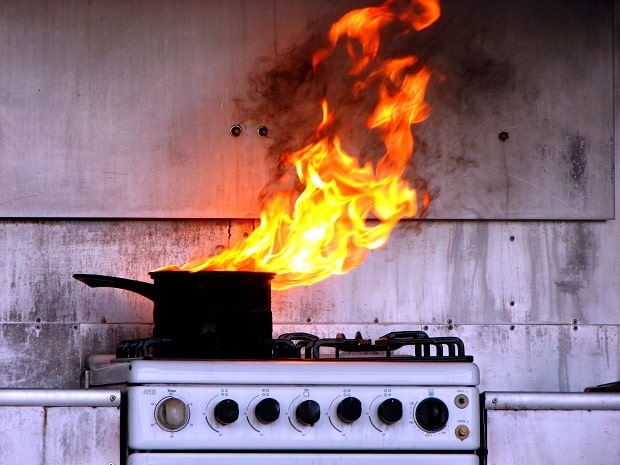
I ran to the kitchen. The oil was burning hot and there was smoke everywhere. I told my cousin to open the window and proceeded to put chilli powder in the oil. As soon as I threw in the chilli, the oil flared up into flames! I screamed. My cousin rushed into the kitchen. He was horrified to see the flames and grabbed the burning pot and shoved it under the tap in the sink. As soon as the water hit the oil the flames burst out of control and hit the ceiling! I screamed hysterically.
My cousin, realising that the apartment was going to be on fire pretty soon, grabbed the flaming pot and made a mad dash for the balcony. Meanwhile I was screaming hysterically and waving a very sharp butcher’s knife in the air. My cousin saw the knife coming straight at him and to avoid being stabbed, he made a sharp turn right into the glass dinning table which moved with his weight and jammed into the gyprock wall, putting a big dent in it!
He somehow managed to escape all this drama and make it to the balcony door. The fire alarm was deafening. There was banging on the front door and seconds later the concierge burst into the apartment. I just kept screaming uncontrollably throughout this fiasco.
The fire was finally put out. The pot had to be left outside overnight for it to cool down. My cousin was bleeding from having hit the glass table’s corner while trying to avoid being stabbed by me. The land lord had to be informed about the big dent in the dinning room wall and the black kitchen ceiling, and of course my cousin had to pay for all the damage!
Oops! All I was trying to do was make aloo ki sabzi.
***
Eggs and chicks
Veena Kumar
It was a beautiful cloudy day and my whole family demanded breakfast in bed. The boys all had a day off from school and my husband and I always started the day late anyway, so I decided to spoil everyone. They all wanted an English style breakfast with the works; eggs, baked beans and toast. But unlike the English, they wanted their eggs boiled. With at least two eggs per person it came to ten eggs in all so I decided to boil the entire case of a dozen eggs.
As soon as I put the eggs on the phone rang. Mrs Sharma’s son was in love with a gori and she was devastated, and of course 9 o’clock in the morning was the best time to bring it up. I got completely engrossed in the soap opera that was Mrs Sharma, The Son and His Gori. Kind of like The Lion, The Witch, and The Wardrobe! Gossip had a strange way of giving immense satisfaction to all participants. The eggs were completely out of focus by now and the screams for breakfast that came from up stairs were totally muffled. The only thing that was crystal clear was the gori dragon who was about to enter Mrs Sharma’s life.
The loud wail of the fire alarm made me jump out of my skin and brought the rest of the residents of the house come thundering downstairs. THE EGGS!!! Oh my God! Mrs Sharma had to be stopped or the fire engines would be parking outside pretty soon! The eggs no longer existed! They had boiled themselves to death; all the water was gone and the eggs were now on the ceiling! Instead of breakfast in bed I had given my family a special treat with breakfast on the ceiling!
Patrons of classical music enjoyed a delightful evening of melody
Bhairavi Raman, a student of Murali Kumar’s Raaga Sudha School of Music, performed a full solo concert on March 29 at the Chandler Centre. The concert was organized in aid of Cancare Foundation, a Chennai based NGO set up by a group of oncologists and social workers with the objective of providing free of cost holistic care to patients with cancer. Their objective is to support both patients and their families.
Those who have been following Bhairavi’s rise and rise over the years, were treated to some beautiful music that evening. She has been performing alongside her guru Murali Kumar at several concerts; she has accompanied several established local vocal artistes and has been part of orchestras of several dance performances.
Bhairavi began with a saveri composition of Muthuswami Dikshitar and set the tone for the evening with a flawless rendition. This was followed by the soulful ahiri, a Shyama Shastri kriti, delivered with finesse worthy of a professional. The hindolam raga Dikshitar kriti which came next was embellished with raga alapana and kalpana swaras, making it a masterpiece that was simply soaked in emotion. A brisk and majestic atana composition of Tyagaraja, Bala kanakamaya was the next number. Papanasam Sivan’s well known composition in mohanam delighted the audience, and the Hamir Kalyani oozed melody in every swara; janaranjani and bhairavi were equally delightful, followed by tani avarttanam by Bala on mrudangam and Nanthesh on the ghatam. Their korvais were flawlessly executed, and their percussion support enhanced the violin concert in every way. It was clear from the evening’s concert that the young musical trio are not dilettantes.
Bhairavi’s technique was full of ‘bhava’ or emotion, and those familiar with the kritis would have observed that she emphasized the right notes, in keeping with the lyrics of the grand compositions she played; Bala and Nanthesh played with confidence and ease, striking the right note in every sense.
Seniors across various associations in Melbourne take to the great outdoors to enjoy clement weather and company
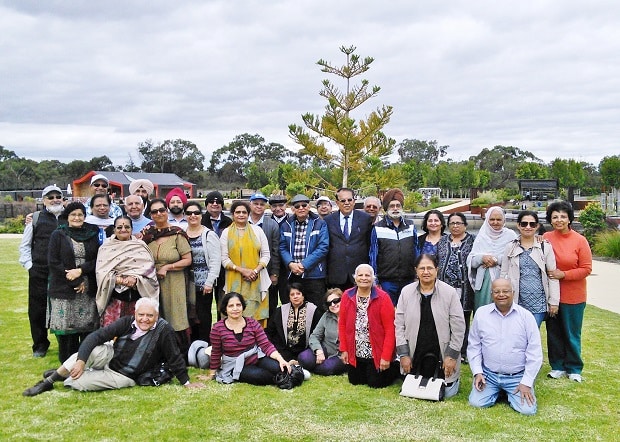
The autumn and spring months are Mother Nature’s gift to Melburnians, so we may enjoy the outdoors in unpredictable, yet constantly pleasant weather. This resulted in seniorsout for leisure in record numbers. As initiated by Chief Coordinator SK Auplish and Dr Gurdev Rattan of Point Cook, the Indian Senior Citizens Forum (ISCF) chose picturesque Philip Island for a picnic. A bus picked up members from various points and headed towards the venue.
At a spectacular ocean front spot at Cowes, volunteers got busy in serving a delicious assorted sweet and savoury breakfast, as most members had left home very early. After story-telling, Punjabi balle balle and Gujaratidances, we strolled along the beautiful beach and around 3:30pm, chanting the Hanuman Chalisa, we returned home.
From 4pm to 6pm on Saturdays, Sewa International conducts discourses plus yoga and meditation classes for spiritual and physical development of seniors and their families at the Annexe of Clayton Hall. For information, please call Mrs Nirmal Kantaon 9543 6615.
***
The Northern Region Indian Seniors Association (NRISA) in conjunction with Ivanhoe Library celebrated their annual Indian cultural day. From the last four years, NRISA has been holding this event mostly outdoors. Focussing on the colourful Indian festivals of Holi and Vaisakhi, the library very kindly widely advertised the event resulting in the day attracting a cherished number of over a hundred visitors, Indians and non-Indians, who were offered free packed Indian snacks and sweets. For information on NRISA, please call President Santosh Kumar on 9816 3401.
***
In their latest meet, the Indian Seniors Association West (ISAW), celebrated the Vaisakhi festival at Errington Community Centre, St. Albans, followed by a buffet lunch at Watergardens Hotel. Courtesy of the State government, ISAW have acquired a projector, screen and wireless sound system, which will provide interesting, educational and entertaining documentaries to members. For more details on ISAW, please contact President Arjan Tulion 9390 2818.
***
In observance of the Indian Senior Citizens Association (ISCA ) motto of ‘Mutual Help’, a picnic at Cranbourne Botanical Gardens was a first for volunteers to make new friends when ferrying members with no transportation to and from the venue on a sunny Melbourne day. The venue was beautiful, BYO food to share amongst the 40-odd attending members was plentiful, and the company of the group was the best feature of the day. The extraordinary history boasted of by the gardens was unknowntous, the walking tracks were inviting, we sang Bollywood songs, related vegetarian jokes andl aughed until it was time to return home. Following a donation to the gardens, the members ushered a great day to an end. For information on ISCA, please contact President Prem Phakeyon 9803 3989.
***
Kingston Senior Citizens Association (KISCA) however, cancelled their picnic at Cranbourne Botanical Gardens due to bad weather. President Barbara Nagaya may be contacted on 9893 3427
*** The Federation of Indian Associations, Victoria (FIAV), in a periodic meeting, sought that associations and community leaders propose measures to further streamline the organisation of major festivals and events from different states of India, which may be incorporated in the Constitution, so that the community may constantly keep improving. President Vasan Srinivasan informed the gathering that 28 organisations regularly use the FIAV Hall in Little India. “35 individual music groups which were not moving forward satisfactorily have been brought together under one umbrella,” Vasan stated. The Wine and Food Festival in Little India, a hundred artists performing classical andBollywood dance sat the Moomba parade and the community’s representation on SBS radio and television are feathers inthe FIAV’s hat. The organisation is fighting to have the largest museum on India outside India, plus a retirement home initiated in Little India. Dr Dinesh Parikh, a collector of artefacts for 60 years, proposed to donate his collection to the museum. Vasan stated that a 13 bedroom home for victims of domestic violence has very kindly been donated to FIAV by an Indian philanthropist.
Neville Patel, from the Parsi Association stated that Zorastrian temples are open for those who may wish to learn about the religion. Rameshfrom the Gujarati Association said that he has lived in various states of India and has willingly participated in all state festivals. Moti Visa insisted that we are all Indians; notPunjabis, Biharisor Malyalees, and when together, we must respect the others’ individuality and converse in a language that is in everybody’s grasp. KISCA President Barbara Nagaya talked of the efforts the association is making for the community. Amresh Deshmukh informed members that a forth coming website will provide complete information on the Indian community in Australia. Neeraj Nanda stated that there existed too much diversity in thec ommunity, which mustbe united. Vasan stated that the whisper about living in Oz means giving up our culture was entirely unacceptable. A brief mention was made of a Federal leader’s argument that bigotry is tolerable, with Vasan insisting that, “We loveo ur parathas, our idlis, our roshogullas, and are determined to make (the concept of) bigotry history!” He emphasised that that we must not delude ourselves that Indians are squeaky clean, and since governments distribute $44 billion to make our lives cosy, we should return the favour by being educational service providers and by being exemplary citizens.
Parents must acknowledge that some children have learning difficulties and need support, rather than being labelled lazy,
“I just want to push my son,” she said to me. Her flailing hope was palpable.
Three months earlier I had received a tentative phone call at the tutoring institute I run, from a mother who was concerned about the lack of effectiveness of the combination of in-class support and also private tutoring. Her son, she said, was not like his older brother. The older brother was in Year 11 and doing so well in the selective school. Surely the younger boy should be the same?
After one session of tutoring, my special needs tutor reported that the young boy had learning difficulties. The mother refused to believe it and, in tears, said that this could not be true. She needed her son to be bright because that would mean he could go to a good school and not the local school.
The mother refused to have the special needs tutor help her son and asked if I could give a second opinion. I obtained copies of all of the past six years of NAPLAN papers and started on the reading test in order to gauge comprehension. It was evident as he read aloud that the boy’s reading was very poor with obvious pronunciation errors such as substituting ‘f’ for ‘th’ and reading ‘three’ as ‘free’, ‘the’ as ‘duh’ and ‘although’ as ‘aldough’. Apart from this error, and a failure to stop at full stops, the reading was quite slow and disjointed.
When answering the most basic of the questions on the first three pieces of stimulus, the boy did reasonably well. However, as the reading became more abstract, there were a higher proportion of incorrect responses. This could be contrasted with the boy’s spelling. His answers on the language conventions tests were mostly correct and he displayed outstanding spelling. The boy clearly had a very disparate set of abilities.
I recommended that the mother have the boy psychometrically assessed so that any tutoring and also any teaching through school could be properly informed. She was reluctant. Surely her son just needed to ‘work hard’. The cost of the testing was waived so that any issue of cost was not a factor.
The psychometric test revealed that the boy was well below average (bottom 3%) in terms of reading comprehension. However his spelling was in the 99th percentile. Moreover, he had a very short working memory. This type of psychometric profile clearly indicated learning difficulties.
At this point the mother seemed to accept that her son needed to be understood and she needed to make decisions about him that matched his ability. However, this was only temporary.
By the end of the week she had her son do several more reading tasks and purchased copies of books for preparation for the selective schools exam. I suggested that she have him read aloud for 20 minutes a day to improve his literacy and we commenced free weekly one and a half hour sessions of reading comprehension.
It was during the holidays in one of these sessions that I asked the boy how he would spend the rest of his day. The boyreplied, “At my muder work”. When I later inquired about this with the mother she said that every day of the holidays he had spent all day at work with her and that he spent the day learning. He had not seen any of his friends, did not see any movies and did not play computer games at all in the two weeks.
A week later when we had a session together, the boy got just over half of the 50 items correct. When his mother was being shown the work he would smile when she saw the correct responses, but would closely read her face when she saw his incorrect responses. I commented that the boy appeared to be tying his self-esteem to her approval and disapproval around the success of his answers. He nodded when I said this and she looked down.
A day later I received a phone call from the mother. In it she stated that she would no longer be bringing her son to tutoring as her ‘shift times had changed’. I suggested times outside of her altered shift times. She then said, “I still want to push him. All he has to do is stop being lazy”.
At this point I was reminded of a parent who came to me a few years ago seeking help with his son. I suggested he start to understand his son by listening, rather than telling him what to do. A year later the father returned for ‘more wisdom’. He had booked an hour. A quick inquiry as to what he sought ‘wisdom’ about was met with, “My son is lazy and he never listens, though I tell him a million times”.
I turned to him saying, “Last year we spent time together and you stated then that you would listen to your son. Instead, all you have done is what you have always done and the outcomes are the same… So, my so-called wisdom is the same as last year, hence ‘ditto’”.
The mother in this case was doing exactly as this father did. Ignoring their child for the sake of some pre-cast view of what a child should be. Her son was stressed to the point of scratching himself to bleeding when studying with his mother at home. Away from her he could concentrate and smile during tutoring. He displayed resilience despite getting many test items incorrect.
If she ever brings her son back I will continue to help him without charge. However, sometimes people turn away. I hope that the boy holds on to the memory of my belief in him that he is a good boy, who is trying his best and whoever he is, is plenty good enough.





 May 16