
Home Blog Page 953

Red and yellow and… orange

0
Reading Time: 3 minutes

Use papaw or papaya for a tropical burst of a juicy sweet, yet subtle flavour in your next meal

Use papaw or papaya for a tropical burst of a juicy sweet, yet subtle flavour in your next meal

Although they’re often mistaken for each other, papaw and papaya both look and taste quite different. Yellow papaw is the larger one and is not as sweet as its smaller, red-orange fleshed counterpart with its yellow-orange skin. But both are juicy in texture, and have a subtle, yet sweet flavour. Great news for recipes that would be overpowered by sickly sweet fruits.

These two tropical fruits are thankfully available all year round in Australia, and are both an great source of vitamin C and beta-carotene; which is good news for your skin and immune system.

“I love to marry the fruits with both light meats such as prawns, and rich meats like pork, and I also add it to my salsas for a fruity kick,” Alvin Quah, MasterChef Series Two contestant says. They’re also great in a chilled smoothie or lassi or dessert.

Two pointers to make things easier when selecting the fruit; make sure it only has black seeds (white seeds = won’t ripen) and it’s at least 50% yellow or orange (with limited green skin).


Red papaya lassi

Serves 2

Prep time: Less than 5 minutes

Ingredients

1 medium red papaya
½ cup natural yoghurt
250mls iced water
A dash of rosewater
¼ cup fresh mint leaves
1 teaspoon honey, if needed

Peel and deseed red papaya. Cut into chunks.
Place fruit and all other ingredients in a blender or food processor, blend until well combined and frothy.
Taste to determine if honey is required for extra sweetening. Add if needed and re-blend.
Pour into glasses and serve.


Prawn & yellow papaw tacos

Serves 4

Ingredients

24 medium Australian Prawns (approx. 650g)

½ tsp sea salt

For the salsa:

500g Yellow Papaw

¼ red onion, finely diced

½ cup fresh coriander leaves

2 tbsp lime juice

To Serve:

8 – 12 medium corn or flour tortillas


Peel, de-seed and dice papaw, combine with remaining salsa ingredients and stir to combine.

Peel and roughly chop prawns, season with salt. Heat a skillet to medium-high and cook prawns for two minutes until opaque. If required, add a splash of olive oil.

Layer tortillas with prawns and salsa just before serving.

Tip: Warm tortillas in a hot skillet, then wrap in a clean tea towel until needed.


Yellow papaw & prosciutto pizzas

Serves 2 – 4

Ingredients

2 large Lebanese flatbread wraps, or pre-baked pizza bases

2 tsp olive oil

1 garlic clove

250g Yellow Papaw

100g prosciutto, thinly shaved

120g fresh ricotta

2 handfuls rocket


Preheat oven to 200°C. Slice garlic clove in half and rub flatbreads with cut side. Brush breads with olive oil.

Crumble ricotta over bases. Peel, de-seed and thinly slice papaw, then layer over ricotta. Cut prosciutto slices into large ribbons and arrange over other ingredients.

Bake on a pan or pizza stone for six minutes, until prosciutto is sizzling and bases are just crisp. Top with rocket and drizzle with a bit of extra oil, slice into wedges and serve warm.

Tip: For an extra crispy base, bake pizza directly on oven rack.
 

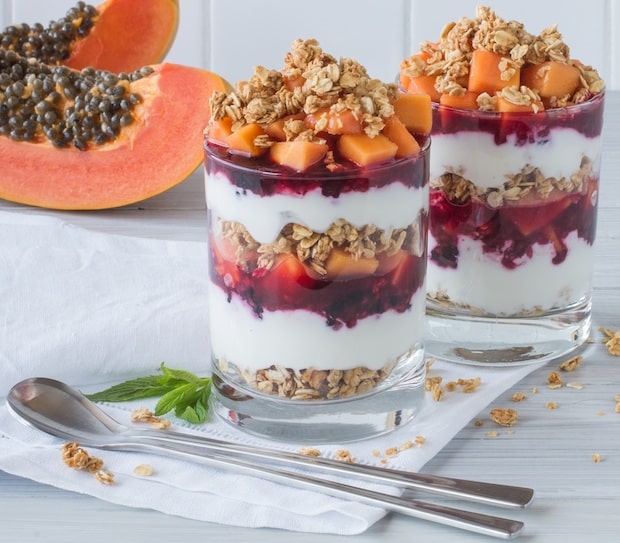
Red papaya & mixed berry parfaits

Serves 4

Ingredients

400g Red Papaya

500g (2 cups) natural Greek or vanilla yoghurt

200g (2 cups) toasted muesli or granola

250g (2 cups) frozen mixed berries

1 tbsp water


In a saucepan over medium heat, simmer berries and water for four to five minutes, until just warm and syrupy. Mash slightly with a fork and set aside to cool while you peel, de-seed and dice papaya.

Spoon 2 tablespoons granola into the base of four glasses. Layer each glass with ¼ cup yoghurt, 2 tablespoons berry compote, ¼ cup diced papaya and 2 tablespoons granola.

Repeat layers and serve immediately.
 

Recipes and photos: www.australianpapaya.com.au


For web use: Share using #aussiepapayapapaw

Salary woes

0
Reading Time: 4 minutes

Dear Auntyji

My husband works in advertising. Two weeks ago he found out that one of his staff members who reports directly to him, who was only working three days a week but now has gone full time, has had her salary prorated and consequently earns $20k more than him. My husband was shocked and upset, and is unsure about how to handle the situation. The company is not doing as well as it could, so he is doubly concerned about asking for any salary increases. What do you think he should do in this situation Auntyji, bechara pareshan hai?


Auntyji says

Oh my dear, this is not a great situation to be in. I too would be mighty irked if I were your husband, but then, what do you expect from working in advertising – nothing good can come from this. Ever. So, here is what your husband must do. He must act swiftly; the longer this continues, the more it becomes an acceptable situation, until the point where your husband will think that it’s not even worth worrying about. But of course, if your husband is a chuha, then none of this applies, but if your husband wants to be a sher, then he needs to redress this situation. So, your husband-the-fearless must go to HR or his manager and explain clearly that having a subordinate earning more than him does not make sense. If your husband has more accountability and responsibility then he should be paid accordingly. If the company is not doing so well, then he can stay on the same salary, but work four days a week for instance. He could go and play golf and pick up the kids. When the company turns around, then the salary balancing can occur. Of course, your husband should state clearly that he is unhappy with the status quo and make this HR’s problem to solve. Now, you must also understand that your husband probably thinks that the company is not doing so well so he shouldn’t even bother asking for this. The point your husband should ponder is that if the organisation is not doing so well, how is it managing to pay a person with fewer responsibilities $20k more. The question is one of fairness. Further, your husband should not have to solve this issue. Let HR and your husband’s boss sort this out. Further, you must also be prepared to acknowledge and accept that if your husband isn’t interested in going down this road, you can’t use this as a stick to beat him with. But the fact that you are writing to me asking this question makes me think that perhaps this is exactly what you will be doing. Stop and think about it. No one likes a shrill wife who emasculates her husband by belittling him and telling him what to do. Show him your support – even a chuha deserves support.


*


Leave me alone already!


Dear Auntyji

I have decided that I did not want to be with my girlfriend of two years because she was not as supportive as I would have liked, and I found that I was happier when I was by myself or with others than when I was with her. So I broke up with her and dealt with my sadness and all that and have moved on. However, all my friends and family are expecting me to be a-sighing and a-sobbing and carrying on. I have had phone calls and posts on Facebook and texts from everyone wanting to know how I am. Why is everyone so interested in my feelings? What do I do to tell everyone to stop worrying about my feelings? Can you please shed light on this, Auntyji?


Auntyji says

Arre, my chikna, my sonu monu, what a funny little jalebi you are. So this is what happened. Your life was all gol mol, going around swimmingly and everything was hunky dory. You and your girlfriend looked like the ideal couple and everyone was probably expecting the usual tamasha of engagement, shaadi, bachche etc. then you decided that shaadi was barbadi and you put a full stop to this love story. Of course everyone was upset by this sudden ending, by this anti-climax, by this film-mein-intermission-cum-ending. You should be happy ki people are caring, but you’re not! You should be khush ki log jaanna chahate hai ki are you ok. At least you have people worried about you. You have two options when people ask you what you are feeling. You can give them a pained look, look away, put a hand on your heart, shake your head sadly while gazing at the ground for precisely five seconds, then change the topic. Everyone will get the meaning without your saying a word. Your second option is to look blankly at the person and say, what do you mean how am I – why, what happened to me? And if they say, well, you broke up with Shania, are you ok? And then you say Shania? Ye Shania kaun hai? Kaun Shania? Then change the topic. Or, you could start elaborating on why you broke up and make the story so dull and painful, that people will be begging you to stop after two minutes and they will never ask you how you are again. See, you have many options available to you. But at least be happy, nah, ki people care. If you were related to me and you broke up with Shania, Tania or even Chameli, you wouldn’t even get a slightest bit of interest from me. I would not even bother asking you how you are on a normal day, let alone after you broke up with an unsupportive girlfriend. But perhaps I might care if you write back and tell me what you meant when you said she was unsupportive. I hope you don’t mean she was unsupportive of your smoking or hanging out in the pub. If this is what you meant, then you haraami, you budtameez, stop wasting my time.


The pieces finally come together

0
Reading Time: 4 minutes

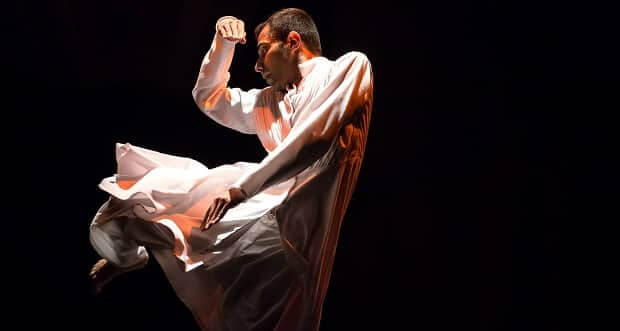
Indian Australian Raghav Handa explores his cultural lineage through dance

Photo: Gregory Lorenzutti

The stage is dark. You hear light footsteps, and a dark figure emerges. He crouches, and softly places an object on the floor. Silence. You hear the strike of a match. The flickering light reveals a young, bare-chested man clothed in white, loose fitting cotton pants. He leans forward, almost in reverence, and lights a lamp.

Meet dancer and choreographer, Raghav Handa. In Tukre (Hindi for ‘pieces’), Raghav explores his personal identity, re-lives sacred memories and traces his origins while taking us on a delicate, non-linear and nostalgic journey across space and time.

His confidence, grace and precision belie an impossibly late start for a dancer.

“I was seventeen turning eighteen when I started doing dance classes,” he says. “Proper dance classes,” he adds with a grin.

Being from an Indian background, dance is not something you do professionally.

“‘Are you going to make money off it?’” Raghav mimics questions asked of him about his dance ambitions.

“No, you’re not,” he answers.

So naturally, he enrolled in an accounting degree.

“I dropped out in the first year,” he reflects. “It’s not that I couldn’t do it, I just didn’t want to do it”.

Three years after he started dance classes, Raghav landed his first dance job in a production of West Side Story.

Indigenous choreographer Marilyn Miller, suggested he try indigenous contemporary dance classes.

“That was my first foray into contemporary dance, in 2002 or 2003. Before that I did modern commercial dance, musicals: 5! 6! 7! 8! That kinda thing,” he laughs.

He met Sydney choreographer Vicki Van Hout, started working as a dancer and then did three years on and off at the London Contemporary Dance School.

“One job lead to another, and 10 years later, here I am!”

Tukre is Raghav’s first full length choreographic work, and with it, it seems as though he’s finally piecing it all together.

“I’ve worked with a number of Australian choreographers, but it was always their movement, never the movement I set for myself,” he says. “This is my own”.

Tukre is a very intimate piece for Raghav. It takes memories of his jeweller family, everyday objects and seemingly banal tasks and weaves them together in fluid dance form.

Take the opening piece, where he lights a match.

“It’s a mundane task, but it is very special to me. It’s a memory of my grandfather, and that’s how he would look at diamonds. He would look at them with a candle or a lamp, and then look away. Everyday things like that have left a big, big impression on me, and they are essentially connecting and making a memory map”. About the artistic process itself, Raghav is clear.

“Do it, don’t like it, can it,” he says emphatically.

“I knew these images, but I didn’t attempt to connect them. If they happened to connect, great, and if they didn’t, they don’t,” he says simply.

This sort of unencumbered approach helps in dealing with criticism too.

The piece ends with Raghav setting up an installation of his mum’s sarees.

“A critic of 30 years said the installation took too much time. I have an answer for that now,” he says. “My mother takes half an hour to put on a saree, and likes it done properly. I’m taking only six minutes for six sarees, so I’m doing a damn good job!”

Tukre’s opening night was also special for Raghav in another way. His parents watched him perform live for the first time.

“My parents don’t live in Australia; they live between the UK and India,” he explains. “They’ve seen me in videos, but they haven’t seen me perform in a theatre. My Da was saying, ‘Before coming into the theatre, I was thinking, does he really dance, can he really dance, what’s he going to do for an hour?’ But now, the penny’s dropped for them, like ‘Oh wow, that’s what he does!’”.

Dancing, however, is only a small part of Raghav’s work. “We’ve got to rig the set, get the lighting plan done, look at the sound and see how it relates to me in space… the dancing almost comes at the end,” he exclaims.

And you’d expect relief after it’s over, but not for Raghav. “The [nerves for] warm-up and the performance are expected, but actually, after the performance is the hardest bit,” he quips with a grin. “I go to bed, but my mind is still going. I go over every detail of the performance. I just can’t sleep. If you know of some tea that will help, feel free to tell me”.

When he’s trying to get away from it all, Raghav enjoys watching TV or meeting friends and zoning out.

“I love horse riding. And I’m a very good cook, if I may say so myself,” he laughs. “I love Italian food. I can cook a few Indian dishes, like aloo baingan, lamb curry, but that’s about it”.

His signature dish? “I love prawns, so it’ll have to be spaghetti with prawns!”

“Oh my word,” he exclaims when I ask him about his biggest achievement. “Sticking to my art,” he answers in a quiet tone. “I’m getting work now, but leading up to this was hard yakka. Five years ago, I almost gave up. I did a fitness course and taught classes at Fitness First for a year. I hated it. I jumped at the first dancing job I got”.

And he’s not stopped dancing since.

“I want to create a dance vocabulary; Raghav Handa technique…”, he trails off and twirls his hands intricately to demonstrate. “Hopefully in the years to come, that will happen”.


For more photos click here

AMA awards Indian doctor with highest honour

0
Reading Time: 3 minutes

Prominent GP Dr Mukesh Haikerwal is awarded AMA Gold Medal for services to medical profession

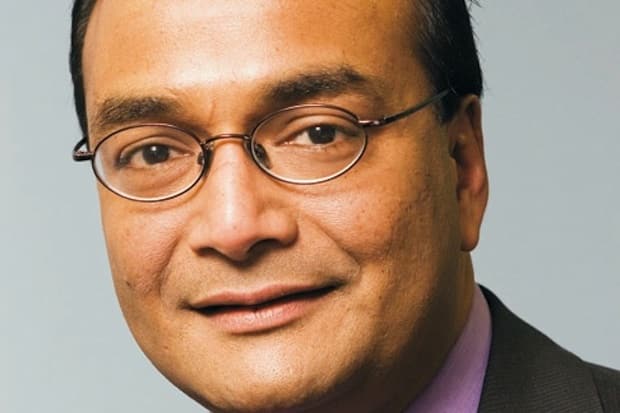
Former Australian Medical Association (AMA) President and prominent GP Dr Mukesh Haikerwal has been awarded with the association’s highest honour – the AMA Gold Medal.

The award, presented by President Dr Steve Hambleton at the AMA National Conference Gala Dinner, recognises outstanding services to the medical profession and community.

President Hambleton said that Dr Haikerwal has been a leading figure in the medical profession for many years, and his long list of significant and enduring achievements warranted the Association’s highest accolade.

“In the last two decades, Dr Haikerwal has been an extraordinarily active and committed member of the AMA, advancing the interests of members and patients at almost every level of the organisation,” Dr Hambleton said.

In 1995, Dr Haikerwal became an AMA Victoria State Councillor. He rose to State President in 2001 and four years later became Federal AMA President.

He has held numerous esteemed positions in the AMA including the Chair of the Taskforce on Indigenous Health and the Committee on the Care of Older People, as well as serving on the General Practice, Public Health, Therapeutics, and Doctors in Training committees.

“During his long and distinguished record of service he has been at the forefront of many issues pivotal to the health care system,” Dr Hambleton said.

“He played a significant role in securing the future of medical practice during the indemnity crisis, he led the profession in embedding the principle and practice of informed financial consent, he highlighted the glaring deficiencies in the care of Indigenous Australians, and called attention to the risks posed by the burgeoning number of medical school places without accompanying provision for the capacity of the training pathway”.

As AMA President, Dr Haikerwal also confronted the spectre of medical racism, and led the AMA in condemning abuse of international medical graduates.

President Dr Hambleton added that Dr Haikerwal was instrumental in putting the AMA at the centre of the e-health debate, saying he led the Association’s enthusiastic support for the adoption of e-health.

“It is an issue that remains both essential, yet unresolved, but not for wont of effort by Dr Haikerwal, who continued to work hard on e-health following his presidency, most recently as the Clinical Lead for the National E-Health Transition Authority.”

Dr Hambleton said that since leaving the AMA Presidency in 2007, Dr Haikerwal has continued to be an influential figure.

In 2008-09, he was a Commissioner on the Australian Health and Hospitals Reform Commission, which recommended major changes including the introduction of activity-based funding in public hospitals and the establishment of local hospital networks.

He is a regular contributor to public debates and is looked to as a trusted advisor by Health Ministers across the political spectrum.

“Dr Haikerwal’s contribution has extended beyond this nation’s shores,” Dr Hambleton said.

Dr Haikerwal has been a member of the World Medical Association’s Council since 2007, and in 2011 became the first Australian to be elected as Chair of the world body. In this position he fostered the pursuit of ethical care, professional standards and the freedom of doctors to treat all people.

“Dr Haikerwal has been a keen and selfless supporter of the AMA for many years, and has been a generous mentor and source of support for many of the Association’s leaders,” added Dr Hambleton.

“Amid all this, he has continued to maintain a busy general practice, and showed tremendous courage and determination to resume work after suffering serious injuries in 2008”.

Dr Haikerwal has been recognised for his outstanding contribution with a string of honours, including the Centenary Medal, Fellowship of the AMA, the AMA President’s Award and being made an Officer of the Order of Australia.

“Dr Haikerwal is a most deserving recipient of the AMA Gold Medal,” Dr Hambleton said.


Top 20 places to eat in Sydney

0
Photo: Akis
Reading Time: < 1 minute
Photo: Akis

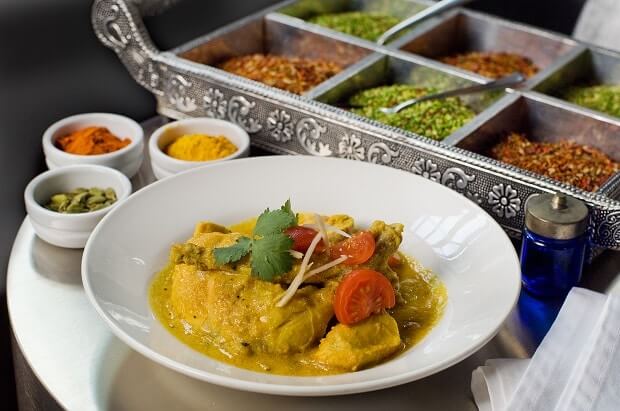
The stalwarts for some years have been regular culprits Abhi’s at Concord, Manjit’s at Balmain, Nilgiri’s at St Leonard’s, Maya at Surry Hills and Zaaffraan at Darling Harbour. But in the last two years, new kid on the block Urban Tadka at Terrey Hills has splashed on to the scene with a bang, winning not only fans within the Indian community but also industry awards. Meanwhile, Thousand Spices at Homebush, Bijolias at Seaforth and Mantra and Dragon House Indo-Chinese at Ryde continue on steadily with their band of regulars. In specific pockets of the community, Maharaja’s Haveli at Quakers Hill, Castle Taj in Castle Hill and Indian Fusion at Pennant Hills are popular with locals. In the Parramatta area, Kings Indian and the new Anjappar Chettinad are doing well. For Harris Park, try Hyderabad House, Billu’s and Taj, and the new Durga Paan and Falooda House for its Indian style ice creams.

Many of these restaurants have function rooms if you want to organise an event or party. Some venues such as Nilgiris or Urban Tadka will organise high-class corporate or private events with all the trimmings, but for the Indian community, Manjit’s Concord Function Centre is the go-to place for large-scale events such as weddings.


See our list here

Our guide to Sydney’s India

0
Photo: Simon Hewson
Reading Time: 3 minutes

Where to eat, shop and play Indian style in Sydney

Photo: Simon Hewson

You know them as doctors, taxi drivers, gas station attendants, IT guys, international students, Parramatta residents… and the nerdy kids at your children’s school who manage to do well at sport as well as public speaking. Jai Hos.

But, how well do you know Sydney’s Indian community?


Photo: Ajay Mathur

Top 20 places to eat Indian food in Sydney:

1.  Urban Tadka – 321 Mona Vale Road, Terrey Hills

2. Abhi’s Indian Restaurant – 163 Concord Rd, North Strathfield

3. Manjit’s Indian Restaurant – 360 Darling St, Balmain

4. Nilgiri’s – 81 Christie Street, St Leonards

5. Maya Tandoori – Level 1/472 Cleveland St, Surry Hills

6. ZaaffraanLevel 2, 10 Darling Drive, Harbourside Centre, Darling Harbour

7. Thousand Spices – 23 The Crescent, Homebush

8. Bijolias – Shop 5/540, Sydney Road (opposite Commonwealth Bank), Seaforth

9. Mantra and Dragon House Indo-Chinese – 1037 Victoria Rd, West Ryde

10. Maharaja’s Haveli14 Douglas Rd, Quakers Hill

11. Castle Taj – 12 / 3-9 Terminus St, Castle Hill

12. Indian Fusion – 114 Yarrara Rd, Pennant Hills

13. Kings Indian – 40 Phillip St, Parramatta

14. Anjappar Chettinad – 104, Church Street, Parramatta

15. Hyderabad House – 21 Hassall St, Parramatta

16. Billu’s – 62 Wigram St, Harris Park

17. Taj – 91 Wigram St, Harris Park

18.  Maya Vegetarian – 470, Cleveland St. Surry Hills

19. Durga Paan & falooda House – 3/14-20 Station St E, Harris Park

20. Manjit’s Concord Function Centre – 138-144 Majors Bay Road, Concord

Why these top 20?

WANT TO WIN A DINNER FOR TWO AT AWARD WINNING URBAN TADKA RESTAURANT?*


Email win@indianlink.com.au with Urban Tadka in the subject line and your name to be in the draw.

Winner will be announced on our Facebook page on June 12.

Urban Tadka is the winner of Savour Australia – 2013 Award for Excellence, nominated for Chef’s Hat (Australian Good Food and Travel Guide).


Guide to shopping in an Indian grocery

Click here to find out how, what are where to shop


Top Indian-Australian charity organisations

Click here to find out


Did someone say Bollywood? The B-word in Sydney

How to do Bollywood in Sydney

Top upcoming Indian events in Sydney

Whether you’re an Indophile or not, you’ll find something of interest in this list of events from the Indian community’s annual social calendar. Come join us as smear coloured powder on each other, or light a lamp to mark our new year and try out your light-bulb moves on the dance floor.

Click here for events

Top places to worship in Sydney

Click here for our top 7


Fun fact: Why do Hindus worship cows? 

Here’s a rational answer to this question…

Click here to find out


*Conditions apply

B…ollywood in Sydney

1
Reading Time: 2 minutes

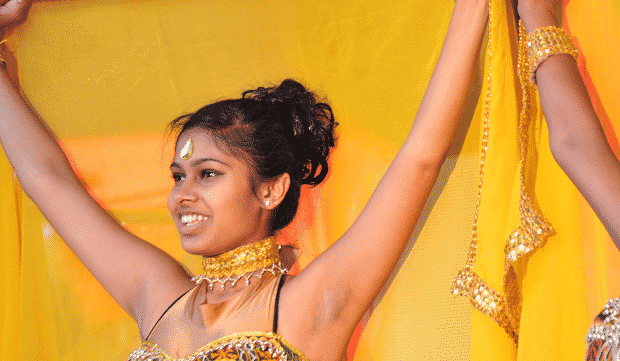
So you want to book a Bollywood act for your next fund-raiser. Try Ramona Lobo’s Sirens Dance Group (www.sirensdance.com.au) who will enlighten your guests about the not-so-subtle nuances of Bollywood dancing and have them screwing in that light-bulb like experts.

One of Bollywood’s leading choreographers, Shiamak Davar has chapters of his dance company in major cities of the world. Shiamak Davar Sydney may have opened only recently, but they’ve already won the heart of the city’s Indian community.

And if you want to understand the lyrics of that Bollywood number, or just want to learn how to say Hello in our language, or what Jai Ho! really means, you’ll want Hindi lessons. Give Mala Mehta a call at the Indo-Australian Bal Bharatiya School (www.iabbv-hindischool.com). Hello Namaste! She’ll have you nodding your head sideways in no time.

Speaking of Bollywood, we know you’ve seen Bride and Prejudice, Bend It Like Beckham, Monsoon Wedding and Slumdog Millionnaire. But Sydney’s very own Bollywood expert Anupam Sharma will tell you, these are not really Bollywood films, they are merely posing as Bollywood films! Bollywood films are those that are made in Bollywood, er, Mumbai, and have an impossibly impossible story that will make you laugh and cry and despair and feel hopeful all in one hour, do that very same circle again in the second hour, and again in the final third! Get out there right now and see Dhoom 3 at your closest Hoyts cinema or better still, on IMAX – the latest Bollywood thriller might still be on as we go to print, inching closer to that record Rs 600 crore mark (A$ 108,480,000) in one month.

Bollywood music, anyone? Try Indian Link Radio, Australia’s only 24-7 Hindi radio station easily accessible on our website or downloadable as an app for your smartphone.

Top places of worship in Sydney

0
Reading Time: 2 minutes

Top 7:

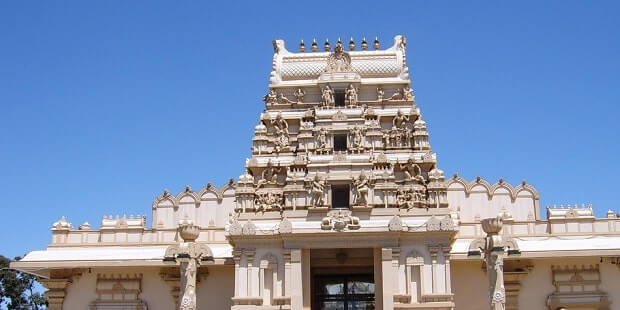
A number of Hindu temples dot the city of Sydney, all built strictly to architectural guidelines listed in the ancient Hindu scriptures.

  1. Sri Mandir (286 Cumberland Rd, Auburn) is Australia’s oldest Hindu temple, built in 1977. It caters to the spiritual needs of Hindus from diverse linguistic and cultural backgrounds.
  2. Completed in 1985, the Sri Venkateswara Temple (Temple Rd, Helensburgh) is dedicated to Lord Venkateswara, one of the forms of Lord Vishnu (the Preserver of the Universe).
  3. The Murugan Temple at 217 Great Western Highway, Mays Hill, is dedicated to Lord Murugan, the Hindu god of war and victory popular with the Tamils.
  4. The Mukti Gupteshwar Temple at 203 Eagleview Rd, Minto, is dedicated to Lord Shiva (the Destroyer of the Universe). Built in a cave-style, it was consecrated on 14 Feb 1999 when certain planets aligned in a fashion described in the epic Ramayana, an arrangement that reportedly occurs once every hundred years. The temple houses an auspicious symbol relating to Lord Shiva, water from the five oceans and from 81 rivers from across the world, and two million hand-written notes from devotees.
  5. Right next door at 201 Eagleview Rd, is another temple worth visiting, the Shri Shiv Mandir.
  6. The BAPS Swaminarayan Temple (40 Eleanor St, Rosehill) and ISKCON Temple (180 Falcon St,North Sydney) are two other popular temples.
  7. Sydney’s Sikh community worships at Sikh temples known as Gurudwaras (literally, ‘gateway to the guru’). The temples house the holy book of the Sikhs, the Guru Granth Sahib, and large dining halls where devotees eat Langar, the food of the Lord. The Gurudwaras in Sydney are at Revesby (14-22 The River Rd), Turramurra (81 Kissing Point Rd), Glenwood (8 Meurants Lane) and Penrith (15-27 Blaikie Rd, Jamiesontown).

Guide to shopping in an Indian grocery

0
Reading Time: < 1 minute

Well worth a visit if you haven’t ventured into one of Sydney’s many ‘spice shops’. What could you buy? Try the Basmati rice: heaps cheaper, and much better quality, than your usual supermarket variety. The wide range of Indian breads in the freezer sections could be interesting. Give paneer a try, Indian cottage cheese, which you could put in your salads, pan fry like haloumi or cook into a curry. Pappadums are a great snack if you are gluten-sensitive: give them a whirl in the microwave, or better still, roast with tongs over an open flame. If you’ve cooked Indian before, you will love the variety in lentils on offer, and you could pick up a bunch of fresh curry leaves for a tenth of the price at Harris Farm. How about some mithai (desserts?) Try the Nanak or Haldi Ram brand rasmalai from the freezer section – finger-licking good. And on your way out, don’t forget to pick up a free copy of the latest Indian Link issue.

Fun fact: Why do Hindus worship cows?

0
Reading Time: 2 minutes

Here’s a rational answer to this question.

According to Hinduism, what is divine is not God, or Heaven, but human life itself. So we must celebrate life. Every day of our living life is a special day. We celebrate life by acknowledging all the things that make us live our life better. These could be forces of nature, for example, the earth, the sun, the rain, and even plants and animals. So we have a Sun God, a Moon God, Rain God, etc. etc.

Also enabling us to live our lives well, are the special people around us: our parents, siblings, friends, grandparents and extended family, even our teachers. And so we have special days in the calendar earmarked for each of these special people – for example Ancestors’ Day, Brothers’ Day, even a Teachers’ Day.

With so many forces to acknowledge, it is no wonder we have so many “festivals”.

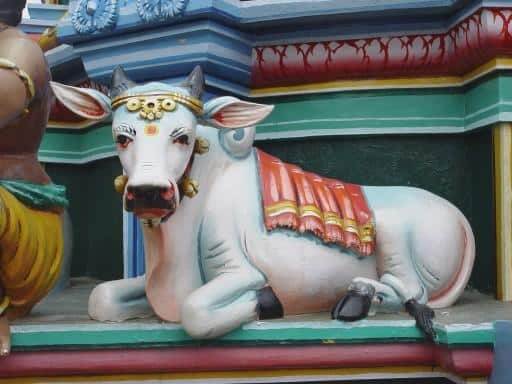
Do we really worship cows? In reality, we worship all animals. The cow is merely a symbol of all animal life. Just as Nagini (yes, the snake from Harry Potter!) is a symbol of all reptile life, and Garuda (the name of Indonesia’s airline) is a symbol of all bird life.

We might as well answer that other question Hindus are often asked: why do you believe in reincarnation? ‘Reincarnation’ is really an over-simplified way of saying that if you lead a good life, you will get another chance on this earth. Notice we don’t say you will be rewarded with heaven: because Hindus believe that if there is a heaven, it is right here, on earth.