Home Blog Page 946

Naman Ojha puts India A in command against Australia A in Brisbane

0
Reading Time: 2 minutes

A splendid unbeaten double century from Naman Ojha put India A in a commanding position against Australia A on Day 2 of their first four-day match at the Allan Border Field in Brisbane on Monday, July 7.

Wicketkeeper-batsman Ojha guided his team to 475/9 declared, with an innings of 219 not out, before the visitors snapped six Australia A wickets to end the day with the home side reeling at 126/6.

Resuming the day at 304/6, the visitors found runs flowing in quickly.

Ojha, resuming from 82 not out, brought up his century with a six. His brisk 99-run partnership with Dhawal Kulkarni ended when Kulkarni holed out for 33 off the bowling of Cameron Boyce (4/146).

Boyce struck again in his next over, dismissing Umesh Yadav for a duck. Moises Henriques (1/30) followed shortly with his first wicket of the match as Pragyan Ojha (4) edged it to Sam Whiteman after frustrating the Australian bowlers with his 27-ball knock.

Ojha’s impressive innings continued and he reached the 200-run milestone with another big six off the last ball of the first session, seeing India A to lunch at 450/9.

The tourists put on another 25 runs after the break before declaring with Ojha achieving his highest first-class score which included a remarkable 29 boundaries and eight sixes. Jasprit Bumrah, unbeaten on 7, also gave good support to Ojha to put together an unbeaten 75-run 10th wicket partnership.

In reply, Australia A had a shaky start. Opener Alex Doolan went early for 12 thanks to a sharp catch in close by Lokesh Rahul off the bowling of Bumrah. The home side went to tea at 51/1.

Australia A lost five more wickets in the day’s last session with Peter Forrest (16), Phillip Hughes (34), captain James Faulkner (1), Henriques (4) and Chris Lynn (20) all departing in quick succession. Bumrah was the pick of the India A bowlers, finishing the day with figures of 3/42.

At the close of play, Mitchell Marsh was batting on 18 not out while Sam Whiteman was on 13 not out.

Brief scores: India A 475/9 dec. (Naman Ojha 219 not out, Manoj Tiwary 83, Jiwanjot Singh 56; Cameron Boyce 4/146, Mitchell Marsh 2/54, Ben Cutting 2/104)

Australia A 126/6 (Phillip Hughes 34, Chris Lynn 20, Mitchell Marsh 18 not out; Jasprit Bumrah 3/42, Dhawal Kulkarni 1/10, Pragyan Ojha 1/21).

A show of rare works

0
Reading Time: 3 minutes

Adelaide University celebrates its 140th birthday by showcasing some of its valuable library collection

Adelaide University is 17 years younger than some of its notable Indian cousins like Bombay, Calcutta and Madras universities, all of whom were established in the same year, 1857. But Adelaide’s Barr Smith Library (founded in 1874) holds a collection richer in depth and breadth.

To mark the University’s 140th birthday the library recently gave a glimpse of the extent of its collection by showcasing some 140 valuable items from its Rare Books and Special Collections. This section holds more than 60,000 items including books, photographs, recordings and films, prints, maps, manuscripts, research papers, assembled largely through gifts and donations.

Securely enclosed in a number of glass-top cases, the exhibits were diverse in age, origin and material. The items ranged from large tomes to tiny books – all illuminating and interesting due to their adornment and antiquity. Some on display, not necessarily ancient, were included for their rarity. There were other pieces arousing curiosity as to why they were included. Handy descriptions on those display cabinets showed the reason for them being there.

Many early printed works have their roots in religion such as a facsimile of Gutenberg Bible, the first book printed with moveable type around 1450 AD. This was the library’s half-millionth volume obtained in 1969. Also on display was the first translation of the New Testament into an Aboriginal language in 1897, an English version of the Polyglot Bible, and an annotated personal Bible (1833) of George Angas, founder of the South Australian Company which established the State.

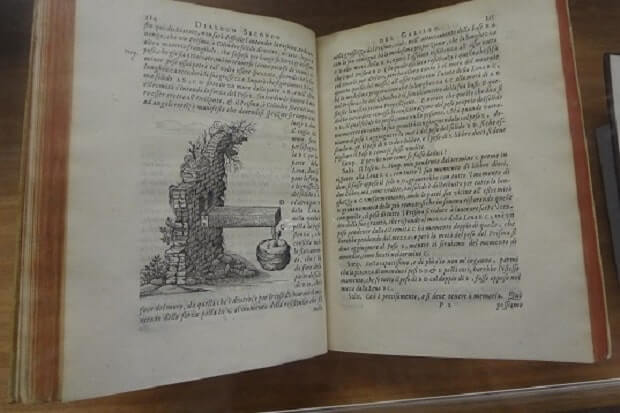
On the scientific side, Galileo Galilei’s (1564-1642) final book of physics (Discorsi e dimostrazioni matematiche, 1638), acquired by the Library in 1979 as its millionth volume, was on display. The World of Sound (1933), a series of lectures by Adelaide’s Nobel prize winning physicist, William Bragg, was also being shown. A non-book item on show was an ampoule of dried calcium penicillin produced by Adelaide’s pharmaceutical company F.H. Faulding based on the formula by Howard Florey, another South Australian and winner of the Nobel Prize for jointly developing penicillin.

A very rare piece indeed was a hand-written warrant by Queen Elizabeth I ( 1533-1603) ‘a warrante to the great Warderobe for yor Ma’ties Maundye …(1578) detailing gifts to be given to the poor on Maundy Thursday.

An equally amazing work on show was Aurora Australis the only book published in Antarctica, in 1907, with a story by the legendary Sir Douglas Mawson. It was published and printed by ‘At the sign of the Penguins’ (how appropriate!) in that icy land.

The literary front was represented by James Joyce’s (1882-1941) Ulysses, a first edition signed by the author (printed in 1922), and a first edition of Lady Chatterley’s Lover, signed by its author D.H Lawrence (1885-1930). The first pirated edition of The Posthumous Papers of the Pickwick Club by Charles Dickens (1812-1870), printed in Tasmania in 1838, was also on display.

Some unusual items included a most colourful ‘Kammavaca’ ( Buddhist monks’ ordination presentation text from the 19th century), a gilded red and black lacquered text on cloth from monks’ robes in Burma.

Reputed to be the world’s smallest book, also being shown was an inch-long ‘Das Vaterunser’ (Lord’s prayer in seven languages from the Gutenberg museum, Germany). An equally small book ‘Matilda Lees Dods’ (a handbook of practical cookery – the new and enlarged edition!) was revealed to be a miniature gift book with silver plate as cover, produced in London in 1906. Some Indian sweets are laced with small silver leaves but this book takes the cake!

Chandigarh and beyond

0
Reading Time: 5 minutes

Adelaide architecture students take a study tour to India and Nepal

The University of Adelaide’s architectural students have beaten the Feds to the punch. The New Colombo Plan (NCP) was rolled out by the Federal Government in 2014. Its objective is to “lift knowledge of the Indo-Pacific in Australia and strengthen people-to-people and institutional relations”. India was not even to be considered until the wider roll-out in 2015.

Interestingly, the University of Adelaide’s School of Architecture decided to take the matter into their own hands by setting out an India project. Their ‘India Studio: Collaboration in Design’ mission was designed with overall aims remarkably in line with those of the NCP but with a narrower focus, and included a visit by their architecture students to India.

More recently, a different group of students has visited Nepal as part of their course, for a project to construct buildings for mothers’ groups on two different sites in the mountains north of Kathmandu.

The groups were led by Dr Amit Srivastava, lecturer in the School of Architecture. The India Studio project was developed in collaboration with Professor Rajat Ray of the Sushant School of Architecture in Delhi. The students also had the opportunity to visit Agra, Ahmedabad and Chandigarh.

The observations of the Adelaide students provide an interesting window into the lives of their peers in India, and Indian architecture in general.

Students with boundless energy need to be kept occupied, so one of the aims of the India Studio in Delhi was to work alongside local architecture students on a design project based in Delhi. The idea here was to come up with designs for the redevelopment of an old textile mill site in North Delhi.

This stroke of genius led to students getting to learn more about each other.

Adelaide student Jesse recalled, “Students at Sushant were enthusiastic and passionately opinionated. It was eye-opening to see the way in which they interacted during studio sessions, with great enthusiasm and sometimes brutal honesty”.

The visit to Chandigarh was one of the highlights of the Indian trip. As is well known, this northern city was created as part of first Prime Minister Jawaharlal Nehru’s grand vision for a modern India. It was a massive project especially for its time and came to symbolise hope for the future architectural landscape of India.

Adelaide students Lana and Marguerite saw Le Corbusier’s Chandigarh as an example of a large-scale project created by the masters that exemplifies modernistic tendencies without disengaging from the human scale.

Daniel’s reflection was somewhat different. “While planning a city can be incredibly important for the success and good-working of a city, it does not itself mean that the city is ‘successful’,” he noted. “Much of the quirky and culturally rich elements we saw in the other Indian cities, were not present in Chandigarh”.

He added, “The most beautiful part of Chandigarh… was the Rock Garden, where Indian culture, materials and artistry was on display”.

The students were also pleased to meet Nek Chand Saini, the creator of the famous Rock Garden.

It was not all work and no play. Any excuse will do to explore the Jantar Mantar in Delhi. The students enjoyed clambering all over the structures. Built by Maharaja Jai Singh of Jaipur, the site is a marvel of architectural and engineering design. Although it was built for the scientific pursuit of astronomy, it conjures up an image of almost being a plaything or a ‘folly’. Other places of interest visited included the Red Fort and Humayun’s Tomb in Delhi.

Cities in India have typically developed organically over long periods of time. Beset with the problems of a developing country, urban planning tends to display haphazard tendencies and this was reflected in the opinions of the students.

For instance, Jesse observed, “Many of the more recent developments and newer buildings in the large cities often seemed disconnected and lacked a thorough understanding or representation of the context”.

Daniel on the other hand, was impressed by the Akshardham Temple and the Lotus Temple in Delhi but felt that the buildings of Gurgaon “were the uninspiring soldiers standing to attention in rows… to accommodate more people in these individual, but too-familiar monoliths”.

What stood out for Lana and Marguerite were the “predominantly gated and often guarded” buildings, “creating little islands of modernistic architecture where the chaos of India seemed to pause”.

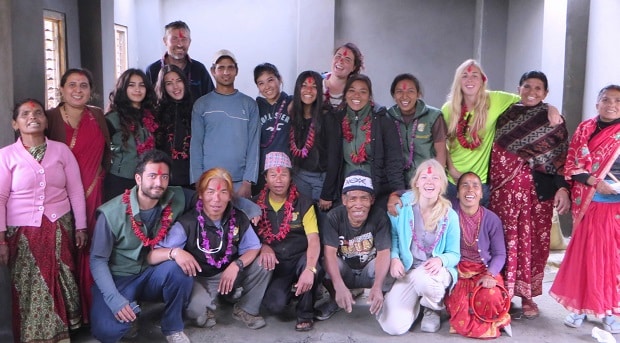
But the plains of India were a long way from the tranquil setting in the mountains of Nepal, which was the destination for the second group of architecture students from the University of Adelaide. The project to assist in the construction of two mothers’ group halls was undertaken with the NGOs Aussie Action Abroad and Architecture Without Frontiers. The 23 students were split into two groups; one travelled to the Khudi South site and the other to the Taal site. The project was to use simple techniques with local materials and mainly manual labour in the construction.

It was fascinating to hear the views of three students – Scott, Ashleigh and Charlotte – on their experiences in Nepal. Ashleigh mentioned that she “didn’t know what to expect” and so felt quite upset by the culture shock. All three were struck by the simplicity of the Nepalese people’s lives and their generosity.

There is always a risk that such ‘flying visits’ can be just for self-gratification of the visitors with no real benefit for the local population. But the responses dispelled this notion.

Firstly, in this case, the money being spent did go towards the benefit of the local community. Secondly, it helped the relationship, even if slightly, between Australia and Nepal.

In the bigger picture, what stands out as the most important benefit here, is that the visit by the students gave hope to the people they met. Finally, of course, is the practical aspect in that the halls are now being used by mothers and run by the local people themselves. The halls will be a lasting memory to the contribution of a handful of Adelaide students to the future lives of the Nepalese community.

Any visit to Nepal is incomplete without a diet of daal-bhat and a trek. So the two groups went on five-day organised treks accompanied by guides. The students also visited the historic city of Bhaktipur which they found quite fascinating. They noted the Roman-like influence in the construction through the wide use of bricks even on the roads.

The Nepal trip was brought to a close with a flourish, by means of an exhibition in May. This transported the colour, feel and atmosphere of the mountains and its people to Adelaide and showed glimpses of the work done by the students.

For the future, the School of Architecture is very likely to maintain its links with the sub-continent. When asked if they would go back to India and Nepal, the over-riding response was positive. Such visits help develop unique bonds. Something of oneself is left behind: a mark, a memory or a moment, in exchange for something taken, to be cherished or recalled in years to come.

A hockey great in town

0
Reading Time: 3 minutes

Former captain Dilip Tirkey talks about the state of affairs in Indian hockey

As the Soccer World Cup fever rages on, Adelaide’s Club India International SA Inc roped in support for the Socceroos from none other than one of India’s hockey greats.

Dilip Tirkey, former India hockey captain, Padmashree awardee and Rajya Sabha member, is currently in Adelaide, recuperating after undergoing ankle surgery at Sportsmed SA, a premier sports medicine institute.

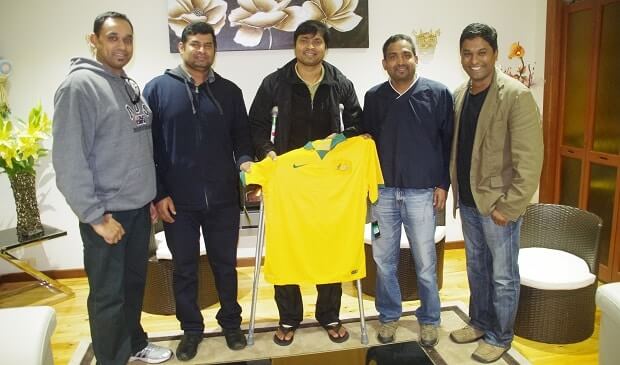
That the Socceroos, after splendid performances against much better ranked teams, did not progress into the round of 16, was a different story. Club India International SA Sports Secretary Shelvin Roswan, Entertainment Secretary Nick Fernandes, Treasurer Sterling Silveira, executive committee member Dunstan Albert Morais and others presented the official Socceroos jersey to the former Indian hockey captain and wished him a speedy recovery.

Tirkey is the highest capped Indian player at 412 international matches. He played in the fullback position and was best known for his penalty corner hits as well as his defence, thanks to his tight marking skills near the goal post. He was forced to retire from the game prematurely due to ankle problems. He recently underwent surgery on both ankles at Sportsmed, and is currently recuperating here.

The former Olympian – Atlanta 1996, Sydney 2000 and captain of the team in Athens in 2004 – Dilip Tirkey was known for his stick skills throughout the world. In March 2012 he was elected unopposed to the Rajya Sabha.

Considered as the world’s best defender during his playing days, the former captain firmly believes he will be able to recover well from the ankle surgery and his first priority will be to coach the Indian hockey team.

Always in the thick of action while he represented the country, Tirkey took time out to speak to Indian Link.

“I still have a lot to offer to the game that has given me so much in life,” he said. “Once I am fit to move about, I look forward to taking on the role of coach. We need to groom youngsters, talented players and give them exposure. I want to coach them and share my experience”.

Tirkey, who made his debut in the Indira Gandhi Gold Cup in 1995, feels that his vast experience and tough play on the field as a dependable defender will be positive points that he can share with upcoming players. “In hockey, fast thinking and tackling the ball are the most important aspects of the game”, he emphasised.

“After I slowed down with my performance due to the ankle injury, which resulted in a down slide in my fitness, I took to imparting training to young tribal players in my home district of Sundargarh in Orrisa,” Tirkey revealed.

As a player, Tirkey considers India’s performance in the 2007 Asia Cup finals as the defining moment of his 15-year-long career. India defeated a strong Korea team.

At the recently concluded 2014 Hockey World Cup in the Netherlands, where defending champions Australia won the tournament after defeating the host country 6-1 in the finals, India lost to Australia, England and Belgium and had a draw with Spain. Tirkey believes this was primarily due to the inexperience of young players in performing at the world competition level, and a failure to cope with this fast-paced nature of the game.

With regard to the Indian Hockey League, Tirkey observed, “This is the best thing to happen for hockey in our country. It will help spot players and give them the desired exposure, plus of course the opportunity to brush shoulders with foreign players who are participating in the league”.

Still, he added, more needs to be done to popularise the game in the larger cities of the country.

Tirkey had a word of praise for current Indian men’s hockey coach, Australian Terry Walsh, for his strategies and moulding of the team. But he did say that ultimately it is up to the players who need to do their part on the field, which unfortunately did not happen in the last major world tournament.

As a sportsperson in the Rajya Sabha alongside cricket great Sachin Tendulkar, Tirkey feels his major responsibility in India’s Parliament is to work for the betterment of hockey as well as other sports. Yet he is equally motivated toward the development of India’s rural and tribal areas, with education as his primary objective.

OFBJP launches SA Chapter

0
Reading Time: 2 minutes

Prime Minister Modi inspires the community of Adelaide

To celebrate the victory of the Bharatiya Janata Party in the recent Indian elections, chapters of the Overseas Friends of BJP (OFBJP) worldwide are organising public programs marking the unique event of Mr Narendra Modi becoming the 16th Prime Minister of India.

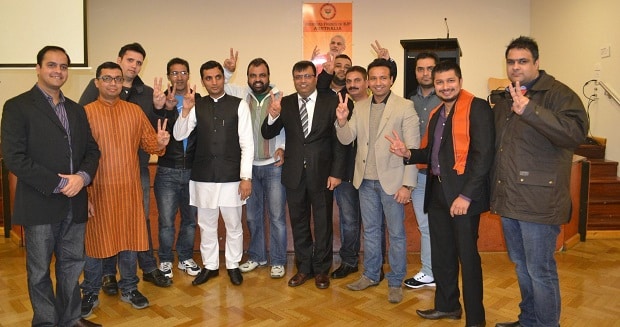
The South Australian chapter of the OFBJP was launched in late June at the Klemzig Primary School function centre in Adelaide.

It was a well attended event with 60 current and potential members attending, including representatives from most Indian community groups as well as the Australia India Business Council (AIBC) and South Australia India Advisory Council (SAIAC).

Speeches were focussed and specific. The SA coordinator of the OFBJP, Chirag Trivedi, welcomed everyone and committed the South Australian chapter to progressing the objectives of OFBJP and working with the South Australian Government in promoting its India engagement strategy.

National President Balesh Dhankhar presented the objectives of the OFBJP Australian chapter which he outlined for the audience.

Rahul Jethi, OFBJP Chairman, Australia, re-iterated that the Australian Chapter is dedicated to working towards projecting a positive and correct image of India and its people in the Australian and foreign media.

He said, “The OFBJP will promote the philosophy of ‘Integral Humanism’, a core objective of the organisation with a call to create a think tank of mature, experienced and intelligent individuals of Indian origin in order to utilize their expertise and wisdom to generate new ideas which could be beneficial for the Indian community in Australia and the people of India”.

Adrian Vicary, President of the Australia India Business Council, recalled his time with AIBC and its commitment to engaging with the Indian diaspora in South Australia at both a cultural and business level. He said that AIBC and SAIAC were both friends of India and that the time was now opportune to further this relationship.

The executive committee of OFBJP with other dedicated members laid the foundation of OFBJP Australia. President Balesh Dhankhar’s earnest efforts to strengthen the Indian community in Australia are coming to fruition as OFBJP Australia rapidly expands, with chapters having opened in NSW, Victoria, Queensland, and other parts of Australia.

OFBJP SA have already been active in the community, having run a massive telemarketing campaign during the last Indian election. The launch is a culmination of their work over the last 12 months.

Chirag Trivedi revealed on the occasion, “We are initiating a new campaign to secure signature protests against the perpetrators of the recent rape cases in India and ensure that the governments in Delhi and Uttar Pradesh, under the new leadership of Prime Minister Modi, hear the strong voice of the Indian diaspora in Australia”.

They are also making a concerted effort to highlight the trials of young Indian professionals in Australia, South Australia in particular, through a similar signature campaign and to submit a referendum to Premier Jay Weatherill.

For further information on the work and objectives of OFBJP or to become members, log onto http://ofbjpglobal.org/AboutUs.aspx

Speech pathology for kids in India

0
Reading Time: 4 minutes

Flinders University students prepare for a volunteer trip to Himchal Pradesh

In September this year, a group of ten students from Flinders University Bachelor of Speech Pathology program will be going to Palampur, Himachal Pradesh, on a volunteer clinical placement for a period of three weeks.

They will provide volunteer speech pathology services and health education to children and their families living with disability.

Services will focus on improving the children’s access to communication, using communication aids, educating carers and family and enhancing social interaction skills.

The students are in their 3rd and 4th years of the speech pathology degree. They hope to give kids with speech disorders or delays, communication skills that will give them a voice they may not have at the moment. Their goal is to help teachers and carers facilitate communication skills in the children. Services will be provided at two centres for children with disability in Palampur, the Harmony Through Education Centre and the Rotary School for the Disabled.

This is the first time the volunteer placement has been organised, and for the students, it is the first time they are visiting India.

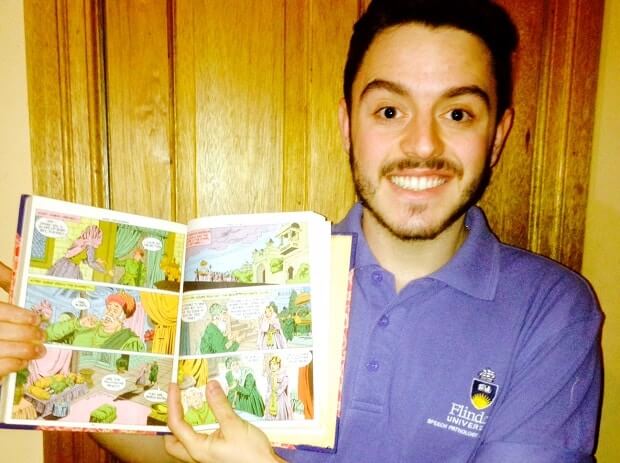
Adam Caruana, one of the students, is excited at the prospect of learning how to work outside the conventional framework of speech pathology.

“I don’t really know what to expect from India, though,” he confesses, “other than that it will be an assault on the senses!”

The group also plan to raise awareness in parents, families, and the community about different ways to communicate, and also what speech pathology can do for children. This will give the kids greater access to their own future.

“We will also be encouraging good oral hygiene and assisting the children in developing safe swallowing habits, to help prevent the development of conditions such as pneumonia that are quite common for children with certain conditions,” Adam said.

The program requires participants to volunteer their time and cover all associated costs of the trip. In addition, students are required to anticipate, source and develop any resources that may be required for speech pathology and educational purposes whilst in India. Since there is no speech therapist at the Centres, the students do not know what resources are available there. They hope to use locally available resources or make aids with materials available. But being there for only three weeks, it is all a challenge. There are budget issues too.

So the students, off their own bats, have been seeking sponsorship to help enable them to deliver services to these children and families in Palampur, including donations in the following forms:

  • Speech pathology resources
  • General education resources, including books, educational toys and games
  • Oral hygiene resources
  • Health resources, including awareness posters
  • Stationary, both to donate to the children and for the purpose of creating resources for the children prior to departure
  • Monetary donations, to purchase any of the above items/materials either in Australia or in India, with any remaining funds to be donated to the centres

They have also negotiated with the airlines for allocation of extra luggage for the purpose of transporting resources. They are organising fundraisers and trying to contact people and organisations for donations including for their Book Drive.

Adam says, “As we will only be in India for three weeks, it will be unrealistic for us to deliver intensive speech and language intervention and expect dramatic improvement in children’s skills in such a small period of time. Instead, our aim is to provide the children with greater access to communication – through verbal means, visual/picture boards, gestures, simple signs – any method that helps each child to get their intentions across and be ‘heard’ by those around them”.

Why books?

“Books can play an extremely important role in communication development. They can be interactive and enjoyable for children, and help them to develop skills such as joint attention and turn taking that do not always come naturally. Books provide exposure to rich language, but the reader can also choose to adapt stories based on the pictures if the language is too complex. Lastly, children can learn important social skills through the stories that are read to them”.

The Indian Community Radio in Adelaide is helping the group with the book drive, helping them collect books especially Indian books which the children and their families can relate to. It does not really matter which language the books are in, but books in Hindi would be an added advantage. The students also hope to make contacts in India who may be able to purchase resources in the bigger cities and send to Palampur.

So, as they set off on their big Indian adventure, combining study with volunteer work and using the skills they have learnt so far for the greater good, and we wonder what their expectations are, whether there are any fears.

There seems to be a bit of trepidation since no one has done this placement before and so they don’t have any existing guidelines to go by. However, they are all quite excited (even with the fact that they might only be eating dal and roti for 3 weeks!) and are sure it will be a life-changing experience.

They will probably learn to improve their own communication skills, build up their awareness of Indian culture and no doubt to have a great time too. Indian Link wishes them luck!

If you have books or other resources to donate, call Adam Caruana on 0430 923 856 or email him at caru0043@flinders.edu.au

Vidya Balan is Bobby Jasoos in Hyderabad

0
Reading Time: 3 minutes

Film: Bobby Jasoos

Cast: Vidya Balan, Ali Fazal, Kiran Kumar and Rajendra Gupta

Director: Samar Shaikh

Rating: ***

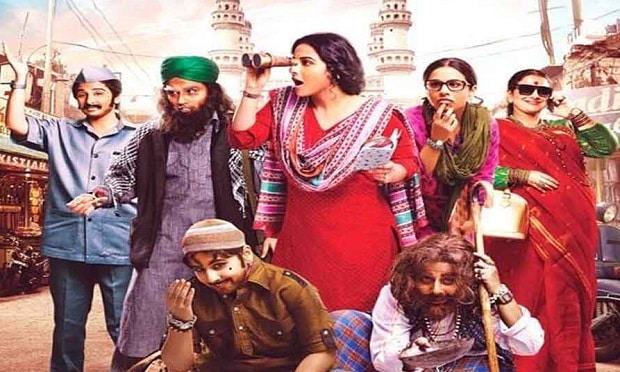
As a detective comedy-drama Bobby Jasoos is filled with furtive delights and the ambivalent aromas of a city (and a heroine) that never sleeps.

If the truth be told, and it’s the truth that our endearing Hyderabadi Nancy Drew is drawn to, there are two heroes in Bobby Jasoos. One, of course, is Vidya Balan. But the other more surprising hero is the city of Hyderabad. You can almost feel the unrehearsed jostle of a city always in a celebratory mood, the colours and gaiety, and yes, the biryani.

Oh yes, there is a whole mouth-watering section devoted to biryani where our lady snoop takes her extended family hand-in-hand on an eating expedition.

So may I add another hero, cinematographer Vishal Sinha to the ravishing roster of achievers in this film about an under-achieving girl trying to impress her father into finally giving her some desperately-needed attention and affection.

Vishal captures the bustle, jostle, aromas and attitudes of Hyderabad with the same affection of a non-tourist as he did when he shoot Raanjhanaa and Issaq in Varanasi. You can almost touch the city’s skyline and then willingly dive right into our heroine’s over-whelmed heart as it searches for all sorts of clues for what humans do to and in a city mired in mystery and intrigue.

Debutant director Samar Shaikh is as proficient in bringing us the city’s endearing as well as unspeakable transgressions, as he is in showing Bilkis, alias Bobby’s home life.

In no time at all we know every member of Vidya’s filmy family. That they are played by some superb actors, notably Tanve Azmi (as a busybody match-maker) and Rajendra Gupta (Vidya’s father), is just such a stroke of luck here. Bobby Jasoos has the kind of bouncy effervescent energy that somehow eludes today’s cinema.

With her impeccable comic timing, faultless dialogue delivery (the Hyderabadi was last spoken with such effortless seductiveness by Shabana Azmi in Ankur and Mandi) and eyes that not only speak volumes, they chant reams of poetry on the hurt and healing process of existence, Vidya just nails her goofy free-spirited character.

This is her best performance to date. Yes, even better than Kahaani and certainly far superior to the over-rated over-sensationalised The Dirty Picture. In the title role she sparkles, shines and shimmers providing us with more proof of her versatility.

The mystery that surrounds Bobby’s cryptic client Kiran Kumar’s assignments for missing persons provides a kind of conspicuous backdrop to Bobby’s free-wheeling relationship with the world at large.

It’s also good to see commercial Hindi cinema acknowledging the father-child relationship.

Bobby Jasoos also left me with one of the most heartwarming romances in recent times. Bobby/Bilkis’s brittle relationship with a television journalist Tssavur (Ali Fazal) grows in the plot with nurtured niftiness. Not for a minute does the relationship appear unreal or manipulated.

There is this wonderful episode in a narrow lane between Bobby and Tassavur where they discover their true feelings for one another.

This is the kind of romantic writing that cinema today sorely misses. And when was the last time we heard the santoor playing in the background in a romantic sequence? Slow clap for Shantanu Moitra’s thoughtful and dreamy background music.

That Vidya is partnered on screen by the striking Ali just gives a dizzying spin to the narrative. Though the film belongs to Vidya, Ali makes his own space and owns his part with pride and confidence. Make no mistake – he is star material, probably Vidya’s most confident co-star to date.
Bobby Jasoos works so well because it creates a unique yet relatable world for its female hero without making her seem super-vulnerable (like Kangana Ranaut in Queen) or super-confident (like Shabana Azmi in her best roles).

Bilkis/Bobby in her salwar-kameez, sneakers and various super disguises, is a fearless bundle of bumbling energy. Her infectious gusto and irresistible joie de vivre envelope this biryani-flavoured Hyderbadi delight of a film.

Like Vidya’s multiple disguises, the film’s ability to surprise never flags. If Bobby/Bilkis revels in a sense of adventure the narration doesn’t lag behind.

You can find flaws here. But you won’t hold them against the film. That’s a guarantee.


Irrfan, Tillotama win best actors for ‘Qissa’ at Qld Film Fest

1
Reading Time: < 1 minute

Indian actors Irrfan Khan and Tillotama Shome have been named the best actors at the recently concluded International Film Festival of Queensland (IFFQ) in Australia.

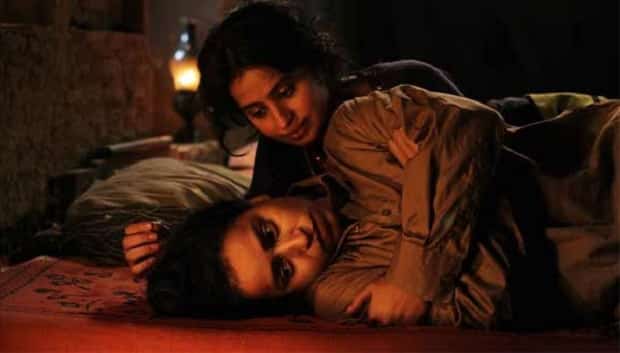
The pair were awarded for their performances in Qissa. The movie also won the best director award for Geneva-based Anup Singh.

IIFQ concluded on July 3 with the announcement of the awards, leaving Singh in a celebratory mood. “Irrfan Khan is with me in Geneva at the moment. We’re celebrating and look forward to celebrating with the Qissa team soon,” Singh posted on his Facebook page on Thursday.

The Punjabi movie, about a girl raised as a boy, also won the best cinematography award for Sebastian Edschmid. Qissa has been screened at various movie galas including Toronto International Film Festival, Mumbai Film Festival, Abu Dhabi International Film Festival, International Film Festival Rotterdam and Curacao International Film Festival.

It is now being screened at the Munich International Film Festival in Germany and is scheduled to release in the country on July 10. It will be showcased in the dubbed version and also in the original version with English subtitles in select theatres

The hard-hitting drama is likely to release in India in September.

Irrfan, Tillotama win best actors for 'Qissa' at Qld Film Fest

1
Reading Time: < 1 minute

Indian actors Irrfan Khan and Tillotama Shome have been named the best actors at the recently concluded International Film Festival of Queensland (IFFQ) in Australia.

The pair were awarded for their performances in Qissa. The movie also won the best director award for Geneva-based Anup Singh.
IIFQ concluded on July 3 with the announcement of the awards, leaving Singh in a celebratory mood. “Irrfan Khan is with me in Geneva at the moment. We’re celebrating and look forward to celebrating with the Qissa team soon,” Singh posted on his Facebook page on Thursday.
The Punjabi movie, about a girl raised as a boy, also won the best cinematography award for Sebastian Edschmid. Qissa has been screened at various movie galas including Toronto International Film Festival, Mumbai Film Festival, Abu Dhabi International Film Festival, International Film Festival Rotterdam and Curacao International Film Festival.
It is now being screened at the Munich International Film Festival in Germany and is scheduled to release in the country on July 10. It will be showcased in the dubbed version and also in the original version with English subtitles in select theatres
The hard-hitting drama is likely to release in India in September.

Fast apps support Muslims in Ramadan

0
Reading Time: 3 minutes

The new generation of devout Muslims are using apps to keep track of religious rituals during Ramadan, writes MOHIT DUBEY

Hard pressed for time in today’s fast-paced world, keeping track of religion and its day-to-day rituals is not an easy task. Cutting across religious lines, this seems to be a niggling problem for the generation of devout, in particular. As the Muslim holy month of Ramadan gets under way, things are going to be easy this time around for the ‘rozedaars‘ (those who keep the fast).

Finding the right time for beginning and breaking the fast are among many things they will now get help with. Thanks to a bevy of applications available for their mobile phones – Window, Android, iPhone – they are not only kept abreast with ‘sehari‘ and ‘aftaar‘ timings on a day-to-day basis but are also kept updated on the timings of the coming days.

These applications, mostly available on Google Apps store, also have alarm functions and aid you in reading out a ‘dua‘ (prayer).

One of these apps is ‘Ramadan 2014 and prayer time,’ said Saleem Haider, a travel agent who said it has “almost minimized” his chances of missing out on aftaar and sehari, as well as prayers.

Talking to IANS, the 32-year-old said he had also set alerts for the five-times-a-day ‘namaaz‘ as “the nature of my job is such that I miss out on prayer timings”.

Another application on Good Playstore is a compendium of ‘duas‘ tailormade for the pious month. Once downloaded, they can be read anywhere and at any time. These prayers are also substitutes of the long and arduous ‘Taraabi‘ (special prayers) that many professionals do not get time for.

A Muslim government official, while pointing to the “immense utility” of such applications, said he can listen to them while poring over files and even while driving as his job does not allow him the “luxury of attending long prayers at mosques.”

Shadaab, a 16-year-old milk seller in Indiranagar, too, is a votary of such applications. “Bhaijaan“, he muses between attending his clients, “this is very helpful as it allows me prayers in the shop though I would love to go to a mosque for prayers.”

Eminent cleric Maulana Irfan Miyan Farangi Mahali said using such apps was not “anti-Islam” but cautioned users to ensure that the prayers they contain are correct and in sync with the holy Quran. “It not only saves time but is also handy,” he said, while citing the busy schedules of young Muslim professionals.

Among other apps available are easy to learn prayers for children in which the invocations are simplified and explained. There are also apps that offer guidance for ‘zakaat‘ (giving of alms) and also cooking for the aftaari during the holy month.

“Women-centric applications are in demand and we use them off and on over traditional ways of cooking,” admitted Mohsina Hussain of Thakurganj.

“While the use of the internet is strictly banned for entertainment purposes, nobody stops us from seeking out knowledge, specially about our religion,” said Saanya, a housewife who is a frequent user of such apps on her iPhone gifted by her husband.

Technology wedded to religion is only helping the community, especially when “time is a scarce commodity”, an elder pointed out.

IANS