
Home Blog Page 926

Five ways to experience Fiji

0
Reading Time: 5 minutes

More than just an island paradise, Fiji has something for everyone

Located in the heart of the South Pacific, around 3150 kilometres northeast of Sydney, wondrous Fiji is an archipelago comprising of over 330 islands. Viti Levu and Vanua Levu are the two largest where 95 per cent of Fiji’s 900,000 people live. Nadi, on the west coast of Viti Levu, is the nation’s main international gateway, while Suva, dotted on the same island’s south-east corner, is the capital. Often touted as a ‘travellers hideout par excellence’, this paradise-like destination offers a dramatic array of landforms and seascapes all concentrated in a relatively small area. Those who touch its shore unanimously stamp its sun drenched beaches, lush rainforests edging rolling hills and wide spectrum of coral reefs as truly superlative.

Tourism is obviously one of the top revenue earners of Fiji, and during a recent visit here I discovered that it’s a place of choices, offering something unique from its menu to cater for the varied tastes and likings of visitors from different parts of the world.

Do nothing and just relax

Many go to Fiji just to relax and recharge their batteries, and the destination rewards them aptly. The soothing effects of nature, the serenity of the engulfing atmosphere, the idyllic seafront locations where most of the hotels and resorts are nestled, and the welcoming attitude of local Fijians acts as a tonic to rejuvenate the urbanised mind, body and soul. Doing nothing is a great option for some holidaymakers. They really do nothing but eat, drink, read a book and intermittently look at the turquoise blue ocean, from sunrise through to the twilight as the sun vanishes into the horizon.
If bored, they may go for a walk along the water or for a dip into the pool. Some join others for a game of beach volleyball or tennis. Fresh air, and a friendly atmosphere free from vendors and touts as seen in other similar spots like Phuket or Bali, and warm hospitality at the resorts – filled with all sorts of contemporary facilities – soon makes them forget which day of the week it is. Fiji is extremely popular to holiday with young kids as loving attendants at the resorts take good care of the children while parents wind down.

Have an adventurous affair with sea and sand

To some a vacation in Fiji means an adrenalin rushing affair with sea and sand. They fancy water sports like parasailing, waterskiing, surfing and kayaking, while snorkelers and scuba divers jump into the water for an awesome experience of underwater scenery dominated by colourful marine life and dazzling coral reefs. Fiji claims more than quarter of the South Pacific’s so called ‘rainforest of the sea’. Viti Levu Island is blessed with awesome reef sites which provide underwater swimmers the ecstatic joys of experiencing one of the most exotic gifts of nature. If someone is inexperienced, expert divers from the resorts or tour companies are always available to help so that the interested doesn’t miss out on the experience.

Indulge in indigenous culture

A visit to Fiji remains incomplete until you dig into some of their long-standing traditions and customs which form part of their ancestral culture. Among several, perhaps the two most significant ones are the “Yaqona” ritual, which is the ceremonial preparation of a non alcoholic but intoxicating drink called “Cava”, and drinking with guests, family and friends and the “Lovo” feast where meat and vegetables are cooked in an underground oven. Both the ceremonies in their full colourful form and scale can best be experienced in a village during a festival. However, most resorts organise social “Cava” drinking and serve some kind of “Lovo”- style meals for guests to sample their rich cultural heritage. Like at most resorts, in the evenings they also host traditional singing and dancing including fire walking, where Fijian men walk on red hot stones, demonstrating their strong physical power.

Explore isolated islands

All the above can be well experienced by taking part in a couple of nights cruising as offered by Blue Line Cruises aboard their small boutique ship “Fiji Princess”. After departing from Denarau Island, Fiji’s top class resort hub near Nadi town, guests soon gets lost in a magical world on board where there is nothing under the deep blue sky but series of isolated, lush-green-rainforest covered islands surrounded by golden-yellow sand bordering the sea with stunning mountain ranges as the backdrop. The spectacular colour combination of blue, green and yellow soothes urban eyes and relaxes the mind. Stops at a few islands, some totally uninhabited, some housing one or two Fijian villages, provides the opportunity to experience simple lifestyle elements. Brooke Shields comes to mind when around the islands where the famous Blue Lagoon movie was filmed.

Relish Pacific-Style Little India

When visitors want a break from sand, sea and sun, a tour of the Little India quarters in Nadi and Lautoka becomes an encouraging option. Subsequent to Fiji becoming a British colony in 1874, Indians were brought in to work as indentured labourers in the British and Australian owned sugar industry. The first batch of 450 landed in 1879, and the last in 1916. By then the Indian population had grown to around 63,000. To work in Fiji, the Indians then had to sign a contract called “girmt”, committing their services at the master’s farm for the first five years, followed by another five years of farming on their own on small plots of land leased from local Fijians. After ten years they were made free. However, by then most of them had become accustomed to the local climate and culture, and decided to stay. The indenture system was terminated in 1920, but the number of Indians kept soaring due to the later arrivals of Gujarati and Sikh business people. Today descendants of first generation Indian migrants constitute around 38 per cent of Fiji’s population, though during the 1946 census Indians marginally outnumbered the indigenous people.

The Indian settlements mushroomed around sugarcane farms and mills around Nadi and the nearby town of Lautoka, by virtue of which both these quarters display extensive Indian characters which can make visiting Indians feel home sick. Wandering here you notice men wearing kurtas and women attired in sari or salwar kameez, you hear people speaking Bhojpuri-type Hindi, smell the aroma of curries, can eat hot samosas and pakoras, and walk past shops selling Bollywood DVDs. At times it feels like you are roaming in a regional town in Bihar or Uttar Pradesh. Adding to the panorama are several temples, mosques and gurdwaras, the most important being the Siva Subrahmaniya Swami Temple, the ornamented gate of which dominates Nadi’s landscape.


TRAVEL NOTEBOOK

Getting There
Fiji Airways (www.fijiairways.com), Jetstar (www.jetstar.com) and Virgin Australia (www.virginaustralia.com) have regular flights to Nadi


Accommodation
Just 20 minutes drive from Nadi Airport, Denarau Island offers several resort-style accommodation options from international brands like Sheraton, Westin, Hilton and Radisson Blu


Indian Cuisine
There are several Indian restaurants throughout Fiji for those who fancy desi food; Indigo (www.indigofiji.com) at Denarau Island is highly rated


Island Cruise
Blue Lagoon Cruises (www.bluelagooncruises.com)


Local Tour Operator
Selva Tours & Transfers (www.fijitransfersandtours.com)
 

The quest for eternity

0
Reading Time: 3 minutes

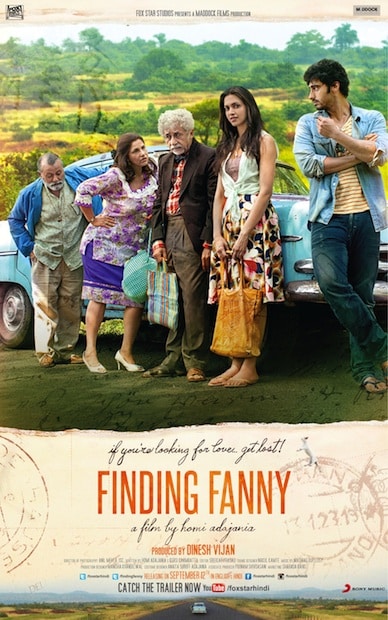
Film: Finding Fanny

Cast: Naseeruddin Shah, Dimple Kapadia, Pankaj Kapoor, Deepika Padukone, Arjun Kapoor

Directed by Homi Adajania

Rating: *** 1/2 (3 stars and a half stars)

Now here’s the thing. Finding Fanny has a dead cat in a traveling car that the cat’s owner knows to be dead, and towards the end, a dead painter-artist who nobody cares whether he’s dead or not.

Between these two points of mortality shared by the script lies a huge unshared joke about life and how it screws you up when you aren’t watching. Watching this weirdly wonderful ode to a long-forgotten anthem of love, I felt like a person who receives a really costly gift which is of no use to him.

“Really? This is for me? Wow! But what do I do with it…???”

You know that feeling of holding a precious parcel which you can’t tell the right-side-up from the wrong-side-down? That’s Finding Fanny. Homi Adajania’s world of insulated eccentricities invites you into its languorous folds with a yawning casualness. These characters, so fastidiously crafted to appear utterly adrift, couldn’t care less whether we like them or not.

That’s what makes them so deliciously appealing. They are a gallery of weirdos content to be perceived as such, as long as they are allowed to lead their lives the way they want. There’s the very engaging Dimple Kapadia playing a prosthetic-ridden, bum-happy mother-in-law to the widowed Angie (Deepika Padukone). The two beautiful actresses, one unnecessarily fattened in the wrong places for satirical emphasis, had earlier been seen together in Adajania’s Cocktail.

The frisson between them remains delectably unidentifiable even when their on-screen definition is specifically re-defined towards the end of the film when the placid Goan village’s resident postman Ferdie (Naseeruddin Shah) is close to finding his lost love.

Does Ferdie finally find Fanny Fernandes? Nobody really cares by the time the long 93-minute film draws to a close.

There is a helluva lot of self-indulgent self-pleasuring in the narration. Director Adajania loves his characters as long as they remain true to their soporific state of existence. The search for “Fanny” is a metaphor for the pursuit of that element of unconditional surrender to self-indulgence where you tell yourself nothing matters except your personal happiness.

Every character in Finding Fanny is supremely selfish, although some, like the incandescent Angie (Deepika) and the surly Savio (Arjun Kapoor), pretend to care for what happens to others. Angie and Savio will make up and make out before the film is through. “It will get better, right?” Angie asks Savio – hopefully about the sex.

For us to sink into the narrative’s discomforting folds, we have to wait for the guffaws to settle down. And who can tell when Adjania’s characters will actually stop laughing at fate and start laughing at themselves? You really can’t trust these unhinged emotional marauders who take off in a jalopy.

The car has seen better days, just like the time-ravaged characters. Naseeruddin Shah’s wizened features suggest more wisdom than his character of the awkward over-the-hill love-struck lover-boy is capable of feeling. Pankaj Kapoor, on the other hand, is bang-on as the smug self-serving painter who loves the ravaged Rosie (Dimple) with or without her ample derriere and finally insults her so hard, you want to knock his bloody teeth out of their roots.

Between them, Naseer, Pankaj and Dimple manage to keep the narrative’s fire aglow. These are people whose lives can splutter to a halt any moment, just like the car they are travelling in. A lot of the film’s perverse brilliance hinges on the way cinematographer Anil Mehta shoots the relation between the characters and their Goan home-life. Mehta shoots the travelling trio of love veterans with an endearing edginess.

Goa seldom seemed so windswept and soporific in our films. At its vortex is the tragic Angie. Deepika’s Angie is a sexy half-widow who seems to have abandoned her widow’s weeds in pursuit of a more sensual life. She plays the characters as a haunted beauty looking for a place to hide her uncontrollable beauty. Her coupling in the fields with the open-mouthed Arjun Kapoor might have worked better if the director didn’t seem so keen on appearing normal in his storytelling while dealing with characters whose lives are over. And are in pursuit of a life beyond inertia.

This is Zindagi Milegi Na Dobaara of the Goan world where aspirations are so low you would have felt embarrassed for the characters if they hadn’t decided to preserve a core of dignity during times of tumult and stress.

Does Naseer’s character finally find Fanny? Frankly it doesn’t really matter at the end. And I am not sure if that’s good or bad.


SUBHASH K JHA 


Help! I’m attracted to my married boss

0
Reading Time: 5 minutes

The young ones
Dear Auntyji

I am a 45-year-old single lady and have the most gorgeous nieces who are 16 and 17. They have lived in England all their lives and I have mostly seen them when I have been on holidays in the UK. They are coming to stay with me for six months and I am very excited. But, Auntyji, I am a little concerned about what advice I need to give them, seeing that they are at a critical phase in their lives. And seeing that I am their aunt, I don’t want to let them down, as I am sure they look up to me. Can you please give me some advice, some sage counsel, that I can offer to my nieces?

Auntyji says

Oh, how wonderful to have nieces who are English roses… possibly of the dusky variety, but roses nonetheless. Well, my dear, I have sage advice for you that you are going to love. Let’s start with you being relaxed and not worrying about the advice you need to give your nieces. These are millennial kids, who have grown up with social media and the internet, and in an era of selfies and trolls and the look-at-me-look-at-me lifestyle. This is the generation that thinks that every single thought they have is worthy of publication, every mouh they make deserves multiple endorsements of validation on Facebook, and everything that they do/say/think/want/hear/eat/drink should be public information. So, what advice to give to these young ones? Absolutely nothing. When was the last time someone gave you advice and you listened to it? How many times did your parents tell you to get married and have children and find a man and don’t work so hard and eat right and don’t smoke and give to charity and be nice to Aunty Pushpa? And how many times did you knowingly, willingly, happily ignore every single nugget of counsel that came your way? Seeing that you are still single at 45, I’d say you ignored pretty much everything that well-meaning, misguided friends and relatives told you. So why would you offer advice to your English gulaboes? I suggest that all you do is sit with them and let them be whoever they want to be, and just listen to them – listen with 100 per cent of your attention and ask them questions and feed them. And then prepare to be amazed and delighted and humbled by their wisdom and intelligence and generosity of spirit. The millennials are particularly interesting as a species, and if you happen to have access to study them in their habitat, then you are particularly lucky indeed. Good luck, have fun, and do put away those questionable pastimes of yours. You know what I’m talking about. No point corrupting their beautiful minds more than they already are.

Get back on track!

Dear Auntyji

I have a particular conundrum and I do wish to hear what you have to say about this. I am most perplexed and wish that this problem would just go away. So, here is what happened. I work with an amazing team of people and we all get along really well. There are five women and four men in the team, and our boss, who is very intelligent and hardworking, is a man. He and I have gotten along very well for the past five years. He is married and so am I. Oh, and did I tell you that he is also very attractive, with a ready wit, easy smile and, Auntyji, he is blonde with very short hair, but on the top of his head is a smallish roundish spot of hair which is even more blonde, kind of like Indira Gandhi’s silver stripes but round. Sometimes I look at this spot and wish I could touch it. Not in a weird way, but like, sometimes you see a small baby with fat legs, and you just want to touch the legs? Well, that’s how I feel about Steve’s blonde headlight. In any case, last week, we all went to a pub to celebrate the launch of a major project and we had the best time ever. Now Auntyji, it’s only now that I have spent some time thinking about this, but three months ago, at a group meeting, I noticed that Steve was staring at me. I thought nothing of it at that time, but today, it kind of all makes sense. Anyway, on the night of the celebration, we had a great time, then we walked out of the pub laughing hysterically and talking with great animation. Steve called a taxi and the laughing, tipsy girls tumbled in, after they all gave Steve a goodbye kiss and told him he was a great boss. I was the last girl and Simone pulled me into the cab just as I was about to give Steve a polite, courteous goodbye kiss and I was thanking him for paying for dinner and drinks. Anyway, the movement of Simone laughing and pulling me into the cab, me waving and talking while reaching forward to kiss Steve’s cheek, and the starry moonlit night, all conspired to have me kiss Steve not on the cheek, but closer to his honth! At that moment, everything stood still for me as I realised what was happening, but in a heartbeat, I was in the cab thinking, what just happened? The next day, Steve and everyone was back to their usual professional self and I was left to ponder what really happened. I have not stopped thinking about it, but Steve is still as professional as ever. I wonder if there is anything between us. Auntyji, can you please guide me? Please tell me what to make of this?

Auntyji says

Oh, you shameless girl. You paapin! Listen to you gushing and carrying on, as though you are a Mills and Boon heroine, giddy with romance because your nadaan hero kissed you in the moonlight. Listen up, you besharam aurat, you behaya. There is nothing going on here, and everything is in your head. That lone isolated event, which was the result of your high heels and tipsiness causing you to stumble and land your sinful hothon ke do phool kale kale next to your boss’s anmol lips, was nothing more than just that. Everyone has forgotten about the incident except you. You are making a mahabharat out of this, and no good will come of it. Stop thinking about this event and go back to being your professional self – unless you want a sexual harassment warrant out in your name. Paapin, surely your projects keep you so busy that you don’t have time to think such gandi baatein about your manager? And as for Steve’s blonde patch, you need to find some patch on your husband to obsess over. That’s your territory. Steve is someone else’s and your eyeing him with interest will only create disturbance in your world. No good will come from this.

Help! I'm attracted to my married boss

0
Reading Time: 5 minutes

The young ones
Dear Auntyji
I am a 45-year-old single lady and have the most gorgeous nieces who are 16 and 17. They have lived in England all their lives and I have mostly seen them when I have been on holidays in the UK. They are coming to stay with me for six months and I am very excited. But, Auntyji, I am a little concerned about what advice I need to give them, seeing that they are at a critical phase in their lives. And seeing that I am their aunt, I don’t want to let them down, as I am sure they look up to me. Can you please give me some advice, some sage counsel, that I can offer to my nieces?
Auntyji says
Oh, how wonderful to have nieces who are English roses… possibly of the dusky variety, but roses nonetheless. Well, my dear, I have sage advice for you that you are going to love. Let’s start with you being relaxed and not worrying about the advice you need to give your nieces. These are millennial kids, who have grown up with social media and the internet, and in an era of selfies and trolls and the look-at-me-look-at-me lifestyle. This is the generation that thinks that every single thought they have is worthy of publication, every mouh they make deserves multiple endorsements of validation on Facebook, and everything that they do/say/think/want/hear/eat/drink should be public information. So, what advice to give to these young ones? Absolutely nothing. When was the last time someone gave you advice and you listened to it? How many times did your parents tell you to get married and have children and find a man and don’t work so hard and eat right and don’t smoke and give to charity and be nice to Aunty Pushpa? And how many times did you knowingly, willingly, happily ignore every single nugget of counsel that came your way? Seeing that you are still single at 45, I’d say you ignored pretty much everything that well-meaning, misguided friends and relatives told you. So why would you offer advice to your English gulaboes? I suggest that all you do is sit with them and let them be whoever they want to be, and just listen to them – listen with 100 per cent of your attention and ask them questions and feed them. And then prepare to be amazed and delighted and humbled by their wisdom and intelligence and generosity of spirit. The millennials are particularly interesting as a species, and if you happen to have access to study them in their habitat, then you are particularly lucky indeed. Good luck, have fun, and do put away those questionable pastimes of yours. You know what I’m talking about. No point corrupting their beautiful minds more than they already are.
Get back on track!
Dear Auntyji
I have a particular conundrum and I do wish to hear what you have to say about this. I am most perplexed and wish that this problem would just go away. So, here is what happened. I work with an amazing team of people and we all get along really well. There are five women and four men in the team, and our boss, who is very intelligent and hardworking, is a man. He and I have gotten along very well for the past five years. He is married and so am I. Oh, and did I tell you that he is also very attractive, with a ready wit, easy smile and, Auntyji, he is blonde with very short hair, but on the top of his head is a smallish roundish spot of hair which is even more blonde, kind of like Indira Gandhi’s silver stripes but round. Sometimes I look at this spot and wish I could touch it. Not in a weird way, but like, sometimes you see a small baby with fat legs, and you just want to touch the legs? Well, that’s how I feel about Steve’s blonde headlight. In any case, last week, we all went to a pub to celebrate the launch of a major project and we had the best time ever. Now Auntyji, it’s only now that I have spent some time thinking about this, but three months ago, at a group meeting, I noticed that Steve was staring at me. I thought nothing of it at that time, but today, it kind of all makes sense. Anyway, on the night of the celebration, we had a great time, then we walked out of the pub laughing hysterically and talking with great animation. Steve called a taxi and the laughing, tipsy girls tumbled in, after they all gave Steve a goodbye kiss and told him he was a great boss. I was the last girl and Simone pulled me into the cab just as I was about to give Steve a polite, courteous goodbye kiss and I was thanking him for paying for dinner and drinks. Anyway, the movement of Simone laughing and pulling me into the cab, me waving and talking while reaching forward to kiss Steve’s cheek, and the starry moonlit night, all conspired to have me kiss Steve not on the cheek, but closer to his honth! At that moment, everything stood still for me as I realised what was happening, but in a heartbeat, I was in the cab thinking, what just happened? The next day, Steve and everyone was back to their usual professional self and I was left to ponder what really happened. I have not stopped thinking about it, but Steve is still as professional as ever. I wonder if there is anything between us. Auntyji, can you please guide me? Please tell me what to make of this?
Auntyji says
Oh, you shameless girl. You paapin! Listen to you gushing and carrying on, as though you are a Mills and Boon heroine, giddy with romance because your nadaan hero kissed you in the moonlight. Listen up, you besharam aurat, you behaya. There is nothing going on here, and everything is in your head. That lone isolated event, which was the result of your high heels and tipsiness causing you to stumble and land your sinful hothon ke do phool kale kale next to your boss’s anmol lips, was nothing more than just that. Everyone has forgotten about the incident except you. You are making a mahabharat out of this, and no good will come of it. Stop thinking about this event and go back to being your professional self – unless you want a sexual harassment warrant out in your name. Paapin, surely your projects keep you so busy that you don’t have time to think such gandi baatein about your manager? And as for Steve’s blonde patch, you need to find some patch on your husband to obsess over. That’s your territory. Steve is someone else’s and your eyeing him with interest will only create disturbance in your world. No good will come from this.

Hum honge kamyaab

0
Reading Time: 3 minutes

IABBV School’s Hindi Diwas celebration lives up to its motto ‘We shall overcome’

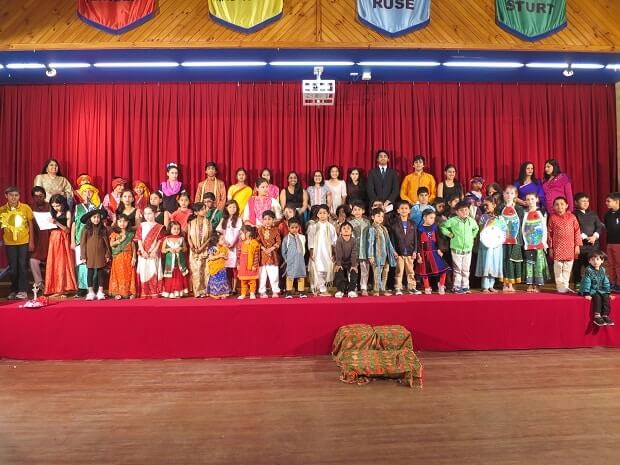
As Indo-Australian Bal Bharatiya Vidyala celebrated Hindi Divas in mid-September, the students sang the school song Hum honge kamyaab (We shall overcome) and the adults joined in.

It must surely have been a moment of pride for founder Mala Mehta OAM and many of the volunteer teachers, who have slogged for 27 years to keep the school afloat.

Finally, perhaps with that school song as inspiration, it looks as though they are here to stay.

As the community looked on, the students collected their trophies for excellence, and showed off the Hindi skills they have picked up in the year.

The main theme of the school song, hope, formed the inspiration for one batch of students who presented a short skit entitled Badaee Ka Dava.It was based on the question, which of the human needs like hunger, thirst and sleep, is the greatest. It was concluded that ‘hope’ must surely win this honour. How very apt for IABBV!

The littlies, for their item, wondered, Surya aur chanda aasman mein kyun rahte hain? Why do the sun and the moon live in the sky? They answered their own question with a mythological tale.

Senior students picked Anzac Day as their theme, reflecting their desire to integrate their heritage with that of the mainstream.

One of the highlights was the poetry recitation competition. There were some excellent performances from the kids under 10; the enunciation was impressive, and even though the choice of poems seemed rather age-inappropriate, it is admirable that they are becoming acquainted with the gems of contemporary Hindi literature.

Support for school from the community, organisations such as Australian Hindi Indians Associations, Bharatiya Vidya Bhacvan, and government agencies such as Hornsby Council, NSW DEC Community Languages program and the Indian Consulate in Sydney.

For Mala Mehta, it is the kids that make it all worth it. She glows with pride each time they come off stage, whatever the occasion.

“I love my bachchas,” she says frequently.

For many of the students, it is her genuine warmth and affection in her interactions with them that is the highlight of their Sunday classes at Hindi School.

Equally, parents form a vital part of Mala’s efforts at IABBV, for it is their devotion to their native tongue that keeps her going. On this occasion, after a community-sponsored lunch, Mala took the adults on an Anatkshari challenge while the kids took time out to chill. Four teams, melodiously named “Bhairavi”, “Yaman”, “Bhopali” and “Pahari”, vied for the honours, and made for a wonderful afternoon of entertainment.


Study made easier

0
Reading Time: 3 minutes

A new study app helps students prepare for HSC exams


Former Greystanes High School student Shubham Shah has developed an app that contains multiple choice exam questions from past HSC papers.

NSW Minister for Education Adrian Piccoli recently released the HSC Test Yourself app and stated that the mobile app will help students prepare for their exams while on the go.

“With the HSC written exams starting in October, this app helps students make the most of their study time using information straight from the creator of the HSC — the Board of Studies, Teaching and Educational Standards [BOSTES],” Mr Piccoli said.

“This mobile app will allow students to access the tests whenever and wherever they want”.

Mr Piccoli also added that, as all of the other sections of the HSC exam, consistent practice is one of the best ways to improve results in multiple-choice.


Shubham Shah originally developed the interactive app last year during his HSC, using BOSTES material, as he needed the practice himself. He was then contacted by BOSTES this year to further develop the app, as it was free and very successful with his peers.

“I have always been interested in educational applications and e-learning,” Shah said.

“The app will be really good for current and future students. I had a lot of luck with multiple choice and went really well in it because of the app”.

Shah said that he had been familiar with program development from a young age and that the app itself took a month and a half to develop.

According to BOSTES President Tom Alegounarias, the app is a great new learning tool for HSC students. It is also based on the most current syllabus of the HSC for each course, containing exam questions from 2010 to 2013.

Downloading the app is free and it works across Android phones and tablets, iPhones and iPads platforms. Once the app is downloaded, students are able to test themselves with sample questions from various courses and then may choose which subject packs they would like to purchase and download.

“The cost to download a course is affordable and everyone has the chance to try some questions before they buy the full set,” Mr Alegounarias said.

“The HSC Test Yourself app will help teachers with revision lessons and will also help parents who want to learn more about the types of questions contained in the HSC exams.

“While the app is designed primarily for individual study and self-testing, it will also assist students to test each other in group study activities”.

Some of the subjects included in the app are Economics, Legal Studies, Mathematics Extension, Chemistry, and Business Studies among many others.

The HSC Test Yourself app can be downloaded from Google Play and iTunes.

Ten Heads Are Better Than One

0
Reading Time: 3 minutes

It was a night of trivia fun at the Light for Life fundraiser, writes ARUNA GUPTA

Did you know that the average person produces enough saliva in their lifetime to fill two swimming pools? Or that glass is made of sand? Or that a lightning bolt is four times hotter than the sun? These were the type of questions asked of the 320 guests at the Light for Life Trivia night, held last month at the Don Moore Community Centre.

Many months of hard work and preparation by Swati Jain (an accountant by profession), brother Tanmay Jain, and her teammates, culminated in a three-hour long trivia night full of fun and entertainment. This charity event was organised to raise money for the Chris O’Brien Lifehouse, a state-of-art cancer centre at the Royal Prince Alfred Hospital, Sydney.

Swati and Tanmay’s father, Navin Jain, passed away from cancer in December 2009. During his treatment Swati gained firsthand experience of the dedication, support and wonderful work done by the medical staff. This gave her the impetus to support other cancer sufferers by raising funds for charity.

By organising a trivia night for the community months in advance, participants were able to choose their teams. There were about 32 tables, with 8-10 people on each team, competing against each other. There were children, teenagers and older people. From working together on questions to joking around, participants had fun with each other, creating a stimulating environment filled with friendly competition.

Each round of the trivia had a theme ranging from Bollywood questions to general knowledge using audio, visual and paper questions. The variety of questions, including some very obscure, challenged the audience and included something for everybody.  Even six-year-olds were contributing to the trivia answers! To add a bit of spice to the night, each round of trivia questions was interspersed with entertainment, ranging from Bollywood dances, to hip-hop and classical music routines.

Swati Jain was a great host and her charismatic personality won over the crowd. Swati guided participants through a lovely, enjoyable, fast moving night of trivia fun, with the evening culminating in a live auction. There was tremendous team work at play with friends and community members contributing in their own small ways to make the evening a success.

It was a night of bonding and learning, and everyone left feeling a genius! On the night, Swati raised $10,800. This is the fourth time Swati has organised a fundraising event and it is getting better each time. To date, she has raised $190,000 for cancer charities.

The Lifehouse organisation was named after Dr Chris O’Brien, a head and neck surgeon at Royal Prince Alfred Hospital, made famous by the Channel Nine program RPA. He believed Sydney would benefit from a dedicated cancer hospital that both treated patients and conducted research.

His death in 2009, of brain cancer, helped generate momentum for the creation of the Sydney Cancer Centre. The mission at Chris O’Brien Lifehouse is to improve the quality of life of cancer patients, carers and their families, by advancing the understanding, diagnosis, treatment, cure and prevention of cancer.

The organisation began with an ambitious plan to transform cancer care by creating an integrated and patient-focused centre of excellence. With people like Swati supporting the cause, that dream is becoming a reality, as they have opened their state-of-the-art $260 million facility to patients.

Lifehouse is more than a new building, it is about creating a new kind of cancer organisation with patient care at the centre of everything they do.


Kashmir… from conflict to calamity

0
Reading Time: 3 minutes

Just as this unstable region was finding its feet, natural disaster struck

The very first family holiday that I am able to recall was a trip to Kashmir, way back in the early 1980s. Even today, I often go through some of the photos from that trip when I visit my home in India. Kashmir, one of the most elegant and picturesque places on this planet. Beauteous and outright exquisite, often referred to as “heaven on earth”.

I do not remember much from that holiday in Kashmir, however the grandeur and dazzle of the snow-capped mountains and lush valleys remains fresh and vivid for me. All the bewitching locales of Kashmir have been made all the more familiar and memorable for people of my generation by Bollywood movies of the 1970s and 1980s.

I have never been back to Kashmir. The biggest reason for this, perhaps, has been that for a long while now Kashmir has been considered an “unsafe” place for holidaymakers. The long running instability and terrorism in this region has been responsible for the tainted image of this gorgeous place.

However, more recently, I had heard from family and friends in India that people were returning to the Kashmir Valley once again. Peace, life, and normalcy were making headway in the region, they told me, after a long inglorious period of dispute and violence. It was such a pleasing thing to hear.

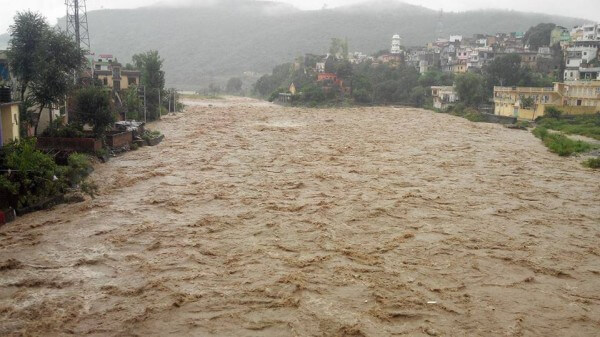
And then the tragedy of the recent floods struck this region. The silver lining of an impending revival of peace has yet again been rocked by a setback. This time, a callous natural calamity with unparalleled fury causing widespread havoc. Washing away entire villages and leaving countless hundreds homeless and exposed to the nature’s acrimony, the floods caused calamitous loss of life and property on a monumental scale.

But, like any great nation, the citizens of India came together, in spirit and effort in this hour of need, to reach out to the people of Kashmir. Leading the way in rescue and relief have been the defence forces. The true unsung heroes. The pride and honour of this great nation. The greatest example of a true democracy in the real sense – fellow citizens reaching out to those in dire need with religion or class no barrier.

I am not even remotely astute enough to adequately comment on the history and politics of Kashmir, or the dispute that has held it back for years. Nor am I qualified enough to provide an opinion on what is the future of this conflict moving forward.

The reason I chose to write this piece is to share my sense of gratitude and pride towards the citizens of India, and members of defence forces, working tirelessly in the harshest of terrains, to reach out to their fellow citizens.

It is a Sunday evening in Melbourne as I write these lines. Prior to writing this article, I was getting organised for my work week. While contemplating the hectic work schedules for the next week, I expressed a sense of stress to my wife. I suggested to her that life has to be easier than this for us.

Right at that moment, a news story about the Kashmir flood situation came on TV. There are people over there who have lost everything they ever worked towards for their entire lives. They have been rendered homeless with nowhere to go. With an impending harsh winter, they are staring at cold, hard adversity.

My little case of “Mondayitis” is insignificant when I think of those fellow humans facing such brutality. So I hope and I pray that life gets a bit easier for them. I will gladly face my work week next week…


The Great Indian Cook-Off

0
Reading Time: 3 minutes

A new culinary event in Melbourne invites participants to a MasterChef-style cooking competition

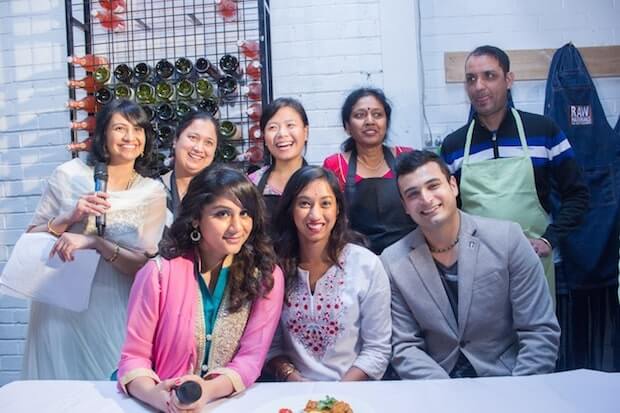
Here’s a recipe for a Saturday night that Melbourne hasn’t seen so far. Take two dishes, add four teams of cooks, and three ex-MasterChef contestants as judges. Mix with an enthusiastic and diverse audience. Garnish with Bollywood music, a lively dance performance and serve. That was The Great Indian Cook Off held recently in Footscray. Organised by Sonali Shah of EverythingIndian.org, the event invited participants to a MasterChef-style cooking competition.


Participants were organised in teams of four to cook Baingan ka Bharta, a popular eggplant dish. Their dish was to be judged by MasterChef 2013 contestants Natasha Shan, Faiza Rehman and Rishi Desai. The team with the best dish went through to the next round where they competed against each other to cook up Sooji ka Halwa (dessert made of semolina). Best halwa wins!


The event started with pizzazz, with a Bollywood dance performance that set the scene for the fast-paced cooking that was to follow. Brows furrowed as ingredients were prepped. Heads came together as strategy was discussed. Timers were set and off they went!


The young judges walked around, gave advice, heaped encouragement and reminded participants that flavour, texture and appearance all needed consideration. The audience was invited to participate, and enthusiastic members milled around the contestants, watching and taking photos as the baingan ka bharta took shape. Onions, tomatoes and eggplant simmered as chapattis were rolled. Thirty minutes flew by and when time was up, the dishes were plated and presented to the three judges.


Team ‘Gulab Jamun’ came out on top and went through to the next round. The four contestants were free to be innovative with the dessert, and were instructed to bring their own ingredients so that they could get creative. The aroma of ghee filled the venue as cashews, almonds and pistachios were prepped to accompany dessert.


One of the participants, Bangalore-based Rajeshwari Rajagopal, who is in Melbourne to visit her daughter, made a bold move and added mango essence to the dish. Sanjeev Gogna was very liberal with the ghee and fried it to give it a bit of texture, while the other contestants, Dianne and Gurpreet, kept it simple and followed the recipe. This worked in Dianne’s favour, and the judges deemed her dessert just right in texture and flavour to be the winner.


“It was a bit freaky,” she told Indian Link. “I’ve never made it, never seen what it looks like and don’t know what it tastes like! I didn’t expect to get through the first round, so I didn’t even bring my ingredients!” Another contestant came to Dianne’s rescue and she followed the recipe step by step to win the contest.

The interactive and casual format of the contest was fresh and kept the audience engaged. MasterChef 2013 contestant Faiza Rehman reflected on her Indian and Pakistani background.


“It makes me proud of my heritage. This event has brought so many communities together,” Rehman said.


Natasha Shan echoed the same sentiment and went on to talk about how much things have changed. “When I first came to Australia in 2005, there were no Indian people on TV. But with MasterChef, you’ve seen people of your own colour. Parents have come to me today and said their children are proud of being Indian at school. And that makes me proud.”

A message from Prime Minister Tony Abbott on the eve of Diwali 2014

1
Reading Time: 2 minutes

I am pleased to provide this message on the occasion of Diwali 2014.

Diwali – the Festival of Lights – is marked by millions of people around the world, including many of the 450,000 Australians of Indian origin.

It is a time to enjoy good food and entertainment, and to celebrate the bonds we share with family and friends. It is also an opportunity to reflect on the meaning of Diwali – the triumph of light over darkness.

In periods of conflict and uncertainty, Australians and Indians have worked, fought and sacrificed together. Our men served side by side at Gallipoli in the First World War. In the Second World War, they endured extreme hardship after the fall of Singapore.

Australia and India have a strong friendship based on shared history, a commitment to democracy and the rule of law.

Today, our two countries share growing trade and people-to-people links. Two-way trade between Australia and India is around $15 billion a year and India is our second largest source of international students with over 30,000 currently studying in Australia.

I recently travelled to India. The visit strengthened the strategic partnership between our two nations. It also let India know that our country is open for business, and wants to do more business with our friends on the sub-continent.

During the visit I met India’s Prime Minister, Mr Narendra Modi, and India’s President, Mr Shri Pranab Mukherjee. This visit has deepened the friendship between Australia and India.

I send my best wishes for an enjoyable Diwali celebration.