Home Blog Page 922

Twenty years!

0
Reading Time: 9 minutes

It’s time for a bit of trumpet-blowing as we celebrate our ‘coming of age’, writes editor RAJNI ANAND LUTHRA. Take a look at the kind of work we’ve done in the past two decades at Indian Link

Not another Indian newspaper the spice-shop-wallah had said to us, somewhat disdainfully.

“We don’t need another newspaper – there’s two already”.

We hadn’t expected this answer, not from someone who we knew well; we had been buying our groceries from him for the past five years.
As Pawan and I stared at him open-mouthed, he relented.

“Okay, you can stock your paper at my store,” he said. “But it will have to live outside my door. If you can sustain it for a full year, I will let you keep it inside”.

A year later, Mr Spice Shop Wallah rang us.

“I’d like to advertise in your paper”.

“Oh, but you don’t need to advertise,” we said. “You’re the king of the spice shop universe”.

“That’s true,” he agreed, “But the times are changing. The community is growing, and the competition is picking up…”

It was 1995, and Indian Link newspaper had survived its first year of life.

We had survived thanks to the support of the King of the Spice Shop Universe (who remains a good friend and well-wisher to this day), and thanks to the community that he rightly identified as growing by leaps and bounds at the time.

But mostly, we’ve thrived, not just survived, because of two strong principles that have been our cornerstone ever since the very idea of this project took root in our minds. These are a commitment to quality in terms of content, design and regularity of production, and the amassing of a storehouse of talent behind us that we like to call the ‘Indian Link family’.

Today, in our twenty-first year, we have well and truly come of age. Graduating from a small 24-page black-and-white monthly publication in 1994, produced with next to no resources except the voluntary contributions of a small group of six interested people, Indian Link is now a media group active on many platforms. It produces 72 publications a year with a team of more than 80 regular contributors and reports from every major city in Australia.

Indian Link has a radio arm that broadcasts 24 hours a day and which can be heard traditionally, online or via a smartphone app that has been downloaded some 11,000 times. With over eight hours of talk back shows every day, it has a following which even government funded radio channels such as SBS could envy.

Our website, first launched in 2003, is updated daily and has a variety of sections to capture breaking news happening all over Australia, as well as relevant information from India. Users can join the conversation as we give our readers a voice when it comes to important issues.

Indian Link has always been at the cutting edge of technology. We have heavily invested in social media, reaching out to readers on Facebook and Twitter. We are able to deliver instant news and community happenings to our strong base of followers and have high user engagement as compared to other similar media organisations. We also deliver news directly to the inbox of subscribers every fortnight.

Ever since the Multicultural Media Awards were announced in NSW three years ago, Indian Link has become the most-awarded ethnic media group in the state, bringing home multiple awards and even more nominations, in a whole host of categories. We have been recognised as a top contributor to the fabric of Australia’s multicultural society.

We have published the Best Print and Online News reports, been rewarded for our innovative use of digital and online media and nurtured a Young Journalist of the Year. We have been recognised for our community work with a Harmony Award and been given accolades for our coverage of community affairs abroad. We have been awarded Best Image of the Year, Best Online Publication of the Year, and our CEO Pawan Luthra was awarded Multicultural Journalist of the Year.


About Indian Link

Indian Link is a free publication targeted not only at Indian-origin Australians, but also mainstream Australians who have an interest in India. Indian Link is the Circulation Audit Bureau’s oldest ongoing member from amongst the Indian publications.

As watchers of the trends in Australia’s Indian community, our clear grasp of issues in the community for over 20 years has made us much sought-after.

Our considered commentaries on issues that put the community in mainstream spotlight, such as the students’ crisis of 2009-2010, and the contentious one of Australia’s sale of uranium to India, have been widely read and welcomed.

In times of national crises such as the Victoria bushfires of 2009 and Queensland floods of 2011, we look out for members of the community, seeking out the affected and bringing their stories to our readers.
From within the community, the social and cultural expressions of individuals and groups, in particular the celebration of our many festivals, find much coverage on our pages. The community’s performing arts scene is increasingly become prolific – reports of classical and popular dance and music shows, theatrical productions and art exhibitions are now beginning to cram our pages. An increasing trend is the organisation of fund-raising events, as the community becomes more settled and begins to give back to society.

We are proud also to feature everyday individuals who shine through with their intelligence and application. These might include school students who have excelled, professionals who have been awarded Australia’s highest civilian awards, and those excelling in sport or art or business in the mainstream.

As well, we like to cast a regular look at the different layers that make up our community: seniors and the issues that concern them; kids (their lives at school and at leisure); home-makers and aspects of their lifestyle; the youth and their particular passions, and the gay community in their attempts to reconcile their lifestyle choice with age-old traditions.

Our reports of community events in Australia have been welcomed by the mainstream as an informed comment on relevant issues. Our features such as travel, food, sport, literature, health, fashion, Bollywood, humour, kids and heritage, are read with interest by both the Indian and the wider communities.

An important segment of our coverage is also devoted to mainstream Australians who have an interest in India. We have followed interested Aussies on their trips to India, and others who have explored film-making with some of Bollywood’s greats. Indophiles in Australia pore over our pages reading stories about the intercultural connections. When the mainstream has a question about India, or when the community has a story to tell, Indian Link is the first point of contact.

We have developed a reputation as a leading media group in Australia, and small and medium businesses within the community, corporates, government departments, and businesses from India seeking to enter the market all come to Indian Link to get the word out about their products and services.

At Indian Link we pride ourselves on our high quality of content and design as well as regularity of production.And yet, while we whole-heartedly embrace new trends such as those in technology, we prefer to be old-fashioned when it comes to separating our editorial content and our advertising. We follow an ethical business model and will not be seduced in any form of “cash for comment”. We have managed to keep at bay the recent upsurge in native advertising (where ads are camouflaged to look like news), supposedly the way to go to survive in a diminishing industry.


The Team
Indian Link is the only Indian community media organisation to have a professional office, with headquarters in the Sydney CBD. Our team of contributors now numbers more than 80, with many being long-time Indian Linkers.

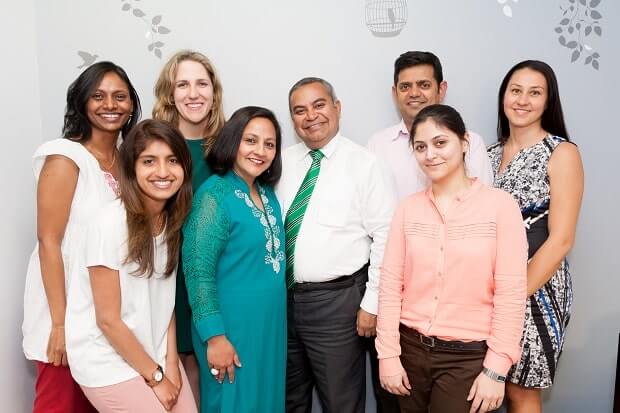
Our core office staff of ten oversees their work and the production process. More dedicated and conscientious than we could ask for, they go beyond their required hours – too frequently on recent occasions – to meet deadlines, and to being ambassadors of the company at public events after-hours.

A pillar of strength is Vivek Trivedi who has been with the team for over seven years. In charge of marketing and sales for Indian Link, he has taken our core policy of objectivity even further with a standard ethical procedure for all potential clients and a streamlined process in the booking of ads. His strong values and work ethic make him an invaluable member of the team.

Softly spoken, yet a master salesman, his conviction in the values of Indian Link often has him at odds with potential advertisers, but his gentle persuasion wins them over.

With his role in the frontline, he has strengthened our position in understanding the moods of the community, and serving their needs accordingly.

His mentoring of the sales team not only in Sydney but also other centres is enabling further growth of the company.

Kira Spucys-Tahar as assistant editor, has taken the company to a new level with her online expertise, expanding the company’s influence on other platforms (and teaching us social media dummies a few things along the way). Her work with both our design and marketing teams, to ensure a quality product is sent to print every fortnight, has won our admiration.

Nitika Sondhi and Bindiya Masabathula both contribute to the smooth running of the office with their pleasant personalities and always complete their work with a smile.

Preeti Jabbal, Indian Link’s Melbourne coordinator, has been with the newspaper for 12 years, and was recently awarded the Victorian Multicultural Award for Excellence in Media. Ashish Chawla, in charge of sales in Victoria is well respected for his dedication and work in making Indian Link as a premier brand in the state.

On the radio, Neelam Vasudevan is in charge and ensures the music flows beautifully. With a team of 10 radio jockeys and listeners across the globe, many of whom call in on a regular basis, Indian Link Radio has taken us to the world stage.


Influence

Observing the trends for over 20 years now has enabled us to draw conclusions about community movements with some precision and objectivity.

This was particularly true in the case of the students’ crisis. Our reports were unbiased, taking into perspective the views of all parties involved, and pointed out flaws in the system as well as suggestions for the future. Our take on the issue, considered balanced and mature, made us a leading commentator for both the Australian and the Indian media, with our CEO Pawan Luthra called upon to make regular comments on TV and radio in both countries. (Pawan has been a frequent guest on ABC Radio 702, ABC TV’s Lateline, Channel 7’s Sunrise and on other television programs like Today Tonight, ABC News 24, BBC Hindi Radio Service, as well as on television and radio networks in India, who seek him out for his in-depth knowledge of both local community affairs and the India-Australia relationship. He was also the guest commentator on Fox television’s coverage of the opening ceremony of the 2010 Commonwealth Games in New Delhi with Tracey Holmes and Steve Leibmann).

At election times, our polls to gauge the mood of community voters have become a long-standing tradition. (In fact, one such survey is currently on, to assess voter sentiment regarding the upcoming Victorian State elections). We would like to go so far as to suggest, that our analysis enables the undecided voters to make up their minds, our coverage significantly influences public opinion.

Our reports are not always flattering to community stakeholders, such as when we explored the divisions within community organisations a few years ago, or the debacle that was the Pravasi Bharatiya Divas in Sydney more recently. Yet the readers out there see the merit in our assessments, and can appreciate that we come from an objective editorial position. They understand better than those purporting to hold community leadership positions, that putting Bob Carr on the cover, for instance, does not make us Labor supporters, just as reporting a community poll in favour of the Coalition does not mean we back the Liberals.


The next 20 years

In a scenario where community newspapers are spawning even as their mainstream counterparts are dying off, we at Indian Link hope to keep carrying on with the same ideals with which we started. The times ahead are indeed exciting, not only as we reinvent ourselves as the media industry goes through an upheaval, but also as the mainstream finally begins to give us some much-deserved attention. There are deadline pressures to contend with as always, plus the stresses of diminishing revenue and new forms of media that we struggle to understand. Reporting on a community that is beginning to feel some growing pains (health issues, old age issues, bicultural stress in the youth, assimilation issues in new migrants, domestic violence, even a gradual increase in gambling addiction), we have our work cut out for us.

But every day at the Indian Link office is enjoyable, from regular dashes for coffee to the gentle teasing among co-workers and the frequent hounding of the boss. We have fun working on stories and getting to know the people of the community. Even though there are stresses, we laugh and smile together as we collate each new edition.

In 20 years we hope to tell our future generations that we were able to help create that perfect blend of Indian and Australian values and lifestyle that has made us a successful multicultural community. We have kept our Indian traditions alive and lasting while learning and integrating from Australian culture the values of openness and fair go.

The support of the community, we know, will continue to be with us just as we continue to tell their stories.
A window to our world

0
Reading Time: 2 minutes

Keeping a watchful eye over Sydney’s Indian community for the past two decades

Indian for lunch

0
Reading Time: 4 minutes

It’s a Deepavali hat-trick for the Hindu Council of Australia at Martin Place 

There was India in the air as office-wallahs in the city stepped out for lunch on a recent Friday.

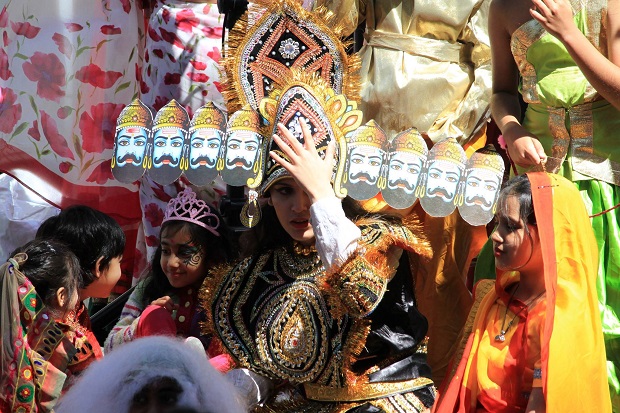
At the ‘Deepavali @ Martin Place’ event, the sights and sounds of India seemed to have taken over.

The Hindu Council of Australia (HCA) made a hat-trick this year as it successfully organised one of the most happening Indian events in Sydney’s CBD. The program marks the start of the festive season for Sydney’s Indian community.

It was a perfect choice of location and time, as office goers had a laid back mood, with the weekend almost upon them. The decorative set up and jolting racket of Bollywood songs made them linger just that little bit longer during their lunch hour!

The entertainment blast they witnessed included power-packed performances in dance styles like bhangra, garba, dandiya, Bollywood and hip hop.

Dazzling stars, the littlies stole the thunder with their cute and innocent Bum Bum Bole gig. Cronulla PS, India Calling, IABBV Hindi School, Lotus Dance School and West Ryde Public School were some of the participating schools. The Gujarati Girls flowed to the tunes of the seasonal Navratri pick, the popular Gujarati folk song from the movie Ramleela, Mor Bani Thanghat Kare, which temporarily switched the mode from Deepavali to Navratri.

The entertainment bag became even fuller with the energetic Mexican folk dance by Mexidahlia, Indonesian dance by Sisca Hunt, instrumentals by Prabhu (Osoniqs) and Neelesh Paravastu (clarinet).

Earlier in the afternoon, the event officially began with a humble start by the lighting of the ceremonial lamps, and then paying respect to both Australia and India with their national anthems. MCs Astha Singh, Neha Jain, Sunali Bhandula, Emie Roy, Raina and Suvarnika took turns to introduce the performances that followed. A team of 15 organising committee members and 20 volunteers worked tirelessly to put together this explosion of entertainment.

Their third annual Deepavali event, HCA introduced a Corporate Performance challenge this year, a song/dance competition for corporate teams. Team CPA Wealth Australia lead by Ankush Sardana won the challenge, while team Vishwas, led by Abhishek Bhovar, placed second.

While many spectators parked themselves in front of the stage grabbing the best spots, promising never to budge or miss a thing, others took strolls around the stalls pleasing themselves with henna tattoos, Indian costume dress ups, face painting, shopping, yoga, and sampling Indian food.

Many were surprised to hear MP Michelle Rowland remark that this was but a meagre prelude to a much bigger picture, the Deepavali Fair to be organised by the HCA at Parramatta Park on 19 October.

Consul-General of India in Sydney Sunjay Sudhir, Senator Sam Dastyari and other dignitaries, including Opposition Leader John Robertson and Geoff Lee MP, also graced the occasion. The VIPs heartily congratulated the Hindu Council of Australia for the successful turnout and their wonderful efforts.

John Robertson shared a personal note, that he was particularly pleased to be engaging with the Indian community as his son-in-law-to-be is a Gujarati.

The Chairman of HCA Nihal Agar congratulated the organisers and invited everybody to the Parramatta Park event on 19 October.

In the early days, members of our Indian community shared the Diwali spirit by taking a plate of mithai round to the neighbours. For Nihal Agar and the Hindu Council of Australia, this has now grown to inviting all the communities to come party with us. It’s the Deepavali spirit of reaching out.

It was indeed wonderful to see the crowds throng in the heart of the city to witness a little bit of India and celebrate our special festival, Deepavali.

For those who didn’t make it to the Martin Place event, it is time to get cracking and crackling, as Deepavali is here. It is time for fireworks, Ravan deham, feasting, lamps, gifts, fairs and some more feasting!

 Click here to check out our Facebook album with all the fabulous photos!

A Navaratri Doll Festival – the Canberra Way

0
Reading Time: 3 minutes

RADHA RAVI finds a creative way of engaging children in Navaratri

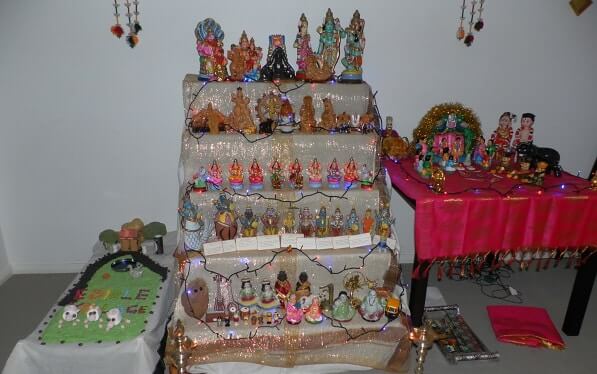
In South India, Navaratri is associated with Kolu or display of dolls in a hierarchical fashion. It is a very interesting and unique tradition called Bombe Habba or Golu or Kolu (Kannada), or Bommala Koluvu (Telugu), or Bommai Kolu (Tamil) or simply Dasara dolls. This tradition involves a toy festival that is celebrated by families across Tamil Nadu, Karnataka and Andhra Pradesh. Kolu or doll festival is celebrated through an exhibition of various dolls and figurines arranged as per the customs of the family. The dolls are arranged and exhibited on a stepped platform having an odd number of steps or tiers (usually 5, 7, 9 or 11) and usually covered with a white or light color cloth. The earlier kolupadis or steps used to be made of wood; those have now been replaced with iron kolupadis. Often it’s the furniture of the house that is dragged around to create the steps.

Most households follow a theme for the arrangement of dolls. Some households follow a simple and traditional thematic setup, while others create elaborate and extravagant ways of presenting their dolls. People use their creativity to showcase their collection in a unique and attractive manner. Some people depict stories from Ramayana and Mahabharata on the rows of the platform.

A number of South Indian families in Canberra follow this age-old tradition. In recent years it has become a time of visiting our friends, singing traditional songs or bhajans and partaking in sundal. There are many innovations on display too. Each year new dolls are added to the collection as new items come on to the market.

Author Rada Ravi

My children enjoy this kolu festival the most as it is a nine-day celebration with family and friends; with the added tadka of sundal and sweets. The main prasadam of kolu happens to be sundal – soaked lentils cooked with coconut and chillies. Every night, a different sundal variety is prepared and offered to the visiting guests.

This year we decided to add a new attraction, aside from our traditional kolu. The idea was an ‘edible village’. Everything that was created in the edible village needed to be exactly that – edible. The kids were ecstatic as they got to play with food. We created marshmallow animals, coconut greens, and even a tar road using sesame seed powder. There was an icing sugar lake, pineapple pieces shaped like animals and so on. The edible village became the talking point amongst the children and adults. There were even prizes for who guessed the maximum number of pieces correctly. As well as being enjoyable, it gave the children and adults something to think about. With a concerted effort, we can reduce or even eliminate the amount of plastic and artificial things in our lives. All in all a very creative and engaging concept.

Pre-registration open for Medibank Private Share Offer

1
Reading Time: 2 minutes

Australians can now pre-register to receive a prospectus for the Medibank Private Share Offer

The pre-registration process is another important step in the Government’s orderly and methodical execution of the sale of Medibank Private.

Medibank Private is Australia’s largest private health insurer and provides health insurance cover for over 3.8 million people across Australia.

Australian residents who pre-register to receive a prospectus and then apply for shares can receive a preferential allocation of shares.

Eligible[1]Medibank Private and ahm policyholders who pre-register and then apply for shares can receive a greater preferential allocation than non policy holders who pre-register.
A Medibank Private Share Offer Website and Information Line are now open for pre-registration. People can pre-register online at www.medibankprivateshareoffer.com.au or call 1800 998 778 for further information.

Pre-registration for the Medibank Private Share Offer will close on Wednesday, 15 October 2014.

Further details of the Offer will be provided in the Medibank Private Share Offer prospectus, which is expected to be available in late October, subject to market conditions. Medibank Private is then expected to list on the Australian Securities Exchange by December 2014.

The Government has long been committed to the sale of Medibank Private.

Medibank Private is a commercial business operating in a well functioning and competitive private health insurance market with 34 competing funds.

As such there is no compelling policy reason for the Government to continue to own Medibank Private.

The sale of Medibank Private will also remove the current conflict where the Government is both the regulator of the private health insurance market as well as a large market participant in a competitive market.

Proceeds from the sale of Medibank Private will be re-invested into productivity enhancing infrastructure through the Government’s Asset Recycling Initiative.

Legal Notices

The Medibank Private Share Offer will be made by the Commonwealth of Australia. A copy of the prospectus in relation to the Medibank Private Share Offermay be obtained after it has been lodged with the ASIC. Anyone who wants to acquire shares in Medibank Private will need to carefully consider the prospectus and then complete an application form that will be in or will accompany the prospectus. Pre-registrants are not obliged to apply for shares. This document does not constitute an offer to sell, or a solicitation of an offer to buy securities in the United States. The shares referred to in this document have not been, and will not be, registered under the U.S. Securities Act of 1933 (the “U.S. Securities Act”) or under the securities laws of any state or other jurisdiction of the United States and may not be offered or sold in the United States absent registration under the U.S. Securities Act or an exemption from registration requirements.

[1]Persons who are covered under private health insurance policies (excluding Overseas Student Health Cover policies and Overseas Visitors Health Cover policies) issued under either the Medibank or ahm brands at 11:59pm (AEST) on 27 September 2014, who are permanent residents of Australia, over the age of 18 and are not in the United States or acting on behalf of a person in the United States. Only one Policyholder pre-registration can be made in respect of each policy.


A ‘Sweet’ Diwali with Carrot Barfi

0
Reading Time: 3 minutes

Add a little nutrition to your festival of sweets

Diwali, the festival of lights, is just around the corner. A celebration of goodness, knowledge and hope, every Indian household looks forward to this festival irrespective of caste, creed or religion.

A profusion of traditional sweets and snacks are prepared in every home. In fact, delicious, ghee-laden sweets have become so much of a highlight of Diwali, that many even refer to it as the ‘festival of sweets’.

The Indian sweetmeats also known as mithai are not just desserts. These delicious, sweet morsels nibbled through the entire festival period are often considered a combination of snack, confectionary and dessert.

Back home in India, this is the time when you get together with the other female members of the household preparing the sweets and snacks in advance. It is customary to exchange sweets with family and friends during this colourful festive season and some of the traditional Diwali sweets include laddoo, barfi, halwa, sohan papdi, mawa kachori, moti pak, packed in beautifully decorated boxes.

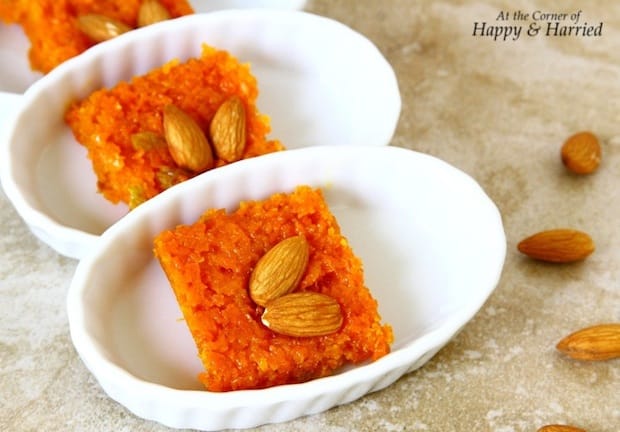
My pick for this festive season is the barfi, a simple mithai made from milk, ghee and sugar. There are plenty of variations but some of the famous ones include the besan barfi (made with gram flour), kaju barfi (a lush addition of cashewnuts), pista barfi (with the green goodness of pistachios), coconut barfi (with the sweetness of freshly grated coconut).

This Diwali, let’s add a healthy twist to our humble barfi with this delicious carrot or gajar barfi.

Carrots have an extremely high nutrition profile; packed with vitamin A and antioxidants, it is indeed the common man’s powerfood. The carrots not only lend nutritional goodness to this barfi, but the beautiful orange colour imparted makes it perfect for this colourful festive season.

Being such a simple recipe, preparing sweets this Diwali does not have to be a chore. These can be made ahead of time and also in bulk to be distributed among family and friends. And a plus factor – kids love it!

Eaten on its own, or served with a dollop of ice-cream, this gorgeously delicious, healthy carrot barfi will definitely be the ‘wow’ factor at your dinner parties. So, here’s how you make these soft, melt in the mouth, carrot cakes with a hint of cardamom, sweet raisins and crunchy almonds.

Ingredients:

(Makes 8 squares)

Ghee – 3 tbsp

Carrots – 2 – 2 ½ cup, grated or chopped finely

Milk – 1 cup

Cardamom powder – ½ tsp

Sugar – around ½ cup (or as per taste)

Salt – a pinch

Golden raisins – 2-3 tbsp (optional)

Toasted almonds or cashew nuts – for garnish

Method:

  1. Heat ghee in a large pan. Add the grated/chopped carrots and sauté on medium heat for 4-5 minutes.
  2. Now add milk, cardamom powder and ¼ cup sugar and cook the carrots further.
  3. When most of the liquid evaporates, taste and add more sugar, golden raisins and a pinch of salt. I ended up using slightly less than ½ cup of sugar as I like the barfi to have the natural sweetness of carrots.
  4. The sugar will introduce some more liquid. Stir constantly and cook it further till fairly dry. The barfi is done when the mixture leaves the sides of the pan and starts to come together. It will also have a lovely sheen to it.
  5. Remove from heat and spread the barfi onto a greased plate/flat dish and flatten to 1/2 inch thickness. Top with toasted almonds or cashew nuts. Cool slightly in pan and refrigerate till set.
  6. Cut into squares using a greased knife and serve. The barfi will be set, but with a soft, melt-in-the-mouth consistency. Refrigerate any leftovers in a closed container.

Notes

  • The carrots are cooked in milk to make the barfi creamier. If you are vegan, use vegan butter instead of ghee, and water or milk substitutes instead of regular milk.
  • For an even easier recipe, use sweetened condensed milk instead of milk and sugar.
  • Use beetroot instead of carrots to make beetroot barfi. Beets may need more milk as it takes longer to cook.


Tender souls are heartened

0
Keshav
Reading Time: 5 minutes

A trip to Australia seems to have done wonders for these special needs kids from India

Renu Bali and Arti

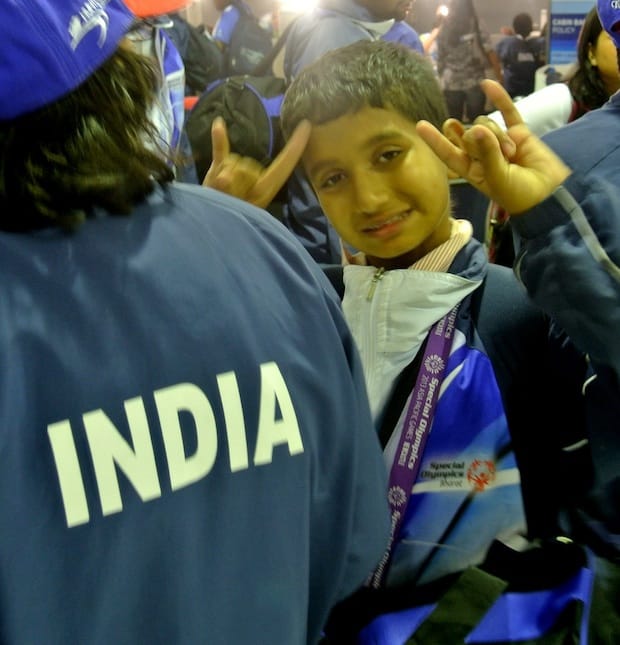
It was December 2013, during the Special Olympics held in Newcastle, Australia. Amongst the 2500 athletes from 30 countries, including 400 participants from India, were eight athletes from Tender Heart School in Bhatola, Faridabad.

The students won an impressive tally of 13 medals, which changed their lives forever.
It was the effort of a few selfless people that made this possible. The athletes had left India as shy and isolated young people but went back as local heroes.

Tender Heart school is a non-government, not-for-profit school ten kilometres from Faridabad near Delhi. Renu Bali founded it 16 years ago with the aim of providing social and educational opportunities for disadvantaged children. The school provides education to both non-disabled children and those with physical and mental disabilities and works to empower women by teaching them sewing and needlework skills so that they can find work.

In the school, the 200 non-disabled children and 50 special needs children all play and study together.

“With the special needs children, the emphasis is not only on providing an education but also on making those often rejected people a part and parcel of society,” said Renu Bali.

The story of the athletes began when Bali observed the children happily playing games. She wrote to the Special Olympics Bharat Committee and started the children on a special training program.

“After this, I stepped up participation in training camps. These were often held interstate and I had a tough time convincing parents of children to let them go, but my efforts paid off,” Renu said.

Although the first training camps were difficult for the kids, as they were away from home, she noticed that travel and game participation was making a huge difference in them.

“Each time they came back with new words in their vocabulary and started doing very well at district, state and then national level games”.

“My aim is to make these children stand on their feet and sustain themselves,” she added.

Tender Heart has international volunteers that help train students in computers and other skills.

“There have been many volunteers from Australia and with their help we are trying to up-skill our teachers to use better training methods for special needs students,” explained Renu.

As Edmund Burke once said, “Nobody made a greater mistake than he who did nothing because he could only do a little”.

One volunteer who assisted Tender Heat in particular, is photographer Katy Fitzgerald, who was crucial in getting the children to the Olympics.

After volunteering at Tender Heart, Fitzgerald held an exhibition that expressed her love for India through photographs. The funds raised were used to bring the disabled children from India to Australia to participate in the games.

The experiences of these children mean a better future now seems a likely possibility to aspire for, not a hopeless dream.

These some of their stories:


Deepak, 20, Athletics

To save her son from a life of isolation, Deepak’s mother has woken up early every morning for the past five years to make an hour long journey to take him to Tender Heart. On his return from Australia, the whole village was out in the streets to welcome him. Not only did he win two medals, but he was also the first person in his village to have travelled abroad. The experience turned this silent boy to a confident young man. He has firmly conveyed to Renu Bali his intention to become one of the school drivers!

Deepak powerlifting


Bhupender, 21, Athletics

Bhupender was the most experienced athlete of the Tender Heart team, having participated some years ago in the Athens Special Games. His hyperactivity was what brought him to Tender Heart and athletics is what has allowed him to control it. In the last seven years, he has been waking up at 5am to run for two hours. He has a silver medal now to show for his efforts. He now would like to start training other children.

Vishesh and Bhupender


Vikram, 18, Table Tennis

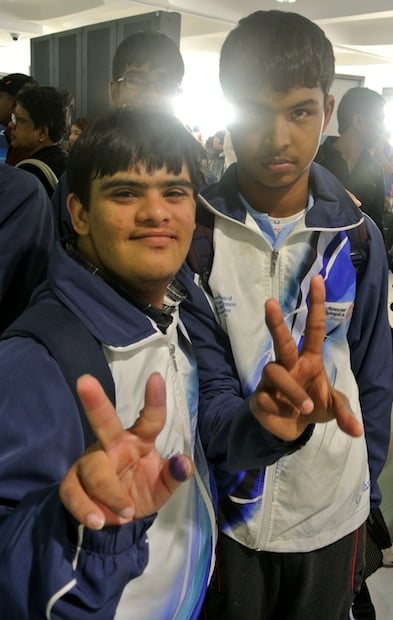
Down Syndrome did not prevent Vikram from obtaining one silver and one bronze medal at the Special Olympics. At Tender Heart, he found the opportunity to study at his own pace.

“These children need special care and we need to adapt to them if we want to make it work,” said Kakoli, one of his teachers who accompanied him to the games. Vikram’s next challenge is basketball which he is training for every day.


Vikram and Utkarsh


Utkarsh, 14, Bocce

With a gold and a silver medal under his belt, teachers were surprised to find Utkarsh asking for extra homework on his return from Australia.

“I’m a smart boy,” he often reiterated to himself. His urge to learn more was not lost on them.

“His handwriting and Math skills have notably improved and best of all, he is now having fun when learning,” his teachers said. Now into badminton and basketball, he is training for the next challenge.


Piyush, 23, Athletics

Piyush’s parents died six years ago but he is lovingly cared for by his aunt. He grew up without friends. At Tender Heart, he felt at home. Athletics has helped him release his energy and winning two gold medals changed his life. He now has new friends and can be seen playing cricket every afternoon with other boys. The family recently participated in the Delhi Book Fair and Piyush gave a hand at the stand.

“He travelled from Faridabad to Delhi, confidently navigating public transport alone. What else can I ask for?” said his proud aunt.

Piyush with Kakoli Mukherjee


Keshav, 12, Bocce

The baby of the team, Keshav’s bronze medal has changed his life and that of his immediate family. He is the youngest of three brothers, all with special needs. The little hero is now an inspiration for his older brothers who have suddenly realised the positive impact that sport can have. They want to follow their little brother’s footsteps and have the experience of travelling abroad!


Keshav

Arti, 32, Bocce

Arti shares her life with her two brothers. She said on winning her bronze and silver medals, “These medals are for my brothers. They have been always there for me”. After the trip, Arti’s self-esteem has soared higher than ever. She is back to her daily training, preparing for the local, then hopefully regional, national and hopefully her next international game.


Being exposed to a different world in Australia, the children are now curious and want to explore more. They need financial and other support just to keep operating as a school and to meet the day-to-day expenses such as teacher salaries, electricity, computers, craft materials, learning equipment and books. For the Tender Heart team to continue to work such wonders, they would love for interested sponsors to get in touch.

Local contact Katy Fitzgerald, katy2127@gmail.com or 0418 447 600, or visit www.tenderheartngo.org.  for more information


Why the Aam Aadmi Party lost its relevance

0
Reading Time: 3 minutes

Political movements must have a clear commitment and vision if they are to last

Citizens in any nation, when oppressed for long, resort to a revolution. A revolution to overthrow the oppressor(s) and make change. An individual with a sense of duty and sacrifice steps up to the challenge and the rest tend to follow that leader. The most recent example of such a movement is currently shaping up in Pakistan. However, the success of such an uprising is bound to be struck by challenges. That is where public emotions must be balanced with an adequate dose of realism. All the citizens of Pakistan have to do is look closely at a similar uprising in India earlier this year and learn from its shortcomings.

India, prior to the last general elections, witnessed an uprising of sorts in a nascent political party headed by Arvind Kejriwal. A social reform movement that started with protests and demonstrations, it eventually shaped into a fully-fledged political party in very quick time. Public sentiment endorsing this party ignited rapidly across the nation, making the Aam Aadmi Party (AAP) a formidable force on the national political front. However, the AAP succumbed to the spotlights of the big stage and crumbled.

A country of disillusioned citizens, troubled by blatant misuse of power and authority over a long period of time, sensed a silver lining in the AAP. A tangible alternative to a long array of underperforming governments, people connected instantly with the party’s straight talking leader. They felt affiliated to his vision of a corruption-free India and showered overwhelming support towards the change that the AAP was seeking within the governance framework of India.

Somewhere though, the wheels started to come off this mini revolution in India. The public sentiment of support for the AAP started to be tainted with doubt over the capability of the leaders to run the full journey and deliver the “India” that they had promised.

Granted, the AAP leaders were relatively inexperienced as politicians, however their messages and actions were more directed towards overthrowing the Congress and inhibiting the BJP from governing. They were not about communicating their own merit, vision, and commitment to run the country.

The Congress was bound to suffer in these elections due to their inadequacies over a 10 year rule, and the AAP leadership should have focused on marketing themselves as a capable alternative leadership unit. Instead, their election pitch was more about restricting the number of BJP members entering Parliament.

A successful social or political revolution does not stop at overthrowing the oppressor, it provides the alternative to then effect the change it promised.

“Corruption Free India” makes for a good slogan but not a fully-fledged manifesto to run a national election campaign. Other than putting an end to corruption, the AAP failed to articulate any other major policies of good governance aimed at the medium to long term future of the country. A holistic policy manifesto, tapping into foreign relations, economic growth, internal affairs and defence, was never sold to the voting public in great detail.

Some extremely irresponsible political statements, a streak of irreverent mudslinging, publicised internal party power struggles, and some high profile resignations sighting differences amongst top level leaders of AAP, all added to a sense of unease and lack of confidence towards the party.

The fallout and resignations of key AAP figures after the Lok Sabha elections earlier this year reflected a shade of political opportunism within the ranks of AAP. The decision by Arvind Kejriwal to give up the governance of Delhi in lieu of running for the top job as Prime Minister eroded his credibility to finish off the task at hand.

When you start a protest as a common person, you resort to demonstrations, hunger strikes, and disruptive activities. The effort in all of that is to get noticed. To create awareness. But, when you are a known entity and the government of the day, as AAP was in Delhi at that juncture, you follow constitutional protocols to effect change. Change, of any sort, is a long and arduous process. It demands patience and perseverance. You do not have to revert to being a powerless vigilante once you are in government (and I refer to the much publicised “dharna” by Arvind Kejriwal while he was the CM of Delhi). You stick to the legitimate processes and clean up the system. As challenging and tough as it may be.

The AAP had a lot going for it, but somehow managed to implode on the big stage. I am sure it is regrouping somewhere in its political trenches, as I write, reassessing its approach and priorities, re-strategising. It will return to the main stream at some stage to stake a claim at governance once again. However, I am afraid, the once popular reform movement that it originated as now runs the risk of being branded yet another “political party”.

Much like a schizophrenic, AAP will now have to fight demons created by its own self.


Each man’s death diminishes me

0
U Srinivas (1969-2014)
Reading Time: 5 minutes

The literature and classical scenes in India have recently lost two greats

U Srinivas (1969-2014)

When a friend called on 19 September to say that Mandolin Srinivas was no more, I was left speechless.

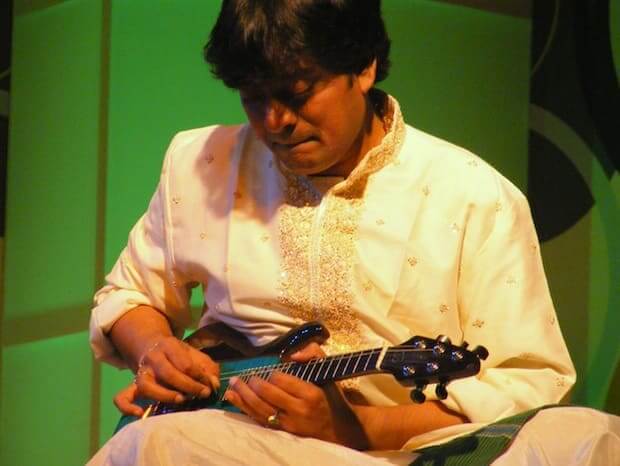
The internet confirmed the news: the music scene in India was shattered. Srinivas, the wonderboy of the classical scene who was so closely associated with his instrument of choice that it became part of his name, was only 45 years old.

Incident after incident flashed in my mind.

It was 1984. Srinivas was in Sydney, all of 14 years old, but already a prodigy. His first international tour, he performed at two concerts. You could not take your eyes off him on stage. He would play a movement and look towards his Guru (who was also seated on the dais) for approval. The Guru would return a smile.

He had been invited by Dr Perumal Janardhanan of Sydney Tamil Mandram. My son Gautham, who was five years old then, won Srinivas’s admiration for his attentive listening seated in the front row and identifying Kalyani raga as he played.

About 15 years ago, the Sydney-based classical music organisation Rasikapriya organised a concert by him. As the concert was in progress, the organiser, the late Dr Govindan, came to me and said, “The editor of the Indian Link wants to say hello to you”. Thrilled by this, I came out. There waited Pawan Luthra, who looked at me and said, “You look young. I expected you to be a much older man!” Thus started my relationship with Indian Link which has endured to this day.

Srinivas was in his element at that event. I wrote a superlative review for this newspaper, stating that Srinivas was definitely one of the five who had created original music in the Carnatik style. Someone criticised me for being extravagant in my praise. But when I read the tribute that maestro Ravikiran recently paid to this genius, I feel I was not wrong at all. I was completely justified.

I maintain that Uppalapu Srinivas has been one of the most creative artists of our time. His music is so very romantic. Forget the mandolin; look at the quality of music he has produced. It is sublime. Take the hour long Sharavana Bhava Guhane in Madhyamavathi raga or the three-minute long  Chandrasekhara in Sindhu Bhairavi raga. What a rendition! It transports you to another realm altogether.

I met the young maestro in person at a reception organised by Dr Govindan at his Sydney home. I was amazed at the utter humility he exhibited, answering all my questions by addressing me as “Sir”.

Srinivas came to Sydney on many occasions for many performances, including a hugely memorable one at the Opera House. The legendary tabla player Zakir Hussain was his accompanist a few times. Once I found the rendering to be very noisy and put it down in my review. That is beside the point.

We say that an artist suffers, but in a different way. I am told that far from the glory and the glitter, Srinivas had a personal life which was devastating. Yet he never exhibited his distress, he exhibited only his music. He was indeed a true artist.

***

U R Anantha Murthy (1932-2014)

Another Indian great, U R Anantha Murthy, the Kannada writer and scholar, passed away on 22 August this year. He was 82, and led a complete life in any sense of the term.

His novel Samskara (1965) is considered to be one of the contemporary greats in any Indian language. Set in rural Karnataka, it captures the collapse of personality of a character, PraneshaAcharya, in the wake of the death of another, Naranappa. It brought to Kannada literature the essence of Sartre, Camus and existentialism, and took the reader by storm. The film based on it became an all-time hit and a Cannes Festival award winner.

In the fifties, Kannada literature entered the modern era. Anantha Murthy, known as URA, belonged to the new school of modernists. Along with Yeats and Eliot came in the French, Freud, Marx and Mao. He was able to pack within 150 pages what took others five times as many. His Bharathipura, a picture of contemporary India, and Avasthe, based on the life of a socialist politician, are among some of his more critically acclaimed works. He has also written numerous short stories, poems and critical essays. His works have been translated into various Indian and international languages.

URA was awarded the coveted Jnanapeetha, India’s top literary honour, in 1994 and the Padma Bhushan, India’s third highest civilian honour, in 1998. He was one of the finalists for the Man Booker prize in 2013.

URA was a professor of English at the University of Mysore, visiting professor at many universities within India and overseas, the Vice Chancellor of Mahatma Gandhi University in Kerala, and held many important positions in literary circles.

As an author, URA did not lock himself in a lofty ivory tower. Instead he came out and participated in the life outside. For him politics was an essential part of life. He even contested and lost in the 2004 elections for a seat in the Lok Sabha.

Of course, for such a passionate man, controversy was never far behind. One such incident was when he said recently, “I will not live in India if Modi becomes the PM”. Never at rest, he seemed to move from one controversy to another.

I had occasion to meet him in person a few times and found him to be extremely intelligent and very friendly. Our first meeting was at my friend and scholar Kiram Nagaraj’s home in Bangalore. Both were engrossed in a deep discussion with Charminars cigarettes dangling from their lips! URA welcomed me warmly and we spoke at length. I was then writing science articles in Kannada and often doubted whether anybody was reading them at all. He opened my eyes and told me, “People in rural places read Kannada writings (in science as well) with interest. You should continue to write”.

Next I met him at the wedding of the famous story writer Diwakar’s daughter (who married my nephew). What warmth he showed when I introduced myself again. It was as if he knew me very well.  Mind you, he was already at his peak by then.

Heavy in heart at the loss of these two greats, I can but rephrase John Donne:

Each man’s death diminishes me,
For I am involved in mankind.
Therefore, send not to know
For whom the bell tolls,
It tolls for thee.


Each man's death diminishes me

0
U Srinivas (1969-2014)
Reading Time: 5 minutes

The literature and classical scenes in India have recently lost two greats

U Srinivas (1969-2014)

When a friend called on 19 September to say that Mandolin Srinivas was no more, I was left speechless.
The internet confirmed the news: the music scene in India was shattered. Srinivas, the wonderboy of the classical scene who was so closely associated with his instrument of choice that it became part of his name, was only 45 years old.
Incident after incident flashed in my mind.
It was 1984. Srinivas was in Sydney, all of 14 years old, but already a prodigy. His first international tour, he performed at two concerts. You could not take your eyes off him on stage. He would play a movement and look towards his Guru (who was also seated on the dais) for approval. The Guru would return a smile.
He had been invited by Dr Perumal Janardhanan of Sydney Tamil Mandram. My son Gautham, who was five years old then, won Srinivas’s admiration for his attentive listening seated in the front row and identifying Kalyani raga as he played.
About 15 years ago, the Sydney-based classical music organisation Rasikapriya organised a concert by him. As the concert was in progress, the organiser, the late Dr Govindan, came to me and said, “The editor of the Indian Link wants to say hello to you”. Thrilled by this, I came out. There waited Pawan Luthra, who looked at me and said, “You look young. I expected you to be a much older man!” Thus started my relationship with Indian Link which has endured to this day.
Srinivas was in his element at that event. I wrote a superlative review for this newspaper, stating that Srinivas was definitely one of the five who had created original music in the Carnatik style. Someone criticised me for being extravagant in my praise. But when I read the tribute that maestro Ravikiran recently paid to this genius, I feel I was not wrong at all. I was completely justified.
I maintain that Uppalapu Srinivas has been one of the most creative artists of our time. His music is so very romantic. Forget the mandolin; look at the quality of music he has produced. It is sublime. Take the hour long Sharavana Bhava Guhane in Madhyamavathi raga or the three-minute long  Chandrasekhara in Sindhu Bhairavi raga. What a rendition! It transports you to another realm altogether.
I met the young maestro in person at a reception organised by Dr Govindan at his Sydney home. I was amazed at the utter humility he exhibited, answering all my questions by addressing me as “Sir”.
Srinivas came to Sydney on many occasions for many performances, including a hugely memorable one at the Opera House. The legendary tabla player Zakir Hussain was his accompanist a few times. Once I found the rendering to be very noisy and put it down in my review. That is beside the point.
We say that an artist suffers, but in a different way. I am told that far from the glory and the glitter, Srinivas had a personal life which was devastating. Yet he never exhibited his distress, he exhibited only his music. He was indeed a true artist.
***
U R Anantha Murthy (1932-2014)

Another Indian great, U R Anantha Murthy, the Kannada writer and scholar, passed away on 22 August this year. He was 82, and led a complete life in any sense of the term.
His novel Samskara (1965) is considered to be one of the contemporary greats in any Indian language. Set in rural Karnataka, it captures the collapse of personality of a character, PraneshaAcharya, in the wake of the death of another, Naranappa. It brought to Kannada literature the essence of Sartre, Camus and existentialism, and took the reader by storm. The film based on it became an all-time hit and a Cannes Festival award winner.
In the fifties, Kannada literature entered the modern era. Anantha Murthy, known as URA, belonged to the new school of modernists. Along with Yeats and Eliot came in the French, Freud, Marx and Mao. He was able to pack within 150 pages what took others five times as many. His Bharathipura, a picture of contemporary India, and Avasthe, based on the life of a socialist politician, are among some of his more critically acclaimed works. He has also written numerous short stories, poems and critical essays. His works have been translated into various Indian and international languages.
URA was awarded the coveted Jnanapeetha, India’s top literary honour, in 1994 and the Padma Bhushan, India’s third highest civilian honour, in 1998. He was one of the finalists for the Man Booker prize in 2013.
URA was a professor of English at the University of Mysore, visiting professor at many universities within India and overseas, the Vice Chancellor of Mahatma Gandhi University in Kerala, and held many important positions in literary circles.
As an author, URA did not lock himself in a lofty ivory tower. Instead he came out and participated in the life outside. For him politics was an essential part of life. He even contested and lost in the 2004 elections for a seat in the Lok Sabha.
Of course, for such a passionate man, controversy was never far behind. One such incident was when he said recently, “I will not live in India if Modi becomes the PM”. Never at rest, he seemed to move from one controversy to another.
I had occasion to meet him in person a few times and found him to be extremely intelligent and very friendly. Our first meeting was at my friend and scholar Kiram Nagaraj’s home in Bangalore. Both were engrossed in a deep discussion with Charminars cigarettes dangling from their lips! URA welcomed me warmly and we spoke at length. I was then writing science articles in Kannada and often doubted whether anybody was reading them at all. He opened my eyes and told me, “People in rural places read Kannada writings (in science as well) with interest. You should continue to write”.
Next I met him at the wedding of the famous story writer Diwakar’s daughter (who married my nephew). What warmth he showed when I introduced myself again. It was as if he knew me very well.  Mind you, he was already at his peak by then.
Heavy in heart at the loss of these two greats, I can but rephrase John Donne:
Each man’s death diminishes me,
For I am involved in mankind.
Therefore, send not to know
For whom the bell tolls,
It tolls for thee.