Home Blog Page 920

Rice husk for fuel

0
Reading Time: 3 minutes

Engineering students from Sydney University have devised a machine that makes briquettes out of paddy waste. NANDITHA SURESH reports

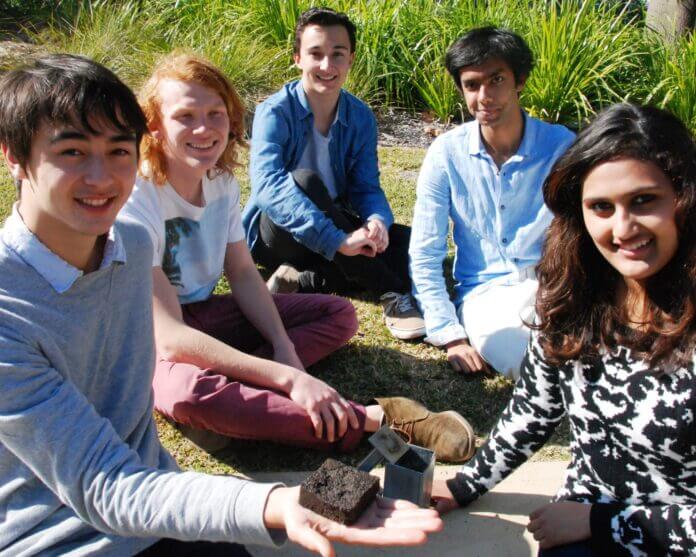
Aditya Katiyar and Aishwarya Cherian (far right) with their fellow teammates Liam Heidt, Jeremy Smith and Kieran Dale, and the Charcoal Briquette Machine

Extraordinary science and engineering are born out of ordinary and mundane things.

A group of engineering students from the University of Sydney has designed a new machine that compresses rice husk to convert it to briquettes – blocks of charcoal that can be used to start a fire.

The five-member team, including Aishwarya Cherian and Aditya Katiyar, impressed experts with their innovation. Made from agricultural waste, the briquettes are a renewable source of energy and, as such, a perfect replacement for fossil fuels.

The invention will have much use in underdeveloped countries, such as in rural Nepal, where the Sydney students hope their development will find application.

It is hoped the new briquettes will improve the living conditions of the people in Sandikhola, a remote village in Nepal.

When asked about the origins of this creation, Aditya Katiyar said, “We did the project for the Engineers Without Borders Challenge. It is based around the concept of ‘humanitarian engineering’, which involves coming up with engineering solutions to improve the lives of people in underdeveloped countries.”

Engineers Without Borders (EWB), a non-profit organisation, uses sustainable engineering as a foundation to improve the quality of many disadvantaged communities. To work towards this goal, the EWB Challenge provides an opportunity for first year engineering students to use their skills and knowledge to help communities in need.

The group was assigned the Sandikhola village for the challenge. After brainstorming concepts for the challenge, they came up with the idea of devising a mechanism that could put compressed rice husks to good use by creating a smoke-free and easy-to-store fuel option.

According to Aishwarya Cherian, “The people of Sandikhola, especially the women and children, spend long and laborious hours gathering firewood or fuel for cooking and everyday use. A major portion of the day is spent doing this. On top of that, the smoke causes various health issues such as respiratory problems.”

The use of the briquettes will not only free up the time spent gathering fuel to sustain everyday life, but also guarantee the health of the users.

“We wanted to design a solution that would be long-term and self-sustaining, and empower the local people; the time saved gathering firewood can be used to improve their quality of life, educate the children and provide an independent income,” Aishwarya said.

“As well, there could be added economic benefits,” Aditya added. “The villagers could use these machines to create additional briquettes, and sell them at their local markets for a secondary source of income.”

While the team plans to present their charcoal briquettes machine at the Engineers Without Borders Challenge exhibition later this year, the design has already garnered some attention. It was named the winner of this year’s Advanced Professional Engineering Prototype Demonstration, judged by engineering firm WorleyParsons.

“We have presented our design to WorleyParsons and hope this will help in creating awareness about the greater benefits of this briquettes machine,” said a hopeful Aishwarya.

Both Aishwarya and Aditya were born and raised in India. Aishwarya spent her childhood in the bustling city of Mumbai, moving to Australia aged six, while Aditya hails from Hyderabad; his family moved here seven years ago.
Biomass briquettes made from agri-waste are not unheard of in India. Sawdust for instance is commonly used. Some companies such as speciality chemicals group Lanxess have even been earning Carbon Credit points for switching from conventional fuel to biomass briquettes.

Rice husk itself has many uses, as building material, fertiliser, insulation material and fuel. Material scientists are also considering the use of rice husk by-products in the manufacture of tyres.

Our young, aspiring engineers from Sydney are now eagerly awaiting their chance to showcase their design at this year’s EWB Challenge. They believe that this opportunity could possibly make the difference for disadvantaged communities not just in Nepal, but also across the globe by enabling humanitarian and sustainable engineering.


Rahul Mishra collection launched in Sydney

0
Reading Time: 3 minutes

The highly anticipated collection from the International Woolmark Prize winner Rahul Mishra launched in David Jones Sydney store on Tuesday 14 October.

“I feel like a storyteller,” Mishra told The Australian. “I enjoy the slowness of the process, I enjoy when a lot of stories get attached to one single product. It creates rather more happiness when you create that imperfect beauty.”

The six piece collection was selected from Mishra’s International Woolmark Prize-winning collection which was made of lightweight Merino wool featuring progressive hand embroidery on beautifully tailored and sculpturally designed pieces, including a cape-style jacket and fitted tube-style dress.

Inspired by the work of Danish artist Maurits Cornelis Escher, the graphically designed embroidery in the collection tells a story of the evolution from an eight-petal lotus, exploring the metamorphosis of the shape; which morphs into complex structures, representing the city landscape. The designs reflect the lifecycle of wool; the journey it takes from the organic land and its natural state, through to the concrete cities where it’s redesigned and reinvented.

Mishra, whose business is now in its seventh year, has a studio based in Delhi, India, but 450 of his 500 employees work in villages, weaving fabrics and creating his intricate embroideries.

Hailing from India, Mishra was awarded the coveted Woolmark Prize in February 2014 in Milan, after impressing an esteemed panel of judges including Alexa Chung, Tim Blanks, Franca Sozzani and Frida Giannini.

“I am thrilled to be stocked in some of the best retailers in the world thanks to The Woolmark Company,” explains Mishra. “It is going to be really great for our brand on the commercial front, getting into these stores is a dream for any designer. The international exposure since winning the award has been immense and has provided us global coverage like never before.”

The Rahul Mishra International Woolmark Prize collection will be stocked in Australia exclusively by David Jones, and will retail internationally in Harvey Nichols – London, Saks Fifth Avenue – New York, 10 Corso Como – Milan, Colette – Paris, Joyce – Hong Kong, Isetan Mitsukoshi – Japan and will be stocked online at mytheresa.com

“The judging panel in Milan were amazed by the skill and craftsmanship in Rahul’s collection,” explained Donna Player, Group Executive Merchandise David Jones. “He is well deserving of the recognition. We are very pleased to be presenting this unique collection which carries with it such a great story of success, to our customers at David Jones.”

The International Woolmark Prize crosses borders and cultures and has been revived for a new generation of emerging talent. It has quickly become one of the most coveted fashion awards of our time and continues to look at new ways to take wool into the future.

“The International Woolmark Prize is an ongoing commitment by The Woolmark Company,” explains The Woolmark Company Managing Director Stuart McCullough. “It is a commitment to the finest emerging talent in fashion design right across the world and a commitment to celebrating the infinite potential of Merino wool.

“The award highlights how innovative Merino wool is and Rahul Mishra’s winning collection is a fine example of this. Having retail partners such as David Jones support the award and commercialise the product encourages emerging talent and reaffirms the Woolmark brand’s deep connection with the international fashion industry.”

Aussie Richard Flanagan beats out Neel Mukherjee for 2014 Man Booker prize

0
Reading Time: < 1 minute

The first Man Booker prize to allow American nominees was won by an Australian, with Richard Flanagan triumphing for a novel of love and war that tells the harrowing stories of prisoners and captors on the infamous Burma railway.


Flanagan won for The Narrow Road to the Deep North, with philosopher AC Grayling, who chaired the judges, describing the book as “an absolutely superb novel, a really outstanding work of literature”, the Guardian reported.

The book, at its heart, narrates the excoriating, horrific story of what it was like to be a prisoner of war forced to work on what has become known as the Death Railway between Thailand and Burma (Myanmar).

This is also the first time in the British prestigious literary award’s 46-year history that it was opened to writers of any nationality, writing in English and having their work published in Britain. It had hitherto been confined to writers from Commonwealth countries, Ireland, and Zimbabwe.

British-Indian writer Neel Mukherjee, who was being stated as favourite to win this year’s Man Booker Prize, could not make it possible. The Kolkata-born writer was considered to be the frontrunner to clinch the 50,000 pounds award.

The other contestants for the award were US authors Joshua Ferris, Karen Joy Fowler, and British authors Howard Jacobson and Ali Smith.

Just me

0
Reading Time: 3 minutes

It’s important for parents to support their children without imposing unrealistic goals and ideals

I was talking with a mother and father a short while ago. We were discussing their daughter and how they needed to reconcile her low marks with the likelihood she would do well in her Year 12 final exams, and succeed in gaining an ATAR that would get her into a university course desired by the parents. I suggested the parents prepare for the possibility their daughter may not get into university. Indeed, based on recent exam outcomes she would be very unlikely to get into any of the courses they had suggested for her. I suggested that, in the alternative, they needed to consider TAFE courses as a possible option. The mother then said, “I guess if she does fashion she could start her own fashion label… or if she did a chef’s course she could open a chain of restaurants like Jamie Oliver.”

At this point I inquired as to why their daughter should be compelled to become famous. In each scenario they had articulated, the message to their daughter was one of ‘you are nothing unless you are something famous, rich and well-known’. This could be seen in their original desire to see her gain entry into particular university courses, despite watching her struggle with reading comprehension and exams in every year of high school. When it came to the point where accepting a realistic alternative was required, they said, ‘we just want her to be happy’. Yet happiness to them did not start with what their daughter wanted. Rather, it constituted fame and wealth. Even the most realistic post-school options were being turned into something where the daughter was being set up for failure and low self-esteem. After all, how many fashion designers are there and how many chefs run their own restaurant chains?

It seems to me that if we want to complicate things for adolescents we can tell them they are both okay, and also not okay, within two sentences. This should confuse them enough to know that we do not know. It should also give them plenty to sort through for years after compulsory schooling finishes.

Parents always assert that they want what is best for their child(ren), but not knowing what form that might actually take, we impose our understanding of what has worked in our own lives on them. At best, this is well-meaning, but alas also often clumsy. At worst however, such a misplaced sense of what matters can be soul destroying for young men and women who compare themselves to others and who feel like they want to please parents but are not quite ever up to the mark.

Many adults know that a true feeling of self-worth and self-understanding can come many years after school. Such feelings are based on experiences and cannot simply be assumed. A child with low self-esteem dressed in the best clothes may still not give eye contact or talk with conviction. Feelings of self-worth and confidence grow over time, imperceptibly as life’s problems, small and large, are confronted. If the struggle is exacerbated by a low self-esteem and a default position of second guessing everything, then the building of self-knowledge can take years longer.

It may be time to have a post-school ‘course’ titled “Just Me”. When a child or adolescent is asked what they would like to be when they grow up they could reply “just me”. When a student in Year 12 is asked what they will study next they could reply, “A course in self-understanding called ‘Just Me’. Once I am more certain about who I am, without the complication of what others need me to be, or tell me I should be, or want me to be, then I will have a clearer sense of what I shall become. At that point I will know whether or not I want to do further study, and if so, what to study.”

If we take time to ponder society, we see that most people are not famous, do not own restaurant chains and appear on the social pages of the weekend papers. Most people live reasonable, settled, ordinary lives, confronting ordinary problems, like how to balance work and home life, maintain friendships and get through a tax return. Most people do not find their self-worth tied to trying to be something that others need them to be.

Before a person can become extraordinary they need to become ordinary. An ordinary person is one who does not aspire to be something other, because who they are is okay.

Of course, if a person opts to do something extraordinary, then it should come from their own volition rather than coming from a feeling of compulsion, ambition for fame, title or ‘success’, determination for recognition or an inner restlessness arising from a need to always be something better.

Perhaps it is time for us all to be “Just Me”.


Dandiya season!

0
Reading Time: < 1 minute

Hemant Chauhan, well-known Gujarati singer of the folk genre, was a special guest in Brisbane recently as he helped bring in this year’s Navratri.

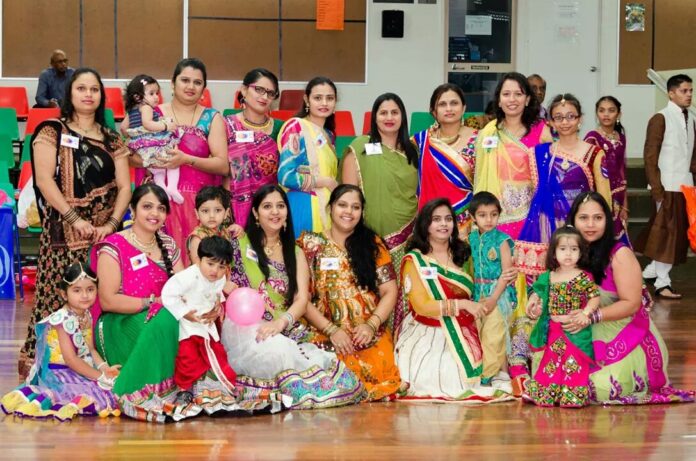
Some 2200 people gathered to hear him sing and sway to his garba tunes as they danced during the special nights of the dandiya season. Organised by the Gujju Lions Association of Brisbane, the event marked the fourth annual mega Garba event in the community. The Akademi Award winning singer Hemant Chauhan made it a memorable event with his authentic traditional style of singing.


A rose by any other name

0
Reading Time: 4 minutes

Changing a label doesn’t change reality

It has become a cliché that all of us live in changing times. We hear about people making a ‘seachange’, thereby completely transforming their lives, and we hear about a ‘he’ becoming a ‘she’ by means of multiple surgeries. It is very common now for people to undertake cosmetic surgery to grow hair on their heads (or to remove hair from other parts of their anatomy), or to increase their breast size (or reduce it) to enhance their sex appeal. Change is typified by the benefits seen or perceived by individuals in many spheres of life, it’s a means of value-adding to people and their persona.

Changing names of places or people for the sake of political, social, professional and psychological benefits is not as common in most parts of the world because there are no tangible effects that can be readily seen – except in India.

Indians would appear to be obsessed with names as much as changing them – how else could you explain a name like Bulusupalli Laxminarayana Srinivasulu Siva Venkata Sai. You feel like sympathising with this man when he starts to fill out a disembarkation card before getting off a flight as the space provided for his name is so small that he is going off the page. Interestingly, Bombay is now ‘Mumbai’, Calcutta is ‘Kolkatta’ and Madras is ‘Chennai’. Baroda is certainly easier than ‘Vadodara’ and why does ‘Hyderabad’ still have the same name. It raises several questions about the standards observed in this ‘name game’. Would if it be far off before Delhi is renamed “Indraprastha”?

Can anyone explain how these changes have benefitted our society or community, except to feel that the name change adds to their bona fides as innately Indian. We do however, know that it has cost the Indian taxpayer a huge sum of money in painting and rewriting the new signage.

Before any accusations are hurled, let me just say nobody should be judged or punished for the practicality of their views. One does not become less nationalistic and does not their patriotic fervour because of their belief in holding a different view.

Naming the former “Mount Pleasant Road”(a name which had neither religious nor British connotations) in Bombay as “Bhausaheb Hire Marg” in Mumbai is not the cleverest way of paying tribute to a freedom fighter. Our beloved freedom fighter would probably be turning in his grave to hear that the street named after him is strewn with household rubbish which is not collected for weeks on end. The powers that be at Mumbai Municipality who are charged with the responsibility of road maintenance would undoubtedly feel that they have discharged their duties completely once the street name has been changed – they must be convinced that potholes are caused by monsoons and it is a futile exercise to keep doing patchwork every now and again.

And how has calling the formerly known “Mount Road” in Madras “Anna Saalai” in Chennai added a new “Tamil dimension” to an arterial road in the city? How has it benefitted the traffic flows from north of the city to the south? It is nothing short of chaotic, with every vehicle having wheels (hand carts, bullock driven carts, rickshaws), regardless of the speed at which it moves, vying for space. Some of the flyovers dotting this road are eyesores and totally devoid of aesthetic sense.

Consider the following name change made by a friend, whose name on his passport is Mathuradas Goverdhandas Parekh. He is, however, recorded on his employer’s rolls as ‘Matty Parker’. Whether this change occurred owing to the perceived difficulty in pronouncing an Indian name by his colleagues is debatable. If so, how about a British name like Timothy Haythornthwaite – does he shorten his name to Mr Hey, Wait? How would our German friend Mr Wolfgang Hindenburger react if he were addressed as Wolf Burger?

If other people of other nationalities do not allow their name to be corrupted, why does the Indian diaspora succumb to compromising their names to an Anglican version? Most young parents-to-be, even now, believe in deriving baby names from the “Tulsi Ramayan” and they would be horrified at the prospect of this ‘name changing game’ which is now rampant amongst overseas Indians.

There is another view on our obsession with names. Most of us would find it a railway train roll off our tongue more easily than having to call it “lohpath gaamini”. Psst! Don’t let Laloo Prasad Yadav hear about this, or else, who knows! I am sure the CEO of All India Lawn Tennis Association would hate to have the name of his tournament Indianised and renamed “Akhil Bharatiya Ghasiya Gaind Ballah Bhidanth”.

India has come a long way from its colonial past and it should not be grudged the right to assert itself. Even the most ardent protagonists of the ‘name changing game’ will acknowledge the ‘ad hoc-ism’, the political point scoring and the arbitrariness that characterise the changes that have occurred already.


Relief operations begin in cyclone-hit Andhra Pradesh

0
Reading Time: 3 minutes

Relief operations have begun in Andhra Pradesh’s Visakhapatnam city and other coastal areas, a day after severe cyclonic storm ‘Hudhud’ made landfall, leaving a trail of destruction and killing five people.

With rains receding in the cyclone-hit areas and intensity of gales also coming down, people came out of their houses, only to find that the scale of devastation is much higher than anticipated.

National Disaster Response Force (NDRF) teams with personnel from various government departments began clearing felled trees, electricity and communication poles and hoardings from roads.

While precautionary measures helped in minimising the loss of human lives, the cyclone disrupted electricity and communication networks, paralysed transport and damaged over thousands of acres of crops.

Visakhapatnam, also known as Vizag, bore the brunt of Hudhud, which hit its coast with the speed of 185 km/h. Hundreds of vehicles parked on roads were damaged while heavy rains inundated few colonies.

Airport, railways and bus stations were also hit in Vizag, which remained without electricity for the second consecutive day. With the collapsing of communication networks, mobile phones are non-functional here.

With no drinking water, milk and other essential commodities, people are facing severe hardships.

Chief Minister N. Chandrababu Naidu, who is about to reach Vizag, said 500,000 people in four districts were shifted to relief camps.

The cyclonic storm Hudhud hit the Andhra Pradesh coast on Sunday 12 October, triggering heavy rains and strong gales.

The districts of Visakhapatnam and Srikakulam are still without electricity. Mobile telephones are not working in the region as communication network collapsed.

With trees and poles falling on highways, the vehicular traffic came to a complete halt while railways cancelled all services in the region.

The “very severe cyclonic storm” in the Bay of Bengal started crossing the coast around noon on Sunday at Pudimadaka, about 50 km from Visakhapatnam.

People were confined to their homes through the day as strong gales felled scores of trees, power and communication towers and hoardings. Many cars parked on roads were damaged.

Andhra Pradesh Chief Minister N. Chandrababu Naidu said in Hyderabad that the eye of the storm crossed the coast but it may take some hours for the entire system to cross. He appealed to people to remain indoors till evening.

With the authorities losing contact with the radar tracking the cyclone, they were finding it difficult to provide information about the impact and wind speed. Naidu quoted the navy as putting the gale speed at 185 km/h.

“We don’t have a mechanism to assess the damages as the communication network has collapsed,” said Naidu, before leaving for coastal Andhra by road.

The cyclone disrupted the functioning of the Visakhapatnam Cyclone Warning Centre, which lost contact with the radar tracking the cyclone. Officials were relying on the navy radar for information.

Officials said 320 villages in four districts of Srikakulam, Vijayanagaram, Visakhapatnam and East Godavari were affected.

Two people were killed in Visakhapatnam while another died in Srikakulam district. Two deaths occurred due to falling trees and one due to a wall collapse.

Naidu announced a compensation of Rs.5 lakh each to the families of those killed, Rs.1 lakh for critically injured and Rs.50,000 for other injured.

In Odisha, an official said a man died on the Puri coast as he tried to save his fishing boat, taking the total deaths to three after two people were killed when a boat engaged to evacuate people capsized in Kendrapada district Saturday. Heavy downpour continued to lash the state and inundated many areas.

A spiritual retreat

0
Reading Time: 3 minutes

Join the Hare Krishna devotees at the New Gokula Farm in the Hunter Valley in their mission to create a more God-conscious Earth

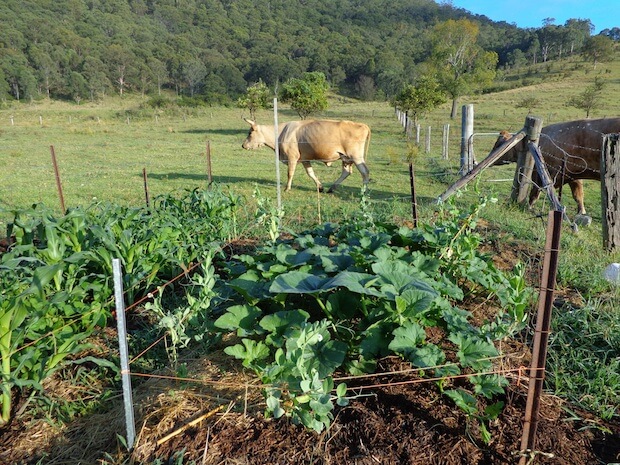
Spread over a sprawling 500 acres of lush organic farms, the New Gokula Farm and the Sri Sri Radha Gokulananda temple, is nestled in the picturesque Hunter Valley in New South Wales, 166 kilometres away from the bustling city of Sydney. The name for the farm is derived from the Sanskrit word go kula or ‘home for the cows’, and replicates Lord Krishna’s childhood days in Vrindavan and his love for cows and mother nature, conserving which happens to be the prime mission at this farm.

In 1988, a few devotees purchased the land with the goal of establishing a self-sufficient Hare Krishna community, laying the foundation for the New Gokula Farm. Soon the Sri Sri Radha Gokulananda temple was built and infrastructural facilities like dams and underground irrigation for the purpose of cow herding and organic farming were developed.


Inside the New Gokula Farm


Surrounded by vast pastures, vegetable and flower gardens, the farm is a sanctuary for 68 cows, bulls and calves, and devotion to Krishna, the Supreme Lord, is the core of all the farm activities here.

“The key focus here is the welfare and protection of the farm animals whilst establishing sustainable farming practices and offering cruelty-free dairy produce to the community, which is the Vedic formula for meeting all economic needs”, says, Jayanti Devi Dasi, one of the ten devotees residing at the ashram.


Protecting the holy cow


In Hinduism, Krishna is depicted as a cowherd in Goloka (abode of the cows) Vrindavan, where he spent his childhood tending cows and calves and playing the flute in the forests with his friends. His avatar portrays the importance of cows to the human society, the benefits of nurturing and protecting them, and the rewards of an agrarian society based on the cooperation between man and cows. Also in the Bhagavad Gita, Krishna mentions cow protection as one of the prime duties of any civilised society.

“In our vedic scriptures, cows are considered to be one of the mothers of humankind because cow’s milk, apart from our biological mother’s milk, is perfectly suited to maintain human life. Krishna also told his cousin Uddhava that go puja (cow worship) is equal to my puja (worship). So we (at the New Gokula Farm) consider ourselves to be a servant of Krishna and willingly offer our services in this spirit, and protect and nurture the cows to please Him”, adds Jayanti Devi Dasi.

Making a difference to the planet


The devotees at the New Gokula ashram aim to create a greener and a more Krishna-conscious, Vrindavan-like world by protecting the mother earth and the holy cow.

“We always need volunteers to help us in our mission and to make it a better home for the cows and to maintain the organic farms. So whether you are a traveller or a WWOOFer (Willing Workers On Organic Farms), you can stay with us and help us in the farm activities”.

As a service to lord Krishna, you can also adopt a cow through the cow sponsorship programme and the donation is used to supply all the necessities for these delightful four-legged devotees and for the improvement of the go-shala (cow shelter).

To present Sydney dwellers with a more accessible hub for spiritual learning, the New Gokula Farm is soon coming up with its city arm in Newcastle called The Bhakti Tree. The Newcastle centre will offer keertan and meditation programmes, Vedic philosophy discussions, organic farming classes, cooking classes, and a lot more. And the New Gokula Farm will always be a gateway and a getaway for a more meaningful and mystical experience.


Upcoming Festivals

Go-Seva(Service to Cows) Starting from Sunday, 28 September 2014, every last Sunday of the month is designated as the day when anyone that wishes to perform go-puja (cow worship) can do so. If you want to join in, the programme starts at 11 am and the donation amount is $151. For details, please contact Kaliya Krishna Das at 0488 178 293 / newgokula@gmail.com


Govardhana Puja, one of the biggest festivals besides Janmashtami, will be celebrated at the New Gokula Farm on the 25th of October this year. Govardhana Puja also called Annakuta (heap of grains)andit is celebrated to mark the day Lord Krishna lifted the Govardhana Hill to protect the inhabitants of Vrindavan from torrential rains created by Lord Indra’s wrath. On this day devotees build a replica of the Govardhan hill with sweets. Cows are especially honoured on this day, being dear to the Lord. Large quantities of prasadam (food that has been offered to the deities and blessed) are made by the devotees at the farm and offered to lord Krishna and then distributed to everyone. If you wish to volunteer your services on this day, email at newgokula@gmail.com by 20th October, 2014.


A touch of grandeur

0
Reading Time: 4 minutes

Nita Tanna’s designs spruce up community events

When Avni Tanna announced her nuptials to her large network of family and friends some eight years ago, it was at a dream-come-true fairy-tale event.

The wonderful evening, organised single-handedly by her mother Nita, is still talked about today.

“Yes, I micro-managed it all, including the decorations which I personally designed, all from scratch,” Nita Tanna remembers.

One invitee, thoroughly impressed, asked her to replicate it all in a few months’ time, at her own event. Within six months, Nita had done four events, all as favours for close friends.

When her husband Hemant suggested she turn her passion for decorating and event management into a profession, Nita jumped at it, threw in her job at National Australia Bank, and Décor-a-shaan was born.

Today, if you’ve been to an Indian wedding in Sydney, or a weekend community function of any sort, you’ve probably sat in a Nita Tanna-decorated room or watched the proceedings on a Nita Tanna-decorated stage. Her beautiful designs have become the hallmark of any major Indian community function. And if you’re organising an event, a trip to her North Rocks-based showroom, will probably be on the cards.

It’s a busy Monday morning as Nita recounts her story in her plush upstairs office. The staff potter around downstairs, washing, ironing and putting away countless drapes and backdrops; stacking pillars, decorative pots, lamps and light fixtures; and putting away candles, mirrors and flower decorations and vases. It’s been a massive weekend of partying, obviously!

“It’s a typical Monday morning actually,” Nita says. “We’re now all cleaned up and ready for this week’s events. We pick up momentum from the middle of the week, with many functions starting from Thursday night on, and by Sunday night we are stretched to our limits, and beyond! Monday mornings, we take stock, and prepare to do it all again”.

Things are a bit different, no doubt, since Avni’s engagement party.

“Well, yes and no,” Nita says in her characteristic, considered style. “I see my own Avni in all my clients. I want them all to have an immensely happy and truly memorable day! But it’s a much larger operation obviously. When Hemant and I started, we worked out of our garage, meeting clients inside the house. Today our client base has increased exponentially”.

There’s a huge variety of people to please as well.

“Most clients come in with some idea of what they want their event to feel like. Some have absolutely no idea, and then there are those who know exactly what they want. All client types are welcomed! Typically, most clients come by about six months in advance. But only recently, I had a client who dropped in a week before! I think she finished off quite happy in the end!”

Of course the business is much more than weddings and community functions. There are milestone anniversaries, baby showers and school events as well.

Corporate events have become a particular passion in the last few years.

“I’d say the corporates excite us the most,” Nita reveals. “We’ve just done the Ella Bache Awards Night, which was hugely satisfying and one of our most successful events ever. A John Holland event we did recently had some one thousand guests! On TV, we were on MasterChef Australia and Recipe to Riches. Christmas parties and end-of-year affairs at all the major hotel brands are also a major market for us”.

Hemant and Nita’s son Prateek now works in the business too, helping to tackle assignments across Sydney. At any given time, there will be three to 10 staff working with them, though on busy weekends it could be even more.

A trained interior designer, another recent venture for Nita has been tie-ups with restaurants, who are beginning to do revamps of décor as often as every three months.

Is it any wonder the company is booked until Oct 2015?

In the midst of drumming up new kinds of business, Nita continues to design all her items, which are manufactured either here or in India.

“I want that uniqueness factor with all my stuff”.

It’s not hard to understand the choice of the name Décor-a-Shaan, which is a clever word play in “Hinglish” that means ‘decorations of grandeur’.

So what’s the best and worst parts of Nita’s job?

“The best part of the job is when a client, say a bride, tells me, ‘You made my day’ with a hug, or a card or flowers. It’s priceless! Worst is doing those 2am pack-ups with my boys! Set-up is always awesome, with lots of energy and enthusiasm, but by pack-up we are drained”.

But it’s that thrill of seeing that happy face at the end that keeps the Décor-A-Shaan going.

Decorate on, Nita!


Have a FRUITY Diwali!

0
Reading Time: 5 minutes

Hey, if the Aussies can switch from ham to prawns for their traditional Christmas feast, why can’t we move from khoya to fruit at Diwali??

Things nutty and syrupy are in abundance, and generally, everything is finger-lickin’ good.

And that is just as it should be. For not only is it a time of celebration, it is also perfect weather-wise. In the north at least, summer has just faded away and the weather is getting pleasanter, as everyone braces for the upcoming winter. The nuts and the khoya and the sugar are oh-so-appropriate.

In Australia on the other hand, at Diwali, we’re getting ready for summer! Are the nuts, the khoya the sugar, the ghee, really so appropriate for us? Wouldn’t you prefer something light, something cooling, something fruity?

Well then, here’s to Diwali with a difference. Hey, if the Aussies can switch from ham to prawns for their traditional Christmas feast, why can’t we move from khoya to fruit at Diwali??


Chocolate Strawberries

(This one comes from my chocoholic daughter Devna)

1 punnet strawberries

½ cup thickened cream

250 gms cooking chocolate slab (milk)


Break chocolate into squares and put in a mixing bowl. Boil cream in a heavy-bottomed pan. Tip cream into chocolate and mix well till smooth. Don’t stop mixing or the chocolate will set in lumps. Leave aside for 3-4 minutes to thicken. Dip washed strawberries by the thin end into chocolate-cream mixture. Arrange neatly on a white platter and refrigerate.


Orange Delight

400 gm tin condensed milk

400 ml fresh cream

600 ml fresh orange juice (strained)

3 tbsp gelatine.


Mix condensed milk and cream with a whisk till well blended.

Soak the gelatine in a little orange juice and place over a pan of hot water till melted. Quickly mix in with the rest of the orange juice. Introduce this to the condensed milk-cream mixture and mix well. Pour into a flat dish and leave to set in the refrigerator.

To serve, decorate with segmented oranges, kiwi fruit slices and strawberries.


Pineapple Cream

400 ml fresh cream

400 ml can evaporated milk

1 pack pineapple flavoured jelly

400 gm can pineapple slices.


Dissolve the jelly in a cup of hot water.

Blend together in a food processor the cream, milk, jelly powder dissolved in water and pineapple syrup from the tinned pineapple.

Pour the mixture into a flat dish and leave to set in the refrigerator overnight. Serve decorated with sliced pineapple.


Mango Mousse

2 mangoes, chopped

1 200 gm carton plain yogurt

1 packet mango jelly crystals

1 cup boiling water

1 tbsp caster sugar

Sliced fruit of choice for garnish.


Mix jelly in boiling water and stir till dissolved. Refrigerate till it reaches the consistency of unbeaten egg-white. Blend together mangoes, yogurt and sugar until smooth. Gently introduce jelly. Pour into individual bowls (or glasses), cover tightly with cling-film and leave to set overnight. To serve, decorate with fresh fruit.


Orange Surprise

1 ½ cup fresh cream

2 cups vanilla ice cream

½ cup orange juice

4 tbsp caster sugar

1 tbsp gelatine

A few drops orange food colour (optional).


Whisk cream with sugar until well-blended.

Soften ice cream and add orange juice and colour if using.

Sprinkle gelatine in half cup boiling water and stir till completely dissolved. Mix together ice cream, cream-and-sugar mixture and gelatine, and combine well. Pour into individual serving bowls, cover tightly with cling-film and leave to set in the refrigerator overnight. To serve, decorate with fresh fruit.


Date and Orange Pudding

1 ½ cups seedless dates, chopped

¾ cup sugar

1 ½ tbsp gelatine

1 cup yogurt

2/3 cup orange juice

1 tsp grated orange rind

1 cup fresh cream

Orange segments for garnish.


Mix dates with sugar and water in a heavy-bottomed pan. Simmer over a low fire for five minutes. Sprinkle gelatine over 1/3 cup of boiling water and stir until completely dissolved. Add to the dates and allow to cool. Whisk yogurt till smooth and add orange rind. Add to the date mixture. Pour in orange juice. Refrigerate until thickened but not completely set. Then fold in the cream. Pour into a deep bowl and return to the refrigerator to set, overnight. Serve decorated with orange segments.


Strawberries with Orange and Mascarpone

500 gms strawberries

Juice of 2 oranges

200 gms mascarpone

2 tbsp caster sugar

1 tsp brandy or orange liqueur

1 tsp vanilla essence.


Hull and halve strawberries. Put them in a large bowl and sprinkle 1 tbsp caster sugar over.

Combine orange juice and brandy or liqueur and pour over strawberries. Stir and set aside for ten minutes. Beat remaining sugar, mascarpone and vanilla essence well until combined.

To serve, spoon mascarpone into serving glass or bowl, top with strawberries and drizzle syrup over.


Banana Frozen Yogurt

1 kg thick yogurt

1 cup caster sugar

1 tsp ground cinnamon

1 ½ cups banana puree.


Combine yogurt and sugar and mix well. Introduce the banana and cinnamon. Pour into a metallic container and freeze for 1 ½ hours. Remove from freezer and beat until smooth. Return to freezer for an h our, and then beat again. Return to freezer and allow to set. Serve with chocolate sauce, or fresh fruit.


Yogurt Jelly

1 100 gm packet raspberry jelly crystals

1 tbsp caster sugar

¾ cup boiling water

1 ½ cups frozen raspberries

3 200 gm cartons berry-flavoured low fat yogurt

For serving, plain low-fat yogurt, fresh berries, fresh mint leaves, icing sugar.


Dissolve jelly crystals and sugar in water and refrigerate until cold. Thaw raspberries on kitchen towels.

Combine jelly mixture and yogurt in a bowl; introduce raspberries. Spoon mixture into dessert bowls or glasses upto ¾ capacity. Cover tightly with cling-film and refrigerate overnight. To serve, decorate with a dollop of plain yogurt, fresh berries, mint leaves and sifted icing sugar.

(Use any other fruit with appropriate jelly and flavoured yogurt).


Orange Apricot Cream

425 gm can apricots in natural juice

1 tsp grated orange rind

½ cup fresh cream, whipped

200 gm low fat apricot yogurt

2 tsp gelatine dissolved in 1 tbsp hot water

½ cup fresh orange juice

2 tsp gelatine extra, dissolved in 1 tbsp hot water

Kiwi fruit slices, orange segments and mint leaves for garnish.


Drain apricots and puree, reserving a few pieces for garnish. Combine puree with orange rind, cream, yogurt and gelatine. Spoon the mixture into dessert glasses or individual bowls and refrigerate until set. Combine the orange juice and extra gelatine and pour over the set apricot cream. Refrigerate until set. Serve decorated with apricot pieces, orange segments, kiwi fruit slices and mint leaves.