

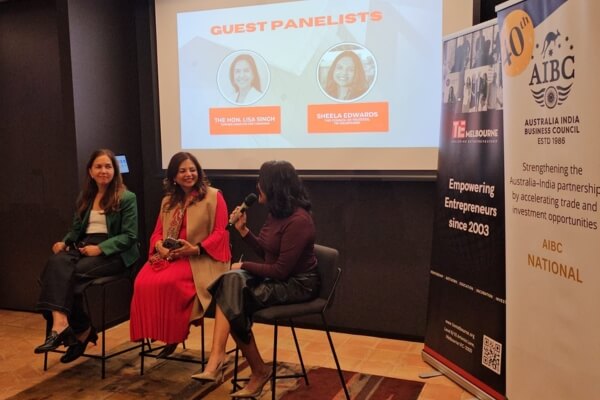
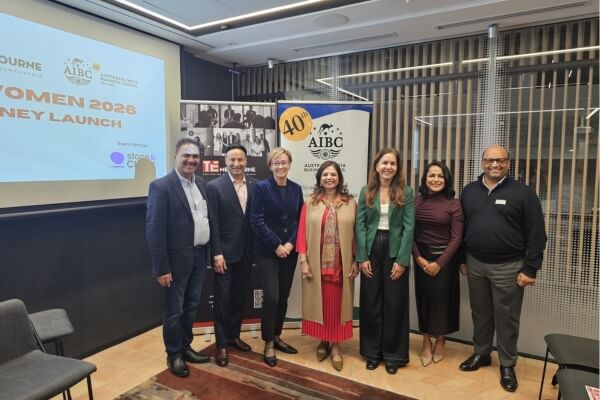
TiE Women 2026 program
For many women entrepreneurs, getting a business idea off the ground is not simply about innovation or ambition, but about being seen, backed, and given access to the right networks. That is one of the key gaps the TiE Women Entrepreneurs (TWE) program hopes to address.
Run by TiE Melbourne as part of the global TiE (The IndUS Entrepreneur) network, the initiative supports women-led startups through mentorship, investor exposure, networking opportunities, and access to a worldwide entrepreneurial ecosystem.
It also creates opportunities for participants to pitch their ventures on an international stage, with local winners progressing to a global finale, where they compete for a US$50,000 equity-free prize.
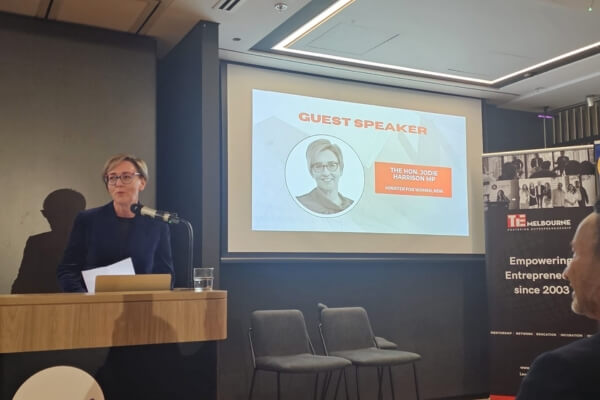
With the support of the Australia-India Business Council, the 2026 program was launched across Melbourne, Sydney and Brisbane this past week, reflecting growing national interest in women-led entrepreneurship and startup innovation.

Namita Gupta, Vice President of TiE Melbourne, who now helps run the program alongside Sangeeta Mulchandani, understands the impact of the initiative firsthand. Three years ago, she herself won the Australian chapter competition before progressing to the global finals in Bengaluru, India.
“That really opened my eyes to the scale and magnitude of TiE, and the type of people that are part of TiE,” she recalls. “It was a great experience… we met some very interesting people, and through that connection became more deeply involved with TiE Melbourne.”
(A dentist by profession and a medtech entrepreneur, Namita co-founded Dental Sanctuary with her husband, fellow dentist Dr Stephan Kantharajah, before going on to launch the dental procurement AI platform Restocq.)
Today, TWE has become one of the organisation’s flagship initiatives, spanning the 63 chapters globally. Participants undergo local mentoring and programming before one winner from each chapter progresses to the international finals.
Yet beneath the mentoring and international exposure lies a more serious purpose: helping female founders navigate the longstanding funding gap that continues to affect women-led startups.
“The statistics are pretty appalling when it comes to institutional backing of female-founded startups,” Namita says. “The program was started to give female founders more exposure in circles where there is access to seed funding or institutional funding.”
Importantly, she notes, the program offers other opportunities.
“There’s also mentorship and access to people who can collaborate and help scale some of these ventures across borders,” she explains. “Because TiE is an international organisation with chapters all over the world, particularly in the US and India, it’s a huge opportunity for Australian startups looking to expand into those regions.”
The program aims to build a supportive entrepreneurial ecosystem for women founders by encouraging collaboration, leadership development, knowledge-sharing, and long-term community connections.
While women founders are now entering virtually every industry sector, Namita believes supporting female entrepreneurs remains especially significant because many are building products and businesses responding directly to women’s lived experiences.
“Women founders have been found to be highly investable and more likely to deliver returns,” she says. “But they’re also building products and companies that support the female population – whether that’s in health, children’s services, or other areas where women bring a different sensibility and understanding.”
The diversity of businesses entering the program has also grown significantly, spanning healthcare, medtech, deep tech, food, marketing, and broader technology sectors.
Importantly, the initiative is open to women from all backgrounds, not only migrant or multicultural entrepreneurs.
For younger women hesitating over whether to pursue a business idea, Namita’s advice is simple: back yourself.
“Have courage and take the leap,” she says. “If nothing else, you’ll learn a lot from the experience.”
She also stresses the importance of community and mentorship.
“Don’t expect to do it alone. Surround yourself with the support network you need. For me, it was TiE and the mentorship I received there.”
And finally, she feels, entrepreneurs must learn not to fear failure.
“With failure comes a lot of learning,” she reflects. “The difference between those that fail and those that succeed is grit and determination – the ability to stay in the game, ride the wave, and keep going even when things get hard.”
Applications for the 2026 TWE program close on 15 June. More details here.
Read more: Sangeeta Mulchandani wins Innovation & Entrepreneurship award